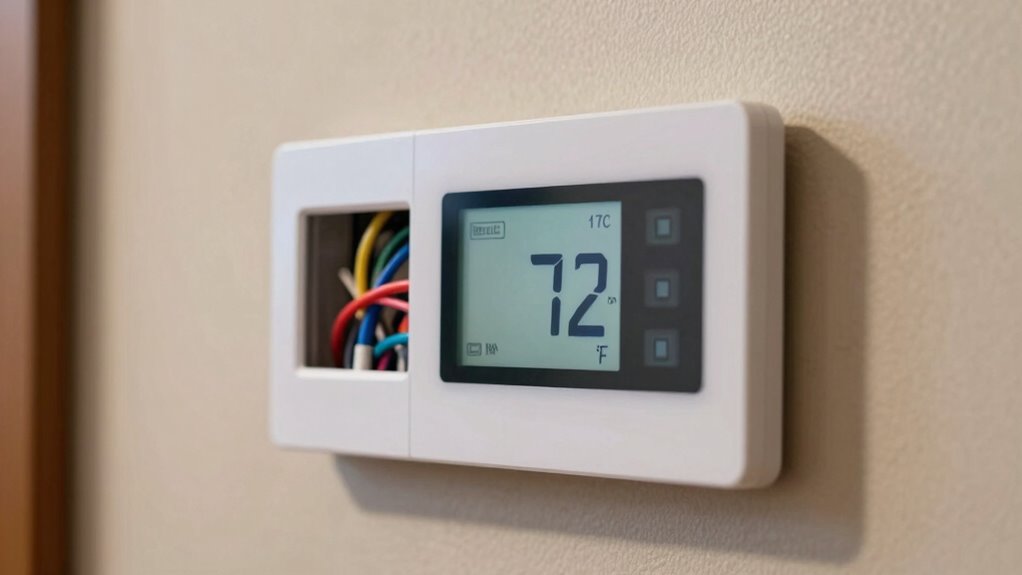
Your thermostat might not match your expectations because placement, calibration, insulation issues, or drafts can cause inaccuracies. External factors like sunlight, outdoor temps, or humidity also impact indoor comfort. Heating or cooling systems may cycle too quickly or slowly, affecting temperature stability. If your thermostat isn’t properly calibrated or suffers from air leaks, it won’t deliver consistent results. Want to uncover how to fix these issues and get your system working correctly? Keep exploring for helpful tips.
Key Takeaways
- Incorrect thermostat placement near drafts, sunlight, or heat sources can lead to inaccurate temperature readings.
- Poor insulation and air leaks cause temperature fluctuations, making the thermostat’s setting less effective.
- Calibration drift over time can result in the thermostat misreading room temperature, reducing its accuracy.
- External factors like outdoor weather, humidity, or wind influence indoor temperature, affecting thermostat performance.
- System cycling issues or improper sensor placement can cause the HVAC to run inefficiently, despite correct settings.
Top picks for "thermostat sett doesn"
As an affiliate, we earn on qualifying purchases.
Differences Between Actual and Displayed Temperature

Sometimes, the temperature your thermostat shows isn’t the same as the actual room temperature. This discrepancy often comes down to sensor accuracy. Over time, sensors can drift or become less precise, causing your thermostat to read incorrectly. To fix this, you may need to check the display calibration. Proper calibration guarantees the displayed temperature matches the real environment. If your thermostat’s display isn’t calibrated correctly, it can mislead you into setting the wrong temperature, causing discomfort or energy waste. Regularly testing and calibrating your thermostat helps maintain sensor accuracy and guarantees reliable readings. Additionally, understanding the concept of free floating sensors can help you better diagnose and address these issues. It’s also beneficial to be aware of how sensor placement impacts temperature readings, as improper positioning can contribute to inaccuracies. Recognizing sensor drift can alert you when calibration or replacement might be necessary to ensure consistent performance. Being aware of sensor calibration procedures ensures your thermostat remains accurate over time. Furthermore, understanding the sensor response time can help in assessing how quickly your thermostat adjusts to temperature changes.
The Impact of Thermostat Placement
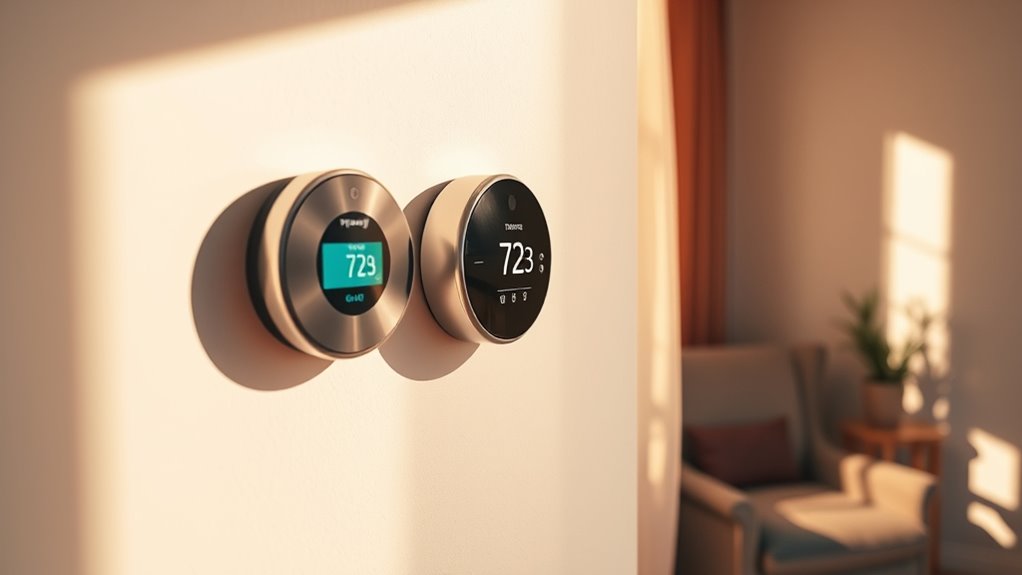
The placement of your thermostat plays a crucial role in ensuring accurate temperature readings and effective climate control. If it’s hidden behind furniture or near drafts, your thermostat may misread the room, causing uneven heating or cooling. Proper placement enhances both thermostat aesthetics and user interface design, making it easier to operate and visually integrate into your space. Keep these tips in mind:
Proper thermostat placement ensures accurate readings and better climate control throughout your space.
- Position it on an interior wall away from direct sunlight or vents
- Avoid placing it near windows or exterior doors where drafts occur
- Choose a location with a clear view of the room for precise readings
- Understanding energetic alignment can help optimize your environment for better comfort and energy efficiency. Additionally, proper sensor placement ensures the thermostat responds accurately to your actual living conditions, preventing unnecessary energy use. Recognizing smart thermostat features can further improve your control and efficiency. Being aware of signal accuracy can also help in troubleshooting and maintaining your system’s performance. For optimal results, consider system calibration to fine-tune your thermostat’s responsiveness.
How Heating and Cooling Systems Affect Temperature
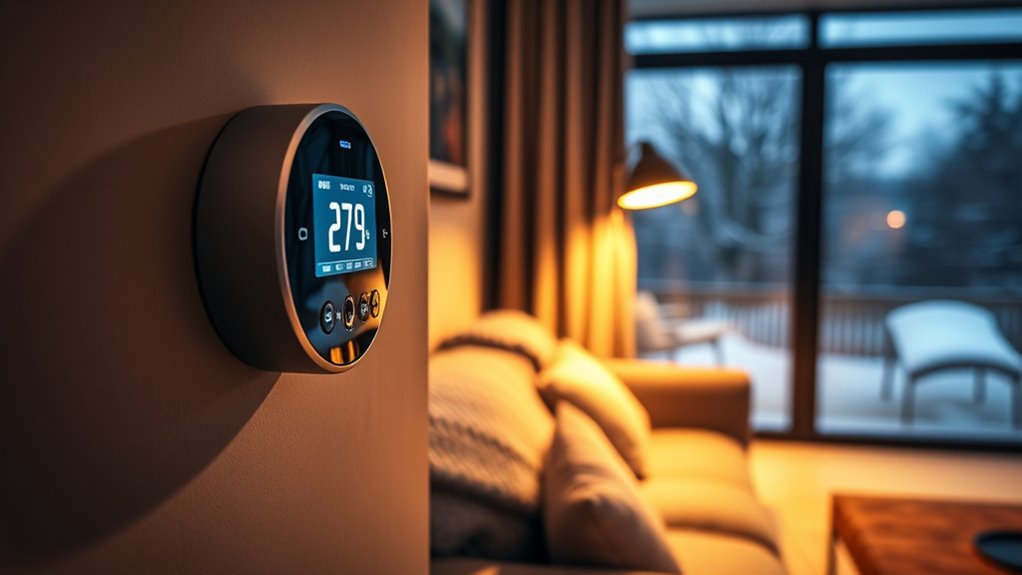
Heating and cooling systems directly influence how accurately your thermostat can maintain comfortable temperatures. Different climate zones require specific system setups, which can impact how your thermostat responds to temperature changes. For example, in colder zones, your heating system may run longer, making it harder for the thermostat to detect when to turn off. Conversely, in warmer zones, cooling systems might cycle frequently, causing temperature swings. Modern smart thermostats help mitigate these issues by learning your system’s patterns and adjusting accordingly. They can also communicate with your HVAC units to optimize performance based on your climate zone. Additionally, system compatibility is crucial for ensuring your thermostat functions as intended. Proper system calibration can improve thermostat accuracy and responsiveness. Furthermore, choosing a high-efficiency heat pump can significantly enhance system responsiveness and temperature regulation. However, if your system isn’t suited to your climate or isn’t functioning correctly, your thermostat’s readings and settings won’t give you the comfort you expect. Understanding your climate-specific system setup can help ensure your thermostat responds accurately to temperature changes. Regular system maintenance also plays an important role in keeping your thermostat and HVAC system working harmoniously.
The Role of Thermostat Calibration and Accuracy
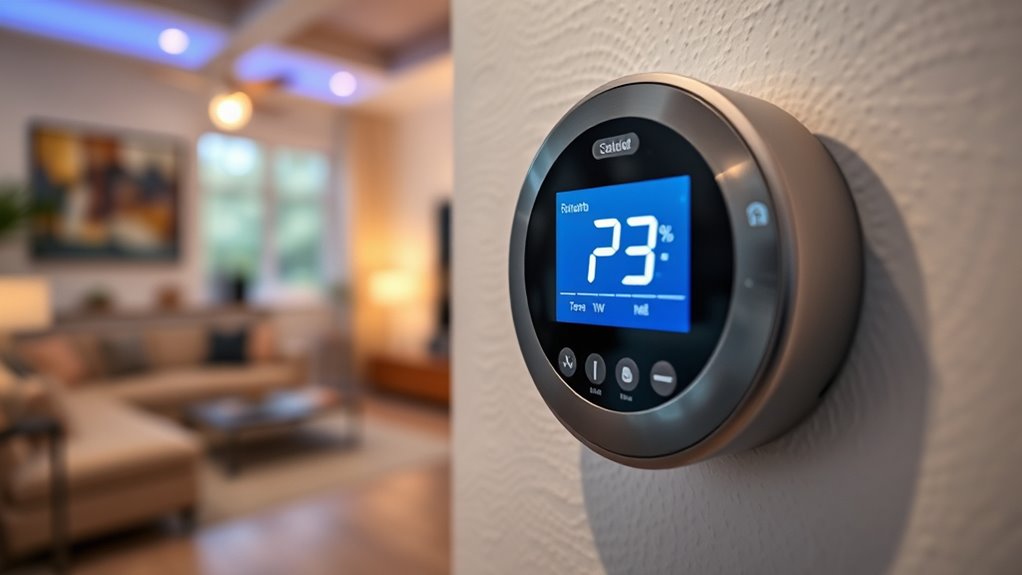
Over time, your thermostat’s calibration can drift, causing it to read temperatures inaccurately. Small changes in sensor precision can also impact how well it maintains your desired comfort level. Ensuring your thermostat stays calibrated and accurate helps keep your home’s temperature consistent and reliable. Regular maintenance and proper calibration are essential for optimal performance. Additionally, understanding thermostat calibration can help you identify when adjustments are necessary to maintain accuracy. Being aware of sensor accuracy can further improve your thermostat’s efficiency and longevity.
Calibration Drift Over Time
As thermostats age, their calibration can gradually drift from accurate settings, causing mismatched temperatures and comfort issues. This drift affects sensor accuracy and calibration stability, making your thermostat less reliable over time. Small changes in sensor readings can lead to significant temperature discrepancies, forcing your system to work harder. You might notice uneven heating or cooling despite setting a specific temperature. Regular calibration checks help maintain sensor accuracy and prevent drift from impacting comfort. Additionally, European cloud innovation emphasizes the importance of reliable, energy-efficient technology to support sustainable solutions. Proper maintenance and periodic professional assessments can further help prevent calibration drift from affecting your system’s performance.
Impact of Sensor Precision
As your thermostat’s internal sensors age and drift, their ability to accurately detect temperature declines, impacting system performance. When sensor accuracy diminishes, your thermostat may misread room conditions, causing uneven heating or cooling. Proper calibration methods are essential to maintain sensor precision; these involve adjusting the sensor’s output to match a known temperature reference. Over time, sensors can become less reliable, leading to discrepancies between the actual room temperature and what your thermostat reports. Regular calibration helps ensure your thermostat reflects the true environment, providing more consistent comfort and energy efficiency. Neglecting sensor accuracy can cause your system to overcompensate or underperform, making your thermostat seem unreliable. Addressing calibration issues keeps your system running smoothly and ensures your settings deliver the intended comfort. Additionally, understanding sensor calibration is key to maintaining optimal thermostat performance.
The Influence of Insulation and Air Leaks
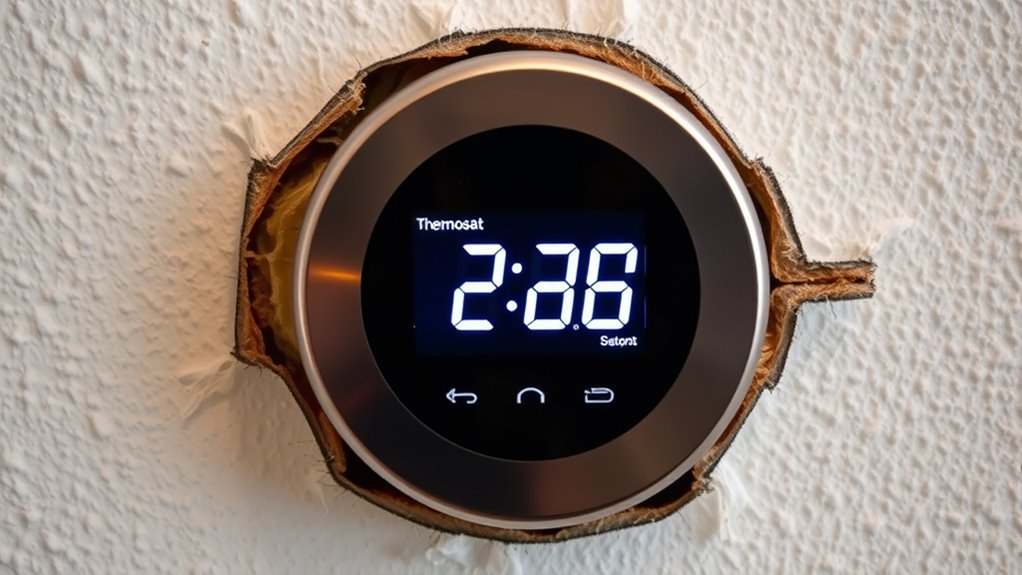
Insulation and air leaks play a crucial role in maintaining a stable thermostat setting, as they directly affect your home’s temperature efficiency. Poor insulation effectiveness allows heat to escape or enter, making your system work harder to maintain comfort. Air infiltration, from gaps and cracks, introduces unwanted drafts that cause your indoor temperature to fluctuate. This not only affects comfort but also impacts your home energy efficiency, leading to higher utility bills. Proper air sealing techniques and insulation improvements can significantly enhance your home’s thermal stability. Gaps around windows and doors considerably increase air infiltration, undermining your insulation. Insufficient attic or wall insulation allows heat to escape in winter and seep in during summer. Addressing air leaks and improving insulation help your thermostat maintain accurate readings and consistent comfort. By tackling these issues, you reduce strain on your heating and cooling system, ensuring your thermostat works as intended.
Understanding Thermostat Types and Their Functions
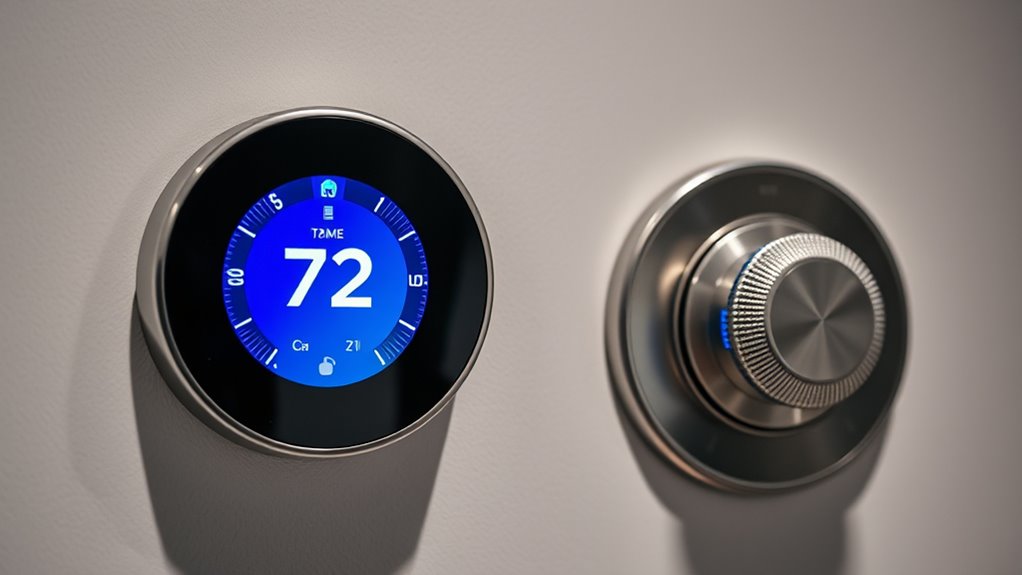
Choosing the right thermostat is key to optimizing your home’s temperature control and energy efficiency. There are various types, each serving different needs. Manual controls are simple, allowing you to set your desired temperature directly, but they lack programmability and automation. Smart thermostats, on the other hand, offer advanced features like remote access, scheduling, and learning your habits over time. They can automatically adjust settings to save energy without sacrificing comfort. Understanding these types helps you select the best option for your lifestyle. Manual controls are ideal for straightforward use, while smart thermostats provide convenience and efficiency through technology. Knowing the functions of each ensures you make an informed decision that aligns with your home’s heating and cooling needs.
The Effects of System Cycling and Short Cycling
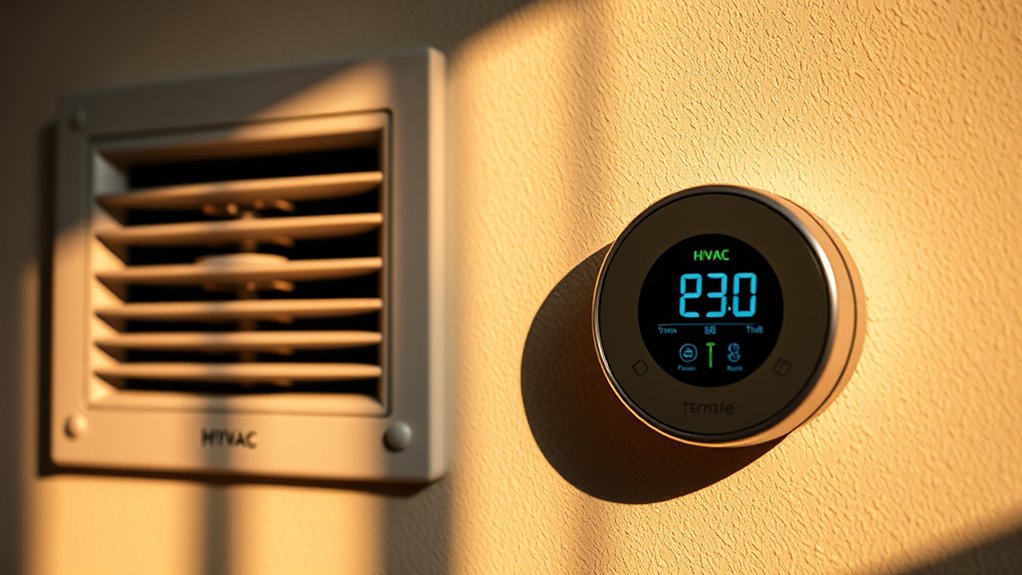
When your system cycles on and off rapidly, it can waste energy and drive up your utility bills. This short cycling also puts extra stress on your equipment, leading to faster wear and potential breakdowns. Understanding these effects helps you keep your system running efficiently and avoid costly repairs.
Rapid On-Off Cycling
Rapid on-off cycling occurs when your heating or cooling system turns on and off frequently in a short period. This can cause wear and tear on your equipment, reducing its lifespan, and may lead to inconsistent comfort. You might notice your thermostat struggling to maintain the desired temperature, especially if it’s a basic model with limited thermostat aesthetics or voice control integration.
- Increased system stress, leading to potential breakdowns
- Noise disturbances from constant cycling
- Difficulty in setting and maintaining a stable temperature
These issues highlight why understanding system cycling is vital. If your thermostat isn’t well-designed or lacks voice control features, it can exacerbate rapid cycling problems, making your home less comfortable and your system less efficient.
Increased Energy Consumption
Frequent cycling not only wears out your HVAC system faster but also substantially increases your energy bills. When your system turns on and off repeatedly, it consumes more energy than necessary, leading to higher costs. Short cycling can cause humidity levels to fluctuate, making your home less comfortable and forcing your system to work harder to maintain the desired temperature. Additionally, window positioning can influence cycling patterns; poorly sealed or sun-facing windows can cause heat gain or loss, prompting your system to run more often. This constant adjustment drains energy and reduces efficiency. To minimize increased energy consumption, ensure proper window sealing, optimize shading, and avoid setting your thermostat too low or high. These steps help your system run more smoothly and save you money.
Equipment Wear and Tear
Short cycling causes your HVAC system to turn on and off more often than necessary, which accelerates wear on its components. This frequent cycling stresses parts like the compressor and fan motor, reducing equipment durability over time. Poor sensor placement, such as thermostats located near vents or direct sunlight, can trigger unnecessary short cycles. These improper signals cause your system to run inefficiently and wear out faster. Additionally, constant on-off cycling increases the risk of compressor burnout and motor failure. To protect your equipment, ensure sensors are correctly positioned and calibrated. Proper sensor placement helps your system operate smoothly, prolongs its lifespan, and maintains consistent comfort. Addressing short cycling issues now can save you costly repairs and extend your HVAC’s overall durability.
Limitations of Non-Programmable Thermostats
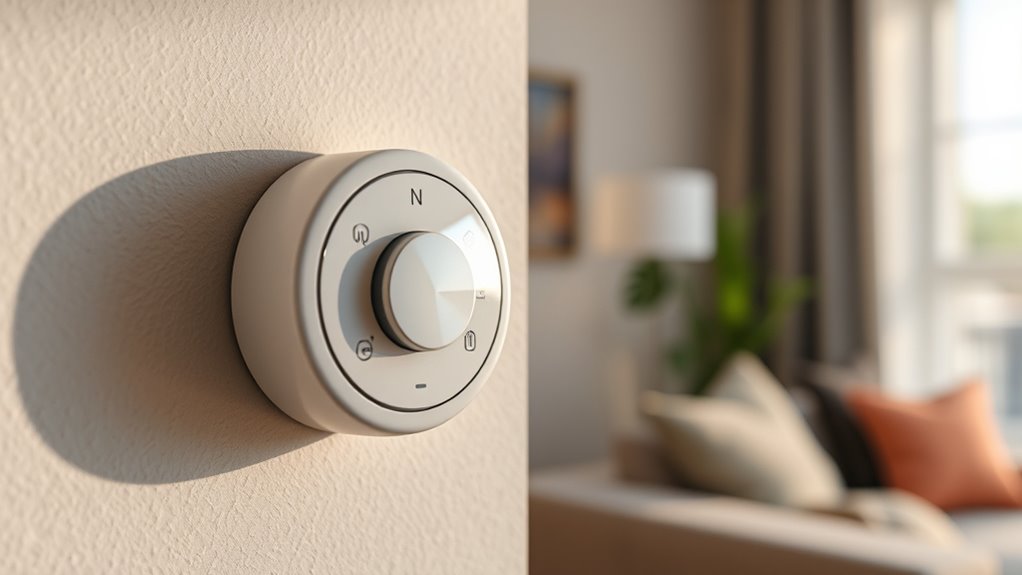
Non-programmable thermostats often fall short when it comes to maintaining consistent comfort and saving energy. Since you have to make manual adjustments, you might forget to change the settings when your schedule or preferences change. This reliance on user settings means your home temperature can fluctuate throughout the day, leading to inefficiency and discomfort. Unlike programmable models, non-programmable thermostats don’t adapt automatically to your routines, forcing you to remember to change the thermostat manually. This can result in wasted energy when heating or cooling runs unnecessarily, or discomfort when the temperature isn’t set correctly during different times of the day. Overall, their limitations stem from your need to actively manage the settings rather than relying on automated adjustments.
The Impact of External Factors on Indoor Temperature
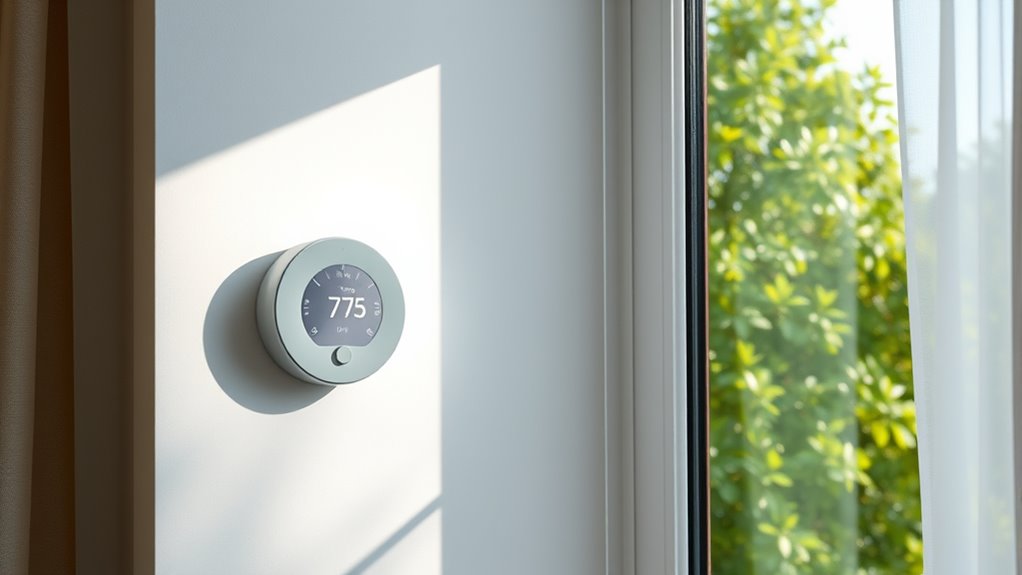
External factors such as sunlight, outdoor temperature, wind, and humidity can markedly influence your indoor climate, often overriding your thermostat settings. Sunlight exposure can warm a room unexpectedly, making your thermostat seem ineffective. Humidity levels also play a role; high humidity can make the air feel hotter and cause discomfort, even if the thermostat is set to a lower temperature. Outdoor temperature fluctuations can cause your heating or cooling system to work harder, sometimes making your efforts seem futile. Wind can cause drafts, affecting indoor temperature stability. To manage these influences, consider shading windows, sealing leaks, and monitoring humidity levels. Being aware of external factors helps you understand why your indoor environment may not match thermostat settings perfectly.
Tips for Ensuring Your Thermostat Works as Intended
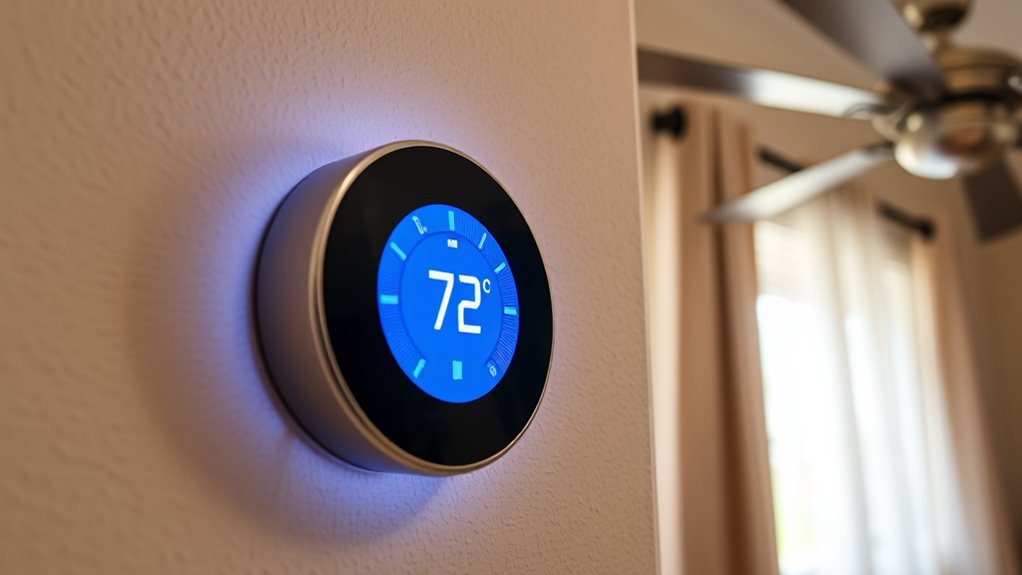
To guarantee your thermostat functions accurately, start by placing it in a prime location—away from drafts, direct sunlight, and heat sources. If you have a smart thermostat, ensure it’s properly connected to Wi-Fi, allowing you to monitor and adjust settings remotely. Regularly update its firmware to keep features and connectivity optimized. Use the app to verify it responds correctly to your commands and to check temperature readings. Calibrate your smart thermostat periodically for precision. Avoid covering sensors or obstructing airflow around the device. If your thermostat supports Wi-Fi, test its remote controls and scheduling features to confirm they work seamlessly. These steps help prevent discrepancies and ensure your thermostat maintains your desired comfort levels efficiently.
Frequently Asked Questions
Can My Thermostat Be Hacked or Manipulated Remotely?
Yes, your thermostat can be hacked or manipulated remotely, especially if cybersecurity concerns aren’t addressed. Hackers exploit vulnerabilities in smart devices to gain access through weak passwords or unsecured Wi-Fi networks. To prevent remote hacking, make certain your thermostat’s firmware is updated, use strong, unique passwords, and enable two-factor authentication if available. Keeping your network secure greatly reduces the risk of unauthorized control and safeguards your home’s climate system.
How Does Humidity Influence My Thermostat’s Temperature Readings?
Humidity impact directly affects your thermostat’s temperature readings because high humidity can make the air feel warmer, while low humidity can make it feel cooler. Your thermostat may register these changes, causing it to turn on or off unexpectedly. This affects thermal comfort, making you feel uncomfortable even if the actual temperature is steady. To improve accuracy, consider using a humidistat or adjusting your thermostat settings based on humidity levels.
Why Does My Thermostat Sometimes Turn on Unexpectedly?
Your thermostat might turn on unexpectedly due to temperature fluctuations or sensor placement issues. If the sensor is near a heat source or in direct sunlight, it can misread the room’s actual temperature, causing the system to activate unexpectedly. Also, slight changes in room temperature can trigger the thermostat, especially if it’s sensitive. Check your sensor placement and consider calibrating your thermostat to prevent these surprises.
Are Smart Thermostats More Accurate Than Traditional Models?
Smart thermostats are definitely more accurate than traditional models, but only if you get their temperature calibration just right and make certain of proper sensor placement. They adapt better to your home’s unique conditions, learning from your habits and adjusting accordingly. Unlike older thermostats, smart ones use advanced sensors and data analysis, so you’ll notice more consistent comfort. Proper calibration and sensor placement maximize their precision, making them a smarter choice overall.
How Often Should I Replace or Recalibrate My Thermostat?
You should recalibrate your thermostat annually to guarantee accuracy, especially if you notice inconsistent temperatures. Follow the manufacturer’s calibration frequency guidelines; most recommend recalibration every 1-2 years. Replace your thermostat if it’s outdated, malfunctioning, or if recalibration doesn’t improve performance. Regular maintenance helps your thermostat work efficiently, saving energy and money. Keep an eye on signs of failure and adhere to replacement guidelines to maintain a comfortable, consistent environment.
Conclusion
Your thermostat is more than just a dial; it’s the gatekeeper of comfort. When it works properly, it’s like a steady heartbeat, keeping your home in harmony. But if it’s off, your comfort can falter, turning your oasis into chaos. By understanding its hidden influences, you hold the key to a balanced environment. Trust in your thermostat’s true purpose—it’s your silent ally, guiding your home to calm and warmth amidst life’s unpredictable currents.