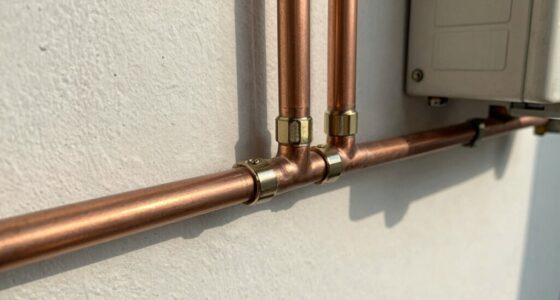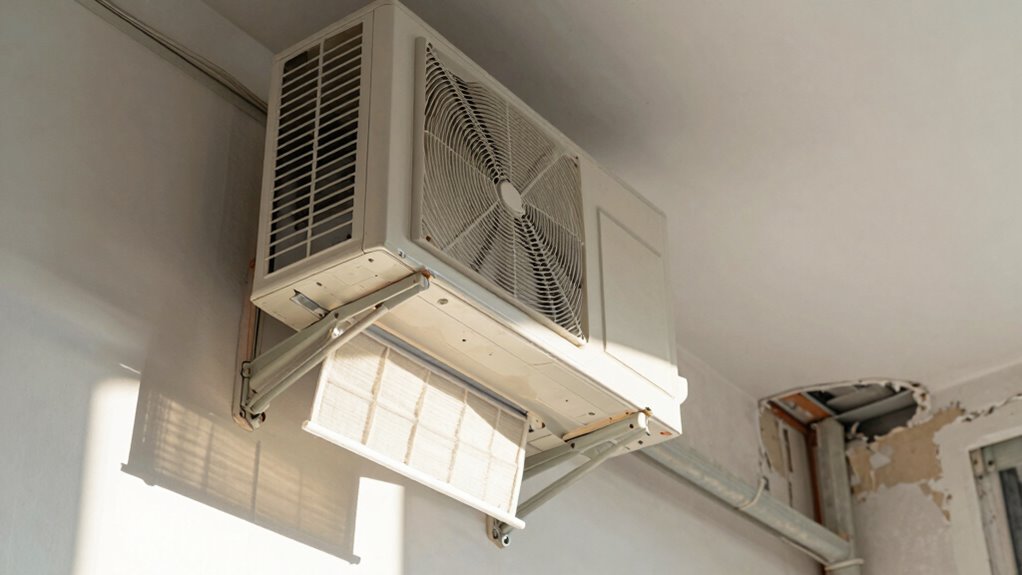

Mini split sizing often goes wrong faster because many rely on rule-of-thumb estimates or online calculators that ignore your home’s unique features. Oversized units short-cycle, wasting energy and causing wear, while undersized systems struggle to maintain comfort, running nonstop and becoming stressed. Incorrect sizing leads to inefficiency, higher bills, and quicker equipment failure. To avoid these pitfalls, understanding your home’s specific needs is essential—continue exploring to learn how to get it right the first time.
Key Takeaways
- Incorrect load calculations often lead to choosing improperly sized mini splits, causing rapid performance issues.
- Relying on rule-of-thumb estimates ignores unique home features, increasing sizing errors over time.
- Mini splits are sensitive to improper sizing, amplifying short-cycling and wear in smaller units.
- Oversized units cool quickly but cycle off and on frequently, accelerating component fatigue.
- Inaccurate assessments of insulation, climate, and space can cause sizing mistakes that worsen with use.
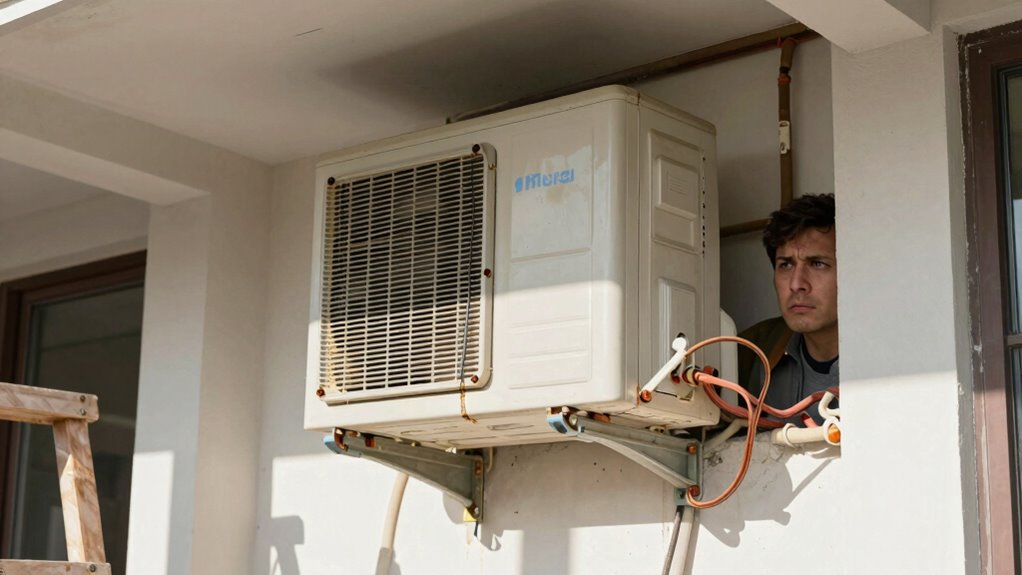
When it comes to installing a mini split system, getting the size right is essential, yet many homeowners make mistakes that lead to uncomfortable temperatures and higher energy bills. Choosing the wrong size can significantly impact the system’s energy efficiency, causing it to work harder than necessary or struggle to maintain consistent comfort. You might think that bigger is better, but an oversized mini split can short-circuit on cooling or heating cycles, wasting energy and increasing wear and tear on the unit. Conversely, a system that’s too small won’t be able to handle the load, leaving you with uneven temperatures and frustration. Proper sizing requires careful assessment of your space, climate, and insulation, but many overlook these details, opening the door to installation challenges that can be difficult to resolve later. Understanding home energy dynamics is crucial to selecting the right-sized system. Additionally, many underestimate how building characteristics influence the cooling and heating load calculations, which can lead to sizing errors. Recognizing the importance of accurate load calculations can help prevent these mistakes before installation begins.
One common mistake is relying solely on rule-of-thumb estimates or online calculators that don’t account for the unique characteristics of your home. This approach can easily lead to selecting a system that’s either too powerful or too weak for your needs. When you don’t get accurate load calculations, you risk installing a unit that’s not optimized for your space, which hampers its energy efficiency. A poorly sized system will cycle on and off more frequently, using more energy and increasing your utility bills. It also shortens the lifespan of your equipment, as constant cycling puts additional strain on components. This is why proper sizing is more than just a matter of comfort; it’s about ensuring long-term savings and system durability. Incorrect sizing can also impact the long-term performance of your mini split, leading to increased maintenance costs over time. Moreover, understanding the air flow within your home can influence how well the system distributes conditioned air, further emphasizing the need for precise calculations.
Installation challenges become more pronounced when the system isn’t properly matched to your home’s specific requirements. For example, an oversized unit might be easier to install initially, but it will lead to frequent maintenance issues and uneven temperature distribution. An undersized unit, on the other hand, may require you to run it continuously, which can also strain your system and make it inefficient. Both scenarios highlight how critical correct sizing is to avoid costly adjustments or replacements down the line. If you’re unsure about the proper size, consulting with a professional who performs detailed load calculations can save you from these pitfalls. They can factor in insulation, window placement, climate, and other variables that influence your mini split’s performance.
In the end, getting the size right from the start means fewer installation challenges, better energy efficiency, and a more comfortable home. It prevents you from facing the hassle of retrofitting or replacing equipment prematurely. Remember, the goal isn’t just to cool or heat your space; it’s to do so efficiently and reliably, which only happens when your mini split is appropriately sized for your home’s unique needs.

Air Duct Sizing Calculator
Air Duct Calculator
As an affiliate, we earn on qualifying purchases.
As an affiliate, we earn on qualifying purchases.
Frequently Asked Questions
How Does Geographic Location Affect Mini Split Sizing Accuracy?
Think of your climate zone as the thermostat of your mini split’s accuracy. Regional heating demands, like colder winters or humid summers, directly influence proper sizing. If you overlook these factors, you risk choosing a unit too small or large. Climate zones shape the air conditioning needs, and ignoring them leads to inefficiency, higher costs, and discomfort. So, always consider your regional heating and climate zone for precise mini split sizing.
Can Improper Installation Impact System Performance and Lifespan?
Improper installation can considerably affect your mini split’s performance and lifespan. Installation errors, like incorrect mounting or refrigerant levels, cause the system to work harder, leading to early wear and inefficiency. Poor system calibration further reduces effectiveness, making your unit less responsive to temperature changes. To guarantee peak performance and longevity, always have a qualified technician handle the installation, accurately calibrate the system, and avoid shortcuts that can cause long-term issues.
What Role Does Insulation Quality Play in Sizing Considerations?
Imagine wrapping your home in a cozy blanket—insulation importance can’t be overstated. Good insulation boosts thermal efficiency, meaning your mini split doesn’t have to work overtime to maintain comfort. When insulation quality is poor, your system struggles to reach the desired temperature, leading to over or under-sizing. Proper insulation guarantees your mini split operates efficiently, lasts longer, and saves you money. It’s an essential piece of the sizing puzzle.
Are There Seasonal Factors Influencing Mini Split Efficiency?
Seasonal factors greatly influence your mini split’s efficiency. As seasons change, thermostat calibration needs adjustment to maintain comfort, and indoor airflow can fluctuate, affecting performance. In summer, high temperatures demand more cooling, stressing the system, while winter requires efficient heating. Poor airflow or incorrect thermostat settings can cause the unit to work harder, reducing efficiency and lifespan. Regularly calibrate your thermostat and optimize indoor airflow to guarantee consistent comfort year-round.
How Often Should a Mini Split System Be Re-Evaluated for Proper Size?
You should re-evaluate your mini split system annually. For example, imagine a homeowner who ignores seasonal changes; their system becomes less energy-efficient and costly to run. Regular assessments guarantee proper size, maintaining energy efficiency and reducing costs. Over time, house modifications or climate shifts affect performance. Staying proactive helps prevent unnecessary expenses, keeps your system running smoothly, and maximizes its lifespan, saving you money in the long run.
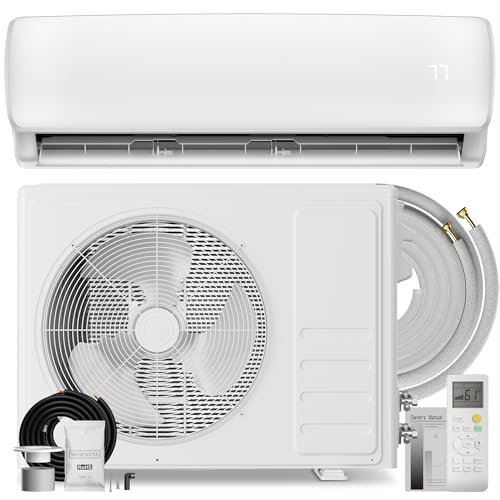
MEPTY 12000BTU Mini Split AC/Heating System, 19 SEER2 Energy Efficient Mini Split Air Conditioner with Heat Pump, 110V Cools Up to 750sq.ft, Ductless Inverter AC Unit with Pre-Charged Condenser
⭐Advanced Energy Saving: Advanced inverter technology with leading 19 SEER2 rating delivers superior performance through ensuring that the…
As an affiliate, we earn on qualifying purchases.
As an affiliate, we earn on qualifying purchases.
Conclusion
Just like Icarus flying too close to the sun, oversizing your mini split can lead to unforeseen problems. Don’t let your comfort soar out of control or plummet into inefficiency. Take the time to size your system correctly, and you’ll enjoy a cool, cost-effective escape from the heat—much like Odysseus steering safely home. Remember, the right fit ensures smooth sailing all summer long, so don’t rush your decision; your comfort depends on it.

BACOENG 3.6CFM AC Vacuum Pump and Gauge Set – Home Mini Split Vacuum Pump Kit for R410A Refrigerants – w/ R410a Mini Split Adapter & 3x5FT Hoses
【𝐌𝐚𝐧𝐢𝐟𝐨𝐥𝐝 𝐆𝐚𝐮𝐠𝐞 𝐒𝐞𝐭】3-way Manifolds with Sight-glass & 1/4" SAE fittings anodized aluminum block body, oversized sight-glass for easy…
As an affiliate, we earn on qualifying purchases.
As an affiliate, we earn on qualifying purchases.

GDGJWL 6PCS Pipe Insulation Cutting Guide, Molded Foam Pipe Cutter Tool with 15MM-53MM Insulation Cutting Fixture for Home/Industrial/Commercial Plumbing + Bonus 59" Tape Measure (Green)
① Precision Multi-Size Cutting System Professional-grade pipe insulation cutting guide kit includes 6 ABS-molded cutters (15MM/22MM/28MM/40MM/46MM/53MM), solving diameter…
As an affiliate, we earn on qualifying purchases.
As an affiliate, we earn on qualifying purchases.