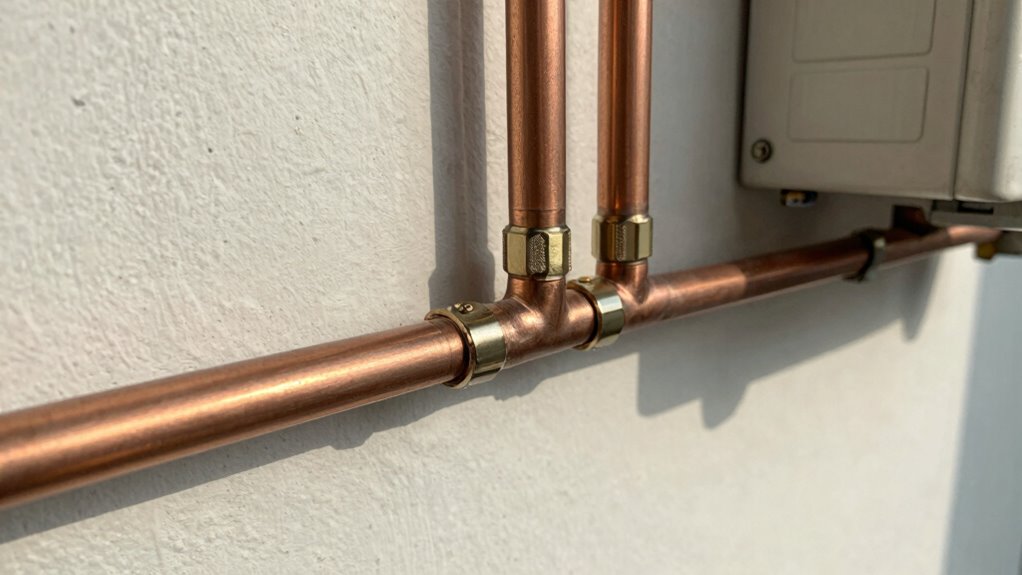

Your mini split’s efficiency largely depends on the size, proper installation, and maintenance of its refrigerant lines. If the lines are too long, bent incorrectly, or undersized, refrigerant flow gets restricted, reducing performance. Proper insulation keeps heat transfer in check, saving energy. Regular inspections for leaks and damage help maintain ideal refrigerant levels. Paying attention to these details ensures your system runs smoothly and efficiently—more tips on how to maximize your setup are just ahead.

Prime made for students and young adults
- Fast, free delivery for dorm and study essentials
- Prime Video and Amazon Music included
- Member-only deals
Key Takeaways
- Proper line sizing and installation prevent pressure drops that can reduce system efficiency.
- Insulation of refrigerant lines minimizes heat transfer and energy loss.
- Correct refrigerant charge ensures optimal heat exchange and system performance.
- Regular inspection for leaks and damage maintains refrigerant charge and efficiency.
- Properly configured and maintained lines support efficient refrigerant flow and system operation.
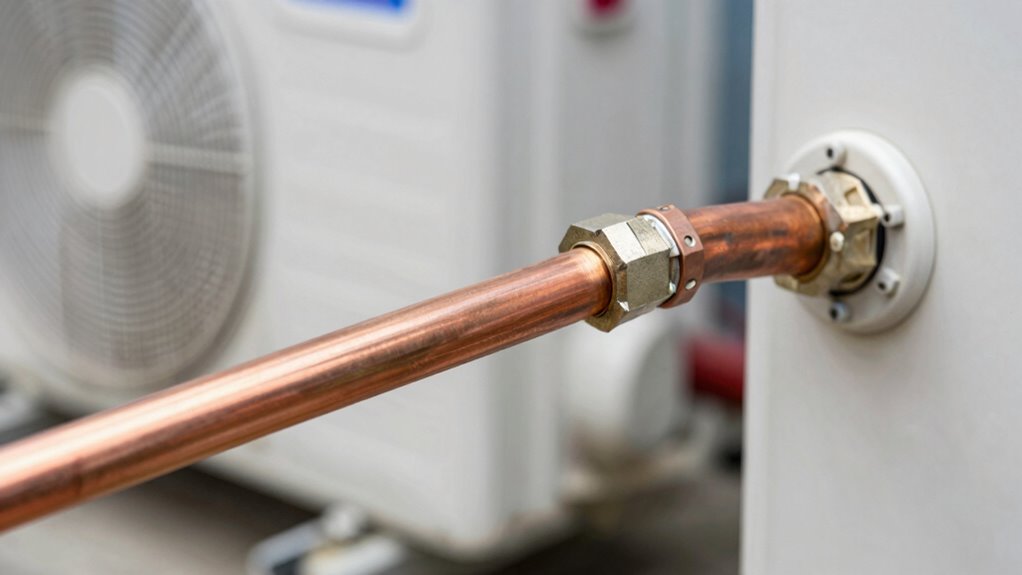
Understanding the details of refrigerant lines is fundamental for maximizing your mini split’s efficiency. The refrigerant line set, which includes the suction line, liquid line, and sometimes a drain line, plays a critical role in how well your system performs. If these lines are improperly installed or maintained, your mini split won’t operate at peak efficiency, leading to higher energy bills and reduced cooling or heating performance. One key component you should pay close attention to is the evaporator coil, which is typically located inside your indoor unit. The evaporator coil is responsible for absorbing heat from the indoor air, and its performance depends heavily on having the correct refrigerant charge circulating through the coil. When the refrigerant charge is too low or too high, it hampers heat exchange, causes the system to work harder, and reduces overall efficiency.
Proper refrigerant line sizing and installation are essential to maintaining the right refrigerant charge. If the lines are too long or have unnecessary bends, it can cause pressure drops that affect how much refrigerant reaches the evaporator coil. This, in turn, prevents the coil from functioning at its best, leading to uneven cooling or heating and increased energy consumption. Conversely, undersized lines can restrict refrigerant flow, also impairing system performance. To avoid these issues, you should make certain that the refrigerant lines are installed according to the manufacturer’s specifications and that they are properly insulated to prevent heat transfer and energy loss. Additionally, refrigerant line maintenance is crucial to prevent leaks and ensure optimal performance over time. Proper line insulation can also help maintain consistent temperatures and improve efficiency. Ensuring correct refrigerant charge levels through regular checks can significantly impact the longevity and performance of your system. Regularly inspecting the refrigerant lines for signs of damage or corrosion can help prevent leaks that diminish system efficiency. Properly charged refrigerant ensures the evaporator coil can absorb and release heat efficiently, which directly affects your system’s energy use and comfort level. Additionally, understanding the refrigerant circuit layout can help troubleshoot issues more effectively. If necessary, a professional technician can recharge the refrigerant to the correct level, ensuring the system operates smoothly and efficiently.
As an affiliate, we earn on qualifying purchases.
Frequently Asked Questions
How Does Refrigerant Line Insulation Impact Mini Split Performance?
Refrigerant line insulation boosts your mini split’s performance by reducing heat transfer, which helps maintain ideal refrigerant temperatures. Thermal insulation prevents energy loss, making your system more efficient and saving you money on energy bills. Additionally, proper insulation enhances line durability by protecting against environmental elements like moisture and temperature fluctuations. This ensures your system operates smoothly, lasts longer, and maintains consistent cooling or heating performance.
What Is the Ideal Refrigerant Line Diameter for Efficiency?
Choose a refrigerant line diameter that balances refrigerant flow and line durability for maximum efficiency. Typically, a 1/4 inch line supports sufficient refrigerant flow while maintaining durability, preventing pressure drops and ensuring smooth operation. Larger diameters, like 3/8 inch, improve flow but may be less durable and harder to install. Small sizes, such as 1/8 inch, restrict flow and reduce efficiency. Match the line size to your system’s needs for the best results.
How Often Should Refrigerant Lines Be Inspected or Maintained?
You should inspect and maintain your refrigerant lines at least once a year to guarantee ideal system pressure and prevent leaks. During inspections, check pipe insulation for damage or wear, as it helps maintain proper pressure and efficiency. Regular maintenance keeps the refrigerant lines in good condition, reduces energy costs, and prolongs your mini split’s lifespan, ensuring consistent cooling or heating performance year-round.
Can Refrigerant Line Length Affect Cooling Capacity?
Yes, refrigerant line length can affect cooling capacity. Longer lines increase refrigerant pressure, which may reduce efficiency and cooling performance. Proper line routing ensures minimal pressure loss and ideal refrigerant flow. If the lines are too long or poorly routed, the system struggles to maintain the desired temperature, leading to decreased cooling effectiveness. To keep your mini split running efficiently, ensure the refrigerant lines are appropriately sized and correctly routed.
What Are Common Signs of Refrigerant Line Leaks?
Imagine your mini split as a race car, relying on perfect pressure to win. Signs of refrigerant line leaks include inconsistent cooling, hissing sounds, or ice buildup on the lines. You might notice reduced refrigerant pressure, causing the system to struggle. For accurate leak detection, use specialized tools to identify drops in pressure or oily spots around fittings, helping you catch leaks early before efficiency drops considerably.
As an affiliate, we earn on qualifying purchases.
Conclusion
In the end, paying attention to refrigerant line details can make a big difference in your mini split’s efficiency. Ensuring proper insulation, correct sizing, and avoiding unnecessary bends helps your system run smoothly and saves you money. Remember, “A stitch in time saves nine,” so taking these small steps now can prevent bigger issues later. Keep your lines in top shape, and your cooling or heating stays efficient all year round.
refrigerant leak detection tools for mini split
As an affiliate, we earn on qualifying purchases.
As an affiliate, we earn on qualifying purchases.
mini split refrigerant charging kit
As an affiliate, we earn on qualifying purchases.
As an affiliate, we earn on qualifying purchases.
Fall Picks
fall essentials
As an affiliate, we earn on qualifying purchases.