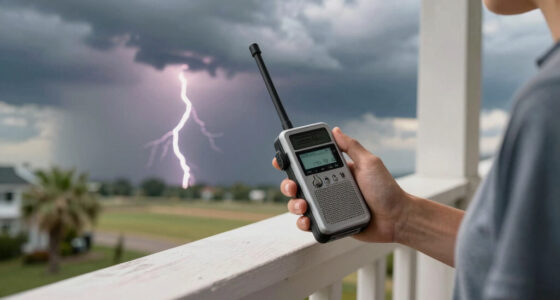

Safety drills often fail when you neglect clear and consistent communication. Without precise instructions, your team becomes confused, hesitant, or even panicked during emergencies. Vague messages can lead to mistakes, delays, and dangerous situations. Effective communication guarantees everyone understands their roles and responds quickly. If you keep communication at the forefront, your safety drills will be more effective, and your team will be better prepared in real emergencies. Keep going to find out how to master this vital rule.

Prime made for students and young adults
- Fast, free delivery for dorm and study essentials
- Prime Video and Amazon Music included
- Member-only deals
Key Takeaways
- Lack of clear, consistent communication causes confusion and delays during safety drills.
- Ambiguous instructions lead to hesitation and improper responses in emergencies.
- Inadequate communication protocols result in missed or ineffective safety procedures.
- Poor communication fosters panic, reducing team coordination and decision-making efficiency.
- Without reliable messaging, safety drills fail to identify or address critical response gaps.

Safety drills often fall short because they overlook one simple but vital rule: clear, consistent communication. Without it, even the most well-designed drills can become ineffective, leaving your team unprepared in actual emergencies. Effective communication is the backbone of emergency preparedness and risk management, ensuring everyone knows their roles and responds swiftly. When instructions are unclear or inconsistent, confusion spreads, panic sets in, and the whole purpose of the drill diminishes. You need to establish communication channels that everyone understands and trusts before a real crisis hits.
Clear, consistent communication is vital for effective safety drills and emergency response success.
Imagine you’re participating in a safety drill, and suddenly, instructions are vague or contradictory. You might hesitate, unsure whether to evacuate, shelter in place, or follow a different procedure. This ambiguity can cause delays, missteps, or even dangerous actions. That’s why, during emergency preparedness planning, you must emphasize clear messaging. Test and refine communication methods—whether through alarms, public address systems, or digital alerts—to ensure they’re effective and accessible to everyone. When communication lines are open and unambiguous, risk management becomes smoother because responses are coordinated and confident.
Inadequate communication during drills also hampers the identification of gaps in your safety plans. If team members aren’t sure what to do or where to go, you won’t know which parts of your emergency procedures need improvement. Regularly practicing communication protocols helps you recognize and fix these issues before a real crisis occurs. It’s not just about sounding alarms; it’s about delivering precise instructions that guide actions and reduce chaos. You should also assign specific roles for communication—who relays information, who responds to questions, and who manages updates—so everyone understands their responsibilities.
Furthermore, consistent communication fosters a culture of safety. When team members trust that messages are clear and reliable, they’re more likely to follow procedures instinctively. This reduces the chances of panic and ensures a more organized response. Your risk management strategies hinge on this trust; without it, you risk escalation and greater harm. Developing effective communication strategies is essential for continuous improvement and safety compliance. Moreover, incorporating training on communication protocols into your safety drills ensures everyone remains prepared for real emergencies and understands how to act under pressure. Additionally, regular evaluation of communication effectiveness helps keep your protocols current and responsive to potential challenges. Building a culture of safety communication can significantly improve response times and confidence during actual emergencies.
In the end, the success of safety drills depends on your ability to communicate clearly and consistently. It’s a simple rule, but its impact is profound—saving lives, minimizing damage, and strengthening your overall risk management approach. If you overlook this vital element, your emergency preparedness efforts are incomplete, leaving everyone vulnerable when it matters most.
Popular right now

Roborock Q7 M5+ Robot Vacuum and Mop with Self-Emptying Dock

Dyson V10 Konical Cordless Stick Vacuum

Vitamix Propel Series 510 Blender, 3 Programs, Slate
As an affiliate, we earn on qualifying purchases.
Frequently Asked Questions
How Often Should Safety Drills Be Conducted for Maximum Effectiveness?
You should conduct safety drills at least quarterly to guarantee maximum effectiveness. Regular practice enhances your emergency preparedness, allowing you to respond swiftly and confidently during real incidents. Consistent drills also help identify risk mitigation gaps, so you can address them proactively. By maintaining a routine, you reinforce safety procedures and keep everyone alert, ultimately creating a safer environment where preparedness becomes second nature during emergencies.
What Is the One Simple Rule That Ensures Safety Drill Success?
The one simple rule that guarantees safety drill success is prioritizing risk awareness and emergency preparedness at every step. You must actively engage everyone in understanding potential hazards and their roles during an emergency. When you foster a culture of vigilance, safety drills become more effective because participants internalize procedures and stay alert. Coincidentally, this focus on preparedness ensures that when real emergencies happen, everyone responds confidently and swiftly, minimizing risks.
How Can Organizations Measure the Success of Their Safety Drills?
You can measure your safety drills’ success by tracking employee engagement and observing how well safety procedures are followed during the drills. Conduct post-drill surveys to gauge safety culture and gather feedback. Analyze response times, adherence to protocols, and incident reports to identify areas for improvement. Regularly reviewing these metrics helps guarantee your organization maintains a strong safety culture, encouraging employees to stay alert and prepared in real emergencies.
What Common Mistakes Do Companies Make During Safety Drills?
You often make the mistake of neglecting thorough emergency preparedness and employee training during safety drills. This oversight leads to unprepared staff who might panic or act inappropriately during real emergencies. To improve, guarantee your drills are realistic, and focus on exhaustive training so employees know their roles. Regular practice reinforces safety procedures, builds confidence, and helps identify gaps, making your safety drills truly effective and responsive to actual crises.
Who Should Be Responsible for Overseeing Safety Drill Procedures?
You should assign safety drill oversight to someone with a strong safety culture and leadership accountability. This person guarantees procedures are clear, practiced regularly, and improvements are made. By doing so, you foster a proactive environment where safety becomes second nature. A dedicated leader keeps everyone engaged, emphasizes importance, and ensures drills are effective, ultimately creating a safer workplace where safety isn’t just a policy but a core value everyone upholds.
Conclusion
Without that one simple rule, your safety drill becomes just another empty echo in the hallway. Imagine the alarm blaring, but everyone frozen, eyes darting in confusion, as chaos quietly creeps in. That rule is the anchor that keeps everyone grounded, guiding their actions like a lighthouse through stormy seas. When you ignore it, you’re leaving your safety to chance, risking the darkness of uncertainty swallowing your team. Remember, clarity and discipline light the path to real preparedness.