

Choosing between flat and satin paint sheens greatly impacts your space’s appearance and durability. Flat finishes hide imperfections and create a soft, matte look, perfect for ceilings and low-traffic walls. Satin offers a subtle sheen, reflects light, and stands up better to cleaning, making it ideal for kitchens and bathrooms. Understanding these differences helps you pick the right sheen for your project. Stay with us to explore more about how each sheen can transform your space.

Prime made for students and young adults
- Fast, free delivery for dorm and study essentials
- Prime Video and Amazon Music included
- Member-only deals
Key Takeaways
- Flat paint minimizes glare and hides surface imperfections, ideal for ceilings and low-traffic walls.
- Satin finishes reflect more light, adding subtle sheen and brightness, suitable for kitchens and bathrooms.
- Higher sheens like satin are more durable, washable, and easier to clean, making them better for high-traffic areas.
- Flat paints require less maintenance but may show surface flaws; satin sheens provide a balance of appearance and durability.
- Sheen choice influences color perception, room ambiance, and environmental impact, affecting long-term aesthetic and eco-friendliness.
As an affiliate, we earn on qualifying purchases.
What Is Paint Sheen and Why It Matters

Have you ever wondered why different paint finishes look and feel so varied? It all comes down to paint sheen, which affects how surfaces reflect light and how colors appear. Choosing the right sheen can enhance your room’s color coordination, making walls look vibrant or subtle as desired. It also impacts the environmental footprint of your project; some finishes require fewer coats, reducing VOC emissions and waste. Satin or semi-gloss paints, for example, often need fewer layers, which means less environmental impact over time. Understanding paint sheen helps you select finishes that complement your space’s style while being eco-friendly. Whether you want a soft, matte look or a shiny surface that’s easy to clean, knowing what paint sheen is and why it matters is essential to achieving your perfect finish. Additionally, color accuracy in paint selection plays a role in how true-to-life your walls will appear under different lighting conditions.
As an affiliate, we earn on qualifying purchases.
When Should You Use Flat Paint? Key Tips

Choosing the right paint sheen depends on how and where you’ll use it, and flat paint is often the best option for certain spaces. Use flat paint in areas where you want to minimize glare and hide imperfections, like ceilings or low-traffic walls. It provides excellent color consistency, guaranteeing a uniform look without sheen variations. Flat finishes also require less sheen maintenance, making them ideal for rooms that don’t need frequent cleaning or touch-ups. Keep in mind, flat paint can be more prone to scuffs and stains, so avoid high-traffic or moisture-prone areas. When applying flat paint, ensure proper surface prep to maintain a smooth, even appearance. This finish is perfect for creating a soft, matte backdrop that emphasizes color and texture without distractions. Simple systems can help you maintain flat painted surfaces more easily and keep your walls looking fresh.
As an affiliate, we earn on qualifying purchases.
Why Choose Satin Finish? Benefits & Best Uses

A satin finish strikes a balance between the flat and high-gloss sheens, making it a versatile choice for many spaces. It offers a smooth, subtle sheen that enhances the aesthetic appeal without being overly reflective. Satin finishes also provide a variety of texture options, allowing you to choose a surface that complements your style. This finish is durable and easy to clean, making it ideal for areas with moderate traffic or moisture, like kitchens and bathrooms.
As an affiliate, we earn on qualifying purchases.
Comparing Flat and Satin: Visual Differences

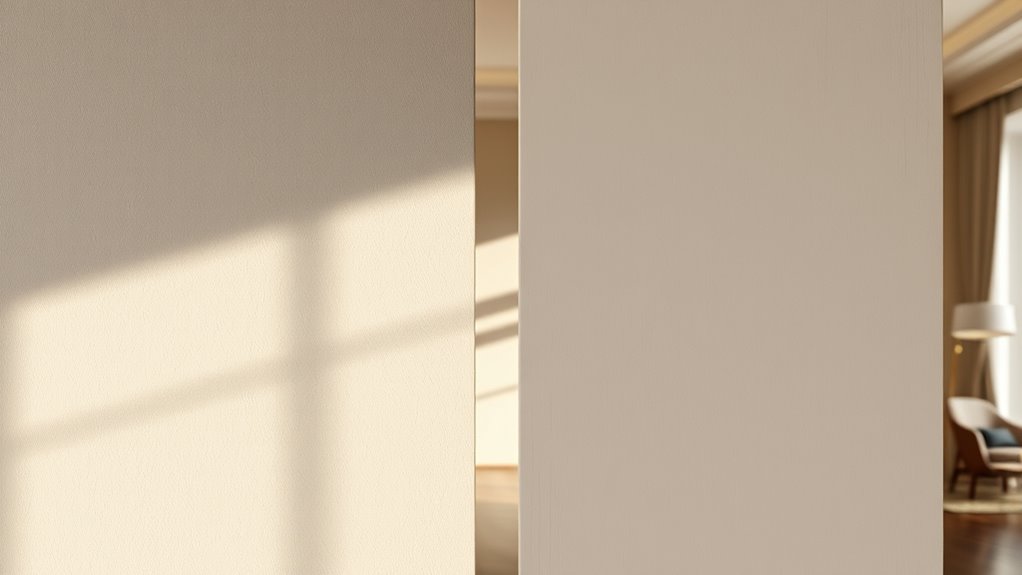
When comparing flat and satin finishes, you’ll notice a difference in texture and how light interacts with the surface. Flat paints have a smooth, matte appearance that minimizes reflections, while satin finishes reflect more light, adding a slight sheen. Understanding these visual differences helps you choose the right paint for your space’s look and feel. Additionally, knowing the market reputation of different finishes can guide you toward durable and aesthetically pleasing choices.
Visual Texture Contrast
Visual texture contrast plays a significant role in how you perceive different paint finishes, especially when comparing flat and satin surfaces. The textural contrast influences the visual impact of a room, making surfaces appear more or less prominent. Flat finishes tend to diffuse light, creating a smooth, matte look that minimizes imperfections. Satin finishes, with their slight sheen, enhance the surface’s texture, adding subtle depth. To maximize visual impact, consider these points:
- Flat paint minimizes textural differences, creating a uniform appearance.
- Satin paint highlights surface details, emphasizing textural contrast.
- The choice of sheen can dramatically alter the room’s overall visual texture and feel.
- Incorporating energy-efficient paints can further enhance the durability and sustainability of your interior surfaces.
Understanding these differences helps you choose the right finish for the desired visual effect.
Light Reflection Variance
Have you ever noticed how different paint sheens reflect light in your space? Flat paints absorb more light, reducing glare and creating a softer, more subdued look. This quality can also influence the perceived color depth and overall ambiance of a room. This makes them ideal for areas with bright ambient lighting or where you want to minimize reflections that can cause eye strain. Satin finishes, on the other hand, reflect more light, adding a subtle sheen that can brighten a room and highlight textures. However, this increased light reflection can also lead to glare, especially in well-lit spaces. If you’re aiming for a calm, glare-free environment, flat paint is your best choice. For spaces needing a bit more brightness and dimension, satin offers a gentle glow without overwhelming reflections. Understanding these differences helps you choose the right sheen for your desired visual effect.
How Sheen Level Affects Durability & Cleaning

Higher sheens generally offer greater durability and are easier to clean, making them ideal for high-traffic or frequently used areas. Satin and semi-gloss paints excel in stain resistance and require less maintenance over time. They are less likely to absorb dirt and grime, simplifying cleaning routines. To maximize durability and stain resistance, consider these points:
- Choose a higher sheen for kitchens, bathrooms, or hallways where spills and fingerprints are common.
- Regular cleaning with gentle products helps preserve the paint’s finish.
- Keep in mind that higher sheens can highlight surface imperfections, so surface prep is essential.
- Using trusted local services can help ensure proper surface preparation and application for optimal results.
Tips for Applying Flat and Satin Paints Flawlessly

Applying flat and satin paints smoothly requires attention to surface preparation and technique. Start by cleaning the surface thoroughly to ensure proper adhesion. Choose the right primer; a high-quality primer helps with color matching and prevents uneven sheen. When applying, use a high-quality brush or roller suited for flat or satin finishes to achieve a smooth, even coat. Apply thin layers, allowing each to dry completely before adding another. Be mindful of overlaps to avoid streaks or marks. For color matching, test small areas first, especially when covering darker shades. Proper preparation, including sanding rough patches and priming correctly, minimizes imperfections. Additionally, understanding the paint sheen differences can help you select the best finish for your project. With patience and attention to detail, you’ll achieve a flawless finish that enhances your space’s overall look.
Common Mistakes When Picking Flat or Satin Sheen

Choosing the right sheen for your space is essential, but many people make common mistakes that can affect the final look and durability. One major error is relying on finish selection based solely on appearance rather than understanding the function. Sheen misconceptions often lead to choosing a finish that doesn’t suit the room’s needs. To avoid this, consider these points:
- Assuming flat finishes hide flaws better—satin can be be more forgiving in high-traffic areas.
- Choosing sheen based on room size alone—smaller rooms benefit from flat for a cozy feel, while larger spaces may need satin for brightness.
- Ignoring durability—satin finishes are more washable, ideal for kitchens and bathrooms.
- Overlooking indoor air quality considerations—some sheens can trap more dust or be easier to clean, impacting overall air cleanliness.
Making informed decisions helps prevent costly repainting and ensures your space looks great and lasts longer.
Budgeting for Paint: Cost Factors to Know
Ever wondered what factors influence the cost of your paint project? Several key elements can affect your overall budget. First, your choice of paint color trends impacts pricing; popular or custom colors often cost more. Eco friendly paints tend to be pricier upfront but offer long-term savings and environmental benefits. The size of your space also matters—more square footage means more paint needed, increasing costs. Quality plays a role too; higher-quality paints with better coverage or durability can save money on additional coats or repairs later. Don’t forget to factor in supplies like brushes, rollers, and primer. Additionally, understanding credit scores can help you secure better financing options if you decide to take out a loan for your project. By understanding these cost factors, you can plan effectively, ensuring your project stays within budget while achieving the desired look and performance.
How to Choose the Right Sheen for Your Space

Selecting the right sheen for your space depends on how you want the room to look and perform. Consider the overall style, lighting, and mood you aim to create. To make an informed choice, keep these points in mind:
Choosing the right sheen enhances your space’s style, lighting, and mood.
- Color coordination: Sheen affects how colors appear—satin highlights depth, while flat finishes soften hues.
- Environmental impact: Opt for low-VOC or eco-friendly paints, especially in high-traffic or indoor areas, to reduce fumes and pollution.
- Room function: High-sheen finishes like satin are durable and easy to clean, ideal for kitchens and bathrooms. Flat finishes work well in bedrooms or ceilings for a calm, matte look.
Balancing aesthetics with environmental considerations helps you select the perfect sheen for your space.
Frequently Asked Questions
How Does Lighting Affect the Appearance of Flat Versus Satin Finishes?
Lighting substantially impacts how flat and satin finishes look. In bright light, satin’s gloss reflection makes colors pop and highlights surface details, giving a vibrant appearance. Flat finishes, however, absorb light, reducing reflections and making colors appear softer and more muted. So, when choosing between them, consider your lighting conditions—bright spaces enhance satin’s shimmer, while flat finishes work well in softer, diffused lighting.
Can Flat Paint Be Easily Touched up Without Visible Differences?
Touching up flat paint is like trying to hide a whisper; it’s tricky and often leaves a sheen mismatch. You might find it challenging because flat paint doesn’t reflect light evenly, making touch-up spots stand out. The challenge of touch-up challenges lies in blending seamlessly, as even a slight sheen difference can be noticeable. So, if you want a flawless finish, consider the potential difficulty of touch-ups with flat paint.
Is Satin Finish Suitable for High-Humidity Areas Like Bathrooms?
Yes, satin finish is suitable for high-humidity areas like bathrooms. It offers excellent bathroom durability and moisture resistance, making it a popular choice. You’ll find that satin’s slight sheen helps resist mold and mildew while being easier to clean than flat paint. Just make certain you choose a high-quality, mold-resistant formula for the best bathroom durability, keeping your space looking fresh and protected from moisture damage.
How Long Does Each Finish Typically Last Before Needing Repainting?
You can expect flat finishes to last around 5-7 years, while satin finishes often hold up for 7-10 years with proper care. The durability comparison highlights satin’s resilience, making it ideal for areas with moisture or frequent contact. Maintenance considerations also play a role; satin’s smooth surface is easier to clean, helping your walls stay fresh longer. Regular touch-ups can extend your paint’s lifespan, keeping your space looking vibrant.
Are There Environmental Impacts Associated With Flat or Satin Paints?
You should know that both flat and satin paints can impact the environment, mainly through VOC emissions. To reduce this, look for eco-friendly options with low or zero VOC content. Flat paints often have fewer emissions, making them a better choice for indoor air quality. Satin finishes may contain more VOCs, so choosing low-VOC or no-VOC paints helps protect your health and the environment.
Conclusion
Choosing the right paint sheen can transform your space, balancing beauty and practicality. Do you want a surface that hides imperfections or one that’s easy to clean? By understanding the differences between flat and satin finishes, you’ll make smarter decisions that suit your needs and style. So, take your time, consider your space, and select the sheen that’ll make your project shine—because your walls deserve the perfect finish.
Fall Picks
fall essentials
As an affiliate, we earn on qualifying purchases.