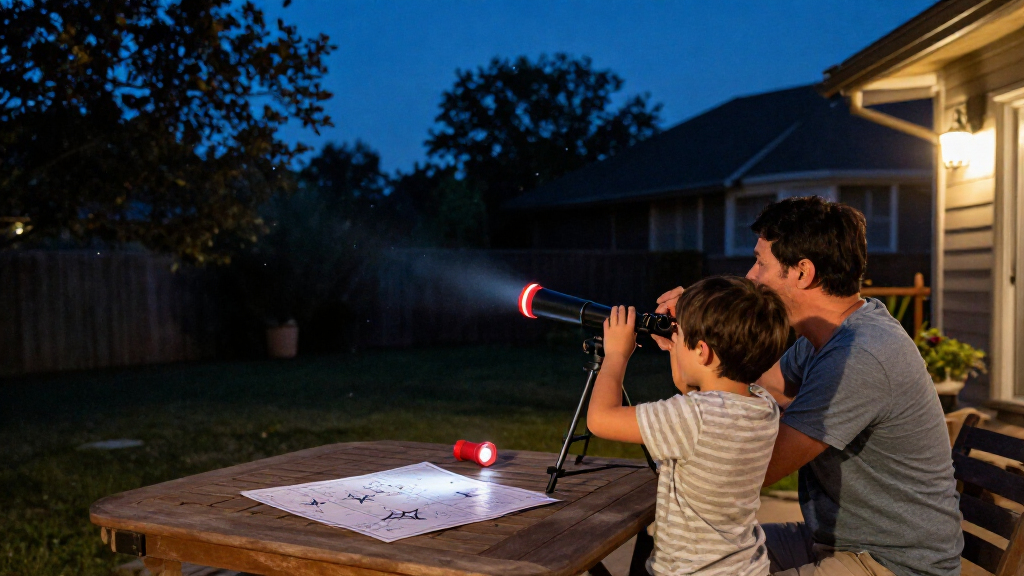

The best astronomy book for most kids is Knowledge Encyclopedia: Space!, which pairs broad coverage with visual explanations suited to curious readers. For a younger child, National Geographic Little Kids First Big Book of Space offers an accessible starting point, while 50 Things to See with a Telescope is a stronger fit for families ready to observe the night sky together. The main tradeoff is between picture-rich reference books, early readers, and practical guides that ask kids to take part. Age, reading confidence, and whether the book will be read indoors or used outside matter as much as subject coverage. Read on for the full comparison and advice on matching a book to your child.

Prime made for students and young adults
- Fast, free delivery for dorm and study essentials
- Prime Video and Amazon Music included
- Member-only deals
Key Takeaways
- Knowledge Encyclopedia: Space! stands out as the broadest all-around choice; telescope guides serve a different purpose by turning space interest into an observing activity.
- The lineup spans very different reading stages, from the early-reader format of Space: Planets, Moons, Stars, and More! to more detailed reference books.
- Several picks focus on visual browsing, but a large image or fold-out page does not replace clear explanations when a child wants to understand how space works.
- 50 Things to See with a Telescope and 110 Night Sky Treasures are better suited to families seeking practical observing ideas than children who mainly want an indoor read.
- The comparison suggests choosing by intended use first: a read-aloud, an independent reader, a reference shelf, and a stargazing companion have different strengths.
| Knowledge Encyclopedia: Space! The Universe as You’ve Never Seen It Before |  | Best for Browsing Together | Format: Encyclopedia | Subject: Space and the universe | Intended audience: Children | VIEW LATEST PRICE | See Our Full Breakdown |
| First Space Encyclopedia: A Reference Guide to Our Galaxy and Beyond |  | Best for First-Time Space Browsers | Format: Children’s reference encyclopedia | Series: DK First Reference | Subject: Space | VIEW LATEST PRICE | See Our Full Breakdown |
| Space: A Visual Encyclopedia of the Universe |  | Best for Visual Browsers | Format: Visual encyclopedia | Subject: Space and the universe | Intended audience: Children | VIEW LATEST PRICE | See Our Full Breakdown |
| National Geographic Kids Space Encyclopedia, 2nd Edition |  | Best for Solar-System Coverage | Edition: 2nd Edition | Series: National Geographic Kids Encyclopedias | Format: Illustrated encyclopedia | VIEW LATEST PRICE | See Our Full Breakdown |
| Space: Planets, Moons, Stars, and More! (Step into Reading, Step 3) |  | Best for Early Reading Practice | Series: Step into Reading | Step: Step 3 | Format: Illustrated reader | VIEW LATEST PRICE | See Our Full Breakdown |
| 50 Things to See with a Telescope: A Constellation-Focused Approach for Kids |  | Best for Constellation-Based Stargazing | Audience: Kids | Observing targets: 50 | Approach: Constellation-focused | VIEW LATEST PRICE | See Our Full Breakdown |
| 110 Night Sky Treasures to See with a Telescope: A Stargazing Guide for Kids and Beginners |  | Best for Building a Telescope Target List | Audience: Kids and beginners | Observing targets: 110 | Topics: Planets, constellations, and distant galaxies | VIEW LATEST PRICE | See Our Full Breakdown |
| Big Book of Big Stars & Planets: A Fold-Out Picture Book About Space |  | Best for Preschool Space Introductions | Format: Fold-out picture book | Recommended age: 4–7 years | Topics: Space, the solar system, and galaxies | VIEW LATEST PRICE | See Our Full Breakdown |
| The Mysteries of the Universe: Discover the Best-Kept Secrets of Space |  | Best for Broad Space-Themed Browsing | Series: DK Children’s Anthologies | Topic: Space | Book type: Children’s anthology | VIEW LATEST PRICE | See Our Full Breakdown |
| Planets (National Geographic Kids Readers, Level 2) |  | Best for Early Readers Focused on Planets | Series: National Geographic Kids Readers | Level: 2 | Topic: Planets | VIEW LATEST PRICE | See Our Full Breakdown |
| Astronomy Activity Book for Kids: 100+ Fun Ways to Learn About Space and Stargazing |  | Best for Hands-On Learners | Activity count: 100+ | Subject: Space | Additional topic: Stargazing | VIEW LATEST PRICE | See Our Full Breakdown |
| Star Finder!: A Step-by-Step Guide to the Night Sky |  | Best for Guided Stargazing | Subject: Night sky | Focus: Finding and identifying objects | Instruction style: Step-by-step guide | VIEW LATEST PRICE | See Our Full Breakdown |
| Astronomy for Curious Kids: An Illustrated Introduction to the Solar System, Our Galaxy, Space Travel, and More |  | Best Broad Illustrated Introduction | Subject: Astronomy | Presentation: Illustrated introduction | Intended audience: Kids | VIEW LATEST PRICE | See Our Full Breakdown |
| There’s No Place Like Space! All About Our Solar System |  | Best for a Solar-System-Focused Read | Subject: Solar system | Purpose: Educational | Intended audience: Not specified in supplied description | VIEW LATEST PRICE | See Our Full Breakdown |
| National Geographic Little Kids First Big Book of Space |  | Best for Young Space Beginners | Subject: Space | Intended audience: Little kids | Series/title positioning: First Big Book | VIEW LATEST PRICE | See Our Full Breakdown |
| astronomy books for kid | Format | Intended audience | Subject | ASIN |
|---|---|---|---|---|
| Knowledge Encyclopedia: Space! | Encyclopedia | Children | Space and the universe | 0744028922 |
| First Space Encyclopedia: A Re | Children’s reference encyclopedia | Children | Space | 1465443436 |
| Space: A Visual Encyclopedia o | Visual encyclopedia | Children | Space and the universe | 1465496858 |
| National Geographic Kids Space | Illustrated encyclopedia | Kids | Space | 1426338562 |
| Space: Planets | Illustrated reader | Young readers | Space | 0553523163 |
| 50 Things to See with a Telesc | Not specified in supplied product data | — | — | — |
| 110 Night Sky Treasures to See | Not specified in supplied product data | — | — | — |
| Big Book of Big Stars & Planet | Fold-out picture book | Young children | — | — |
| The Mysteries of the Universe: | Not specified in supplied product data | — | — | — |
| Planets | Not specified in supplied product data | — | — | — |
| Astronomy Activity Book for Ki | Activity book | Kids | Space | 0593435486 |
| Star Finder!: A Step-by-Step G | — | Kids | Night sky | 1465464751 |
| Astronomy for Curious Kids: An | — | Kids | Astronomy | 1398830976 |
| There’s No Place Like Space! A | Book | Not specified in supplied description | Solar system | 0679891153 |
| National Geographic Little Kid | Book | Little kids | Space | 1426310145 |
More Details on Our Top Picks
Knowledge Encyclopedia: Space! The Universe as You’ve Never Seen It Before
I’d choose this for a child who likes to follow a question from one space topic to another rather than read a leveled story straight through. Its encyclopedia format gives it a different purpose from Space: Planets, Moons, Stars, and More!, which is aimed at children practicing early reading. Here, the appeal is having a broad space reference to browse with an adult or revisit as interests grow. The title signals a focus on the universe, but the supplied product details don’t confirm particular topics, illustrations, age range, or layout, so I wouldn’t buy it expecting specific features beyond an encyclopedia about space. That lack of detail makes it harder to match to a child’s reading level, and a reference book may be less inviting for someone who wants a short, guided introduction.
Pros:- Encyclopedia format suits looking up questions and revisiting topics
- Space and the universe provide a broad subject focus
- Can support shared browsing between a child and an adult
Cons:- Product details do not specify age range or reading difficulty
- No supplied information confirms its illustrations, layout, or individual topics
- Reference format may feel less guided than the Step 3 reader
Best for: Curious children who enjoy browsing space reference books with an adult and jumping between questions
Not ideal for: Beginning readers who need a clearly stated reading level or children looking for a short, sequential story
- Format:Encyclopedia
- Subject:Space and the universe
- Intended audience:Children
- Title:Knowledge Encyclopedia: Space! The Universe as You’ve Never Seen It Before
- ASIN:0744028922
- Series:Not provided
Our verdict“Pick this as a browse-together space reference if your child likes jumping between questions, but choose the Step 3 reader for supported early reading.”
First Space Encyclopedia: A Reference Guide to Our Galaxy and Beyond
The DK First Reference label makes this the clearest fit here for a child just starting to explore space topics through a reference book. Its stated scope runs from our galaxy to the wider universe, so it can serve a child whose questions have moved beyond individual planets. Compared with National Geographic Kids Space Encyclopedia, 2nd Edition, this title’s advantage is a specifically named first-reference series; the National Geographic book is described as covering the solar system and beyond. The available details don’t identify reading level, page count, or visual features, so I can’t tell how independently a child can use it. Families wanting a leveled reading path may prefer the Step 3 reader, while experienced young space enthusiasts may want more detail than a first reference is meant to provide.
Pros:- Part of the DK First Reference series
- Explicitly covers the galaxy and the wider universe
- Reference format invites looking up topics rather than reading in sequence
Cons:- No reading level or age guidance is provided
- The supplied details do not specify illustrations or organization
- May be less suited to reading practice than the Step 3 space reader
Best for: Children beginning to explore space encyclopedias, especially those whose questions range from the galaxy to the universe
Not ideal for: Independent early readers needing a stated reading level or advanced young astronomers seeking confirmed depth and detail
- Format:Children’s reference encyclopedia
- Series:DK First Reference
- Subject:Space
- Coverage:Our galaxy and beyond
- Intended audience:Children
- Title:First Space Encyclopedia: A Reference Guide to Our Galaxy and Beyond
- ASIN:1465443436
Our verdict“Choose this as a first space reference for a child ready to browse beyond the solar system, rather than as a leveled reading book.”
Space: A Visual Encyclopedia of the Universe
I’d put this on the shortlist for children who are drawn to space through images and want an encyclopedia rather than a reading-level exercise. The product description identifies it as a visual encyclopedia about space and the universe, giving it a distinct angle from Space: Planets, Moons, Stars, and More!, whose Step 3 designation makes it the more clearly defined choice for beginning readers. The tradeoff is that “visual” is the only specific presentation detail supplied: there’s no information about image types, topic breakdown, age range, or text complexity. That makes it difficult to judge whether a child can browse it alone or will need help. I’d favor a title with clearer series and coverage information if predictability matters more than a visual-reference approach.
Pros:- Visual encyclopedia format is suited to image-led browsing
- Covers space and the universe
- Offers a reference-style alternative to a leveled reader
Cons:- No reading level or age range is specified
- The supplied data does not describe its images or layout
- Less clearly matched to independent early reading than the Step 3 reader
Best for: Children who are attracted to visual reference books and want to explore space and the universe
Not ideal for: Caregivers who need confirmed reading-level guidance, specific topic coverage, or details about the book’s visual content
- Format:Visual encyclopedia
- Subject:Space and the universe
- Intended audience:Children
- Title:Space: A Visual Encyclopedia of the Universe
- ASIN:1465496858
- Reading level:Not provided
Our verdict“Choose this for a child who prefers visual browsing, but opt for the Step 3 reader if reading-level support is your priority.”
National Geographic Kids Space Encyclopedia, 2nd Edition
This is the most specifically defined pick for families seeking a kid-focused encyclopedia that covers the solar system and beyond. The second-edition label and National Geographic Kids Encyclopedias series give buyers more identifying context than the general details supplied for Knowledge Encyclopedia: Space!. That makes it easier to choose when you want a named children’s series and a stated coverage area, rather than relying on a broad title alone. It is still a reference book, not the clearest choice for practicing reading: Space: Planets, Moons, Stars, and More! has a Step 3 reading designation that this encyclopedia lacks. The provided information doesn’t confirm its age range, reading complexity, or specific features, so I’d avoid assuming how much a child can use independently.
Pros:- Stated coverage includes the solar system and beyond
- Part of the National Geographic Kids Encyclopedias series
- Identified as the second edition
Cons:- No reading level or age range is provided
- The available details do not specify layout or individual topics
- Reference format is less directly suited to reading practice than the Step 3 title
Best for: Families looking for a children’s space encyclopedia with stated solar-system and beyond coverage
Not ideal for: Caregivers prioritizing a confirmed reading level or children who want a short, guided reader instead of a reference book
- Edition:2nd Edition
- Series:National Geographic Kids Encyclopedias
- Format:Illustrated encyclopedia
- Subject:Space
- Coverage:Solar system and beyond
- Intended audience:Kids
- ASIN:1426338562
Our verdict“Pick this when a child wants a kid-focused space reference with named solar-system coverage, not a leveled reading exercise.”
Space: Planets, Moons, Stars, and More! (Step into Reading, Step 3)
Among these five, this is the clearest pick for a child who wants to read about space independently while building reading skills. Its Step 3 designation gives families a concrete reading-path cue that the encyclopedias—including First Space Encyclopedia—don’t provide in the supplied details. The subject list also sets an accessible scope: planets, moons, stars, and other space topics, rather than a reference guide explicitly framed around the wider universe. That focus is useful for an early reader, but it also limits its role: this is not the best match for a child who wants a book to consult for broad, detailed research. The provided description confirms illustrations, but offers no page count or finer reading guidance, so caregivers should still check whether Step 3 suits their reader.
Pros:- Step 3 designation gives a clear series reading cue
- Introduces planets, moons, stars, and other space topics
- Illustrations support an introductory reader format
- Part of the Step into Reading series
Cons:- Reader format is less suited to looking up topics than an encyclopedia
- The supplied data does not specify age range or page count
- Its stated introductory scope may not satisfy children seeking extensive reference detail
Best for: Early readers who enjoy space and are ready for a Step 3 book with illustrations and a range of introductory topics
Not ideal for: Children seeking a detailed encyclopedia or caregivers who need a reading level more precise than the Step 3 label
- Series:Step into Reading
- Step:Step 3
- Format:Illustrated reader
- Subject:Space
- Topics:Planets, moons, stars, and more
- Intended audience:Young readers
- ASIN:0553523163
Our verdict“Choose this for an early reader who wants a guided introduction to space, and choose an encyclopedia for topic-by-topic browsing.”
50 Things to See with a Telescope: A Constellation-Focused Approach for Kids
For kids ready to observe outdoors, this guide gives stargazing a clear destination: 50 telescope targets organized around constellations. That structure can help a young observer connect individual sights to patterns in the sky, rather than treating each observation as a standalone find. Compared with 110 Night Sky Treasures to See with a Telescope, it offers a shorter target list and a more explicitly constellation-centered approach, which may suit children who prefer one organizing idea at a time. The tradeoff is that the available product information does not describe its illustrations, observing instructions, or age range, so I can’t judge how much support it gives a first-time telescope user. It is a more focused pick than Big Book of Big Stars & Planets, but requires a telescope and interest in observing.
Pros:- Lists 50 targets to give telescope sessions a concrete goal.
- Organizes observations around constellations, linking targets to recognizable sky patterns.
- Designed for kids rather than only adult observers.
Cons:- A telescope is needed to make full use of its observing focus.
- The supplied information does not describe maps, instructions, illustrations, or difficulty level.
- Its 50-target scope is narrower than the 110 targets listed for 110 Night Sky Treasures to See with a Telescope.
Best for: Children who already have access to a telescope and want a manageable, constellation-organized list of things to observe.
Not ideal for: Preschoolers or families seeking a read-aloud picture book, since this is framed around telescope targets and no age guidance or picture-book format is provided.
- Audience:Kids
- Observing targets:50
- Approach:Constellation-focused
- Primary use:Telescope observing
- Format:Not specified in supplied product data
- Age range:Not specified in supplied product data
Our verdict“Choose it for a child who wants a constellation-led telescope guide, but pick a picture book or a more fully specified beginner resource if they need more scaffolding.”
110 Night Sky Treasures to See with a Telescope: A Stargazing Guide for Kids and Beginners
Its broad target list is the main reason to choose this guide: 110 night-sky sights give kids and beginners plenty to explore with a telescope. The described coverage spans planets, constellations, and distant galaxies, making it broader in stated target count than 50 Things to See with a Telescope. That difference matters for families who want a guide that can supply many observing goals, rather than a shorter list organized around constellations. It is also more directly tied to outdoor observing than The Mysteries of the Universe, which is described as a space anthology rather than a telescope guide. The tradeoff is that the supplied details do not explain how the targets are organized, whether instructions or charts are included, or what age range is intended; beginners may need extra help finding objects.
Pros:- Provides 110 stated observing targets for repeated stargazing sessions.
- Designed for both kids and astronomy beginners.
- Described coverage includes planets, constellations, and galaxies.
- Centers on telescope-based observing rather than space facts alone.
Cons:- A telescope is needed to use the guide as intended.
- The supplied information does not specify charts, locating instructions, or target difficulty.
- No recommended age range or format is provided.
Best for: Families with a telescope who want a large selection of targets for kids or adults starting out in astronomy.
Not ideal for: Young children who need a read-aloud introduction or buyers who want confirmed star charts and step-by-step locating instructions, which are not described in the supplied details.
- Audience:Kids and beginners
- Observing targets:110
- Topics:Planets, constellations, and distant galaxies
- Primary use:Telescope-based stargazing
- Format:Not specified in supplied product data
- Recommended age:Not specified in supplied product data
Our verdict“Pick this for a family seeking a large, varied telescope target list, and choose 50 Things to See with a Telescope if a more compact, constellation-led scope is preferable.”
Big Book of Big Stars & Planets: A Fold-Out Picture Book About Space
For ages 4–7, this is the most clearly age-targeted, picture-led choice in this batch. Its fold-out format introduces space, the solar system, and galaxies without asking a young reader to use a telescope or follow a long reference-style explanation. That makes it a very different starting point from 110 Night Sky Treasures to See with a Telescope, which is built around observing targets, and a more age-specific choice than The Mysteries of the Universe, whose supplied details do not give an age range or format. The fold-out presentation is also the limitation: it may suit shared browsing better than sustained reading or practical night-sky learning. Buyers looking for observing directions, star charts, or a detailed reference should choose another kind of astronomy book.
Pros:- Recommended for a specific young age group: 4–7 years.
- Fold-out picture-book format offers a visual alternative to text-led guides.
- Introduces space, the solar system, and galaxies.
- Does not depend on a telescope or prior astronomy knowledge.
Cons:- Its picture-book format is less suited to detailed reference use.
- The supplied description does not mention observing activities or telescope guidance.
- The age recommendation makes it a less direct fit for older independent readers.
Best for: Parents and caregivers seeking a visual first space book for children ages 4–7 to browse together.
Not ideal for: Older children seeking detailed astronomy explanations or families looking for telescope targets, star charts, or hands-on observing guidance.
- Format:Fold-out picture book
- Recommended age:4–7 years
- Topics:Space, the solar system, and galaxies
- Intended audience:Young children
- Primary use:Picture-led introduction to space
- Observing equipment required:None specified
Our verdict“Choose this as a visual, shared introduction for ages 4–7, not as a guide for children ready to identify objects through a telescope.”
The Mysteries of the Universe: Discover the Best-Kept Secrets of Space
This anthology is the broadest-feeling choice by description, though the available information gives little detail about its actual contents. As a DK children’s anthology about space mysteries, it may appeal to readers who want a collection of space topics rather than a guide aimed at one activity. That sets it apart from Planets (National Geographic Kids Readers, Level 2), which has a defined planet subject and reading level, and from 50 Things to See with a Telescope, which directs attention to practical observing. The tradeoff is a lack of supplied details about age range, format, topics, or learning features, so I can’t tell whether it is best for early readers, older children, or casual browsing. It makes more sense as a general space pick than as a focused astronomy learning tool.
Pros:- A children’s anthology format offers an alternative to a single-topic reader.
- Centers on space mysteries and secrets, which may invite topic-by-topic browsing.
- Part of the DK Children’s Anthologies series.
- Does not appear limited to telescope observing in the supplied description.
Cons:- The supplied product data gives no age range or reading level.
- Specific topics, illustrations, and learning features are not described.
- It is less clearly suited to practical stargazing than the telescope guides in this lineup.
Best for: Families seeking a general children’s space anthology for browsing, especially when they do not need a specified reading level or observing activity.
Not ideal for: Buyers who need a clearly age-matched reader, a planet-specific book, or verified telescope guidance and activity details.
- Series:DK Children’s Anthologies
- Topic:Space
- Book type:Children’s anthology
- Age range:Not specified in supplied product data
- Reading level:Not specified in supplied product data
- Format:Not specified in supplied product data
Our verdict“Consider it for broad space browsing, but choose Planets for a defined early-reader level or a telescope guide for observing outdoors.”
Planets (National Geographic Kids Readers, Level 2)
A defined subject and reading level make this the clearest choice for a child practicing independent reading among these five titles. The Level 2 label gives buyers more guidance about reading fit than the supplied details for The Mysteries of the Universe, while the planet focus is narrower than the wide-ranging topics named for Big Book of Big Stars & Planets. That narrow focus can help a young reader stay with one part of astronomy rather than switching among unrelated space subjects. The tradeoff is equally clear: this is a planet reader, not a guide to constellations, galaxies, or telescope observing. The supplied product information does not specify age, page count, or illustration style, so families should rely on the child’s reading ability rather than assume a particular age match.
Pros:- Level 2 designation gives a clearer reading-fit cue than the other products in this batch.
- Planet-focused subject keeps the scope defined for a young reader.
- Part of the National Geographic Kids Readers series.
- Reader format is a more direct fit for reading practice than a telescope target guide.
Cons:- Focuses on planets rather than broader astronomy topics such as galaxies and constellations.
- The supplied details do not provide an age range or explain the Level 2 criteria.
- No telescope activities or observing instructions are specified.
Best for: Children who are ready for a Level 2 reader and want to read about planets independently or with light support.
Not ideal for: Families looking for a wide-ranging space encyclopedia, a preschool picture book, or hands-on night-sky and telescope guidance.
- Series:National Geographic Kids Readers
- Level:2
- Topic:Planets
- Book type:Children’s reader
- Age range:Not specified in supplied product data
- Format:Not specified in supplied product data
Our verdict“Choose this for a child practicing Level 2 reading through planet facts, and look to a broader space book for galaxies, constellations, or stargazing guidance.”
Astronomy Activity Book for Kids: 100+ Fun Ways to Learn About Space and Stargazing
I’d choose this book for children who learn more readily by doing than by reading a straight astronomy overview. Its 100+ activities give it a different role from Astronomy for Curious Kids, which introduces topics through illustrated explanations rather than a large activity count. The mix of space and stargazing also connects indoor learning with looking up at the night sky, a useful bridge for families who want more than facts on a page.
The tradeoff is that the provided details don’t specify the activities’ formats, age range, or whether any require supplies or adult help. It may be less suited to a child seeking a structured reference guide or a direct, step-by-step sky-identification lesson like Star Finder!.
Pros:- More than 100 activities offer many opportunities for active engagement.
- Covers both space and stargazing rather than limiting its stated scope to one.
- Activity-led format offers a hands-on alternative to illustrated introductions such as Astronomy for Curious Kids.
Cons:- The available product details do not identify activity types, materials, or how much adult help may be needed.
- No age range or reading level is provided, making it harder to judge fit for a particular child.
Best for: Children who enjoy learning through activities and families looking for space topics alongside stargazing ideas.
Not ideal for: Readers seeking a detailed reference book, a specified age-level reading path, or clearly described step-by-step instructions for identifying stars.
- Activity count:100+
- Subject:Space
- Additional topic:Stargazing
- Format:Activity book
- Intended audience:Kids
- ASIN:0593435486
Our verdict“Choose this activity-led book for a child who wants to explore space and stargazing by doing, not just reading.”
Star Finder!: A Step-by-Step Guide to the Night Sky
I’d put Star Finder! first for a child whose main goal is learning how to find and identify things overhead. Its step-by-step guidance gives it a practical focus that sets it apart from National Geographic Little Kids First Big Book of Space, whose supplied description establishes a broad space subject but not a sky-finding method. That makes this a stronger match for families ready to take a book outside and use the night sky as the lesson.
Its narrow focus is also the tradeoff: the description doesn’t promise coverage of the solar system, space travel, or wider astronomy topics like Astronomy for Curious Kids does. No age range or observing tools are specified, so I wouldn’t assume it suits every young reader or works equally well without adult support.
Pros:- Step-by-step approach provides a clear structure for learning night-sky identification.
- Focused on exploring the real night sky rather than space facts alone.
- Offers a practical alternative to broad introductory books such as Astronomy for Curious Kids.
Cons:- The supplied description does not establish coverage beyond finding and identifying objects in the night sky.
- No age range, equipment needs, or level of adult assistance is specified.
Best for: Families who want a child to follow guided steps while learning to locate and identify objects in the night sky.
Not ideal for: Children seeking a broad introduction to planets, galaxies, and space travel, or buyers who need a stated age range and equipment requirements.
- Subject:Night sky
- Focus:Finding and identifying objects
- Instruction style:Step-by-step guide
- Intended audience:Kids
- ASIN:1465464751
- Title-described format:Guide
Our verdict“Pick this guide for a child who wants structured help identifying objects in the night sky rather than a broad space overview.”
Astronomy for Curious Kids: An Illustrated Introduction to the Solar System, Our Galaxy, Space Travel, and More
This is my pick for a curious child who wants several branches of astronomy in one introduction. The stated scope spans the solar system, our galaxy, and space travel, while the illustrated presentation gives young readers visual support as they meet those topics. Compared with There’s No Place Like Space! All About Our Solar System, this book reaches beyond the solar system; compared with Star Finder!, it emphasizes learning about space rather than guided sky identification.
That breadth may suit a child whose interests range from planets to missions, but it can be less focused than either specialist option. The available description doesn’t give an age range, depth of coverage, or details about the illustrations, so buyers seeking a tightly targeted reading level or practical observing instructions may want another pick.
Pros:- Illustrated presentation is designed as an introduction for kids.
- Covers the solar system, galaxy, and space travel in one book.
- Broader stated scope than the solar-system-focused There’s No Place Like Space!
Cons:- The broad scope may offer less focused guidance than a dedicated night-sky guide such as Star Finder!.
- The supplied description does not specify reading level, coverage depth, or illustration style.
Best for: Curious young readers who want an illustrated introduction spanning planets, the galaxy, and space travel.
Not ideal for: Children looking specifically for hands-on activities or step-by-step night-sky identification, and buyers who need a stated age range.
- Subject:Astronomy
- Presentation:Illustrated introduction
- Intended audience:Kids
- Topic:Solar system
- Topic:Our galaxy
- Topic:Space travel
- ASIN:1398830976
Our verdict“Choose this illustrated introduction for a child whose interests extend from planets to galaxies and space travel.”
There’s No Place Like Space! All About Our Solar System
I’d choose this when the child’s interest is specifically the solar system, not astronomy in all its branches. The title and supplied description make that focus clear, giving it a more targeted role than Astronomy for Curious Kids, which also covers the galaxy and space travel. That narrower promise can help families avoid a broader introduction when they want a book centered on our planetary neighborhood.
The limitation is equally clear: the product information gives no details about its format, reading level, illustrations, or particular solar-system topics. By comparison, Star Finder! offers a stated step-by-step approach to observing the sky, while this book is described as an educational solar-system title. I’d skip it if the child wants practical stargazing guidance or a clearly documented range of subjects.
Pros:- Clear solar-system focus makes its subject scope easy to understand.
- Educational framing suits children looking for learning rather than a stated observing guide.
- More targeted than Astronomy for Curious Kids, which also covers the galaxy and space travel.
Cons:- The supplied product information gives no detail on format, reading level, or visual content.
- The description does not establish coverage of stargazing, space travel, or astronomy beyond the solar system.
Best for: Children whose current interest is learning about the solar system rather than exploring astronomy broadly.
Not ideal for: Young observers seeking directions for identifying night-sky objects, or buyers who need details about reading level, format, and topic coverage.
- Subject:Solar system
- Purpose:Educational
- Intended audience:Not specified in supplied description
- Format:Book
- Additional topics:Not specified
- ASIN:0679891153
Our verdict“Pick this for a child who wants a solar-system-centered book, and choose Star Finder! instead for practical night-sky guidance.”
National Geographic Little Kids First Big Book of Space
The title positions this National Geographic book for little kids taking an early step into space topics, so I’d make it the age-oriented choice in this group. That stated audience gives it a different job from Astronomy for Curious Kids, whose description promises a wider illustrated introduction but does not specify an age range. For families prioritizing a book explicitly aimed at young children, that distinction is useful even though the available details are sparse.
The product data only identifies it as a book about space, however; it does not spell out topics, reading approach, or visual features. I wouldn’t treat it as a substitute for Star Finder! if the goal is learning to identify objects in the night sky, or for the activity book if the child wants tasks to complete. Its appeal is the young-child positioning, not a documented specialist feature.
Pros:- Title explicitly positions the book for little kids.
- Space subject offers an accessible starting point for a young beginner.
- Age-oriented positioning distinguishes it from broader introductions with no age range in the supplied details.
Cons:- The supplied description does not specify topics, reading level, or how the material is presented.
- No activities or night-sky identification guidance are described.
Best for: Families choosing a first space book for a young child and prioritizing a title explicitly positioned for little kids.
Not ideal for: Older children seeking detailed astronomy, hands-on activities, or stated step-by-step night-sky guidance.
- Subject:Space
- Intended audience:Little kids
- Series/title positioning:First Big Book
- Publisher brand in title:National Geographic
- Format:Book
- ASIN:1426310145
Our verdict“Choose this as an age-positioned first space book for a little kid, not as a detailed observing guide or activity book.”
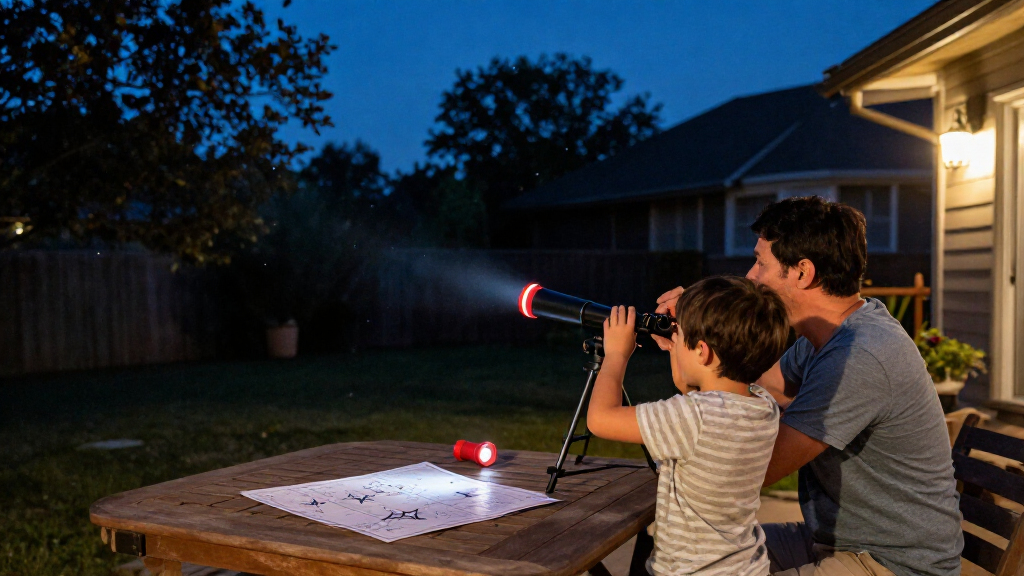
How We Picked
I compared these 15 astronomy books for kids by the job each one can do for a young reader: introduce space, explain it visually, support independent reading, or guide real skywatching. I looked at the likely fit of each format and reading level, the clarity and breadth suggested by its subject coverage, and whether its activities or observing guidance give families a reason to return to it. A book’s usefulness depends on a child’s age, interests, and reading confidence, so I treated those differences as part of the ranking rather than assuming one format suits every family.
Ranking favors versatility and ease of use for the top overall pick, while specialist books rank higher for readers with a clear need, such as beginner reading practice or telescope sessions. Reference books are judged on how well they invite browsing and answer follow-up questions; activity and sky guides are judged on how directly they turn interest into participation. I also weighed tradeoffs: a broad encyclopedia may be less focused for a first reader, and a practical guide may be less satisfying for a child who wants a richly illustrated overview. The list is ordered to help a wide range of families choose, not to suggest that every child needs the same kind of book.
| astronomy books for kid | Subject | Intended audience |
|---|---|---|
| Knowledge Encyclopedia: Space! | Space and the universe | Children |
| First Space Encyclopedia: A Re | Space | Children |
| Space: A Visual Encyclopedia o | Space and the universe | Children |
| National Geographic Kids Space | Space | Kids |
| Space: Planets | Space | Young readers |
| 50 Things to See with a Telesc | — | — |
| 110 Night Sky Treasures to See | — | — |
| Big Book of Big Stars & Planet | — | Young children |
| The Mysteries of the Universe: | — | — |
| Planets | — | — |
| Astronomy Activity Book for Ki | Space | Kids |
| Star Finder!: A Step-by-Step G | Night sky | Kids |
| Astronomy for Curious Kids: An | Astronomy | Kids |
| There’s No Place Like Space! A | Solar system | Not specified in supplied description |
| National Geographic Little Kid | Space | Little kids |
Factors to Consider When Choosing Astronomy Books For Kids
Before choosing among reference books, early readers, and observing guides, decide how your child is most likely to use the book. The right match can make space feel approachable without asking a young reader to manage dense text or technical equipment. These factors can help narrow the field.
Match the reading level to the child, not just the subject
A book about planets can still be a poor fit if its text asks more of a child than they can comfortably read. Younger children may get more from short explanations, read-aloud pacing, and visual discovery, while confident readers may want longer passages and more detailed reference material. Look beyond the age label and check whether the book appears designed for shared reading, independent practice, or browsing. A common mistake is buying an encyclopedia for a beginning reader because the topic sounds exciting; large pages and many facts do not automatically make the text accessible. If you are unsure, choose a book the child can enjoy with help now and revisit independently later.
Choose between browsing and a start-to-finish explanation
Reference books often work best when children can open to a page that catches their eye, while a sequential introduction can build ideas in a more deliberate order. Ask whether your child likes dipping into facts or prefers a guided explanation with a clear beginning and progression. A highly visual book may invite repeat browsing, but a child asking connected questions about gravity, stars, and planets may need explanatory text as well. Avoid treating page count or image size as a measure of learning value. When buying for a shared family shelf, a broad reference book can suit several interests; for one focused question, a narrower title may be easier to use.
Decide whether the book should lead outdoors
Some children want to read about space; others want to find objects in the sky. A telescope or night-sky guide can give families concrete observing goals, but it assumes time outdoors and a willingness to learn basic sky orientation. Before choosing that format, think about local viewing conditions, season, bedtime, and whether an adult can join the activity. A guide cannot make clouds disappear or turn every observation into a dramatic sight, so set expectations around gradual discovery. If outdoor sessions are occasional, pair a practical guide with a more general book rather than relying on one title for every kind of space interest.
Use activities as a fit test, not a promise of instant engagement
Activity books can help a child connect facts with making, drawing, or observing, but their value depends on whether the child enjoys doing tasks. Check whether the activities need household materials, adult setup, or sustained attention before choosing one as a gift. A long list of projects can sound appealing yet go unused if the child prefers reading or if preparation feels like a chore. On the other hand, a hands-on format may be a better starting point for a reluctant reader who likes making things. Think about the family’s available time and let the book support an existing interest rather than assuming activities alone will create one.
Pay for depth only when the child is ready to use it
A more detailed or visually elaborate book can be worthwhile when a child returns to the subject often and enjoys looking up answers. For a first introduction, broad coverage may matter less than friendly explanations and pages the child can navigate independently. Consider whether the book will be read once, shared among siblings, kept as a reference, or taken outside; those uses place different demands on size, durability, and organization. A large illustrated volume may be less convenient for a backpack, while a compact guide may offer less room for expansive pictures. Choose depth, format, and portability around actual use rather than assuming that more information is always better.
Frequently Asked Questions
Which kind of astronomy book is best for a child who is just starting to read?
Look for a title with short passages, familiar vocabulary, and a clear reading progression, rather than choosing by topic alone. Early-reader books can support reading practice while introducing planets and other space subjects, but they may not satisfy a child looking for extensive reference material. If the child likes being read to, a picture-led book with room for conversation may be a better first step. Check whether the text is intended for independent reading or adult support. A book that feels manageable now is more likely to be picked up again.
Should I buy a telescope guide if my family does not own a telescope?
Not necessarily: skywatching guides can still help families pay attention to constellations and objects visible without a telescope, depending on the guide’s scope. Check the book’s stated observing focus before buying, since a guide centered on telescope targets may be less useful without equipment. Also consider whether your family can make time for outdoor viewing and whether an adult can help orient a young observer. If those conditions are uncertain, a general space reference may get more use indoors. You can add a practical observing guide later if the interest sticks.
Is a large illustrated encyclopedia better than a simple beginner book?
It depends on whether the child values browsing or needs a guided introduction. An illustrated encyclopedia can reward repeated visits and answer questions across many subjects, while a simpler book may make the first concepts easier to follow. Dense information can frustrate a young reader if the text is beyond their level, even when the pictures are appealing. For a child who enjoys asking questions and looking through pages with an adult, a reference format can work well. For a child who wants to read alone, prioritize approachable text over the amount of content.
How do I choose between an astronomy activity book and a regular space book?
Choose an activity book if your child enjoys drawing, making, or following prompts and your household has time for those tasks. A regular space book is usually a more dependable choice for bedtime reading, independent browsing, or quick answers to questions. Before buying an activity title, check what materials and adult help its projects may require. Some children enjoy doing one activity at a time, while others prefer a book they can open anywhere without setup. If the child likes both approaches, pairing one hands-on title with a general introduction can offer more variety than expecting either format to do everything.
Can one astronomy book work for siblings at different ages?
A broad, visually organized reference book is often easier to share than a title built around one reading stage, since siblings can approach different pages at their own level. Still, a younger child may need an adult to explain the text, while an older reader may want more detail than the book provides. Look for a mix of clear images, concise explanations, and topics that invite questions. A specialist early reader or telescope guide may be a less flexible shared choice. If the age gap is wide, one shared reference book can pair well with an age-specific title for each child.
Conclusion
For the best overall balance, choose Knowledge Encyclopedia: Space!; it is the clearest starting point in this lineup for families wanting a broad, visual reference. For best value in everyday use, I would start with National Geographic Little Kids First Big Book of Space when the child is young, or an early-reader title when reading practice is the priority. For a premium-feeling gift built around visual browsing, consider Big Book of Big Stars & Planets or one of the larger illustrated encyclopedias, while recognizing that format and detail matter more than size alone. Beginners may prefer Space: Planets, Moons, Stars, and More! or Planets; families seeking outdoor activity should look to 50 Things to See with a Telescope or Star Finder!. Choose the book that matches how your child wants to meet the night sky, rather than expecting one title to serve every age and purpose.