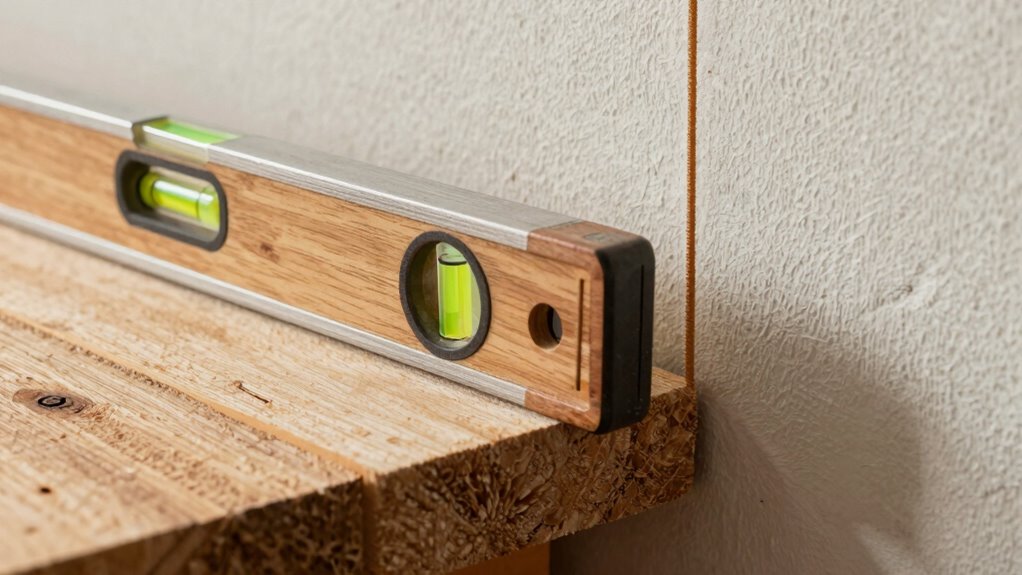

A level and a plumb line are different tools used for specific purposes in construction, even though both rely on gravity. A level checks if a surface is perfectly horizontal or vertical, using a liquid-filled vial with an air bubble. A plumb line, on the other hand, is a weighted cord that creates a true vertical reference. Understanding their distinct roles helps you build safer, more accurate structures—if you keep exploring, you’ll learn how each tool guarantees precision in different ways.

Prime made for students and young adults
- Fast, free delivery for dorm and study essentials
- Prime Video and Amazon Music included
- Member-only deals
Key Takeaways
- Levels measure horizontal surfaces, while plumb lines determine vertical alignment.
- Levels use a bubble vial for horizontal or vertical accuracy; plumb lines rely on gravity for vertical reference.
- They serve different purposes: ensuring floors are level versus walls are upright.
- Proper construction requires both tools to address horizontal and vertical accuracy.
- Their distinct functions stem from their historical development and specific structural roles.
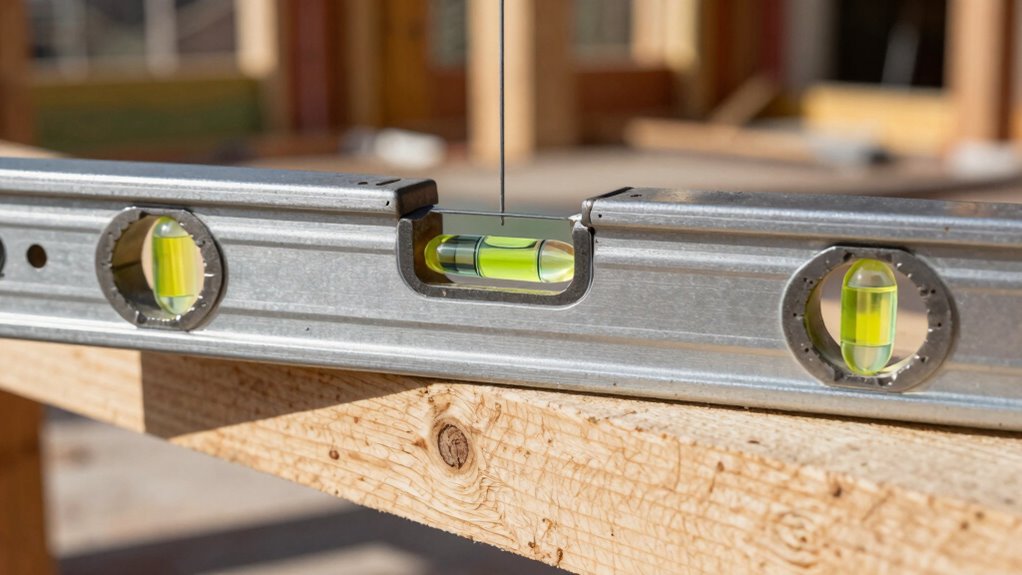
Have you ever wondered why builders emphasize both a level and a plumb line? These tools, though related, serve different purposes, and understanding their distinctions can make a huge difference in construction projects. Historically, measurement differences between the two are rooted in their origins and development. Early builders relied on simple tools like plumb bobs—weighted cords hung freely—to determine verticality, and rough leveling tools for horizontal surfaces. Over time, these methods evolved into more precise instruments. The level, developed in the 17th century, became essential for guaranteeing horizontal surfaces are perfectly flat, while the plumb line remained a fundamental tool for verifying verticality. These historical measurement differences highlight how each tool was designed to address specific needs in construction, and why they’re both vital today. Knowing the measurement origins helps us understand their unique functions better.
Understanding the unique roles of level and plumb line ensures precise and safe construction practices.
The tools used in construction for measuring level and plumb are quite different, yet they work together to maintain structural integrity. A level, whether a traditional spirit level or a modern bubble level, is designed to check if a surface is perfectly horizontal or vertical. It contains a liquid-filled vial with an air bubble that centers itself when the surface is true. On the other hand, a plumb line is a simple weighted cord or chain, hung freely from a fixed point, used to find a true vertical line. While a level is often used for horizontal surfaces like floors and shelves, a plumb line is primarily employed to verify that walls or columns are perfectly upright. Both tools rely on the principle of gravity but are calibrated differently to serve their unique functions.
Using them correctly is key to building structures that stand the test of time. If you only use a level, you might end up with a horizontally perfect surface but miss out on guaranteeing the structure’s vertical stability. Conversely, relying solely on a plumb line might give you a vertical reference but overlook the importance of horizontal alignment. That’s why skilled builders always have both tools at hand, understanding their specific roles. The level helps you achieve flatness, while the plumb line guarantees vertical accuracy. Together, they prevent issues like leaning walls or uneven floors, which could compromise safety or aesthetics.
In essence, recognizing that level and plumb are not the same thing, despite their interconnected roles, allows you to approach construction with precision. Their roots in historical measurement differences remind us of the importance of tradition and innovation in building practices. Knowing how to properly use these tools, understanding their purposes, and appreciating their distinct functions ensure your project is both safe and beautifully aligned.
As an affiliate, we earn on qualifying purchases.
Frequently Asked Questions
Can a Wall Be Level but Not Plumb?
Yes, a wall can be level but not plumb. Wall alignment refers to how straight the wall is horizontally, which affects construction standards for levelness. However, plumb measures verticality, ensuring the wall stands straight up and down. If a wall is perfectly level but leans inward or outward, it’s not plumb. Both are essential for structural integrity and meeting construction standards, but they address different aspects of wall positioning.
What Tools Are Best for Checking Plumb?
You should use digital tools like a digital level or laser plumb bob for checking plumb accurately. These modern tools provide precise readings and are easy to use. Traditional methods, such as a bubble level on a vertical surface or a plumb bob hanging freely, also work well for manual checks. Combining both approaches guarantees you get the most reliable measurement, especially for critical projects.
How Does Gravity Affect Leveling and Plumb?
Gravity’s influence plays a key role in both leveling and plumbing. When you use a level or plumb bob, gravity helps these tools find true horizontal or vertical lines, ensuring measurement accuracy. Gravity pulls the tool’s bubble or weight into the correct position, giving you a reliable reading. Without considering gravity’s effect, your measurements could be off, making your work less precise and potentially causing structural issues later on.
Are Leveling and Plumb Used Together Often?
You often use leveling and plumb together because their combined precision guarantees installation accuracy and structural stability. While they serve different purposes—leveling for horizontal surfaces and plumb for vertical alignment—they complement each other in construction. Using both tools enhances overall accuracy, preventing future issues. Together, they create a sturdy, well-aligned structure, highlighting how vital their joint application is for achieving professional results.
What Industries Rely Most on These Measurements?
You’ll find that construction, manufacturing, and surveying industries rely heavily on level and plumb measurements. Historically, they used simple tools like spirit levels and plumb bobs, but now they depend on modern digital tools for precision. These industries need accurate vertical and horizontal alignment to guarantee structures are safe and functional, making these measurements essential for quality control and successful project completion.
As an affiliate, we earn on qualifying purchases.
Conclusion
So, next time you pick up a level or a plumb bob, remember they’re not interchangeable — just like how a coincidence can seem random until you realize the connection. Both tools aim to find true horizontal or vertical lines, but they do it differently. It’s a small detail that can make a big difference in your project’s accuracy. Sometimes, understanding these subtle differences is what separates a good job from a great one.
As an affiliate, we earn on qualifying purchases.
construction vertical and horizontal measuring tools
As an affiliate, we earn on qualifying purchases.
As an affiliate, we earn on qualifying purchases.
Fall Picks
fall essentials
As an affiliate, we earn on qualifying purchases.