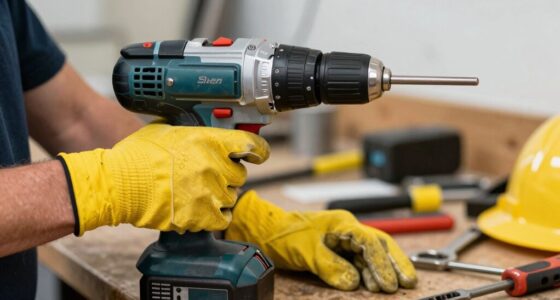
Bits slip when their shank size doesn’t match your drill’s chuck capacity or design, causing instability and wobbling. Poor fit, worn or damaged chucks, or using the wrong size can all lead to slipping and safety hazards. To prevent this, make certain your bit’s shank matches the chuck size and shape, and tighten properly. If you’re still experiencing issues, there’s more to uncover about choosing the right fit and when to upgrade.
Open a free Amazon Business account
Business pricing, bulk buying and tax-exempt orders.
As an affiliate, we earn on qualifying purchases.
Key Takeaways
- Mismatched shank size and chuck capacity can cause bits to slip or wobble during drilling.
- Worn or damaged chucks fail to grip bits securely, leading to slipping and reduced control.
- Improper tightening or debris in the chuck can prevent a proper fit, increasing slippage risk.
- Using incompatible or oversized bits with the chuck size decreases grip strength and stability.
- Frequent slipping indicates the need to upgrade the chuck or drill system for better performance.
What Are Standard Drill Chuck Sizes?
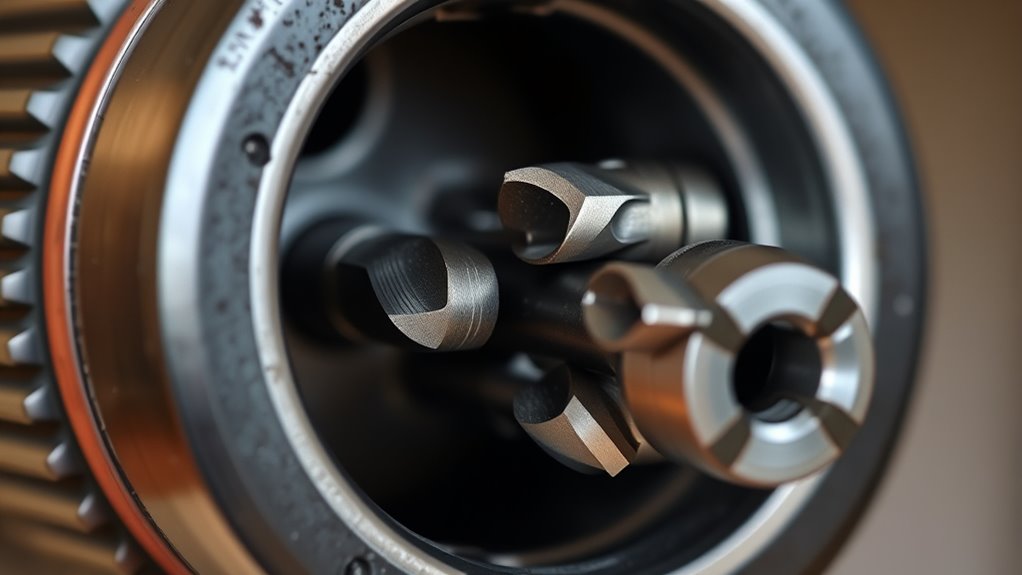
Have you ever wondered what makes a drill chuck compatible with different drill bits? It all comes down to standard sizes, which determine the chuck capacity and the bit shank it can hold. Most drill chucks are designed with specific capacities, commonly ranging from 1/4 inch to 1/2 inch. For example, a 3/8-inch chuck can typically hold bits with a 3/8-inch shank, providing a secure grip. Understanding these sizes helps you choose the right chuck for your needs, ensuring it can handle the bits you use most often. Keep in mind that a larger chuck capacity generally allows for bigger bit shanks, offering more versatility for various projects. Knowing the standard drill chuck sizes simplifies selecting compatible bits and improves your drilling experience. Additionally, drill chuck sizes are standardized to ensure compatibility across various brands and tools, making your selection process easier.
Which Types of Drill Chucks Are Compatible With Your Bits?
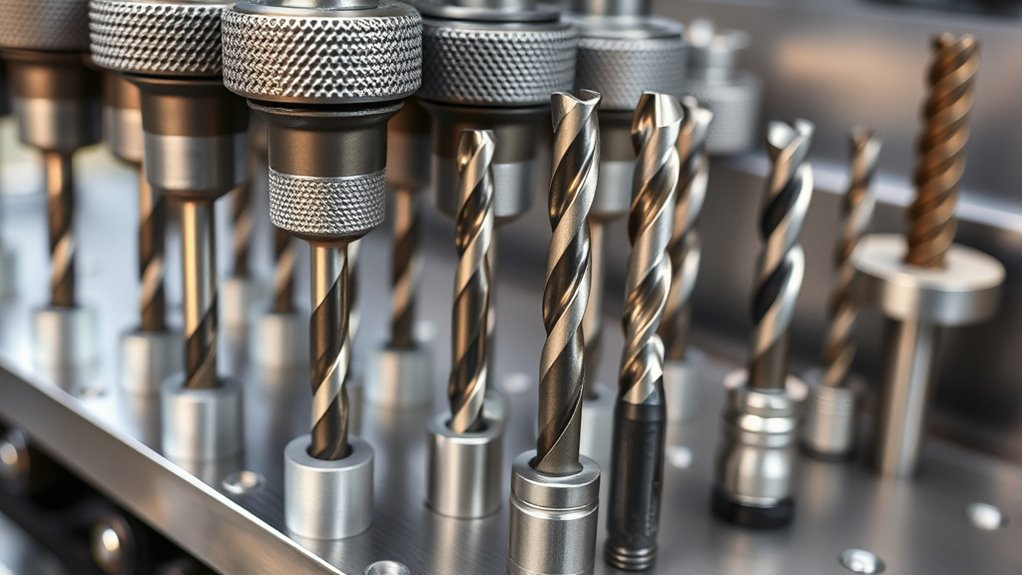
To select the appropriate drill chuck, you need to understand key compatibility features like shank size and mounting type. Different chuck types, such as keyless or keyed, suit various bit styles and applications. Knowing which chuck types work with your bits guarantees secure fits and peak performance. Additionally, considering the style and finish of your bits can help ensure compatibility and optimal results with your drill setup.
Key Compatibility Features
Choosing the right drill chuck is essential because not all chucks are compatible with every type of drill bit. Key compatibility features include:
- Magnetic retention: Some chucks use magnets to securely hold bits, reducing slip and making bit changes faster.
- Chuck size: Ensure the chuck size matches your bit shank diameter for a tight fit.
- Shank type: Compatibility depends on whether your bits have straight, tapered, or hex shanks.
- Chuck lubrication: Proper lubrication keeps the chuck operating smoothly, preventing sticking or slipping during use.
- Material durability: The material durability of the chuck impacts its ability to withstand repeated use without wear, ensuring consistent performance and reducing the likelihood of bits slipping.
Chuck Types Overview
Different types of drill chucks are designed to accommodate various shank styles and sizes, ensuring your bits stay secure during operation. Choosing the right chuck type depends on your drill and the drill bit materials you plan to use. Key chuck types include keyed, keyless, and drill press chucks, each compatible with specific shank profiles. Keyed chucks provide strong grip and are ideal for heavy-duty tasks, while keyless chucks offer quick bit changes for lighter work. Regular chuck maintenance, like cleaning and lubricating, keeps your chuck functioning smoothly and prevents slipping. Understanding which chuck type suits your drill and bits helps improve performance, reduces bit slippage, and extends tool lifespan. Always match your bits’ shank size and style with the appropriate chuck for suitable results. Proper chuck maintenance is essential for safe and effective drilling.
How Do Bit Shank Sizes Impact Fit and Stability?
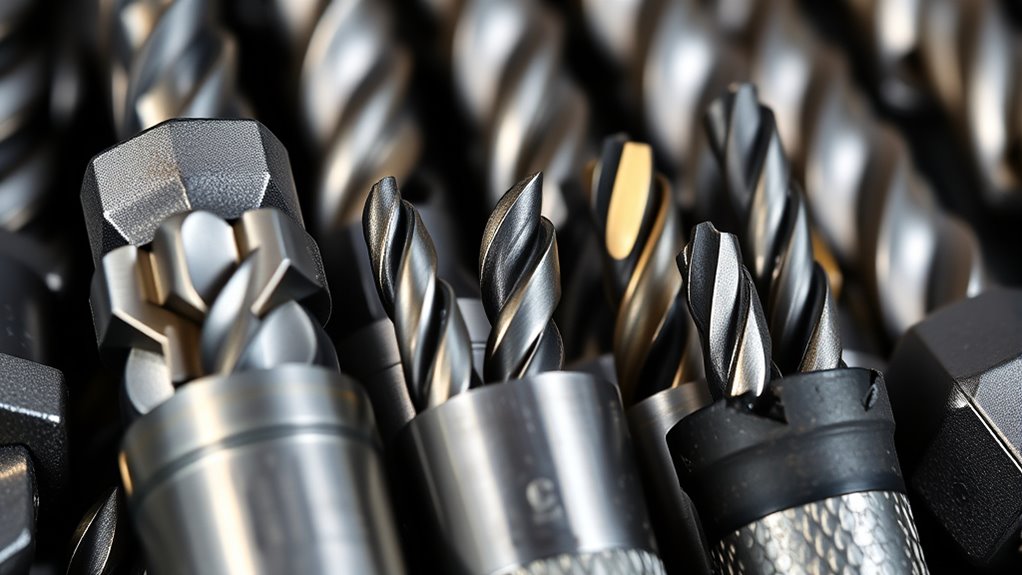
Your drill bit’s shank size determines how well it fits into your drill’s chuck. When the shank matches the chuck’s capacity, you get a secure grip and better stability during use. Mismatched sizes can lead to slipping or wobbling, affecting your work quality. Ensuring the correct shank size for your drill helps maintain precision and safety during operation.
Compatibility With Drill Chucks
Bit shank sizes directly affect how well a drill bit fits and stays secure in a chuck. If the shank isn’t compatible, you risk slipping or damage. To guarantee proper fit and stability, consider these factors:
- Bit length: Longer shanks may require specific chucks to avoid wobbling.
- Material compatibility: Different chuck materials better grip certain shank types, preventing slippage.
- Shank shape: Straight or tapered shanks need matching chucks for a secure hold.
- Chuck size: Match the shank diameter with the chuck’s capacity for ideal fit.
Ensuring proper fit and stability can prevent slipping and damage during use. Choosing the right bit shank size ensures stability and reduces slipping, making your drilling safer and more efficient. Always verify compatibility before starting your project.
Proper Engagement and Grip
When shank sizes match the chuck’s capacity, the bit engages securely, ensuring maximum grip and stability during drilling. Proper engagement depends on the fit between the bit shank and the chuck’s jaws. If the shank is the correct size, the chuck can tighten fully around it, providing a strong bit grip. This tight fit minimizes wobbling and prevents slipping, even under high torque. Conversely, a mismatched shank risks poor chuck engagement, leading to loose bits and unreliable drilling. To achieve *ideal* stability, always verify that the bit shank size aligns with your drill’s chuck capacity. When properly engaged, the bit stays firmly in place, reducing the chance of slipping and ensuring precise, safe drilling every time. Additionally, understanding shank and chuck compatibility helps maintain optimal tool performance and safety.
Why Do Bits Slip? Mismatched Chuck and Shank Sizes Explained
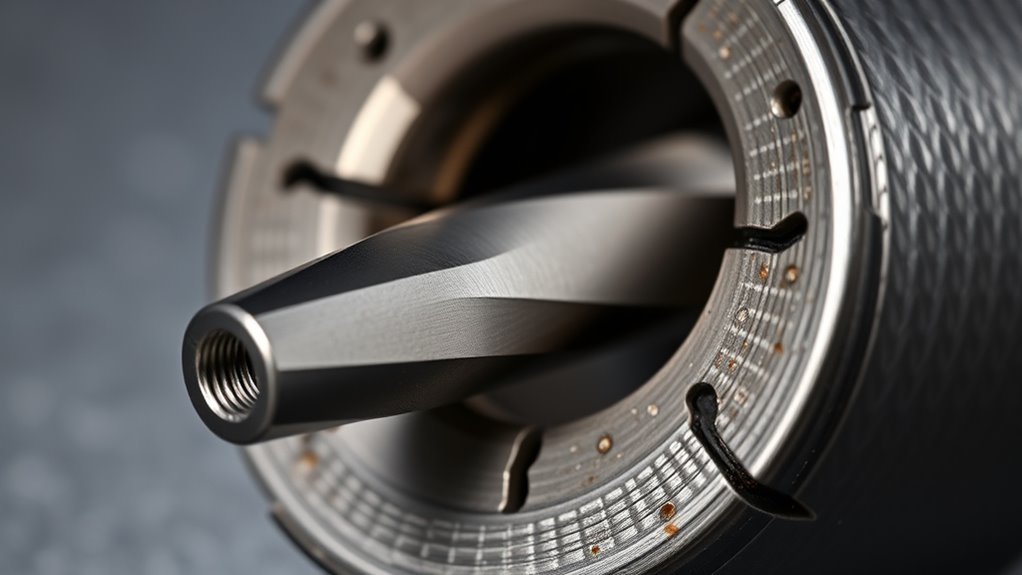
Bits tend to slip out of the chuck when the sizes don’t match properly, which can be frustrating and dangerous. This often happens due to poor fit or mismatched specifications. To prevent this, consider these factors:
- Incorrect bit shank ergonomics: If the shank shape doesn’t match the chuck’s design, it won’t hold securely.
- Mismatch in chuck and shank sizes: The bit must fit snugly within the chuck’s capacity.
- Incompatible chuck material: Some materials may wear quickly, leading to a loose grip over time.
- Worn or damaged chucks: A damaged or dirty chuck reduces grip strength, increasing slip risk.
- Proper measurement and material selection: Ensuring the bit’s gauge size and material are compatible with the chuck enhances grip and reduces slipping.
How Can You Recognize a Loose or Slipping Bit?

Recognizing a loose or slipping bit is essential for maintaining safety and efficiency during your work. One clear sign is difficulty in maintaining a steady drill speed or experiencing sudden stops. If the bit wobbles or vibrates excessively, it indicates slipping or poor chuck alignment. Check if the bit feels loose when you try to tighten it; it should secure firmly with minimal effort. Proper bit lubrication can help ensure smooth insertion and reduce friction, preventing slippage. Regularly inspect the chuck for debris or damage, as misalignment can cause bits to slip during operation. The quality of the chuck also plays a significant role in preventing slippage and ensuring secure bit grip. If you notice these signs, tighten the chuck properly and verify correct bit size. Maintaining good chuck alignment and ensuring the bit is secure will improve performance and reduce safety risks.
How Do You Choose the Right Drill Chuck Size?
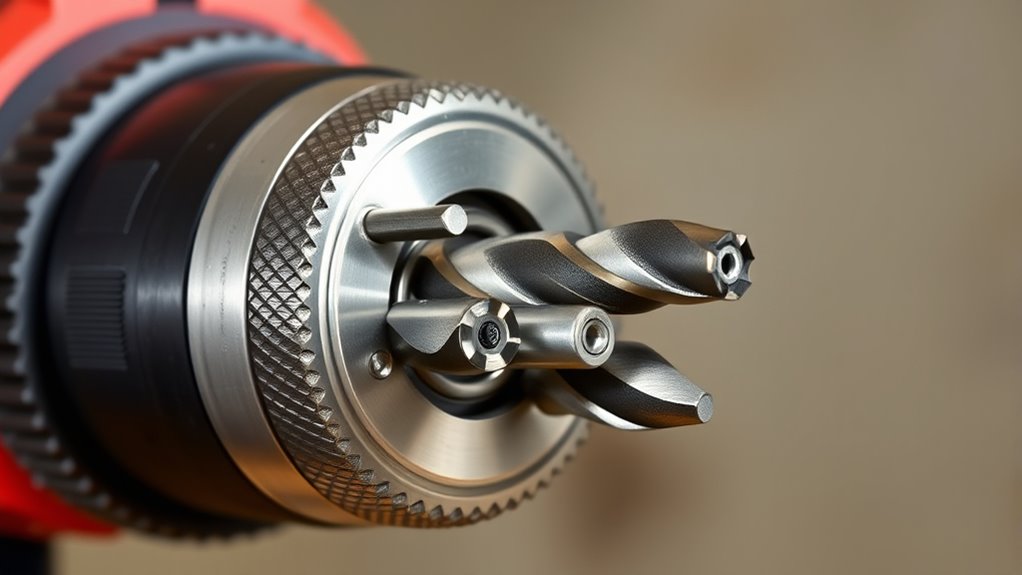
Choosing the right drill chuck size is essential to ensuring your drill operates safely and efficiently. To do this, consider these key points:
- Match your bit shank size to the chuck capacity to prevent slipping or damage.
- Check the compatibility of the chuck with your drill model.
- Determine the size of bits you’ll use most often to select an appropriate chuck size.
- Remember that larger chucks hold bigger bits but may be less precise for small tasks.
- Additionally, understanding drill bit compatibility can help you select the best chuck size for various projects.
Tips to Ensure Bits Fit Securely in Your Chuck

To guarantee your drill bits stay securely in the chuck, start by inspecting the bit shank and the chuck’s jaw slots. Ensuring proper bit shank compatibility is essential; mismatched sizes can lead to slipping. Before inserting the bit, check for any damage or debris that could hinder a tight fit. Use the appropriate chuck tightening techniques—firmly tighten the chuck by hand first, then use a wrench if necessary, but avoid over-tightening, which can damage the chuck or shank. Make sure the bit is seated fully in the chuck, with the shank centered and straight. Regularly inspect the chuck for wear or dirt that could compromise grip. Properly fitting bits combined with correct tightening techniques will help prevent slipping and guarantee safe, efficient drilling.
What Happens When You Use the Wrong Bit or Chuck Size?
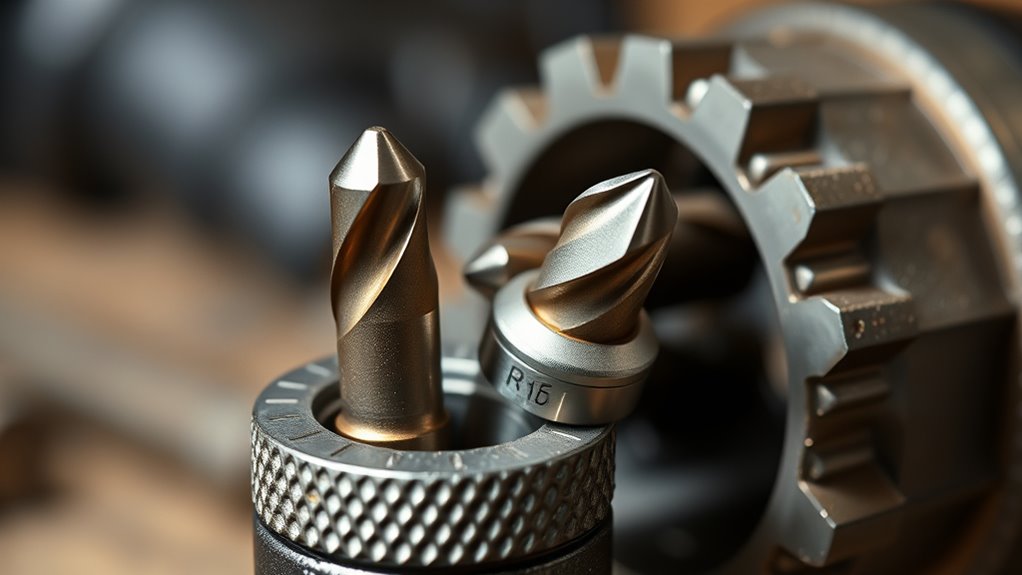
Using the wrong bit or chuck size can cause immediate issues that compromise both safety and efficiency. You might experience:
- Slipping bits due to incompatible bit material or improper fit, risking injury or damage.
- Reduced drill speed, as the drill struggles to maintain power with an ill-fitting bit.
- Excessive heat buildup, which weakens the bit and can cause it to break or warp.
- Damage to the chuck or drill shaft if you force a bit that’s too large or small.
Choosing the wrong size forces the drill to work harder, increasing wear and tear. Always match the bit material and size to your chuck, and adjust drill speed accordingly for safe, effective drilling.
When Should You Upgrade Your Drill or Chuck System?
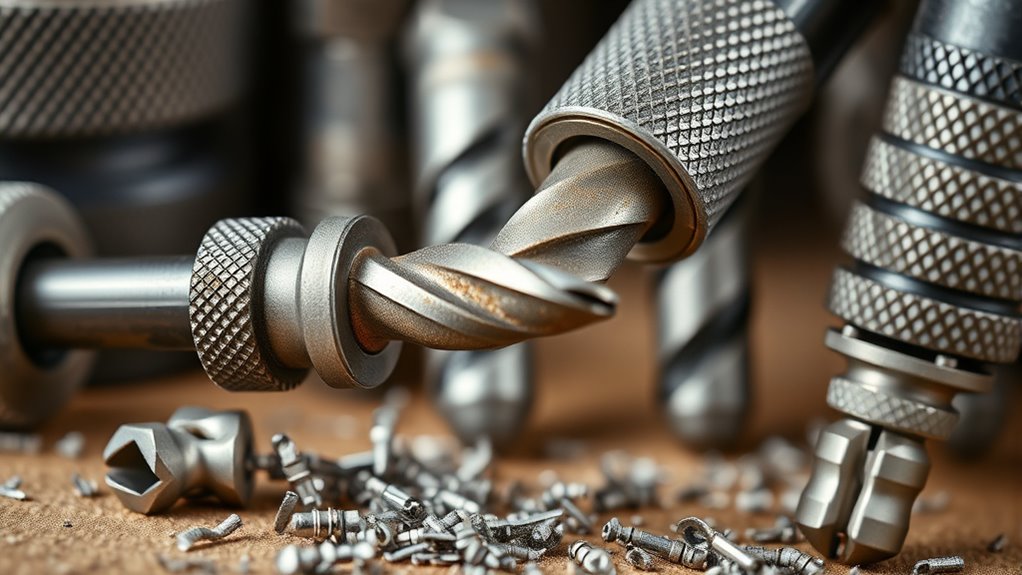
Knowing when to upgrade your drill or chuck system is essential for maintaining ideal performance and safety. If you notice frequent slipping or difficulty securing bits, it’s time to evaluate your setup. Regular bit maintenance, including cleaning and inspecting your bits for wear, helps prevent issues, but persistent problems may indicate the need for an upgrade. Additionally, if your chuck becomes hard to open or close, consider lubricating it with appropriate chuck lubrication to ensure smooth operation. Over time, worn or damaged chucks can compromise safety and precision. Upgrading to a higher-quality chuck or drill system can improve grip, reduce bit slipping, and enhance overall efficiency. Don’t ignore signs of wear—timely upgrades ensure your tools perform reliably and safely.
Frequently Asked Questions
Can Using the Wrong Chuck Size Damage My Drill or Bits?
Yes, using the wrong chuck size can cause bit slippage and damage your drill or bits. When the chuck is too large or too small for your bit, it doesn’t grip properly, leading to slippage. This extra movement can wear out your drill’s motor or damage the chuck itself. Always verify you select the correct chuck size for your bits to maintain safe operation and extend your tools’ lifespan.
Are There Universal Drill Chucks Compatible With All Bit Sizes?
You’ll find some universal drill chucks offer broad compatibility, but they may not fit all drill models perfectly. Always check for universal compatibility and easy chuck adjustment features to guarantee a secure fit for various bit sizes. While these chucks simplify swapping bits, make sure they’re compatible with your drill’s specifications. Proper chuck adjustment prevents slipping and damage, helping you work efficiently and safely with different bit sizes.
How Often Should I Check for Chuck Wear or Damage?
You should check your chuck for wear or damage every few months or after heavy use, as part of regular drill maintenance. Coincidences happen when you least expect them, so don’t overlook chuck inspection after rough projects or if you notice slipping bits. Regularly inspecting your chuck guarantees it grips tightly, preventing slips and extending its lifespan. Staying vigilant keeps your drill working smoothly and safely.
Do Different Materials Require Specific Chuck Sizes?
Yes, different materials often require specific chuck sizes to guarantee proper material compatibility and ideal drilling performance. Using the correct bit size standards helps prevent slipping and reduces wear on your drill and bits. Always check the recommended bit size for the material you’re working with. This way, you maintain safety, efficiency, and extend the lifespan of your tools, making your work smoother and more effective.
What Safety Precautions Exist When Changing Drill Chucks?
Hold your horses, cowboy! When changing drill chucks, always wear safety gear like goggles and gloves. You gotta follow proper technique—unplug the drill first, then securely tighten or loosen the chuck with the correct tools. Keep your hands clear of moving parts, and double-check everything’s secure before powering up again. This way, you stay safe and avoid accidents. Safety first, partner!
Conclusion
Choosing the right drill chuck size is like finding the perfect pair of shoes — it keeps your work steady and comfortable. When you match bits and chucks correctly, you’ll avoid slipping and frustration. Always pay attention to shank sizes and upgrade when necessary, so your projects run smoothly. Remember, a secure fit isn’t just a detail; it’s the foundation for precision and safety — don’t let mismatched sizes be the weak link in your toolkit.
Fall yard work Picks
leaf blowers
As an affiliate, we earn on qualifying purchases.