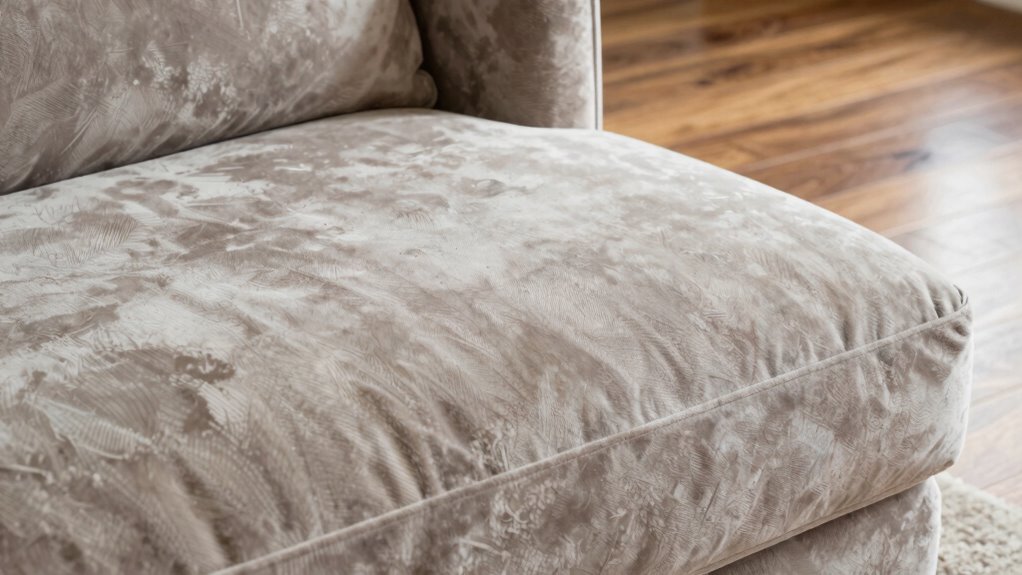

Upholstery holds odors longer than floors because its porous fabric traps particles like pet dander, dust, and allergens deep within the fibers. These particles create a base for microbial growth and release persistent smells that are hard to remove with simple cleaning. Unlike floors, the textured and porous nature of fabric makes it challenging to fully eliminate embedded odors. Keep exploring to discover effective ways to regain freshness and keep your upholstery smelling clean.

Prime made for students and young adults
- Fast, free delivery for dorm and study essentials
- Prime Video and Amazon Music included
- Member-only deals
Key Takeaways
- Upholstery fabrics are porous, allowing odors to penetrate deeply into fibers, unlike floors which are easier to clean thoroughly.
- Embedded particles like pet dander and dust settle into upholstery, making odor removal more difficult than on hard surfaces.
- Deep cleaning methods are often required for upholstery, as surface cleaning only addresses superficial debris.
- Microbial growth within fabric fibers sustains and intensifies odors over time.
- Tighter weaves in upholstery can trap odors longer, whereas floors typically have less porous surfaces.

Upholstery can easily trap odors over time, especially in high-traffic areas or homes with pets and smokers. Unlike floors, which are more exposed and easier to clean regularly, furniture fabrics tend to hold onto smells longer because of their porous nature. When you sit or lie on upholstered furniture, you introduce a variety of particles into the fabric, including pet dander, dust, and allergens. These particles cling to the fibers and become embedded deep within the material, making odors more persistent.
Pet dander is a significant contributor to odor retention in upholstery. Even if your pet is well-behaved and clean, tiny skin flakes and fur shed constantly and settle into the fabric. Over time, this buildup creates a base for odors, especially when combined with other household smells like cooking or smoke. Allergens, too, play a role in odor retention, as they not only cause allergic reactions but also contribute to a musty, stale smell if not cleaned regularly. The moist environment created by body heat and humidity can also encourage the growth of mold and mildew within the fabric, further intensifying odors. Proper ventilation can help reduce moisture buildup and inhibit microbial growth, which are key factors in odor development.
You might think that vacuuming your furniture regularly would eliminate these odors, but it often only removes surface debris. Deeper particles, like pet dander and allergens, embed themselves within the fibers, making them difficult to eliminate with simple cleaning. Over time, these trapped particles release a subtle, persistent smell that worsens with each use. In contrast, floors—especially hard surfaces like tile or wood—don’t trap particles to the same extent. They’re easier to clean thoroughly and don’t provide a cozy environment for mold or bacteria that produce odors.
The porous nature of upholstery fabrics also means that odors can seep into the fibers and linger even after cleaning. Regular vacuuming helps, but it doesn’t fully remove the embedded pet dander and allergens responsible for the smell. Deep cleaning methods such as steam cleaning or professional extraction are often necessary to reach deep into the fibers and break down the trapped particles. Using protective covers or choosing fabrics with tighter weaves can reduce retention, but the most effective way to combat odors in upholstery remains consistent cleaning and maintenance. Additionally, choosing fabrics with tighter weaves can help limit odor absorption. Implementing odor-neutralizing products can also assist in maintaining a fresh scent in your furniture.
Furthermore, the porous fabric structure of upholstery allows odors to penetrate more deeply than surfaces like floors, making it a persistent challenge to eliminate odors completely. The accumulation of pet dander, dust, and allergens within the porous fibers can also lead to microbial growth, which further contributes to persistent odors. In essence, because of their texture and the way particles settle and resist removal, upholstery holds onto odors longer than floors. Pet dander and allergens settle into the fabric’s fibers, creating a persistent smell that’s tough to eliminate without targeted cleaning. That’s why your furniture needs more attentive care if you want to keep your home smelling fresh and allergen-free.
Popular right now

Philips 3300 Series Fully Automatic Espresso Machine with LatteGo

De'Longhi Rivelia Automatic Espresso Machine with Milk Frother

De'Longhi Classic Signature Espresso Machine with Adjustable Milk Frother
As an affiliate, we earn on qualifying purchases.
Frequently Asked Questions
Can Certain Fabrics Trap Odors More Than Others?
Yes, certain fabrics trap odors more than others due to their fabric porosity and odor absorption properties. Porous fabrics like velvet or chenille tend to absorb and hold onto smells longer because their fibers allow odors to seep in and linger. Less porous fabrics like leather or tightly woven textiles resist odor absorption better. You should consider fabric type when choosing upholstery if odor control is a priority.
How Long Do Odors Typically Last in Upholstery?
Odors in upholstery can linger for what feels like an eternity—sometimes weeks or even months—thanks to fabric porosity and odor absorption. Your fabric’s ability to trap smells means they don’t just fade away quickly. Depending on the fabric type and cleaning efforts, odors might persist longer than in floors. Regular cleaning and odor-neutralizing treatments can help speed up the process, but some smells stubbornly cling despite your best efforts.
Does Sunlight Help Eliminate Odors From Furniture?
Sunlight can help eliminate odors from furniture through UV sterilization, which kills bacteria and mold responsible for smells. When you expose your upholstery to sunlight, the UV rays break down odor-causing molecules, reducing persistent odors. Make sure to air out your furniture in direct sunlight for several hours. This natural method is effective, eco-friendly, and can refresh your upholstery without harsh chemicals.
Are There Specific Cleaning Products Best for Odor Removal?
When tackling stubborn odors, use cleaning agents specifically designed for odor absorption. These powerful products go beyond surface cleaning, penetrating deep into upholstery fibers to neutralize even the most persistent smells. Regular household cleaners often fall short, so choose ones formulated for odor removal. They act like a magnet for odors, leaving your furniture fresh, clean, and smelling like you just brought it home from the store.
Can Pets’ Odors Seep Deeper Into Upholstery Than Floors?
Yes, pets’ odors can seep deeper into upholstery than floors, especially if you have fabric types like microfiber or plush that trap smells more easily. This can worsen pet allergies, as allergens cling to fabrics. You should clean your upholstery regularly with pet-safe products and consider professional treatments. Ventilating and using deodorizers can also help reduce lingering pet odors, making your space more comfortable and allergy-friendly.
Conclusion
In the end, understanding why upholstery traps odors longer than floors helps you take better care of your space. Upholstery’s fibers act like a sponge, soaking up smells that are harder to air out. So, don’t throw in the towel; regular cleaning and freshening up can make a big difference. Remember, it’s all about staying ahead of the game—sometimes, you’ve got to play it smart to keep your home smelling sweet as a rose.