During a power outage, applying the time-temperature rule helps you keep food safe by tracking how long perishable items stay above 40°F (4°C). If foods like dairy, meat, or cooked leftovers are above this temperature for more than two hours, you should discard them to prevent foodborne illnesses. Keep your refrigerator door closed to maintain cold temperatures, and use coolers with ice for longer outages. You’ll discover tips on managing your food safely if you keep exploring further.

Prime made for students and young adults
- Fast, free delivery for dorm and study essentials
- Prime Video and Amazon Music included
- Member-only deals
Key Takeaways
- Perishable foods should be kept below 40°F (4°C) to prevent bacterial growth during an outage.
- Foods above 40°F for more than two hours are unsafe and should be discarded.
- Keep refrigerator doors closed to maintain cold temperature and extend safe storage time.
- Use coolers with ice packs to store perishables if power is out for over four hours.
- After power returns, check the refrigerator temperature and discard foods if they have been above safe limits.
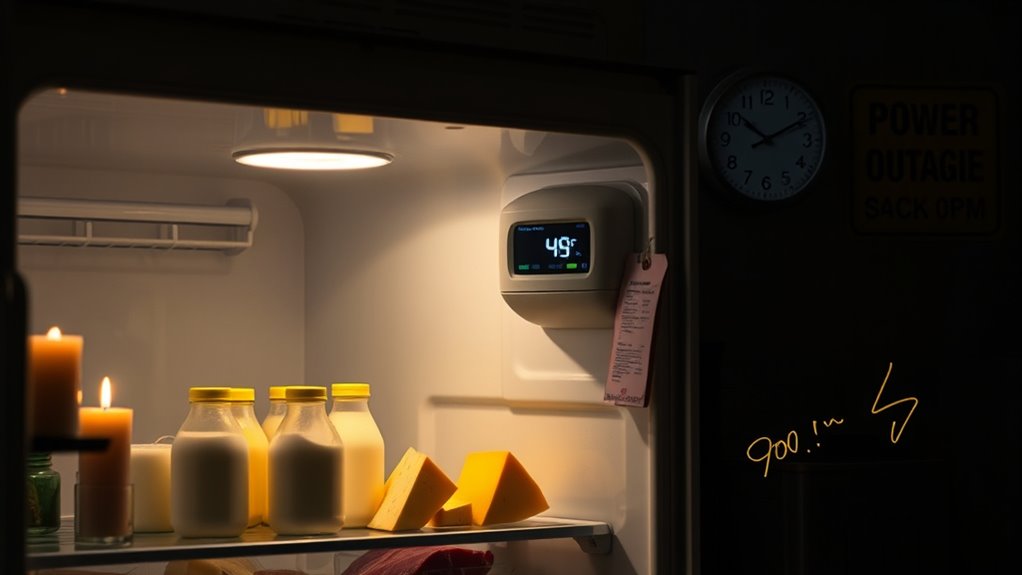
When the power goes out, your food safety is at risk if you don’t act quickly. That’s why emergency preparedness is essential—you need a plan to keep your food safe during outages. One of the most important steps is understanding the time-temperature rule, which helps you decide which foods are still safe to eat and which should be discarded. Keeping your refrigerator in good condition through regular refrigerator maintenance ensures it stays at the correct temperature, even during a power outage. When your fridge is well-maintained, it’s more likely to keep food cold longer, giving you extra time to respond effectively.
Start by knowing how long perishable foods like dairy, meat, and cooked leftovers can stay safe without power. Generally, perishable items should stay below 40°F (4°C). When the power goes out, your refrigerator temperature can rise quickly, especially if it’s poorly maintained or the door is frequently opened. Regular refrigerator maintenance, such as cleaning coils and checking door seals, ensures your appliance runs efficiently, maintaining a consistent temperature. This helps minimize temperature fluctuations during an outage. Additionally, refrigerator efficiency plays a crucial role in preserving food safety during emergencies.
Knowing how long perishable foods can stay safe without power helps prevent food waste and illness.
In an emergency, keep your refrigerator door closed as much as possible. Every time you open it, cold air escapes, and the temperature increases faster. Think ahead and gather supplies like coolers and ice packs to transfer perishable foods if the outage lasts longer than four hours. Having these ready is part of emergency preparedness, allowing you to take quick action to preserve your food supply.
Monitoring your refrigerator’s temperature regularly is vital. If you have a thermometer inside, check it once power is restored. If the temperature has risen above 40°F for more than two hours, discard perishable items to prevent foodborne illnesses. To extend the safety window, pack perishables in a cooler with ice if you see the temperature rising or anticipate a prolonged outage. This proactive step can buy you extra hours to keep food safe.
Another key aspect of emergency preparedness is keeping your refrigerator in top shape. Schedule regular maintenance, such as inspecting door seals for leaks or damage, cleaning condenser coils, and checking that the thermostat functions correctly. These steps ensure your refrigerator operates efficiently, maintaining proper temperatures even during power interruptions. Proper maintenance also helps your appliance recover faster once power is restored, reducing the risk of food spoilage.
Popular right now

Apple AirPods Pro 3 Wireless Earbuds with Active Noise Cancellation

KitchenAid Artisan Mini Tilt-Head Stand Mixer, 3.5 Qt, Contour Silver

Vitamix VX1 Professional-Grade Blender, 64 oz, Black
As an affiliate, we earn on qualifying purchases.
Frequently Asked Questions
How Can I Tell if Refrigerated Food Is Safe After a Power Outage?
You can tell if refrigerated food is safe after a power outage by checking its food temperature and looking for signs of food spoilage. If the food has been above 40°F for more than two hours, bacteria may grow, making it unsafe. Discard any perishable items that smell bad, look slimy, or have an unusual color. When in doubt, it’s safer to throw it out to avoid foodborne illness.
What Are the Best Ways to Keep Food Cold Without Power?
When the electricity dims, you can keep food cold with some creative cooler maintenance and effective ice pack usage. Make sure your cooler is well-insulated and pre-chill it before packing. Fill gaps with ice packs or crushed ice to maintain a consistent cold environment. Keep the lid sealed tightly, minimizing air exchange. These steps help preserve perishable foods longer, giving you peace of mind during the outage.
How Long Can Perishable Food Stay Safe Without Refrigeration?
Perishable food stays safe without refrigeration for about two hours at room temperature. After that, bacteria can grow rapidly, risking food safety. To keep food safe longer, maintain temperature control by keeping items in a cooler with ice packs or in a shaded, cool area. Always check for signs of spoilage before consuming, and when in doubt, discard perishable items to prevent foodborne illness.
Should I Cook or Throw Out Food if the Power Is Out for Hours?
If your power’s been out for hours, it’s safest to throw out perishable foods like cooked chicken, which can spoil quickly. For emergency preparedness, always have a thermometer and ice on hand. Use food safety tips: if the temperature exceeds 40°F for over two hours, discard the food. In a case study, someone ate spoiled leftovers and got sick; better to be safe than sorry.
Are There Specific Foods That Spoil Faster During a Blackout?
During a blackout, you notice some foods spoil faster, especially perishable items like dairy, seafood, and cooked meats. These foods are more vulnerable to food spoilage because they need consistent refrigeration, which isn’t available during a prolonged blackout. The longer the blackout duration, the higher the risk of spoilage. It’s best to check for signs of spoilage and discard any questionable items to avoid foodborne illnesses.
Conclusion
Remember, a power outage is like a ticking clock for your food’s safety. Keep your refrigerator closed to hold in the cold, and use a thermometer to check if your food stays within safe temperatures. Acting quickly is your best defense—think of it as your shield against foodborne illness. When the power returns, don’t forget to examine your food carefully. Staying vigilant now guarantees your health stays protected, like a lighthouse guiding you through uncertain waters.