Etching on stone countertops is a chemical reaction caused by acids like lemon juice, vinegar, or tomato sauce that dulls or clouds the surface, rather than scratching it. These reactions dissolve minerals, especially in softer stones like marble and limestone, creating dull spots and discoloration. Harder stones such as granite resist etching better. Proper sealing and care can prevent damage, and understanding how to spot and restore etching helps keep your surface looking its best. Keep going to learn more about safeguarding and restoring your countertops.

Prime made for students and young adults
- Fast, free delivery for dorm and study essentials
- Prime Video and Amazon Music included
- Member-only deals
Key Takeaways
- Etching is a chemical reaction causing dull, cloudy spots on stone surfaces, not physical scratches.
- Acidic substances like lemon juice, vinegar, and tomato sauce react with calcium-rich stones, leading to etching.
- Stones like marble and limestone are highly susceptible to etching, while granite and quartz resist it better.
- Proper sealing and gentle cleaning help prevent etching, while routine polishing can restore the surface shine.
- Detecting etching involves looking for dull spots or discoloration, and restoration may require professional honing or polishing.
marble countertop etch repair kit
As an affiliate, we earn on qualifying purchases.
As an affiliate, we earn on qualifying purchases.
What Is Etching on Stone Countertops?
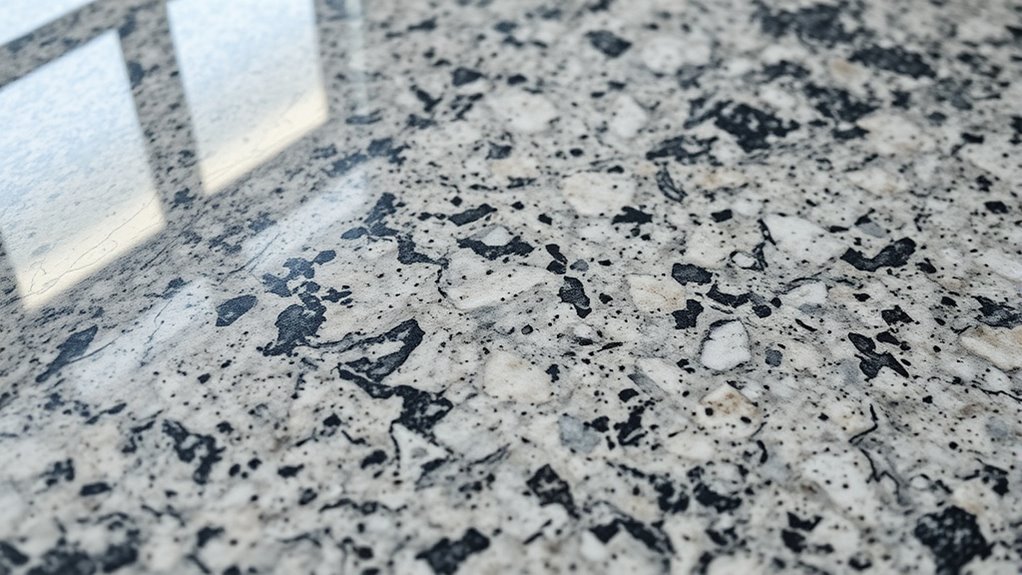
Etching on stone countertops occurs when acids or other corrosive substances react with the surface, causing a dull or cloudy mark. This damage isn’t a scratch; it’s a chemical reaction that alters the stone’s surface. To prevent etching, you can use proper sealing methods, which create a barrier against acids and spills. Regular sealing helps maintain the stone’s appearance and reduces vulnerability. If etching occurs, polishing techniques can restore the surface’s shine by removing the dull area. Different stones respond differently to polishing, so choosing the right method is important. Proper sealing and routine polishing techniques are key steps to protect your countertops from etching and to keep them looking their best over time. Additionally, understanding surface protection methods can help prolong the lifespan of your stone surfaces.
As an affiliate, we earn on qualifying purchases.
How Does Etching Happen Chemically?
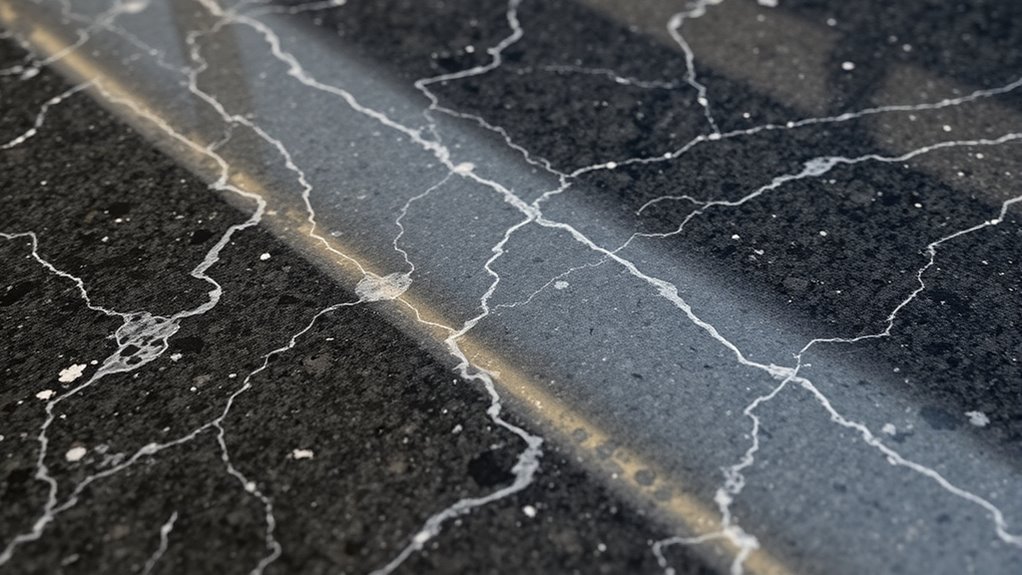
When acids or other corrosive substances come into contact with stone countertops, they initiate a chemical reaction that damages the surface. These chemical reactions break down the minerals in the stone, causing mineral erosion. For example, acids like lemon juice or vinegar react with calcium carbonate in marble, producing carbon dioxide gas and dissolving the mineral structure. This process weakens the stone’s surface, leaving behind dull spots and etch marks. The more acidic or corrosive the substance, the faster and deeper the mineral erosion occurs. Over time, repeated exposure accelerates this damage. Essentially, etching isn’t just surface blemishes; it’s a chemical alteration where the stone’s mineral composition changes due to ongoing reactions with acids and other substances. Youngster Choice illustrates how various factors influence the extent of damage caused by such reactions.
stone countertop polishing cream
As an affiliate, we earn on qualifying purchases.
As an affiliate, we earn on qualifying purchases.
Which Stones Are Most Prone to Etching?
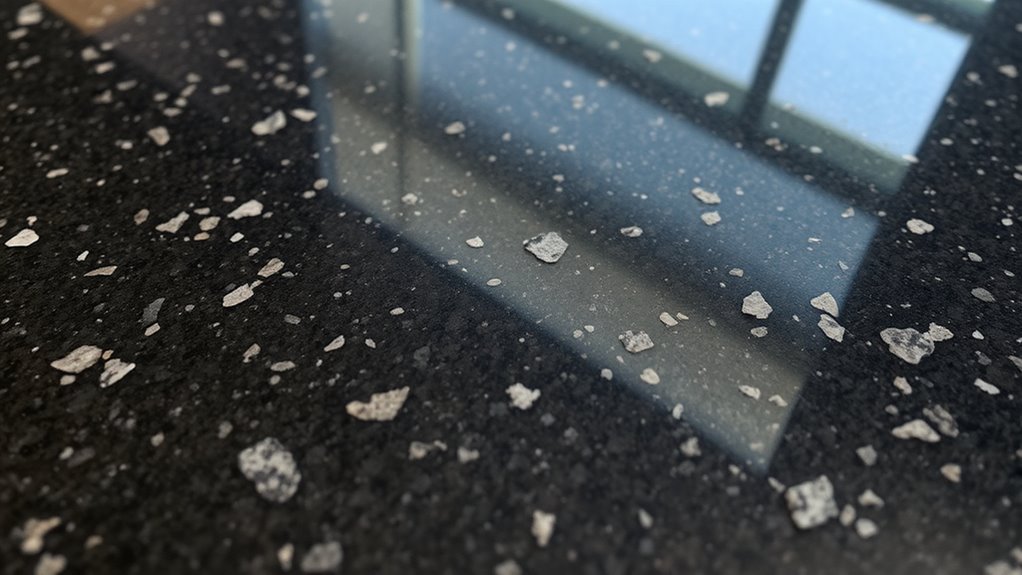
Certain types of natural stone are more vulnerable to etching because of their mineral composition. Marble susceptibility makes it highly prone to etching from acids found in foods and drinks. Its calcite content reacts easily, leaving dull marks or spots. Limestone, on the other hand, is particularly vulnerable due to its high calcium carbonate levels, making it susceptible to similar damage. These stones lack the dense, resistant qualities of harder materials like granite or quartz. If you have marble or limestone countertops, you need to be especially careful with acidic substances. Even common items like lemon juice, vinegar, or tomato sauce can cause visible damage over time. Recognizing their vulnerability helps you take better precautions to protect your surfaces from etching, especially when understanding their mineral composition and how it influences their durability.
natural stone surface protectant
As an affiliate, we earn on qualifying purchases.
As an affiliate, we earn on qualifying purchases.
What Causes Etching in Your Home?
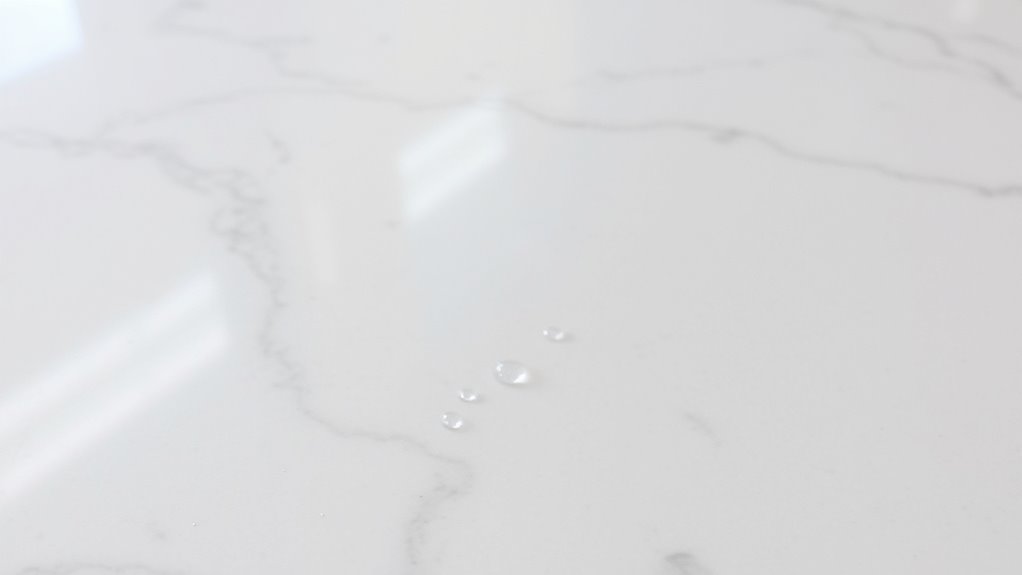
Etching on your stone countertops often happens when acids from food or beverages come into contact with the surface. Harsh cleaning agents and environmental factors like moisture or spills can also contribute to damage. Knowing what causes these issues helps you protect your countertops and keep them looking their best. Additionally, understanding cleaning appliances and systems can help you choose products that minimize etching risks.
Acidic Food Contacts
Have you noticed dull spots or dull patches on your stone countertops after preparing certain foods? Acidic foods like citrus, tomatoes, or vinegar can cause etching by reacting with the calcium carbonate in your stone. These acids break down the surface, leaving dull, discolored patches that can be permanent if not addressed. To prevent this, consistent countertop maintenance and surface protection are essential. Using cutting boards and placing coasters under glasses helps shield your surface from direct contact with acids. Cleaning up spills immediately also minimizes damage. While etching may seem minor, it can compromise the appearance of your stone over time. Being mindful of acidic food contacts and practicing proper surface protection will keep your countertops looking their best and preserve their natural beauty longer. surface protection is a key aspect of maintaining durable and attractive stone surfaces.
Harsh Cleaning Agents
While acidic foods can damage your stone countertops through chemical reactions, harsh cleaning agents pose an equally significant threat. Many cleaning routines involve products containing acids, ammonia, or bleach that can break down the sealant and cause etching. Even if you regularly apply a sealant, using the wrong cleaners can compromise its protective barrier, making your stone vulnerable. Always choose gentle, pH-neutral cleaners specifically designed for natural stone. Avoid abrasive scrubbing pads and harsh chemicals that can strip away the sealant and cause surface damage. Proper sealant application creates a shield against these harmful agents, but neglecting cautious cleaning routines accelerates deterioration. Being mindful of the cleaning products you use helps maintain your countertops’ beauty and durability over time. For added protection, consider reliable whole-home backup power to ensure your cleaning appliances operate safely and effectively without risking damage to your stone surfaces.
Environmental Factors
Environmental factors inside your home can substantially contribute to etching on your stone countertops. The natural mineral composition of your stone makes it vulnerable to certain elements. For example:
- Acidic foods and beverages, like citrus or vinegar, react with the stone surface, causing etching.
- Humidity and temperature fluctuations can weaken stone surface treatments, making etching more likely.
- Cleaning products with harsh chemicals or improper stone surface treatments can strip protective layers, exposing the mineral content.
- Additionally, protective coatings can help shield your countertops from these damaging environmental factors and prolong their lifespan.
Understanding these factors helps you prevent damage. The natural mineral makeup determines how susceptible your stone is to etching, while appropriate stone surface treatments provide a barrier. Regular care and mindful choices can greatly extend your countertop’s beauty and durability.
How Can You Tell If Your Countertop Is Etched?
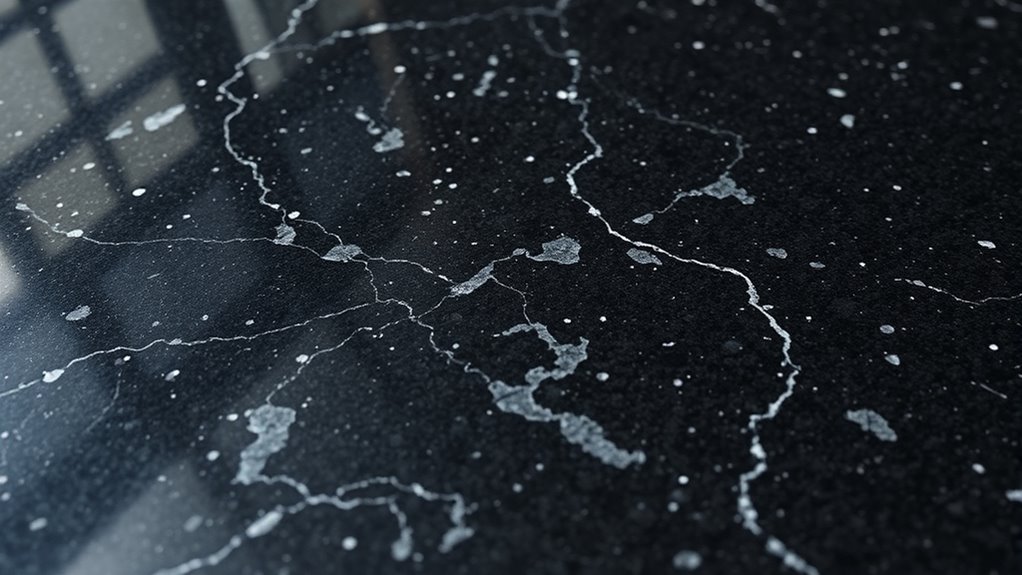
Wondering if your stone countertop has been etched? Look closely at the surface. Etching often appears as dull spots or light discoloration, especially in areas exposed to acidic substances. Marble vs granite surfaces react differently: marble is more prone to etching due to its softer composition, while granite resists it better. To check, try a gentle polish with a stone-safe polishing technique—if dull spots shine up, it’s etched. You can also perform a light scratch test in an inconspicuous spot. Here’s a quick comparison:
| Marble vs Granite | Signs of Etching | Polishing Techniques | Resistance | Common Areas |
|---|---|---|---|---|
| Marble | Dull spots | Light polishing | Low | Kitchen, bathroom |
| Granite | Less visible | Professional polishing | High | Kitchen surfaces |
Additionally, consulting a stone care professional can help accurately diagnose and address etching issues.
How to Prevent Etching With Proper Care
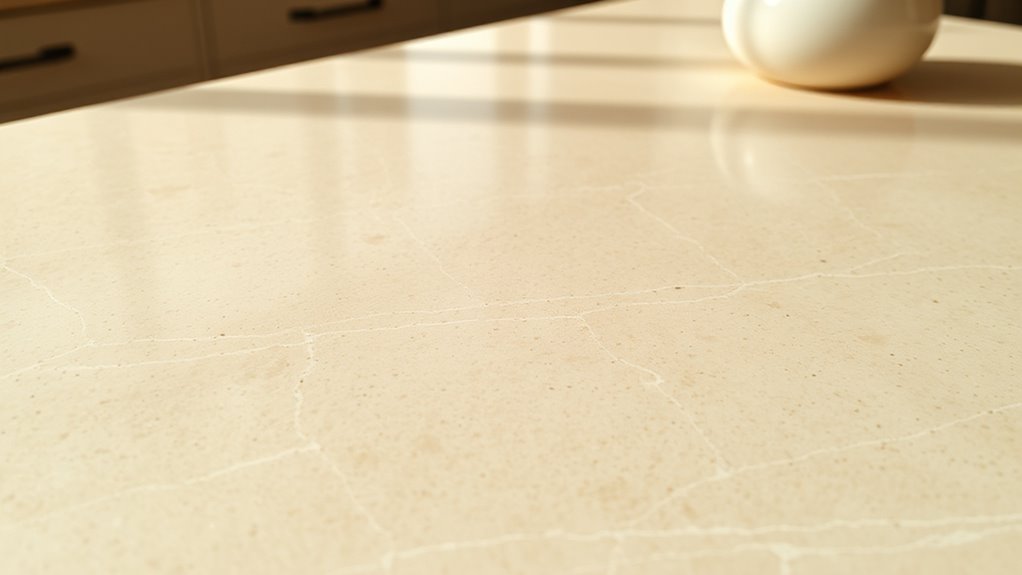
To keep your stone countertops looking their best, start by using cutting boards for all food prep. Wipe up spills right away to prevent acids from causing etching. Stick to gentle cleaning products to avoid damaging the surface over time. Additionally, avoid silly tantrums and unexpected pet antics that can cause accidental scratches or damage.
Use Cutting Boards Regularly
Using cutting boards regularly is one of the simplest ways to protect your stone countertops from etching. Not only does this practice promote cutting board safety, but it also enhances kitchen hygiene. To maximize protection, consider these tips:
- Always use a clean cutting board for raw meats, vegetables, and fruits to prevent cross-contamination.
- Choose sturdy, non-abrasive cutting boards to avoid scratching the surface and exposing it to potential etching.
- Replace worn or heavily scored boards, as deep cuts can harbor acids and bacteria, risking etching or contamination.
- Incorporate proper maintenance routines to keep your countertops in optimal condition and prevent damage.
Wipe Spills Promptly
Promptly wiping up spills is essential to prevent etching on your stone countertops. Liquids like acidic juices or wine can seep into the surface if left too long, risking damage to your polished finish. Regular sealant application creates a protective barrier that minimizes stain absorption and makes cleanup easier. When spills happen, use a soft cloth or paper towel to remove them immediately, preventing contact that could lead to etching. This simple habit helps maintain the countertop’s sleek look and prolongs its lifespan. Remember, the faster you act, the less likely your stone is to suffer from etching or dull spots. Consistent care with prompt spill cleanup and proper sealing ensures your stone stays beautiful and resilient over time.
Use Gentle Cleaning Products
Choosing the right cleaning products is key to preventing etching and maintaining your stone’s polished appearance. Use cleaning agents formulated for natural stone, guaranteeing they have a neutral pH balance—around 7. This minimizes the risk of damaging the surface. To keep your countertops pristine, consider these tips:
- Opt for pH-neutral cleaners designed specifically for stone surfaces.
- Avoid acidic or alkaline cleaners that can disrupt the stone’s surface.
- Read labels carefully to verify the cleaning agent’s pH level and suitability for your countertop.
Using gentle, appropriate cleaning products prevents etching caused by harsh chemicals. Regularly using pH-balanced cleaners preserves the stone’s shine and ensures long-lasting beauty.
How to Fix and Restore Etched Stone Surfaces
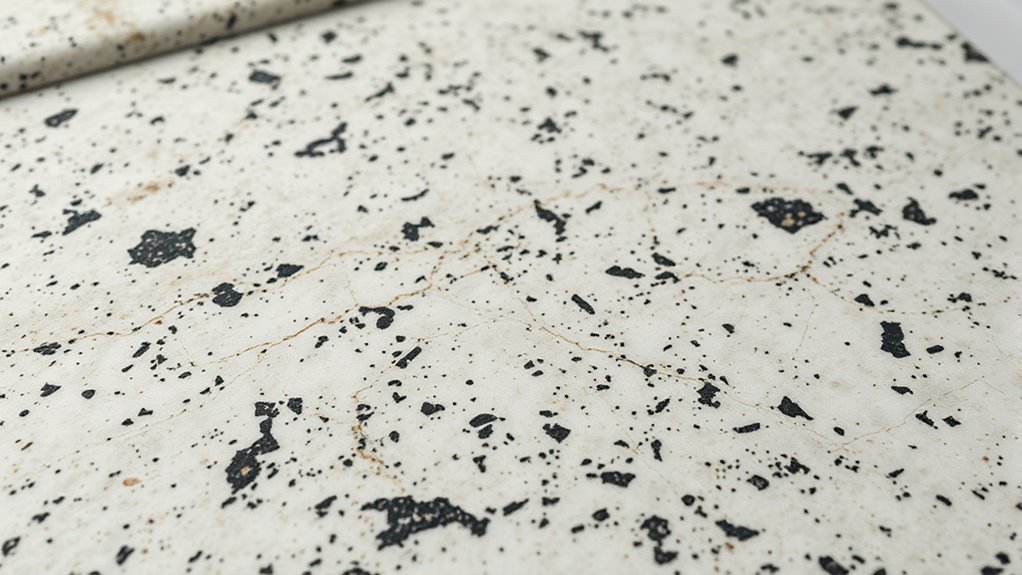
Etched stone surfaces can be frustrating to deal with, but with the right approach, you can restore their appearance and integrity. Start by gently cleaning the surface to remove residues. Then, use polishing techniques designed specifically for stone to smooth out minor etching. For deeper damage, a professional polish or honing may be necessary. After restoring the surface, sealing methods help prevent future etching and stains. Proper sealing creates a barrier that shields your countertop from acidic spills. Here’s a quick overview:
| Step | Action |
|---|---|
| Cleaning | Use gentle, pH-neutral cleaners |
| Polishing Techniques | Buff etched areas to restore shine |
| Sealing Methods | Apply high-quality sealant to protect |
Consistent maintenance with sealing and polishing ensures your stone remains beautiful and resistant to etching.
What’s the Difference Between Etching and Staining?
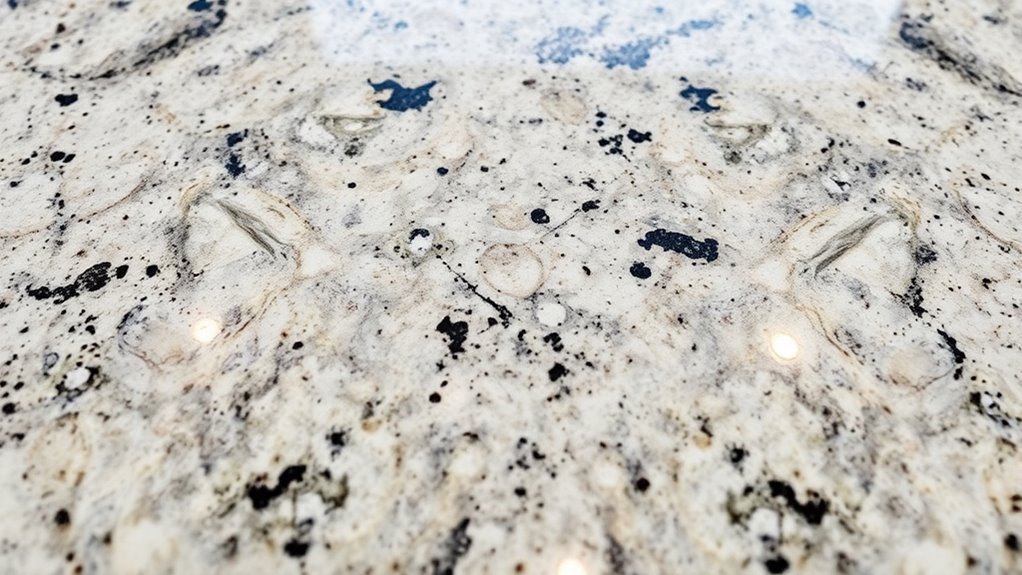
Understanding the difference between etching and staining is essential for properly caring for your stone surfaces. Etching appears as surface discoloration caused by acids reacting with the stone, creating dull spots or marks. Staining, however, involves deeper penetration, often resulting from spills or mineral deposits that leave permanent discoloration. To distinguish between them:
Etching causes dull surface spots, while staining penetrates deeper with persistent discoloration.
- Surface discoloration from etching is usually dull and can be polished out.
- Stains caused by mineral deposits tend to be darker or more persistent.
- Etching affects the surface’s top layer, while stains penetrate deeper and require different treatment.
Knowing the difference helps you choose the right cleaning or restoration approach, preventing unnecessary damage. Proper care preserves your stone’s beauty and prevents surface discoloration from mineral deposits or etching.
Frequently Asked Questions
Can Etching on Stone Countertops Be Completely Removed?
Yes, you can often remove etching from stone countertops, but it depends on the severity. You need to restore the pH balance of the surface and improve its acid resistance. Light etching might be buffed out with polishing compounds, while deeper damage may require professional resurfacing. Regular sealing helps prevent future etching, keeping your countertops looking their best and maintaining their acid resistance.
Are There Specific Cleaning Products That Prevent Etching?
You should choose cleaning product recommendations that are pH-neutral, gentle, and non-abrasive to prevent etching. Regularly wipe your countertops with soft cloths, avoid acidic or alkaline cleaners, and promptly clean spills. Implement stain prevention techniques like sealing your stone regularly and using coasters or trivets. By following these steps, you actively protect your surface, maintain its beauty, and reduce the risk of etching developing over time.
How Long Does It Take for Etching to Appear?
Etching on your natural stone countertop can appear within minutes to hours if you spill acidic substances like lemon juice or vinegar. Regular countertop maintenance and proper natural stone care help delay or prevent visible etching. To reduce risks, clean spills promptly and use gentle, pH-neutral cleaners. By following these practices, you’ll protect your surface’s beauty and longevity, ensuring your countertop stays pristine longer.
Is Etching More Common on Polished or Honed Surfaces?
Etching is more common on polished finishes than honed surfaces. You’ll notice it more on a polished surface because its smooth, shiny look highlights stains and marks, including etching. A honed surface, with its matte and softer appearance, tends to hide etching better. So, if you want to minimize visible etching, consider choosing a honed surface, especially in high-traffic or acidic-use areas.
Does Sealing Stone Countertops Stop Etching From Occurring?
Sealing your stone countertops can help, but don’t assume it’s a magic fix. Sealant effectiveness varies, and while it offers some surface durability, it doesn’t completely prevent etching. You might think your countertops are protected, but a sudden spill or acidic contact can still cause damage. To truly safeguard your surfaces, consider regular sealing and mindful maintenance—trust us, the secret to lasting beauty lies in proactive care.
Conclusion
Understanding etching helps you protect your stone countertops from damage that’s more relentless than a hurricane. By knowing what causes it and how to prevent it, you can keep your surfaces looking flawless for years. Remember, without proper care, etching can turn your beautiful countertop into a shadow of its former self—faster than you can say “repair.” Stay vigilant, take action early, and your countertops will remain stunning and durable, outlasting even the most aggressive household mishaps.
Fall Picks
fall essentials
As an affiliate, we earn on qualifying purchases.