
Cold water washing is great for protecting fabrics, saving energy, and preventing color fading, especially with synthetics or delicate items. It works well for light stains, fresh fruit spills, and maintaining fabric quality. However, it may not be enough for heavy grease, mud, or bacteria-laden items, which require warmer water. To get the best results and know when to switch, explore how to optimize cold water laundry.
Open a free Amazon Business account
Business pricing, bulk buying and tax-exempt orders.
As an affiliate, we earn on qualifying purchases.
Key Takeaways
- Cold water washing effectively preserves fabric colors, prevents shrinking, and reduces wear for most synthetic and delicate fabrics.
- It works well for light stains, fresh food spills, and everyday laundry, especially with cold-water-specific detergents.
- Cold water may be insufficient for heavy stains, greasy/oily residues, or sanitizing items like towels and bedding.
- Warmer or hot water is recommended when dealing with stubborn stains, heavy soiling, or for thorough sanitation purposes.
- Proper detergent selection and machine maintenance optimize cold water cleaning performance and extend clothing lifespan.
As an affiliate, we earn on qualifying purchases.
Why Cold Water Washing Is on the Rise
Have you wondered why more people are choosing cold water washing? The main reasons include protecting your clothes from dye fading and fabric shrinking. Cold water is gentler, helping colors stay vibrant longer, so your favorite shirts don’t lose their brightness after multiple washes. It also reduces the risk of shrinking delicate fabrics, keeping your clothes fitting just right. Additionally, washing with cold water saves energy since you don’t need to heat the water, lowering your utility bills. As awareness about eco-friendly practices grows, more people are switching to cold water to minimize their environmental impact. Proper water temperature can also influence how effectively your detergent works and how well stains are removed. Overall, cold water washing offers a practical way to care for your clothes while saving money and protecting the planet. That’s why it’s quickly becoming a popular choice.
As an affiliate, we earn on qualifying purchases.
Fabrics That Respond Best to Cold Water

Curious about which fabrics benefit most from cold water washing? You’ll find that fabric blends, especially those with synthetic fibers like polyester or nylon, respond well to cold water. These blends retain their shape and color better without the risk of shrinking or bleeding. Delicate textiles, such as silk, lace, and fine wool, also thrive when washed in cold water, as it minimizes damage and prevents stretching or fraying. Cold water helps preserve the integrity of these sensitive fabrics, keeping them looking new longer. Additionally, many athletic and performance fabrics, often made from specialized blends, maintain their moisture-wicking properties when washed cold. Energy-efficient washing also benefits from cold water, reducing energy consumption and supporting sustainable practices. Overall, choosing cold water for these fabrics reduces wear and tear, extending their lifespan and maintaining their appearance.
As an affiliate, we earn on qualifying purchases.
Which Stains Come Out Better With Cold Water?
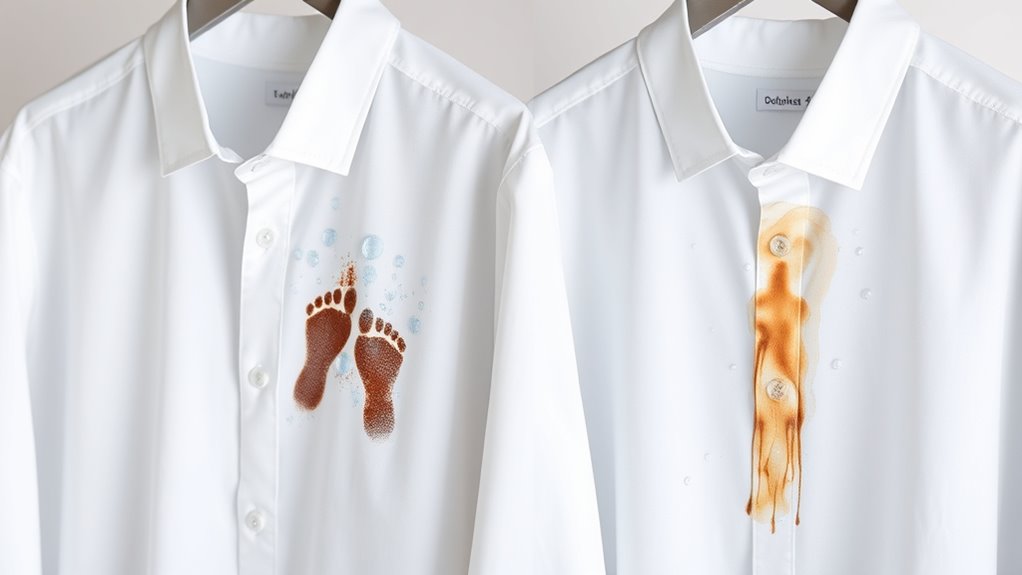
You’ll find that fresh food stains, like fruit or tomato sauce, come out more easily with cold water. Light-colored fabrics also respond better, avoiding discoloration or set-in marks. Using cold water can help keep your clothes looking their best without risking damage. Additionally, understanding Free Floating techniques can assist in managing laundry loads more efficiently.
Fresh Food Stains
When dealing with fresh food stains, cold water often proves to be more effective at removing the mess before it sets. Cold water helps prevent the stain from bonding with the fabric fibers, making removal easier. For example:
- Fruit stains like berries and grapes come out better with cold water, preventing color from setting.
- Greasy spots from food oils are less likely to spread or deepen when rinsed immediately with cold water.
- Tomato sauce stains are easier to lift before they dry and set, especially with cold rinsing.
- Yogurt and dairy spills respond well to cold water, reducing the chance of permanent staining.
- Incorporating visual and auditory cues techniques can enhance the effectiveness of stain removal, especially for persistent stains.
Act quickly, and cold water can save your clothes from stubborn marks, especially with fresh food stains.
Light Colored Fabrics
Light-colored fabrics benefit greatly from cold water washing because it helps prevent stains from setting or becoming more noticeable. Cold water reduces the risk of dye bleeding, which can distort your fabrics’ vibrant look. It also minimizes fabric shrinkage, keeping your clothes fitting like new. However, some stains, like oil-based ones, may require warmer water for better removal. Here’s a quick comparison:
| Benefit | Limitation |
|---|---|
| Prevents dye bleeding | Less effective on some stains |
| Reduces fabric shrinkage | Not ideal for heavy dirt |
| Keeps colors bright | Certain stains need warmer water |
| Maintains fabric integrity | May not fully remove stubborn stains |
| Saves energy | Not suitable for all stain types |
Using cold water with the right techniques can also help preserve the longevity of your clothing fibers, extending their lifespan.
Use cold water confidently with light fabrics to keep them looking fresh and vibrant.
stain remover for fresh food stains
As an affiliate, we earn on qualifying purchases.
As an affiliate, we earn on qualifying purchases.
When Cold Water Washing Might Not Be Enough
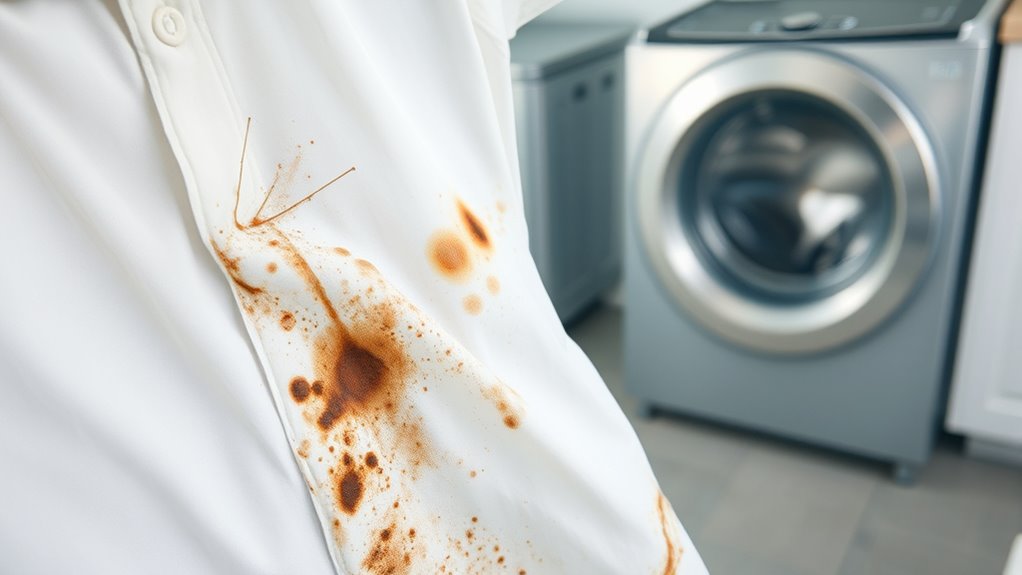
There are situations when cold water washing simply isn’t enough to remove stubborn stains or kill germs effectively. If you’re dealing with certain issues, cold water may fall short. For example:
- Color bleeding can occur, especially with new, vibrant fabrics that haven’t been colorfast.
- Heavy stains from oil, grease, or mud often require higher temperatures or pre-treatment.
- Bacterial or germ-laden items, like towels or bed linens, need warm or hot water to ensure proper sanitation.
- Persistent odors, such as sweat or mold, may not fully wash out without higher temperatures or specialized detergents.
- It’s also important to consider water temperature and how it impacts cleaning effectiveness and fabric care.
How Detergents Boost Cold Water Cleaning Power
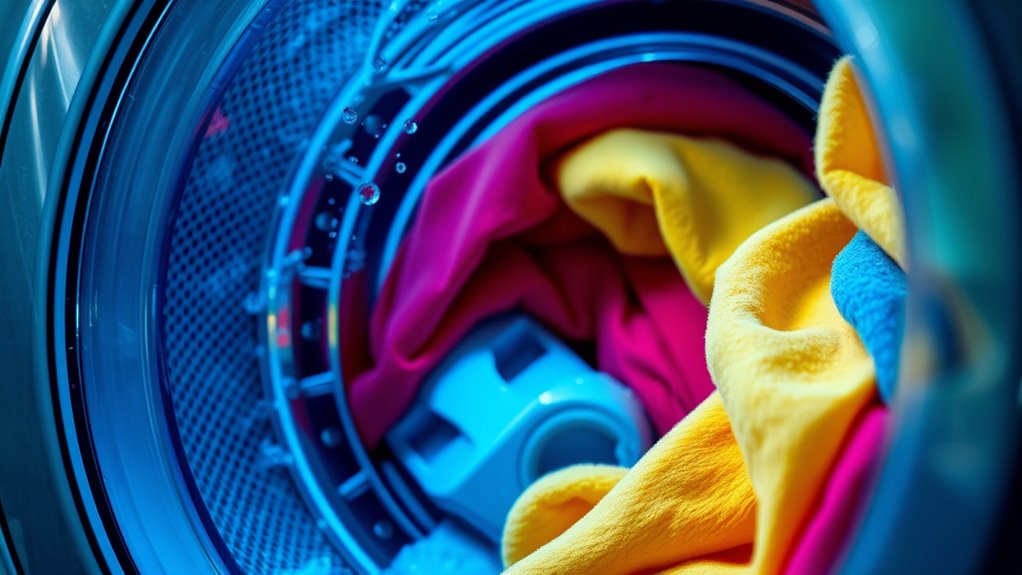
Detergents contain enzymes that break down stains even in cold water, making your laundry more effective. Surfactants help lift dirt and grease from fabrics, improving cleaning power without heat. Together, these ingredients guarantee your clothes come out fresh and clean, even at lower temperatures. Understanding how enzymes work enhances the effectiveness of cold water washing by targeting specific stains more efficiently.
Enzymes Enhance Effectiveness
Enzymes play a crucial role in boosting the cleaning power of detergents, especially in cold water. They enhance enzyme efficiency by breaking down stains more effectively at lower temperatures, thanks to advancements in cold water chemistry. Here’s how enzymes help:
- They target specific stains like proteins, fats, and starches.
- They work faster in cold water, reducing wash times.
- They improve overall stain removal without needing hot water.
- They minimize detergent use, making washing more eco-friendly.
- Innovative precious metal IRA options are now available to diversify investment portfolios and protect assets.
Surfactants Improve Cleaning
Surfactants are key ingredients in modern detergents that considerably enhance cleaning performance in cold water. They work by reducing surface tension, allowing water to penetrate fabrics more effectively. In terms of detergent formulation, surfactant chemistry is crucial because it determines how well the detergent interacts with oils, dirt, and stains at lower temperatures. Different surfactants are designed to optimize cleaning power without relying on heat, making them essential for cold water washing. They break down greasy residues and suspend particles, preventing them from settling back onto clothing. By choosing the right surfactants, you can achieve a thorough clean even in cold water, saving energy and protecting delicate fabrics. Proper surfactant chemistry ensures your detergent performs reliably across a range of cold water washing conditions. Additionally, understanding testing methodologies helps in developing formulations that maintain high cleaning efficiency at lower temperatures.
Tips to Get the Most From Cold Water Laundry
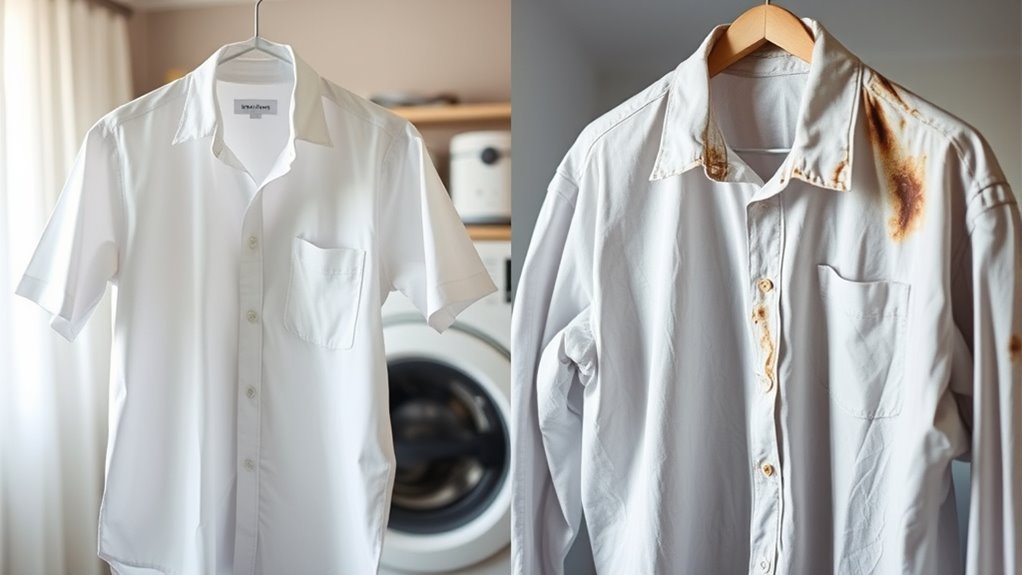
To get the best results from cold water laundry, start by choosing the right detergent designed for cold temperatures. Proper detergent selection guarantees your clothes get clean without hot water’s help. Additionally, keep your washing machine well-maintained for peak performance. Here are some tips:
- Use a cold-water-specific detergent to boost cleaning power.
- Avoid overloading your machine to allow proper agitation.
- Regularly clean lint filters and seals to prevent odor and residue buildup.
- Check and maintain water temperature settings to ensure they’re correctly calibrated.
- Consult your washing machine’s load‑planning tools to optimize cycle efficiency and prevent issues.
Following these steps helps you maximize cold water benefits, preserves fabric integrity, and extends your machine’s lifespan. Proper detergent choice and maintenance are key to achieving fresh, clean laundry every time.
Environmental and Cost Benefits of Cold Water Washes
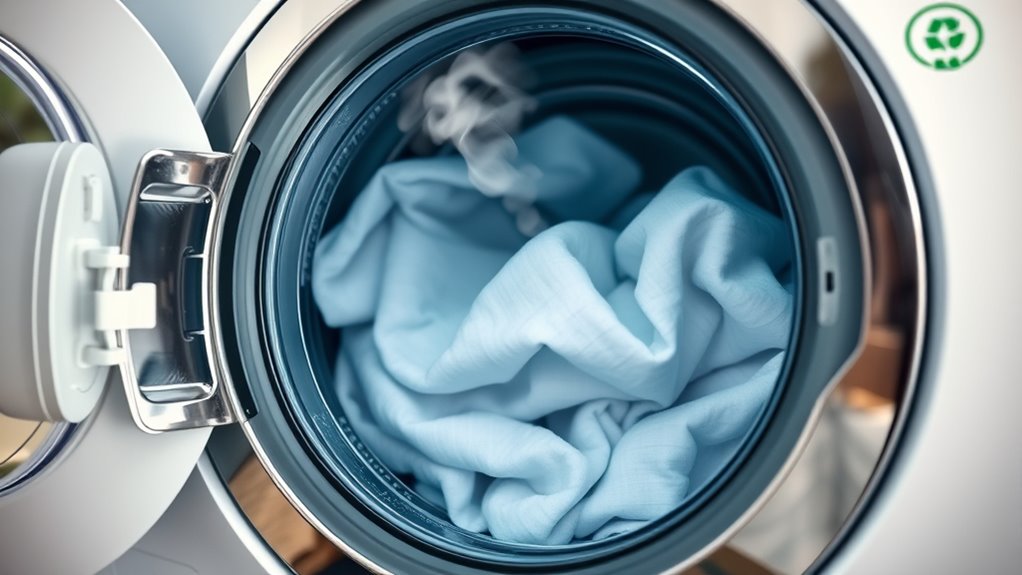
Washing clothes in cold water offers significant environmental and cost advantages by reducing energy consumption. Heating water accounts for a large portion of laundry energy use, so opting for cold water lowers your utility bills and minimizes your carbon footprint. When selecting detergent formulations, look for those specifically designed for cold water, as they work effectively at lower temperatures. Adjust your laundry machine settings to cold wash cycles to maximize savings. Using cold water also helps preserve fabric colors and reduces wear and tear, extending your clothing’s lifespan. By consistently choosing cold water washes, you contribute to environmental conservation and save money, making it an efficient and eco-friendly laundry routine that benefits both your wallet and the planet.
When to Switch to Warm or Hot Water for Better Results
While cold water works well for everyday laundry, there are times when warmer or hot water can deliver better cleaning results. When dealing with heavily soiled clothes or items with stains, increasing the water temperature helps break down dirt more effectively. Warm or hot water also benefits fabric dyeing, ensuring colors set properly and don’t fade. Consider switching to warmer water if:
Warm or hot water boosts cleaning power for heavily soiled clothes and helps set or preserve fabric dyes effectively.
- You’re washing greasy or oily stains.
- Items are heavily soiled or muddy.
- You’re cleaning bedding or towels for thorough sanitation.
- You need to set or preserve fabric dyeing, especially for bright or dark colors.
Adjust water temperature based on the fabric type and cleaning needs to maximize results without damaging your clothes or the environment.
Frequently Asked Questions
Can I Use Cold Water for All Types of Laundry Loads?
Yes, you can use cold water for most laundry loads, but consider detergent selection and fabric compatibility. Use detergents formulated for cold water to guarantee effective cleaning. Check fabric labels—delicates and items prone to shrinking or color bleeding may need warm or hot water. For best results, match your water temperature to the fabric type and stain type, ensuring your clothes stay vibrant and intact.
How Does Cold Water Washing Affect Color Fading?
Like a gentle breeze that preserves delicate petals, cold water washing helps maintain color retention and dye stability, reducing fading. It’s effective for most colored fabrics, preventing colors from bleeding and fading over time. However, for heavily soiled items or whites, cold water might not be as effective, and you may need warmer water to guarantee thorough cleaning. Overall, cold water keeps your colors vibrant longer.
Are There Any Safety Concerns With Cold Water Washing?
Yes, there are safety considerations when cold water washing. You should always check detergent safety and use the right type for cold water to prevent skin irritation or allergic reactions. Additionally, make certain your appliance is compatible with cold water cycles to avoid damage or leaks. Using the correct detergent and verifying appliance compatibility helps keep you safe and maintains your washer’s performance.
Does Cold Water Washing Eliminate Bacteria Effectively?
Cold water washing doesn’t eliminate bacteria effectively because bacteria survival depends on high temperatures. While cold water can remove dirt and some germs, it’s less effective as a disinfectant compared to hot water. If you want to kill bacteria, you need hot water or added disinfectants. Relying solely on cold water may leave some bacteria intact, so use proper disinfectants when necessary to guarantee thorough cleanliness.
How Long Should I Run a Cold Water Wash Cycle?
You should run a cold water wash cycle for about 30 to 60 minutes, depending on your laundry load. This duration guarantees your detergent works effectively and that stains are properly treated. Cold water washing saves energy and reduces your utility bills, but it’s important to select the right detergent for cold temperatures. Longer cycles can enhance cleaning, especially for heavily soiled clothes, while shorter cycles save even more energy.
Conclusion
Think of cold water washing as your trusty sailboat steering calm, clear waters. When the conditions are right, you’ll glide smoothly, saving energy and protecting your fabrics. But when storms—or stubborn stains—roll in, you might need the warmth of a stronger wind to reach your destination. Trust your instincts, know your boat, and switch gears when needed. With the right approach, your laundry voyage stays efficient, eco-friendly, and stain-free every time.
NFL season / tailgating Picks
team gear
As an affiliate, we earn on qualifying purchases.