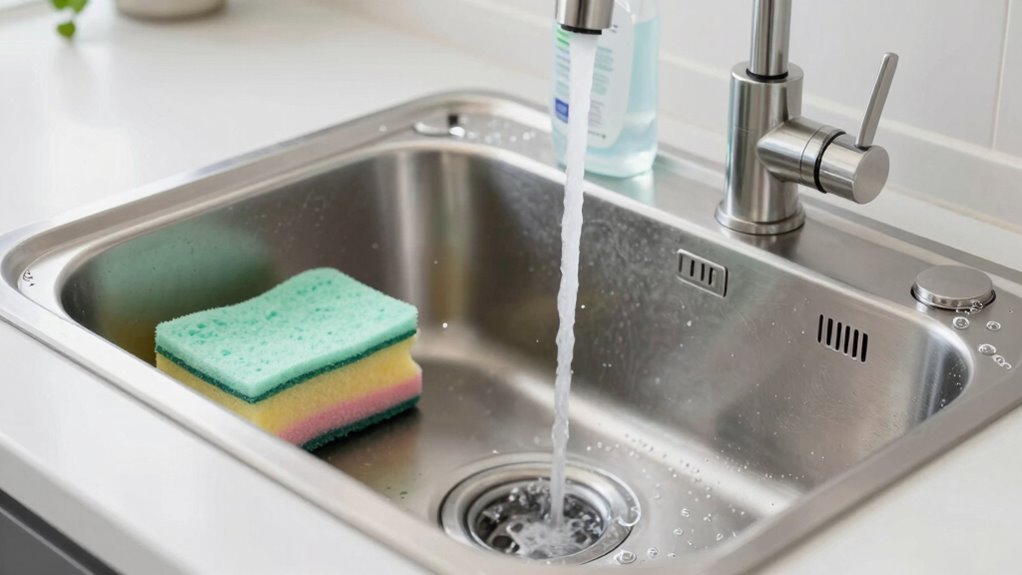

To keep bacteria down, develop a daily routine that includes rinsing, wiping, and disinfecting your sink and handles with natural or eco-friendly cleaners. Deep clean weekly with warm water, vinegar, or hydrogen peroxide, scrubbing all surfaces and drain areas. Make sure to use separate tools for different tasks to prevent cross-contamination. Paying attention to frequently touched spots and maintaining good water quality further boosts hygiene. Continue exploring simple steps to keep your sink bacteria-free and safe.

Prime made for students and young adults
- Fast, free delivery for dorm and study essentials
- Prime Video and Amazon Music included
- Member-only deals
Key Takeaways
- Rinse and wipe the sink with warm water and natural disinfectants daily to remove debris and bacteria.
- Disinfect sink handles and frequently touched areas after each use to prevent cross-contamination.
- Schedule regular deep cleans with eco-friendly cleaners, scrubbing all surfaces including drains and faucets.
- Use non-porous materials like stainless steel for sinks to resist bacterial buildup and simplify cleaning.
- Maintain a consistent cleaning routine, including accessories and water quality checks, to sustain a hygienic environment.
As an affiliate, we earn on qualifying purchases.
Why a Clean Sink Helps Reduce Germ Spread
A clean sink is essential for reducing the spread of germs in your home. Germ hotspots like the sink often harbor sink bacteria that can transfer to your hands, dishes, and other surfaces. When you neglect cleaning, bacteria multiply quickly, increasing the risk of illness. A dirty sink provides a perfect environment for germs to thrive, especially in moist areas around the drain and faucet. By keeping your sink clean, you remove these bacteria before they spread further. Regularly scrubbing your sink with disinfectant reduces sink bacteria and minimizes the chance of cross-contamination in your kitchen or bathroom. Incorporating connected cleaning tools can help monitor and maintain optimal hygiene levels more effectively. Remember, a clean sink isn’t just about appearance—it’s a crucial step in maintaining a hygienic, germ-free environment.
As an affiliate, we earn on qualifying purchases.
How to Maintain Your Sink Daily for Hygiene
To keep your sink hygienic every day, make it a habit to rinse away food debris and soap residues after each use. The sink material, whether stainless steel, porcelain, or composite, influences cleaning ease and bacterial buildup. Use warm water—around 100°F or comfortably hot—to help loosen grime and kill germs effectively. Avoid using water that’s too hot, which could damage certain sink surfaces, or too cold, which may not clean as well. After rinsing, wipe down the sink with a clean cloth or sponge to remove remaining moisture and prevent mold. Regularly drying your sink reduces water spots and bacterial growth. Incorporating natural cleaning methods can also help maintain a bacteria-resistant environment. Staying consistent with this routine guarantees your sink remains a hygienic, bacteria-resistant area every day.
As an affiliate, we earn on qualifying purchases.
Deep Clean Your Sink Weekly With Effective Products
To keep your sink truly clean, you need to pick the right products that cut through grime and bacteria. Setting a regular schedule guarantees you don’t skip deep cleaning sessions and keep buildup at bay. With effective cleaners and consistent effort, your sink stays spotless and hygienic. Additionally, using appropriate cleaning techniques tailored to your sink materials helps prevent damage and ensures thorough sanitation.
Choose Effective Cleaners
Choosing the right cleaner is essential for effectively deep cleaning your sink. Opt for natural disinfectants or eco-friendly cleaners to guarantee you’re using safe, effective products. Natural disinfectants like vinegar or hydrogen peroxide kill germs without harsh chemicals, making them ideal for a thorough clean. Eco-friendly cleaners are designed to be both powerful and environmentally responsible, helping you reduce chemical exposure while maintaining cleanliness. Always check labels to confirm the product’s disinfecting capabilities and suitability for your sink material. Avoid harsh bleaches or synthetic chemicals that may damage surfaces or leave residues. Incorporating proper cleaning techniques can enhance the effectiveness of your chosen products. By selecting effective, eco-conscious cleaners, you ensure a deep clean that kills bacteria, reduces odors, and keeps your sink fresh without compromising health or the environment.
Maintain Regular Schedule
Scheduling regular deep cleans with effective products keeps your sink consistently fresh and hygienic. Set a weekly routine to clean thoroughly, paying attention to sink organization to avoid clutter that traps bacteria. Use warm water to facilitate cleaning, but guarantee it’s not too hot to avoid damaging surfaces. Adjust the water temperature to help loosen grime and disinfect effectively. During each deep clean, scrub all surfaces, including the sink basin, faucet, and drain, to tackle hidden buildup. Regular maintenance prevents mold, soap scum, and bacteria from accumulating. Incorporate proper cleaning techniques to maximize effectiveness and ensure thorough sanitation. Keeping a consistent schedule ensures your sink stays spotless and safe. By sticking to this routine, you minimize bacteria growth and maintain a clean, hygienic environment effortlessly.
natural kitchen sink disinfectant
As an affiliate, we earn on qualifying purchases.
As an affiliate, we earn on qualifying purchases.
How to Prevent Cross-Contamination in the Sink
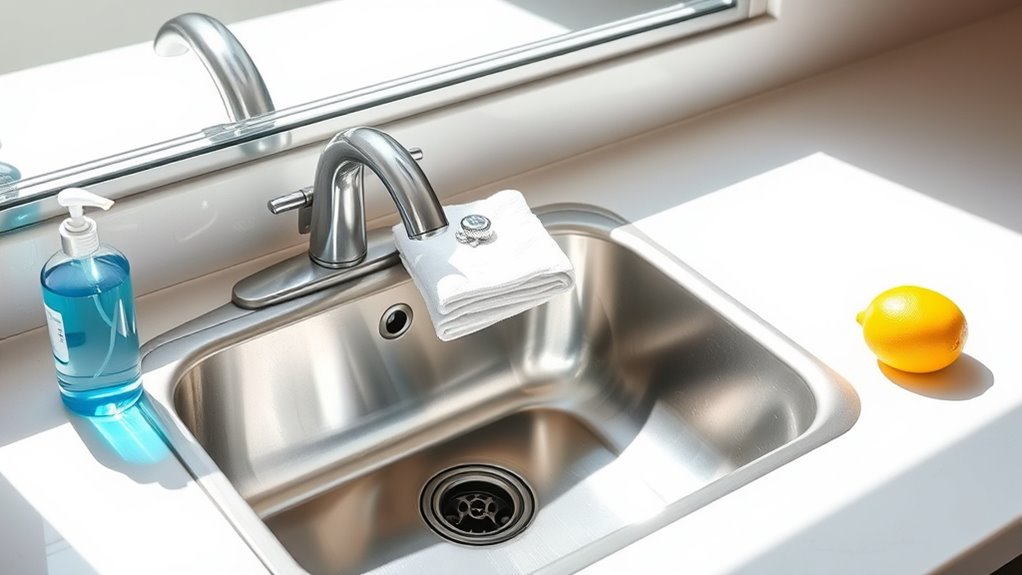
Cross-contamination in the sink can easily happen if you’re not careful. First, choose a sink with non-porous material, like stainless steel, which resists bacteria buildup. Avoid sinks with cracks or porous surfaces that trap germs. Always set the water temperature to hot enough to kill bacteria—around 140°F (60°C)—and let the water run briefly before washing dishes or utensils. Keep food prep areas separate from cleaning zones to prevent cross-contamination. Use separate sponges or brushes for different tasks, and sanitize them regularly. After each use, rinse the sink thoroughly and wipe down surfaces with a disinfectant. Maintaining proper sink hygiene practices is essential for preventing bacteria transfer, keeping your sink and kitchen safer.
Common Sink Cleaning Mistakes to Avoid
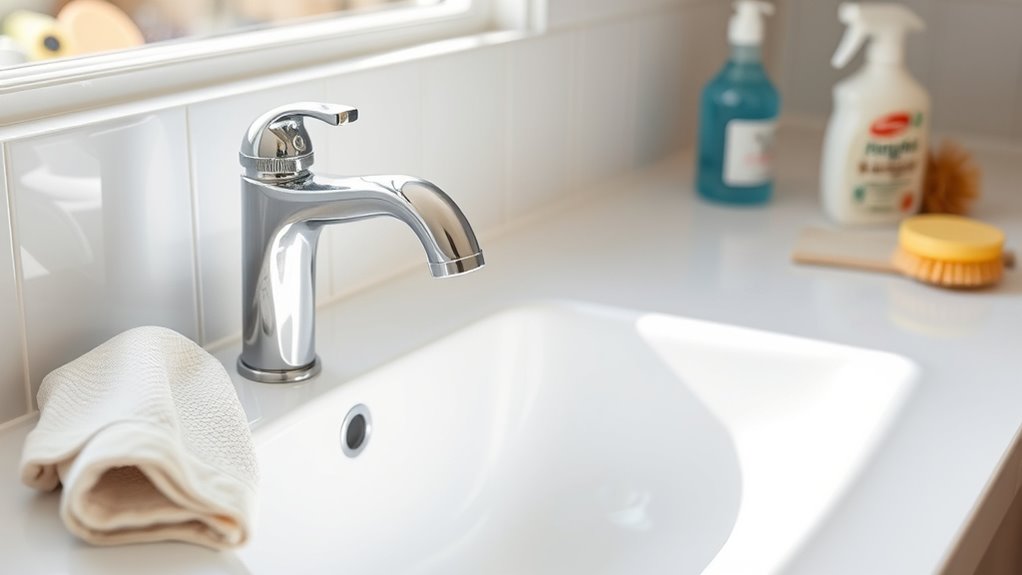
Many people make mistakes that can hinder proper sink cleaning. Using harsh chemicals too often can damage surfaces, while neglecting sink drains allows buildup and odors. Also, forgetting to disinfect handles leaves germs behind, risking cross-contamination. Incorporating regular aeration can help prevent odors and maintain a cleaner sink environment.
Using Harsh Chemicals Regularly
While it might seem like using strong chemicals can quickly restore a sink’s shine, regularly relying on harsh cleaners can do more harm than good. Harsh chemicals can damage your sink’s surface over time, leading to cracks or discoloration. They can also weaken the sink’s finish, making it more prone to stains and bacterial buildup. Instead, focus on cleaning frequency with gentler options like vinegar or baking soda, which effectively disinfect without risking damage. Overusing harsh chemicals may seem efficient, but it can create a cycle of deterioration that requires more extensive repairs later. Always read labels and use these powerful cleaners sparingly. Consistent, moderate cleaning with milder agents ensures your sink stays clean, shiny, and free of harmful bacteria without compromising its integrity.
Neglecting Sink Drains
Have you been neglecting your sink drains? Overlooking proper sink drain maintenance can lead to stubborn drain odors and bacteria buildup. Regularly cleaning your drains prevents clogs and keeps bacteria at bay. Consider the following tips:
| Tip | Why it Matters | How to Do It |
|---|---|---|
| Use baking soda & vinegar | Natural drain odor control | Pour, wait, then flush with hot water |
| Remove debris regularly | Prevents clogs and bacteria | Clear out hair and food particles |
| Flush with hot water | Maintains flow and odor control | Run hot water daily |
Neglecting your sink drains can cause unpleasant smells and hygiene issues. Staying mindful of maintenance and consistent with drain care is essential to keep your sink fresh and bacteria-free.
Forgetting to Disinfect Handles
Neglecting to disinfect sink handles is a common mistake that can compromise your hygiene. Handles often harbor bacteria and germs, making sink handle hygiene essential. If you skip disinfecting handles regularly, you risk spreading bacteria every time you touch them. Use a disinfectant spray or wipes on all sink handles after cleaning the basin, ensuring you cover all surfaces thoroughly. Pay special attention to handles that are frequently used, like those in busy kitchens or bathrooms. Remember, bacteria can linger on handles even after washing your hands or cleaning the sink itself. Incorporate disinfecting handles into your routine to prevent cross-contamination and maintain a truly clean sink area. Proper sink handle hygiene is a simple but crucial step toward a healthier environment. Additionally, understanding air quality and how it impacts indoor environments can help you create a safer, healthier home overall.
Extra Hygiene Tips to Boost Your Sink Routine
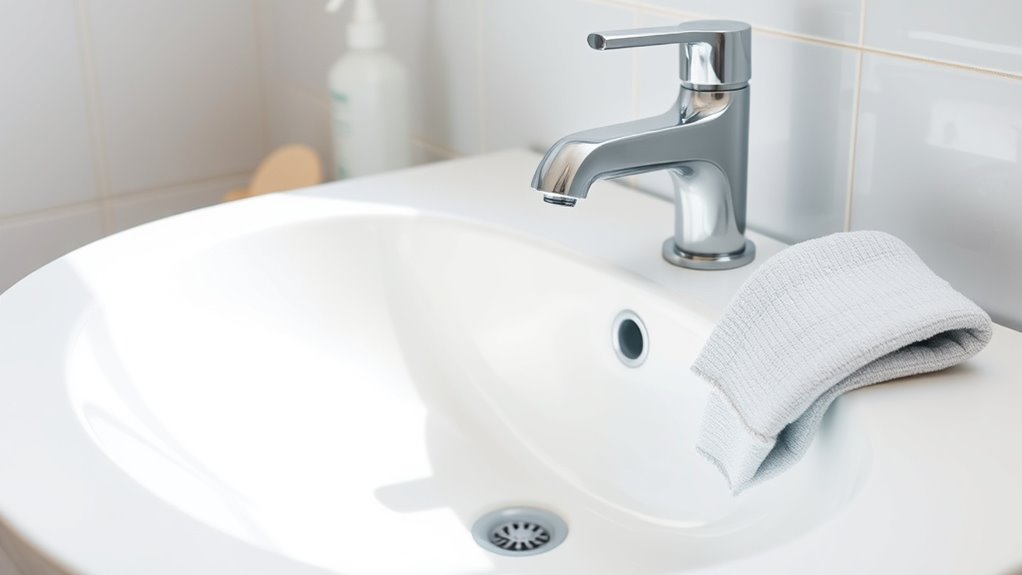
Adding extra hygiene tips can substantially enhance your sink routine and keep germs at bay. Start by regularly checking your sink accessories, like soap dispensers and brush holders, to make certain they’re clean and free of bacteria. Using high-quality water, especially filtered water, helps reduce mineral buildup and contaminants that can harbor germs. Rinse your sink accessories thoroughly and disinfect them weekly. Keep an eye on water quality, as hard water deposits can trap bacteria, making cleaning less effective. Consider installing a water filter if your tap water isn’t ideal. Regularly inspecting your water quality can help identify issues early and prevent bacterial growth. By paying attention to these details, you create a more hygienic environment. Consistently maintaining your sink accessories and ensuring water quality are simple yet effective ways to boost your sink routine’s overall cleanliness.
Frequently Asked Questions
Can Using Natural Cleaning Products Effectively Replace Chemical Disinfectants?
Natural alternatives can be effective, but they often don’t match chemical efficacy for disinfecting surfaces. You’ll find that natural products like vinegar and essential oils can reduce bacteria, but they might not eliminate all germs as reliably as chemical disinfectants. If you want a safer, eco-friendly option, combine natural methods with proper cleaning techniques. However, for high-risk areas, chemical disinfectants remain the most dependable choice for germ control.
How Does Sink Material Affect Bacteria Buildup and Cleaning Methods?
Your sink surface and material durability directly impact bacteria buildup and cleaning methods. For example, stainless steel resists bacteria and is easy to clean, making it ideal for maintaining hygiene. Porcelain and composite materials may stain or harbor germs if not cleaned properly. Choose a durable, non-porous sink surface, and clean it regularly with effective disinfectants or natural solutions, ensuring bacteria don’t accumulate regardless of the material.
Is It Necessary to Wear Gloves During Sink Cleaning Routines?
You should wear gloves during sink cleaning routines to guarantee glove safety and follow proper cleaning precautions. Gloves protect your skin from harsh chemicals and bacteria, reducing the risk of infection. It’s a simple coincidence that what keeps your sink spotless also keeps you safe. By wearing gloves, you’re actively taking a smart step in maintaining hygiene and preventing cross-contamination, making your cleaning routine both effective and safe.
How Long Should a Sink Be Left to Disinfect Properly?
You should leave your sink to disinfect for at least 5 minutes to guarantee proper sink sterilization. This allows the disinfectant’s dwell time, giving it enough time to effectively kill bacteria and germs. Make sure to follow the manufacturer’s instructions on the disinfectant label, as some may require longer or shorter dwell times. Proper timing is key to maintaining a hygienic sink and preventing bacteria buildup.
Are There Specific Tips for Cleaning Sinks in Shared or Public Spaces?
When cleaning shared or public sinks, follow strict public sink protocols to maintain shared space hygiene. Always wear gloves, use a disinfectant spray or wipes on high-touch areas like faucet handles and drains, and guarantee proper hand hygiene afterward. Regularly disinfect the entire sink basin, and encourage others to do the same. Keeping to these protocols minimizes bacteria spread and promotes a cleaner, safer environment for everyone using the space.
Conclusion
Maintaining a clean sink is essential for a healthier home, and it’s easier than you think. By sticking to your routine, you reduce bacteria and prevent cross-contamination. Some might worry it’s too time-consuming, but the effort pays off in peace of mind and better hygiene. Remember, consistency is key—your sink’s cleanliness reflects your overall health. With simple steps, you can confidently keep germs at bay and enjoy a safer, cleaner space every day.
Halloween Picks
halloween
As an affiliate, we earn on qualifying purchases.