
Mixing household products can create problems quickly because chemical reactions happen fast and unpredictably. When you combine products like bleach and ammonia, toxic fumes such as chloramine vapors are released, which can cause serious health issues. Many chemicals are stable alone but become dangerous when mixed. Even small errors can trigger volatile or caustic reactions, risking injury or property damage. If you want to stay safe, understanding the risks and ingredients involved is essential—there’s more to know to prevent accidents.

Prime made for students and young adults
- Fast, free delivery for dorm and study essentials
- Prime Video and Amazon Music included
- Member-only deals
Key Takeaways
- Chemical reactions can occur rapidly when incompatible products are mixed, producing hazardous fumes or heat.
- Unintended interactions may generate volatile or caustic substances, leading to quick safety hazards.
- Small mixing errors can trigger unpredictable reactions, causing sudden releases of toxic gases.
- Mixing incompatible chemicals can cause explosions or burns within moments.
- Lack of knowledge about ingredient compatibility increases the risk of fast, dangerous reactions.
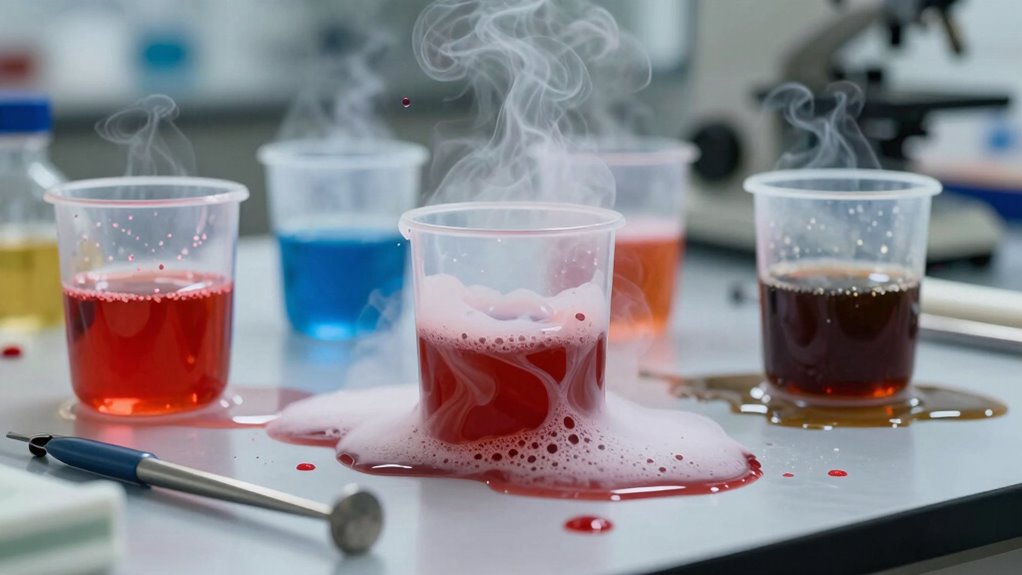
Mixing different cleaning or cosmetic products without careful consideration can lead to serious problems. When you combine substances without understanding their interactions, you risk triggering chemical reactions that can produce dangerous fumes, heat, or even explosions. These reactions often happen quickly, turning what seemed like a simple cleaning or beauty routine into a hazardous situation. It’s crucial to recognize that not all products are compatible, and ignoring this can compromise your safety and well-being in an instant.
One of the main dangers of mixing products is the potential for harmful chemical reactions. For example, mixing bleach with ammonia creates chloramine vapors, which cause breathing difficulties, chest pain, and eye irritation. Similarly, combining different acids or cleaners can release toxic gases that irritate your respiratory system or cause burns. These chemical reactions happen rapidly and unpredictably, making it nearly impossible to gauge how dangerous the mixture might be once combined. The risks escalate if you’re unaware of the ingredients in your products or if you ignore warning labels. Chemical reactions can occur unexpectedly when incompatible substances are mixed, increasing the risk of injury or damage. Additionally, many household products contain chemicals that are stable on their own but become hazardous when mixed with others. Understanding chemical stability is essential to avoid unintentional reactions.
Mixing cleaning products can produce toxic gases and cause serious health hazards unpredictably. Always follow instructions.
Safety hazards are a real concern when mixing products. Many cleaning and cosmetic items contain chemicals that are stable on their own but become hazardous when combined. You might think that combining a few drops of two products is harmless, but this can lead to the release of volatile compounds or caustic substances that can damage your skin, eyes, or lungs. Accidental inhalation of toxic fumes can cause dizziness, nausea, or more severe health issues. Even small amounts of a dangerous reaction can cause long-term health effects if inhaled or absorbed through the skin. Recognizing product interactions can help prevent accidents and protect both your health and property. It’s also wise to keep products in their original containers to avoid accidental misuse that could lead to dangerous combinations.
household chemical safety gloves
As an affiliate, we earn on qualifying purchases.
As an affiliate, we earn on qualifying purchases.
Frequently Asked Questions
Can Mixing Products Sometimes Be Safe if Done Correctly?
Mixing products can sometimes be safe if you understand chemical reactions and product stability. When you carefully read labels and research compatibility, you can avoid dangerous reactions. For example, some substances won’t react adversely if combined properly, maintaining their effectiveness. However, you must be cautious because even small mistakes can lead to hazardous outcomes. Always follow manufacturer instructions and avoid guesswork to guarantee safety when mixing products.
How Do I Identify Incompatible Product Combinations?
You can spot incompatible product combinations by watching for color changes or unusual chemical reactions. If a mixture suddenly darkens, bubbles, or emits an odd smell, it’s a sign things aren’t blending well. Always read labels and ingredient lists carefully; some chemicals don’t play nicely together. When in doubt, test small quantities first, and avoid mixing products unless you’re certain they’re safe to combine. Safety first keeps your space harmonious.
Are There Specific Products That Should Never Be Mixed?
Yes, there are specific products you should never mix, as chemical reactions can trigger dangerous fumes or fires. Always read labels carefully before combining anything, since manufacturers include safety warnings about incompatible products. Mixing bleach with ammonia, for example, creates toxic fumes, while combining acids and cleaners can cause violent reactions. To stay safe, follow label readings precisely and avoid mixing products unless you’re sure they’re compatible.
What Are the Long-Term Effects of Mixing Household Cleaners?
Mixing household cleaners can lead to subtle yet serious issues over time. You risk triggering chemical reactions that may weaken surfaces or cause lingering fumes. These unintended effects can compromise safety precautions, potentially leading to respiratory issues or skin irritation long-term. By avoiding mixing products, you safeguard your home’s environment and your health. Staying mindful of safety precautions ensures you prevent slow, unseen damage and maintain a healthier living space.
How Can I Safely Dispose of Mixed or Unused Products?
To safely dispose of mixed or unused products, follow proper disposal methods and safety protocols. First, check labels for specific instructions, as some chemicals require special handling. If no guidance is provided, contact your local waste management or hazardous waste facility. Never pour chemicals down drains or onto the ground. Use protective gear, work in well-ventilated areas, and store unused chemicals securely until disposal to prevent accidents.
chemical resistant cleaning gloves
As an affiliate, we earn on qualifying purchases.
As an affiliate, we earn on qualifying purchases.
Conclusion
Just like blending colors on a palette can muddy a masterpiece, mixing products often clouds their effectiveness and creates chaos. You’re the artist, and your tools—products—are meant to work in harmony, not clash. When you mix them blindly, you risk spoiling the entire canvas. Remember, sometimes less is more; keeping things separate preserves their true vibrancy. Trust the process, avoid the chaos, and let each product shine in its own right.
As an affiliate, we earn on qualifying purchases.
chemical safety goggles for cleaning
As an affiliate, we earn on qualifying purchases.
As an affiliate, we earn on qualifying purchases.
Halloween Picks
halloween
As an affiliate, we earn on qualifying purchases.