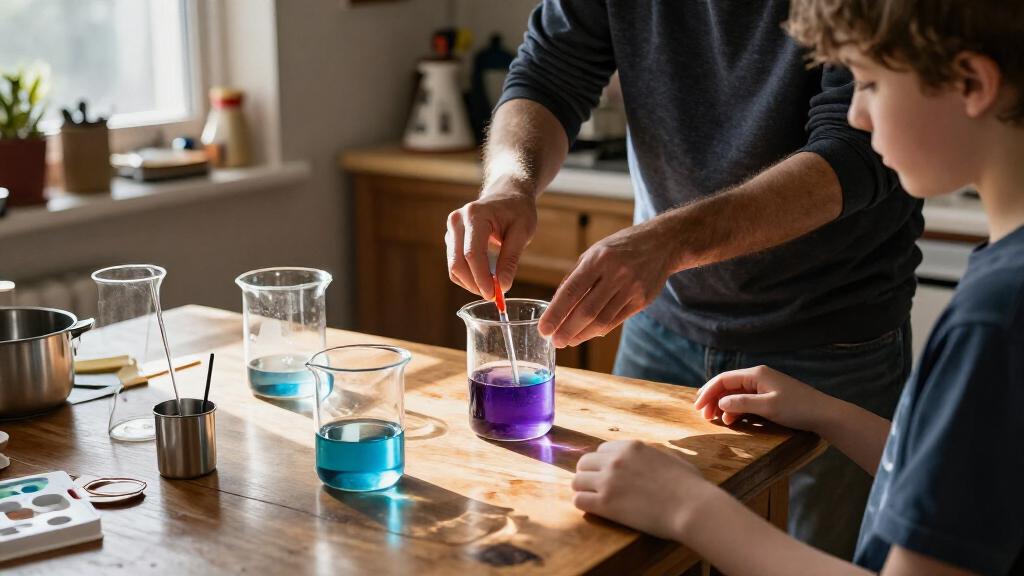

Finding the right science experiment kit for adults depends less on the age printed on the box than on the kind of learning you want: a broad chemistry course, a focused biology project, or a hands-on way to understand circuits and magnetism. My top pick for range is the Thames & Kosmos CHEM C3000, with more than 333 experiments and a substantial illustrated manual. For a more approachable chemistry start, the CHEM C1000 Beginner Chemistry Set includes 125 activities and core lab tools. The Evviva Sciences Microbiology Kit is the most direct route into observing microbial growth, using pre-poured agar plates.

Prime made for students and young adults
- Fast, free delivery for dorm and study essentials
- Prime Video and Amazon Music included
- Member-only deals
Those strengths come with real tradeoffs. C3000 offers the broadest chemistry program, but requires adult supervision and more commitment; C1000 narrows the scope in exchange for a gentler entry point. The microbiology and genetics kits are more specialized, while EUDAX focuses on electricity and magnetism rather than wet-lab science. I rank these kits by how well their materials, instructions, subject coverage, and practical demands serve an adult learner—not by the age range alone. All five can suit curious older learners, but none should be mistaken for a substitute for formal lab training or professional safety procedures.
Key Takeaways
- For the broadest chemistry curriculum, I rank the CHEM C3000 first: it covers more than 333 experiments across inorganic, organic, and electrochemistry, but calls for sustained adult supervision.
- The CHEM C1000 is my chemistry pick for a first home lab because its 125 activities, safety introduction, and included goggles give beginners a more manageable starting structure.
- Evviva Sciences is the most focused option for hands-on microbiology: the 10 pre-poured agar plates remove the need to prepare the growth medium, but biological samples still call for careful handling.
- The Genetics & DNA Lab provides a narrower biology pathway through 20 activities and a DNA model; it is a better fit for guided genetics exploration than open-ended lab practice.
- EUDAX is the only kit here centered on circuits, electromagnets, and a hand-crank generator, so it suits learners who prefer physical demonstrations over chemistry or biology experiments.
| Thames & Kosmos CHEM C3000 Chemistry Set, 333+ Experiments, Ages 12+ |  | Best Overall — broadest home chemistry curriculum | Experiments: More than 333 | Subject coverage: Inorganic, organic, and electrochemistry | Manual: 192-page, full-color illustrated experiment manual | VIEW LATEST PRICE | See Our Full Breakdown |
| Thames & Kosmos CHEM C1000 Beginner Chemistry Set, Version 2.0 |  | Best for Beginners — approachable chemistry with lab fundamentals | Experiments: 125 | Organization: 10 chapters | Manual: 80-page, full-color illustrated lab manual | VIEW LATEST PRICE | See Our Full Breakdown |
| Evviva Sciences Microbiology Science Project Kit with Pre-Poured Agar Plates |  | Best for Microbiology — ready-to-use plates for focused observation | Agar plates: 10 pre-poured nutrient agar plates | Cotton-tipped sticks: 10 | Pipette: 1 | VIEW LATEST PRICE | See Our Full Breakdown |
| Thames & Kosmos Genetics & DNA Lab |  | Best for Genetics — focused biology with a hands-on DNA model | Experiments: 20 | Manual: 48-page, full-color manual | Topics: Cells, chromosomes, genetic codes, inheritance, and DNA | VIEW LATEST PRICE | See Our Full Breakdown |
| EUDAX Electricity and Magnetism Experiment Kit |  | Best for Physics — circuits and electromagnetism without a chemistry focus | Total items: 79 | Electricity components: 56 | Magnetism components: 21 | VIEW LATEST PRICE | See Our Full Breakdown |
| science experiment kits for adult | Experiments | Manual |
|---|---|---|
| Thames & Kosmos CHEM C3000 Che | More than 333 | 192-page, full-color illustrated experiment manual |
| Thames & Kosmos CHEM C1000 Beg | 125 | 80-page, full-color illustrated lab manual |
| Evviva Sciences Microbiology S | — | — |
| Thames & Kosmos Genetics & DNA | 20 | 48-page, full-color manual |
| EUDAX Electricity and Magnetis | — | — |
More Details on Our Top Picks
Thames & Kosmos CHEM C3000 Chemistry Set, 333+ Experiments, Ages 12+
For an adult who wants a substantial chemistry program rather than a handful of demonstrations, CHEM C3000 is the strongest all-around fit in this group. Its more than 333 experiments span inorganic, organic, and electrochemistry, giving it a much wider subject map than the C1000’s 125 activities. The 27 chapters and 192-page illustrated manual also give the experiments more structure: this is the kit I would choose when the aim is to move through related ideas over time, not simply try one activity on a weekend.
The supplied equipment makes the promise more tangible. Glass test tubes, beakers, an Erlenmeyer flask, an alcohol burner, safety goggles, and other lab tools support a more recognizable home-lab format than EUDAX’s circuit components or the focused materials in the genetics kit. The manual’s size is a useful distinction too: compared with the C1000’s 80-page guide, it points to a more expansive learning path, although it also asks for more reading and patience.
The main limitation is supervision. The product specifies adult supervision throughout, so adult buyers should read that as a real working requirement rather than a child-safety footnote. Some activities also need common household additions, which can interrupt a session if you expect every experiment to be self-contained. The kit’s breadth is a benefit only if you have space, time, and willingness to follow its safety directions. I rank it first for its subject coverage and instructional depth, but a newcomer who wants a shorter, more contained introduction may be better served by C1000.
Pros:- More than 333 experiments cover inorganic, organic, and electrochemistry.
- The 192-page illustrated manual organizes activities across 27 chapters.
- Includes multiple glass lab vessels, an alcohol burner, safety goggles, and other tools.
- Offers substantially broader chemistry coverage than the C1000 beginner set.
Cons:- Adult supervision is required throughout, which limits unsupervised use.
- Some experiments need household additions beyond the included chemicals and equipment.
- Its large program may be more involved than a casual learner wants.
Best for: Adult learners seeking the widest guided chemistry curriculum in this lineup and prepared to supervise and follow lab safety instructions.
Not ideal for: Buyers who want a compact, low-preparation activity set, independent experiments without supervision, or a non-chemistry subject.
- Experiments:More than 333
- Subject coverage:Inorganic, organic, and electrochemistry
- Manual:192-page, full-color illustrated experiment manual
- Chapters:27
- Chemicals:16+
- Included equipment:Glass test tubes, beakers, Erlenmeyer flask, alcohol burner, safety goggles, and other lab tools
- Age guidance:12+
- Supervision:Adult supervision required
- Safety standard:EN 71-4
Our verdict“I rank C3000 first for adults who want the broadest and most structured chemistry experience and can commit to careful, supervised work.”
Thames & Kosmos CHEM C1000 Beginner Chemistry Set, Version 2.0
CHEM C1000 is my pick for an adult who wants to start with chemistry but does not need C3000’s much larger program. It supplies 125 experiments across 10 chapters, with an 80-page illustrated manual that introduces lab safety and techniques. That is a meaningful middle ground: more guided and equipment-rich than a general science activity box, yet less expansive than the 333-plus-experiment C3000.
The activities include chromatography, crystal growing, and electrolysis, so the kit offers more than one kind of result or technique. Its glass test tubes, graduated beakers with lids, funnel, pipettes, filter paper, and safety goggles create a practical foundation for following the manual. Seven included chemicals provide a defined starting collection. Compared with C3000, this is a more contained route into home chemistry; compared with EUDAX, it trades visible circuit building for chemical processes that call for measured handling and careful cleanup.
There are limits to that beginner framing. Adult supervision is required, and the chemical set means this is not a casual, leave-it-out activity kit. Some buyers may also find 125 experiments more than they need if they only want a single demonstration. Its safety guidance and hazard labeling help orient the work, but the buyer still needs to read instructions, use the supplied protection, and follow suitable handling and disposal directions. I place it second because its scope is narrower than C3000 while its entry path is clearer for a first chemistry learner.
Pros:- Provides 125 experiments arranged in 10 themed chapters.
- The illustrated manual introduces lab safety and practical techniques.
- Includes seven chemicals, glassware, pipettes, filter paper, and safety goggles.
- Activities cover varied methods such as chromatography, crystal growing, and electrolysis.
Cons:- Adult supervision is required.
- Chemical handling and disposal require attention to the instructions.
- Its chemistry-only focus is less suitable for buyers seeking broad science subjects.
Best for: Adults new to hands-on chemistry who want a structured introduction to techniques, equipment, and safety before taking on a broader curriculum.
Not ideal for: Learners seeking biology, physics, or a chemistry kit that can be used without adult oversight and careful chemical handling.
- Experiments:125
- Organization:10 chapters
- Manual:80-page, full-color illustrated lab manual
- Chemicals:7 included
- Included equipment:Glass test tubes, graduated beakers with lids, funnel, pipettes, wire, stoppers, filter paper, and more
- Safety equipment:Safety goggles
- Age guidance:10+
- Supervision:Adult supervision required
- Safety standard:EN 71-4
Our verdict“I recommend C1000 as the more approachable chemistry entry point, while C3000 is the better choice for learners ready for greater range and depth.”
Evviva Sciences Microbiology Science Project Kit with Pre-Poured Agar Plates
If your interest is microbial growth rather than general chemistry, Evviva Sciences’ Microbiology Kit offers the most direct starting point here. The 10 nutrient agar plates arrive pre-poured, removing one preparation step and making it easier to get into the kit’s intended experiments. Ten cotton-tipped sticks, a pipette, and a plastic vial provide basic supplies, while an eBook supplies step-by-step project instructions. That focus sets it apart from the genetics kit, which covers DNA and inheritance through a broader set of biology activities.
For an adult learner, the appeal is a concrete observation project: the materials are aimed at classroom or science-fair experiments, but the subject can also suit someone revisiting microbiology outside formal study. Pre-poured plates make the setup more accessible than a kit that asks the learner to prepare all the medium first. Compared with the chemistry kits, it avoids their collection of chemicals and glassware, though it introduces a different responsibility: handling biological samples and growth materials in line with the supplied guidance.
Its narrow scope is also its main drawback. The kit does not offer the broad lesson sequence of C1000 or C3000, and the supplied details identify an eBook rather than a printed lab manual. It is intended for ages 15 and older; adult buyers are beyond that stated threshold, but should still follow instructions closely and use appropriate hygiene and disposal practices. I rank it below the chemistry options because it covers a more specialized slice of science, not because microbiology is less valuable. Choose it when microbial observation is the point; choose the Genetics & DNA Lab for a broader introduction to genetics concepts and a physical DNA model.
Pros:- Ten pre-poured nutrient agar plates reduce preparation before starting.
- Includes cotton-tipped sticks, a pipette, and a plastic vial.
- The eBook provides step-by-step experiment instructions.
- Has a more focused microbiology purpose than the general chemistry sets.
Cons:- Covers a narrower subject area than the chemistry kits.
- The included guide is an eBook rather than a listed printed manual.
- Biological samples and plates require careful handling and disposal.
Best for: Adults specifically interested in guided microbiology observations who value pre-poured plates and step-by-step instructions.
Not ideal for: Buyers seeking a broad science curriculum, a printed manual, or projects that avoid biological growth materials.
- Agar plates:10 pre-poured nutrient agar plates
- Cotton-tipped sticks:10
- Pipette:1
- Plastic vial:1
- Guide:Science experiment eBook with step-by-step instructions
- Recommended age:15 years and older
Our verdict“I would choose Evviva Sciences when microbiology itself is the goal, while the Genetics & DNA Lab is the stronger fit for a wider biology-themed activity set.”
Thames & Kosmos Genetics & DNA Lab
Thames & Kosmos Genetics & DNA Lab is the most appealing choice here for adults who want to connect abstract genetics topics to visible activities. Its 20 experiments include isolating tomato DNA, exploring inheritance, and assembling a DNA model. A 48-page full-color manual introduces cells, chromosomes, and genetic codes, giving the activities a stronger conceptual frame than a kit that only supplies a one-off demonstration.
Compared with the Evviva microbiology kit, this one spans more genetics concepts and includes a model that can help make DNA structure tangible. It is also less of a dedicated microbial-growth kit: its center of gravity is genetics education, not repeated observation on agar plates. The listed equipment—glass bottle, test tubes, funnel, filter paper, pipette, measuring cup, and petri dish—supports practical activities, but the kit’s 20 experiments are far fewer than the chemistry options’ stated counts. That is a scope difference, not a reason to judge the count alone; a focused set may suit a learner who wants a clear theme instead of a long curriculum.
The key caution is that some experiments involve growing bacteria. Buyers should read the instructions before starting and treat those activities with care; a science-themed project is not a reason to handle biological material casually. The age range is 10–16, so adults may find the explanations introductory rather than advanced. I rank it below Evviva for microbiology and below C1000 and C3000 for overall program depth, but it is the better fit for someone curious about inheritance and DNA structure specifically.
Pros:- Includes 20 activities focused on genetics and DNA.
- Covers inheritance, cells, chromosomes, and genetic codes.
- The full-color manual and DNA model help link concepts to hands-on work.
- Includes practical materials such as test tubes, a pipette, filter paper, and a petri dish.
Cons:- Some experiments involve growing bacteria.
- Its 20 activities provide less breadth than either chemistry set.
- The 10–16 age range suggests an introductory level for adult learners seeking advanced material.
Best for: Adults looking for a guided, introductory exploration of DNA, inheritance, chromosomes, and cells with a physical model.
Not ideal for: Learners who want advanced genetics, a large experiment program, or activities with no bacteria-related steps.
- Experiments:20
- Manual:48-page, full-color manual
- Topics:Cells, chromosomes, genetic codes, inheritance, and DNA
- Included model:DNA model
- Included materials:Glass bottle, test tubes, funnel, filter paper, pipette, measuring cup, petri dish, and other lab materials
- Age range:10–16 years
- Biological activity:Some experiments involve growing bacteria
Our verdict“I recommend this kit to adults who want an accessible genetics theme and DNA model, rather than the broader chemistry program or plate-centered microbiology of other picks.”
EUDAX Electricity and Magnetism Experiment Kit
EUDAX Electricity and Magnetism Experiment Kit takes a different path from the four biology and chemistry options: it makes sense for an adult who wants to build and observe rather than measure liquids or work through chemical procedures. The listed activities include circuits, electromagnets, and a hand-crank generator, with components divided between electricity and magnetism. A color manual gives the kit a guided format, and the included storage bag helps keep the many small pieces together between sessions.
Its strongest comparison is against the rest of the lineup: EUDAX is the only kit centered on electricity and magnetism, so it is the obvious subject match for someone more curious about current, magnetic effects, and simple generation than DNA or chemical reactions. The 79 listed items and repair tools suggest a component-based experience rather than a small set of prebuilt demonstrations. That may be attractive to a hands-on learner who enjoys assembling and troubleshooting, but the stated age range and grade guidance make the instruction feel school-oriented rather than designed around adult-level physics discussion.
Preparation is modest but not zero. Three AA batteries are required and not included, so you will need to supply them before attempting battery-powered experiments. Also, the kit does not offer the broad chemistry curriculum or extensive manual found in C3000, and its value depends on wanting this specific subject. I rank it last overall because it has the narrowest listed learning scope for a general science-kit roundup, not because it is a poor match for physics-minded buyers. If circuits and electromagnets are your priority, it may be a better personal fit than a higher-ranked chemistry set.
Pros:- Focuses on circuits, electromagnets, and a hand-crank generator.
- Includes a variety of electricity and magnetism components.
- Comes with a color manual and a storage bag.
- Offers a different subject area from all four other kits in this comparison.
Cons:- Requires three AA batteries, which are not included.
- Its subject range is narrower than the chemistry sets.
- Age and grade guidance is school-oriented rather than adult-specific.
Best for: Adults who prefer physical, build-oriented demonstrations of circuits, electromagnets, and a hand-crank generator.
Not ideal for: Buyers seeking chemistry or biology projects, an adult-level physics text, or a kit ready to use without supplying batteries.
- Total items:79
- Electricity components:56
- Magnetism components:21
- Repair tools:2
- Activities:Circuits, electromagnets, and a hand-crank generator
- Battery requirement:3 AA batteries, not included
- Included:Color manual and storage bag
- Recommended age:8–18 years
- Weight:1.43 kg
Our verdict“I would pick EUDAX over the chemistry and biology kits only when electricity and magnetism are the subjects you want to explore.”
How We Picked
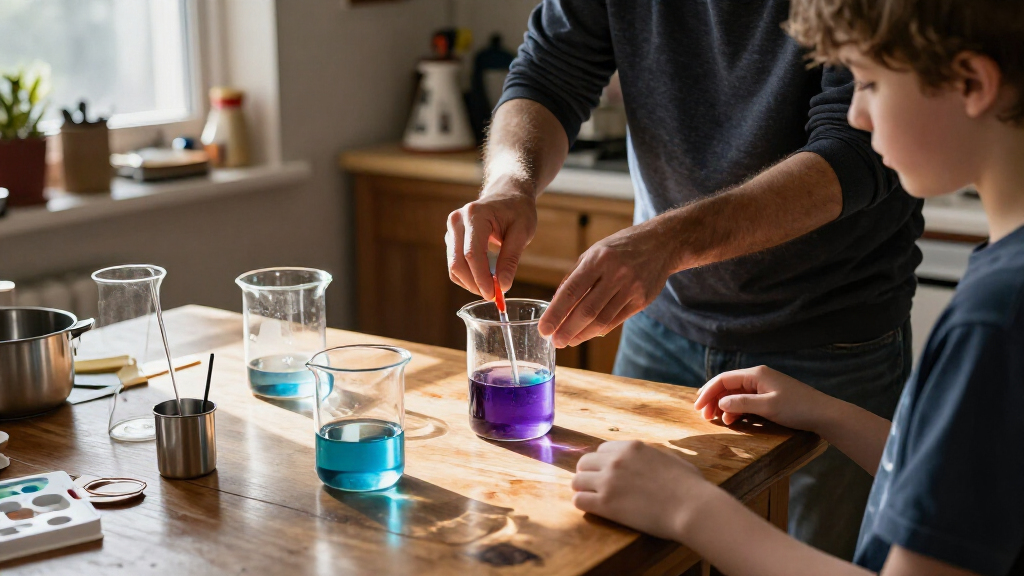
I compared the five kits as adult learning tools, not as toys competing on the age range printed on their packaging. The supplied descriptions identify several kits for younger learners, but that does not automatically rule them out for an adult who wants a guided refresher, a shared project, or a practical introduction to a subject. I gave more weight to the quality and breadth of the learning path, the materials provided, and the kind of work a buyer can realistically do at home.
Subject range and depth shaped the ranking. C3000 comes first because it covers three chemistry areas and supplies the broadest stated experiment program and the longest manual. C1000 sits close behind as a more contained chemistry course with a substantial set of activities, clear safety framing, and lab equipment. The biology kits and EUDAX rank below them for overall scope, but each has a stronger case for a buyer who already knows which topic they want to explore.
I also considered how much setup and supervision each kit demands. Included equipment and clear instructions can make a project easier to begin, while missing batteries or common household additions add preparation. Chemistry and microbiology require particular care: the listed supervision guidance matters, and the presence of goggles or ready-made plates does not remove the need to follow instructions and handle materials responsibly. Since the supplied product details do not establish advanced laboratory precision, repeatability, or professional-grade equipment, I do not treat any kit as a replacement for a proper lab course.
Finally, I weighed adult relevance against age labeling. A concise, focused kit can be more rewarding than a large activity count when it matches a learner’s interests; a high count is only useful if the buyer has the time and patience to work through it. My roles reflect those differences: broad chemistry, beginner chemistry, microbiology, genetics, and electricity and magnetism. I used only the provided product details, and the order reflects the kits’ stated coverage and practical learning structure rather than personal testing.
Factors to Consider When Choosing Science Experiment Kits For Adults
I would choose a science kit by matching its subject and workload to the kind of learning I want. The number of activities matters, but it does not tell the whole story: a focused genetics set can be more satisfying than a larger chemistry program if DNA is the subject that will keep you engaged.
Start with the subject you will actually pursue
Chemistry offers the broadest path in this lineup. C3000 covers inorganic, organic, and electrochemistry, while C1000 gives a more contained introduction to techniques such as chromatography, crystal growing, and electrolysis. For biology, Evviva focuses on agar plates and microbial observations; Genetics & DNA Lab centers on inheritance, DNA, and cells. EUDAX is the only pick for circuits and magnetism. I would choose the subject first, then compare manuals and included materials within that category.
Match the program size to your available time
A stated experiment count can signal how much material is available, but it is not a promise that every activity is quick or self-contained. C3000’s 333-plus experiments and 27 chapters suit a learner who wants an extended course-like experience. C1000’s 125 activities still make for a substantial program, but with a smaller scope. The two biology kits offer fewer activities and clearer subject boundaries, while EUDAX is built around a specific set of physics concepts. Think about whether you want a long sequence or a focused project before prioritizing quantity.
Read the supervision and safety requirements as part of the product
Adult buyers still need to follow the stated safety rules. C3000 and C1000 both require adult supervision; the chemistry kits include goggles, but protective equipment does not replace careful reading, handling, or disposal. Evviva’s agar plates and the genetics kit’s bacteria-related activities call for responsible biological handling. The product details do not establish that these kits provide professional laboratory containment or training. I would review the instructions before opening materials and avoid any activity that cannot be completed safely in your setting.
Check what is included and what you must supply
Included tools influence how quickly a kit can move from box to activity. The chemistry sets list lab vessels, tools, chemicals, and manuals; Evviva arrives with pre-poured agar plates, reducing one preparation step; Genetics & DNA Lab includes a model and basic lab materials. EUDAX includes its components and storage bag but requires three AA batteries that are not supplied. C3000 and other kits may also call for common household additions in some experiments. I would check those requirements against what I already have before choosing.
Choose the instruction style that fits your learning habits
The manuals differ in length and format: C3000 has a 192-page illustrated guide, C1000 an 80-page guide, and Genetics & DNA Lab a 48-page manual. Evviva supplies a step-by-step eBook. EUDAX includes a color manual. More instruction can support a longer learning path, but it also asks for more reading. If I want a structured course, I would lean toward one of the chemistry manuals; if I prefer a specific project theme, the focused biology or physics kits may be easier to approach.
Treat age guidance as a clue, not an adult-level guarantee
Several kits list age ranges intended for younger learners. That can make them approachable for adults seeking a refresher, but it does not mean the material is advanced. The product descriptions identify C3000 for ages 12+, C1000 for ages 10+, Genetics & DNA Lab for ages 10–16, Evviva for ages 15 and older, and EUDAX for ages 8–18. Adult suitability depends on your goal: a beginner may appreciate introductory explanations, while someone seeking university-level theory or professional lab practice should look for a course or specialist equipment beyond this lineup.
Frequently Asked Questions
Which of these science kits is the best fit for an adult beginner?
I would start with the CHEM C1000 if chemistry is the goal: its 125 activities, 10 chapters, illustrated manual, safety introduction, and included equipment provide a more contained route than C3000. If you are new to science experiments but already know you want genetics, physics, or microbiology, a focused kit may be a better starting point than chemistry. In every case, follow the supplied instructions and supervision guidance.
Is the CHEM C3000 a better choice than the C1000?
C3000 is the better choice for a learner who wants broader chemistry coverage, with more than 333 experiments across inorganic, organic, and electrochemistry and a 192-page manual. C1000 is better suited to someone who prefers a smaller, beginner-oriented program with 125 activities and a safety-and-technique introduction. Both require adult supervision, so I would decide based on desired scope and available time rather than choosing only by experiment count.
Which kit is best for learning about DNA and genetics?
The Thames & Kosmos Genetics & DNA Lab is the direct match because its 20 activities cover inheritance, cells, chromosomes, genetic codes, and DNA structure, and it includes a DNA model. It is introductory rather than an advanced genetics course, and some experiments involve growing bacteria. For a learner more interested in microbial growth than inheritance, Evviva’s pre-poured agar plate kit has the clearer microbiology focus.
Do any of these kits require supplies that are not included?
EUDAX explicitly requires three AA batteries that are not included. The C3000 description also says some experiments call for common household additions, so I would check its manual and prepare those materials as directed. The other descriptions list their included equipment and supplies, but that does not mean every activity can be performed without any additional household items. Reviewing instructions before beginning helps avoid an interrupted experiment.
Can adults use kits labeled for children or teenagers?
Yes, an adult can use a kit with a younger age range if its subject and introductory level fit their goals. The age label is a useful clue about intended explanation and complexity, not a claim that the kit provides advanced adult instruction. Adult buyers should still follow the stated supervision requirements and safety directions, especially for chemistry activities and projects involving biological growth. For professional techniques or advanced theory, these kits are better treated as introductions than substitutes for formal lab training.
Conclusion
My choice depends on the kind of science I want to practice. For the broadest chemistry program, I would choose CHEM C3000, provided I can give its experiments the time and supervision they require. For a first home chemistry course, CHEM C1000 offers a more contained path. If I want to observe microbial growth, Evviva is the most direct pick; for DNA and inheritance, I would choose the Genetics & DNA Lab. EUDAX makes the most sense for a buyer drawn to circuits and electromagnets. Each kit has a distinct use, and the best one is the set whose subject, safety demands, and instruction style match the work I actually want to do.
Halloween Picks
halloween
As an affiliate, we earn on qualifying purchases.