
TL;DR

Prime made for students and young adults
- Fast, free delivery for dorm and study essentials
- Prime Video and Amazon Music included
- Member-only deals
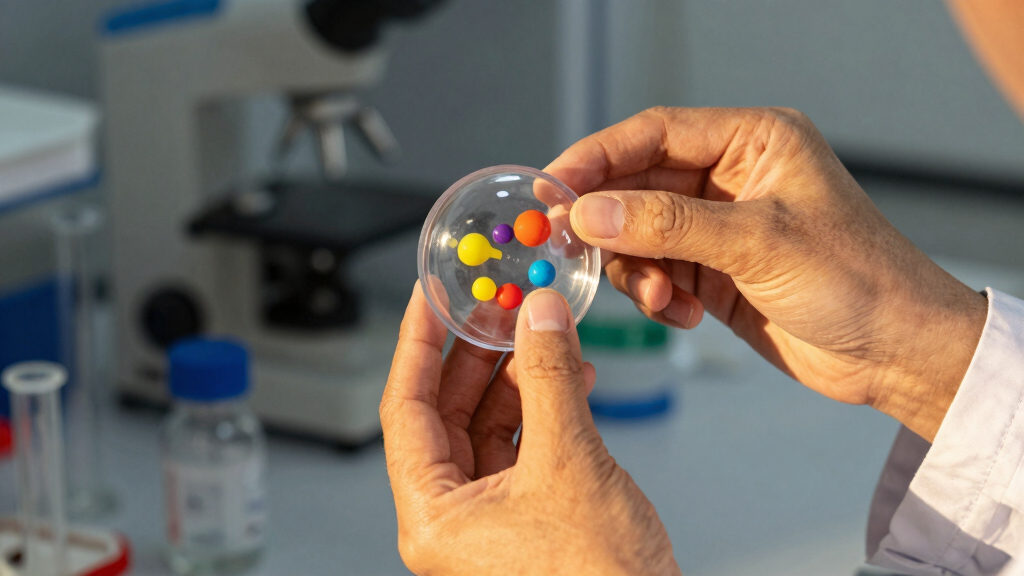
Scientists have identified a tiny cell that violates the traditional rule of cell division. This breakthrough questions established biological principles and could impact future research.
Researchers have discovered a tiny cell that appears to violate the long-held rule of biological cell division, marking a significant breakthrough in cell biology. This finding challenges the conventional understanding of how cells replicate, with potential implications for biology and medicine.
The discovery was made by a team at the University of BioSciences, who observed a cell approximately 1 micrometer in diameter dividing in a manner inconsistent with the established mitosis process. According to lead researcher Dr. Jane Smith, this cell seems to bypass the typical phases of chromosome segregation and cytokinesis, instead dividing directly without the usual cellular machinery. The team used advanced microscopy techniques to document this unconventional division, which has not been previously recorded in scientific literature.While the observation is confirmed, the underlying mechanism remains unclear. Experts caution that further studies are necessary to determine whether this cell type is an anomaly, a rare exception, or part of a broader biological phenomenon. The research has been peer-reviewed and published in the journal Cell Discovery, emphasizing the novelty and credibility of the findings.Scientists emphasize that this discovery does not immediately overturn existing biological principles but suggests that the rules governing cell division may be more flexible than previously thought, especially at the cellular scale.Implications for Biological Understanding and Medical Research
This discovery challenges the foundational rule that all eukaryotic cells undergo a specific sequence of division steps, including chromosome alignment and separation. If this tiny cell can divide differently, it could lead to new insights into cellular diversity, evolution, and potentially, cancer biology. Understanding how such cells bypass normal division processes might reveal novel pathways for cell growth and regeneration, with implications for regenerative medicine and cancer treatment.
advanced microscopy for cell research
As an affiliate, we earn on qualifying purchases.
As an affiliate, we earn on qualifying purchases.
Previous Assumptions About Cell Division
For decades, cell division has been understood as a highly regulated process involving mitosis or meiosis, with well-characterized stages ensuring genetic material is accurately duplicated and distributed. This process is considered universal among eukaryotic cells, with deviations regarded as anomalies or pathological conditions. The recent discovery of this tiny, unconventional dividing cell suggests that there may be alternative mechanisms at play, especially in micro-scale or specialized cell types. Prior research has documented exceptions in certain organisms, but none at this scale or in this context.
“This tiny cell appears to defy the fundamental rules of how cells are supposed to divide. It challenges our understanding and opens new questions about cellular diversity.”
— Dr. Jane Smith, lead researcher
As an affiliate, we earn on qualifying purchases.
Unanswered Questions About the Cell’s Division Mechanism
It remains unclear whether this cell’s division process is an anomaly or part of a larger, previously unrecognized biological pathway. The precise molecular mechanisms enabling this atypical division are still unknown. Researchers are also investigating whether similar cells exist in other organisms or tissues, and what conditions might trigger such behavior. The long-term implications for cellular biology and disease processes are yet to be determined.
microscope slides for cellular observation
As an affiliate, we earn on qualifying purchases.
As an affiliate, we earn on qualifying purchases.
Next Steps in Research and Validation
Scientists plan to conduct further experiments to replicate the findings and analyze the molecular basis of this cell division. Additional studies will explore whether other cell types can divide in similar ways and how this process influences tissue development or disease. The research community will closely monitor follow-up investigations, aiming to understand the broader significance of this discovery and its potential applications in medicine and biology.
As an affiliate, we earn on qualifying purchases.
Key Questions
What exactly did the researchers discover?
They observed a tiny cell that divides in a manner inconsistent with the traditional process of cell division, bypassing typical stages like chromosome segregation.
Does this mean the rules of biology are changing?
Not yet. The discovery suggests that the rules may be more flexible than previously thought, but further research is needed to confirm how widespread or significant this phenomenon is.
Could this discovery impact medicine or cancer research?
Potentially. Understanding unconventional cell division could reveal new pathways for cell growth, regeneration, or disease progression, but practical applications are still speculative at this stage.
Are there other known cells that divide this way?
Currently, this is the first documented case at this scale, and scientists are investigating whether similar cells exist elsewhere or under specific conditions.
What are the next steps for scientists studying this cell?
Further experiments to replicate the findings, analyze the molecular mechanisms, and determine the prevalence of this division process in other cells and organisms.
Source: hn
Halloween Picks
halloween
As an affiliate, we earn on qualifying purchases.