To keep your home safe, store lithium batteries in a cool, dry place away from heat, sunlight, and flammable materials, using fire-resistant containers if possible. Always use the charger recommended by the manufacturer and never leave batteries unattended while charging. Watch for signs of trouble like swelling or smoke, and disconnect damaged batteries immediately. Proper handling and precautions reduce fire risks and extend battery life—continue with this guide to learn more about safeguarding your home.
Key Takeaways
- Store lithium batteries in cool, dry, fire-resistant containers away from flammable materials.
- Use only manufacturer-recommended chargers and avoid third-party chargers to prevent overheating.
- Never leave batteries unattended during charging and disconnect once fully charged.
- Regularly inspect batteries for swelling, smoke, or strange odors, and handle damaged batteries with caution.
- Keep a fire extinguisher nearby and have an emergency plan for battery fires or malfunctions.

Have you ever wondered how safe your lithium batteries are at home? With the increasing use of devices powered by lithium-ion batteries, understanding proper storage and charging rules is vital for fire prevention and emergency preparedness. Lithium batteries are generally safe, but when mishandled, they can pose significant risks, including fires and explosions. By following simple safety guidelines, you can reduce these risks and be better prepared to respond if something goes wrong.
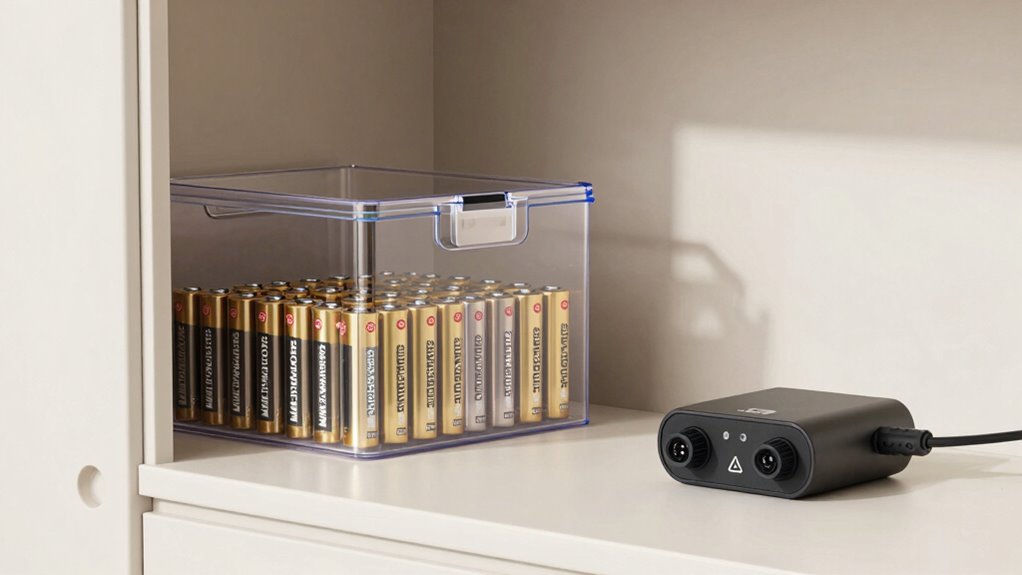
First, always store lithium batteries in a cool, dry place away from direct sunlight and heat sources. Avoid placing batteries near flammable materials like paper, cloth, or liquids. Storing batteries in a dedicated, fire-resistant container can add extra protection and prevent accidental damage. Proper storage minimizes the chance of punctures, short circuits, or thermal runaway, which are common causes of battery fires. Remember, a little prevention goes a long way in maintaining a safe environment. Proper storage is key to preventing accidents and ensuring battery longevity.
When it comes to charging, never leave your lithium batteries unattended, especially during the initial charge or if you’re using a new charger. Always use the charger recommended by the manufacturer, and avoid third-party or incompatible chargers that can cause overcharging or overheating. Keep an eye on the charging process and disconnect the battery once it’s fully charged. Overcharging can lead to swelling, leaks, or fires. Also, avoid charging batteries on soft surfaces like beds or couches where heat can build up and cause a fire hazard. A hard, non-flammable surface is the safest option.
In addition to proper storage and charging, it’s essential to incorporate fire prevention and emergency preparedness into your routine. Keep a fire extinguisher suitable for electrical fires nearby, and familiarize yourself with how to use it. If a lithium battery starts to swell, smoke, or emit a strange smell, disconnect it immediately and move it to a safe, non-flammable area. Never try to handle or puncture a damaged battery—it can ignite unexpectedly. Having a plan in place for emergencies ensures you react swiftly and effectively, minimizing damage and personal risk.
fire-resistant lithium battery storage container
As an affiliate, we earn on qualifying purchases.
As an affiliate, we earn on qualifying purchases.
Frequently Asked Questions
Can Lithium Batteries Be Stored Outdoors Safely?
Yes, you can store lithium batteries outdoors, but you need to take into account outdoor humidity and proper battery enclosure materials. Keep batteries in a dry, cool place, ideally inside a weather-resistant enclosure made of non-conductive materials like plastic or rubber. Avoid exposing them to high humidity, which can cause corrosion or short circuits. Regularly check the enclosure and batteries for damage, and ensure they’re stored away from direct sunlight and moisture.
Are There Specific Temperature Ranges for Safe Charging?
Yes, there are specific temperature ranges for safe charging. You should guarantee proper thermal regulation by charging lithium batteries between 0°C and 45°C (32°F to 113°F). Use temperature monitoring tools to keep track of the battery’s environment and avoid charging in extreme temperatures. Maintaining these conditions helps prevent overheating, thermal runaway, and other safety hazards, ensuring your batteries remain safe and effective during use.
How Often Should I Check My Lithium Batteries for Damage?
You should inspect your lithium batteries regularly—at least once a month—to catch damage signs early. During each check, look for swelling, leaks, corrosion, or discoloration. Investigating these damage signs can prevent potential hazards like fires or failures. Frequent battery inspections guarantee your batteries stay safe and perform well. If you notice any issues, stop using the battery immediately and consult the manufacturer or a professional for guidance.
What Should I Do if a Battery Starts Overheating?
If a battery starts overheating, immediately disconnect it from the device and move it to a non-flammable surface away from heat sources. Do not try to cool it with water or puncture it. To prevent future overheating, guarantee proper battery storage and follow overheat prevention tips. When the battery is damaged or no longer safe, dispose of it properly according to local regulations. Never throw damaged batteries in regular trash.
Are There Age Limits for Safe Lithium Battery Use at Home?
You might think there’s no age limit for lithium battery use, but safety guidelines show otherwise. Child safety is paramount, so keep batteries out of kids’ reach and supervise their use. Always check for proper battery certifications, which guarantee safety standards are met regardless of age. While older children can handle some devices, young kids should only use age-appropriate, certified batteries under adult supervision to prevent accidents.
manufacturer recommended lithium battery charger
As an affiliate, we earn on qualifying purchases.
As an affiliate, we earn on qualifying purchases.
Conclusion
By following these simple storage and charging rules, you can turn your home into an impenetrable fortress against lithium battery disasters. Ignoring safety can lead to fireworks, fires, and chaos right in your living room—things you definitely don’t want! Stay vigilant, handle batteries with care, and never underestimate their power. With just a little caution, you’ll protect your home and loved ones from what could become a true nightmare. Safety isn’t optional—it’s your best defense!
fire extinguisher for electrical fires
As an affiliate, we earn on qualifying purchases.
As an affiliate, we earn on qualifying purchases.
battery safety inspection tools
As an affiliate, we earn on qualifying purchases.
As an affiliate, we earn on qualifying purchases.