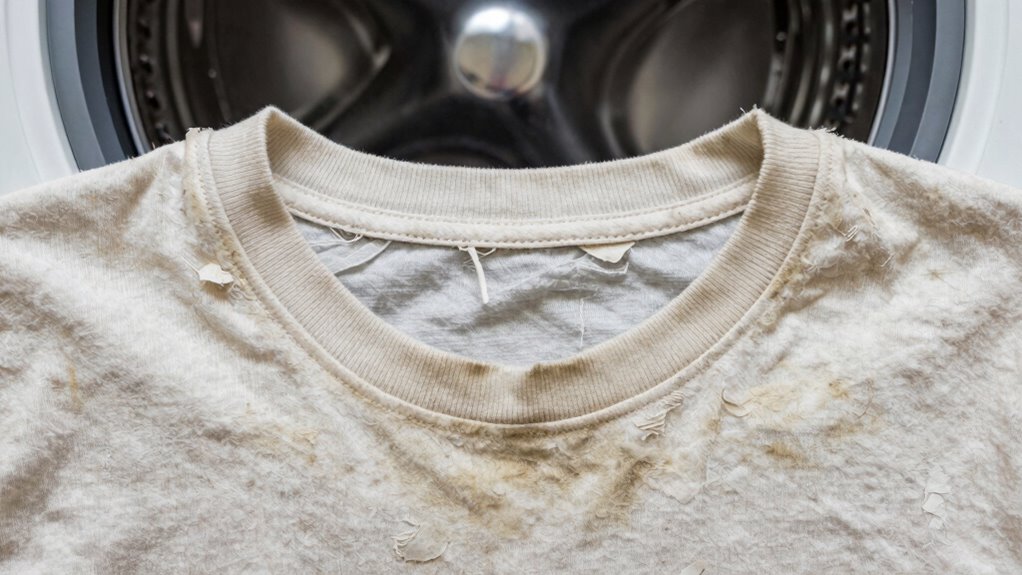

Overloading your washing machine, using too much detergent, and ignoring care labels can all weaken fabrics over time, causing clothes to wear out faster. Hot water washes and improper drying techniques also damage fibers, while neglecting to turn clothes inside out exposes delicate prints to friction. Harsh chemicals further break down fabrics and fade colors. If you want to keep your clothes looking new longer, paying attention to these habits is essential—you’ll discover how to prevent damage step by step.

Prime made for students and young adults
- Fast, free delivery for dorm and study essentials
- Prime Video and Amazon Music included
- Member-only deals
Key Takeaways
- Overloading the washing machine prevents proper agitation, causing dirt buildup and fabric stress over time.
- Not turning clothes inside out exposes outer fibers to friction, leading to pilling and color fading gradually.
- Using excessive detergent residue weakens fabric fibers and dulls colors, accelerating wear.
- Ignoring care labels and washing instructions risks damaging fabrics through improper temperature and cycle choices.
- Frequent, improper drying methods, especially over-drying, weaken fibers and cause shrinkage or fabric deterioration.
Top picks for "laundry habit destroy"
As an affiliate, we earn on qualifying purchases.
The Impact of Overloading Your Washing Machine
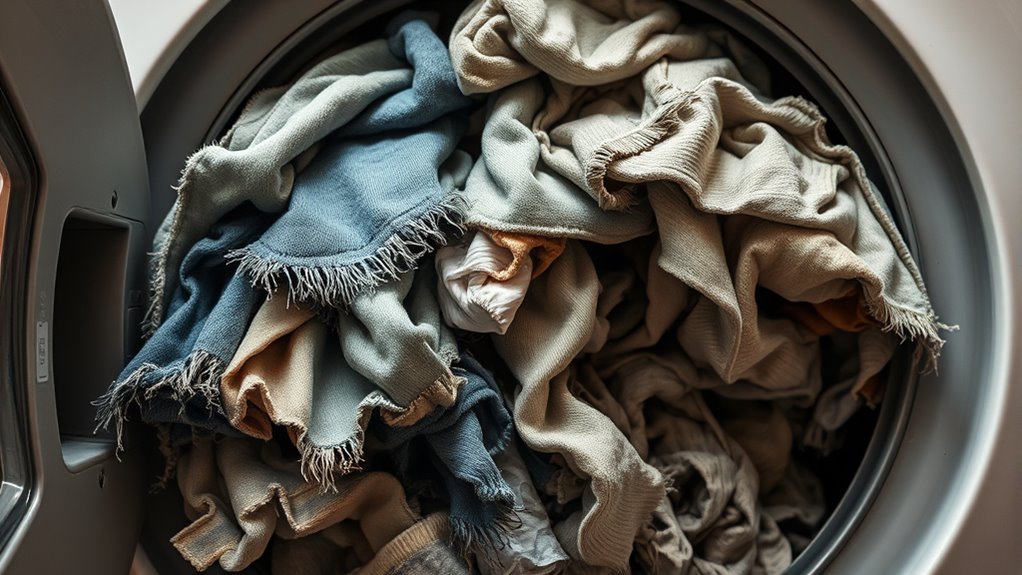
While it might seem convenient to cram as many clothes as possible into your washing machine, overloading can actually cause significant damage to your garments. When you overload, the machine struggles to clean properly, leading to inadequate rinsing and dirt buildup. This can weaken fabric fibers over time. Properly sized loads allow clothes to move freely, ensuring thorough cleaning and reducing wear and tear. Your washing frequency also plays a role; washing too often or too infrequently can stress clothes. Additionally, using low-quality detergent can compound the problem, as it may not break down dirt effectively or rinse out thoroughly, leaving residues. Proper laundry practices include avoiding overloads, which helps extend the lifespan of your clothes and maintain their appearance. Regularly inspecting your washing machine’s load capacity ensures you don’t overload it and helps prolong your clothes’ lifespan. Being mindful of machine maintenance can also prevent issues related to improper loads and keep your laundry routine efficient. To further protect your garments, choosing the right wash cycle and detergent type is essential for maintaining fabric integrity over time. By balancing washing frequency and choosing quality detergent, you protect your clothes from damage caused by overloading and improper laundry habits.
Using Too Much Detergent and Its Consequences
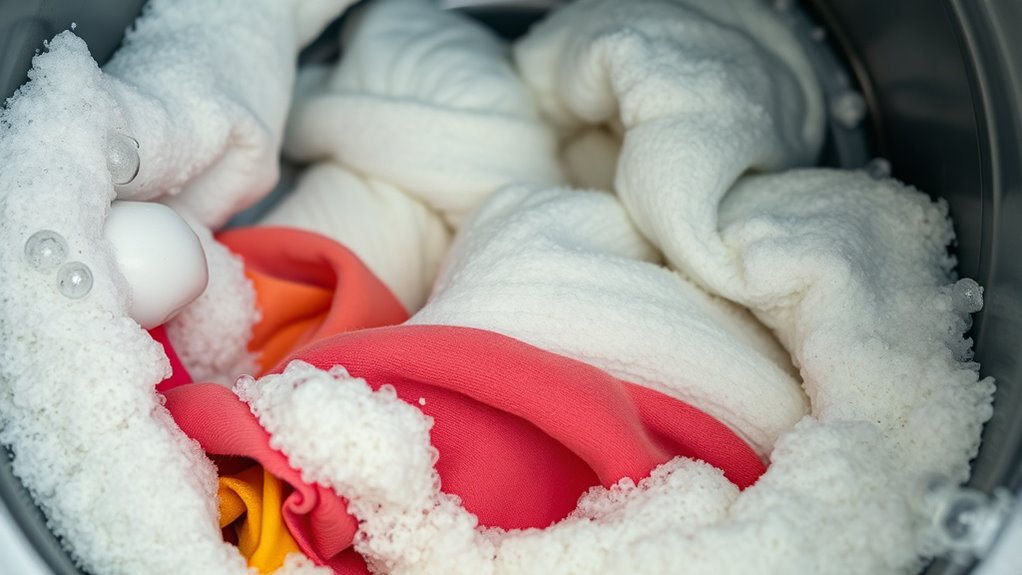
Have you ever thought that using more detergent might make your clothes cleaner? In reality, excess detergent can do more harm than good. When you add too much, it leaves behind detergent residue that clings to fabrics. Over time, this residue builds up, creating soap scum that traps dirt and bacteria, making your clothes appear dingy. Soap scum also dulls colors and weakens fabric fibers, leading to faster wear and tear. Instead of cleaning better, you’ll find your laundry gets less fresh and more damaged. Proper rinsing is essential to prevent detergent residue and soap scum buildup. Using the correct amount of detergent ensures thorough rinsing and prevents buildup, as improper detergent dosage can compromise cleaning efficiency. To avoid this, measure detergent carefully and use only what’s recommended. Proper amounts help guarantee thorough rinsing, preventing detergent residue and soap scum buildup. Additionally, understanding how fabric fibers respond to different detergents can help prolong the life of your clothes. Incorporating smart washing machine settings that optimize rinsing cycles can further minimize residue and extend clothing lifespan. Maintaining detergent balance through proper dosing is crucial for effective cleaning and fabric care. This simple change can extend the life of your clothes and keep them looking newer longer.
The Dangers of Hot Water Washes on Fabrics
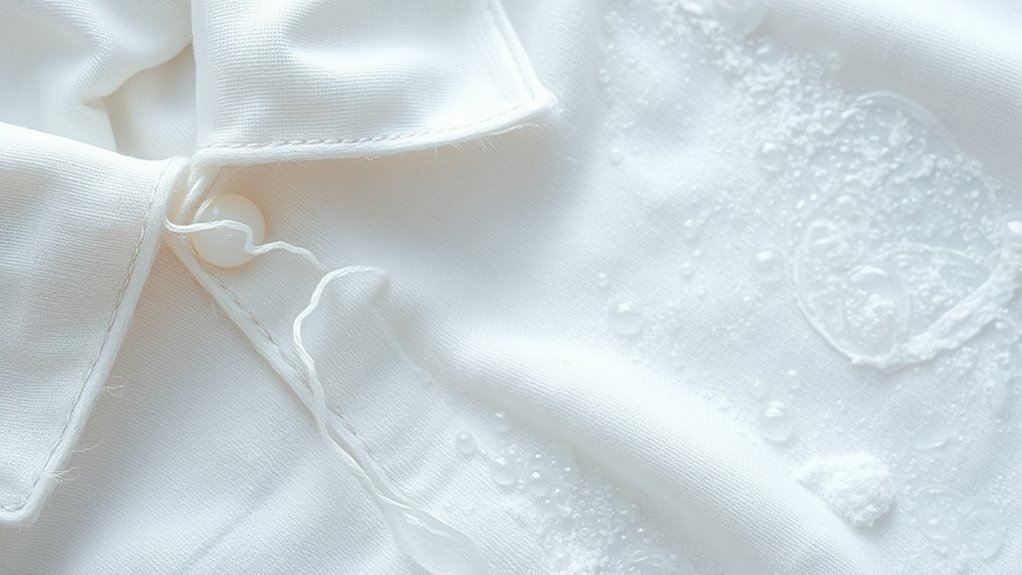
Hot water can weaken your fabrics over time, making clothes more prone to tears and wear. It also causes colors to fade faster, dulling your favorite pieces. To keep your clothes looking new longer, consider washing in cooler water settings. Additionally, using air purifiers can help protect your clothing from environmental pollutants that may contribute to fabric deterioration. Choosing the right washing temperature is essential for fabric preservation, ensuring your wardrobe remains vibrant and intact for years to come. Understanding proper laundry techniques can further extend the life of your garments by minimizing unnecessary stress on the fibers, which can be achieved through proper temperature control and load management during washing.
Fabric Weakening Over Time
Frequent exposure to hot water can considerably weaken fabrics over time, causing clothes to lose their strength and durability. Hot water accelerates fiber deterioration, breaking down the fabric’s structural integrity. As fibers weaken, threads become more prone to fraying and snapping, leading to tears and holes. This gradual process diminishes the overall resilience of your clothes, making them more susceptible to damage with each wash. Over time, the fabric’s ability to hold up against everyday wear decreases markedly. fiber deterioration can be exacerbated by harsh detergents and mechanical agitation. To preserve your clothes, opt for cooler washes and gentle cycles, which help maintain fiber strength and prevent unnecessary thread weakening. Recognizing the importance of fabric care can significantly extend the lifespan of your wardrobe. Additionally, energy-efficient washing practices can contribute to both fabric preservation and environmental sustainability.
Color Fading Risks
Exposing your clothes to high temperatures during washing can cause their colors to fade more quickly. Hot water weakens dye molecules, increasing the risk of color bleeding and dye transfer between garments. When colors bleed, your vibrant shirts may turn dull, and white fabrics can pick up unintended hues. This not only diminishes the appearance of your clothes but also shortens their lifespan. To prevent this, wash colored items in cold or warm water, especially dark or bright fabrics. Always separate whites from colors to avoid dye transfer. By reducing water temperature and sorting clothes properly, you protect their original hues and keep your wardrobe looking fresh longer. Hot water might seem efficient, but it’s a silent culprit behind faded colors and stained whites.
Forgetting to Turn Clothes Inside Out
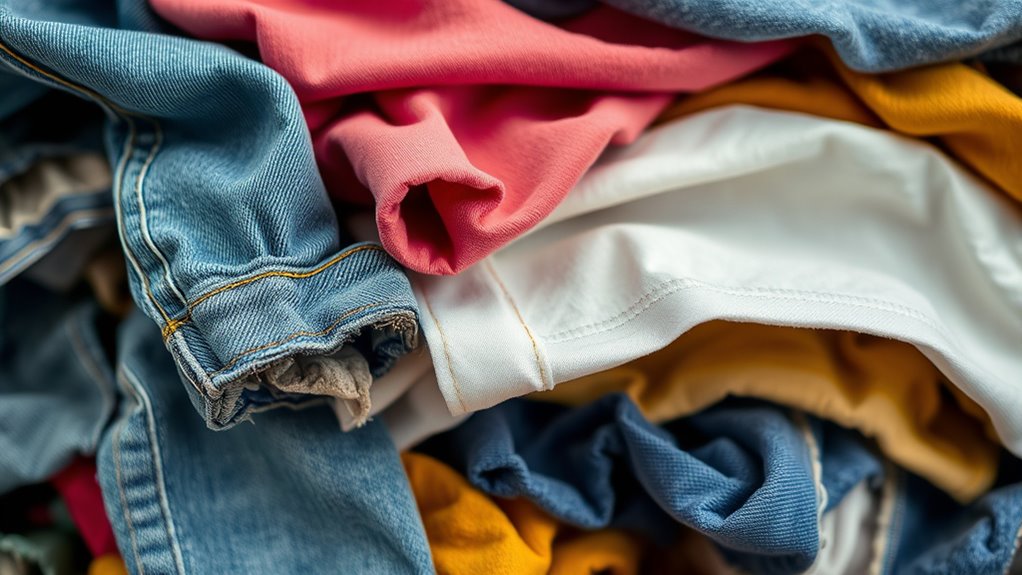
If you forget to turn your clothes inside out before washing, you risk damaging the fabric and fading colors. Frayed edges become more common because the outer surface faces constant friction during the wash cycle. This friction accelerates pilling formation, making your clothes look worn out sooner. Without turning garments inside out, you also expose delicate prints or embroidery to unnecessary wear, which can crack or peel. Over time, these small damages accumulate, reducing the lifespan of your clothes. Turning clothes inside out helps protect the outer surface from harsh agitation and abrasive contact with other garments. It’s a simple step that preserves fabric integrity, keeps colors vibrant, and prevents frayed edges and pilling from developing prematurely. Incorporating proper laundry techniques, such as turning clothes inside out, can help mitigate fabric damage by reducing friction. Regularly checking your laundry process can improve clothing durability and longevity. Additionally, developing a consistent laundry routine can prevent costly wardrobe replacements over time. Don’t overlook this habit if you want your clothes to last longer.
Neglecting Proper Drying Techniques
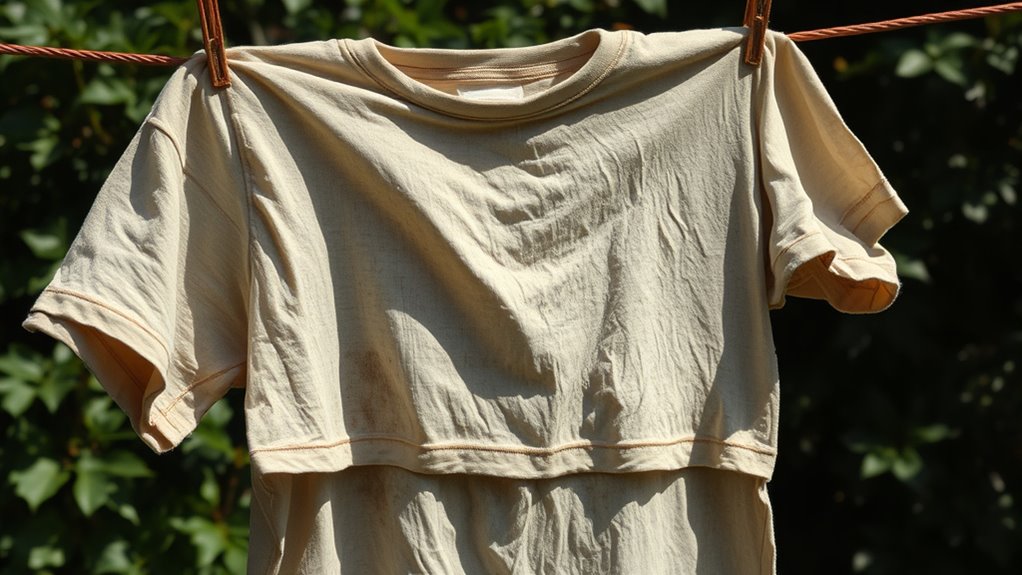
Neglecting proper drying techniques can undo the protective habits you develop during washing. If you rely solely on tumble drying without adjusting settings or over-dry clothes, you risk weakening fibers and causing shrinkage. Air drying can be gentler, reducing heat exposure that damages fabrics over time. Additionally, fabric care guidelines recommend specific drying methods for different materials to ensure longevity. Properly drying your clothes helps maintain their shape, color, and fabric integrity, preventing slow but steady damage caused by neglecting suitable drying methods. Utilizing modern energy-efficient dryers can also contribute to better fabric care while reducing energy consumption. Being aware of drying techniques can help you choose the best method for each load, extending the lifespan of your wardrobe.
Ignoring Fabric Care Labels and Instructions
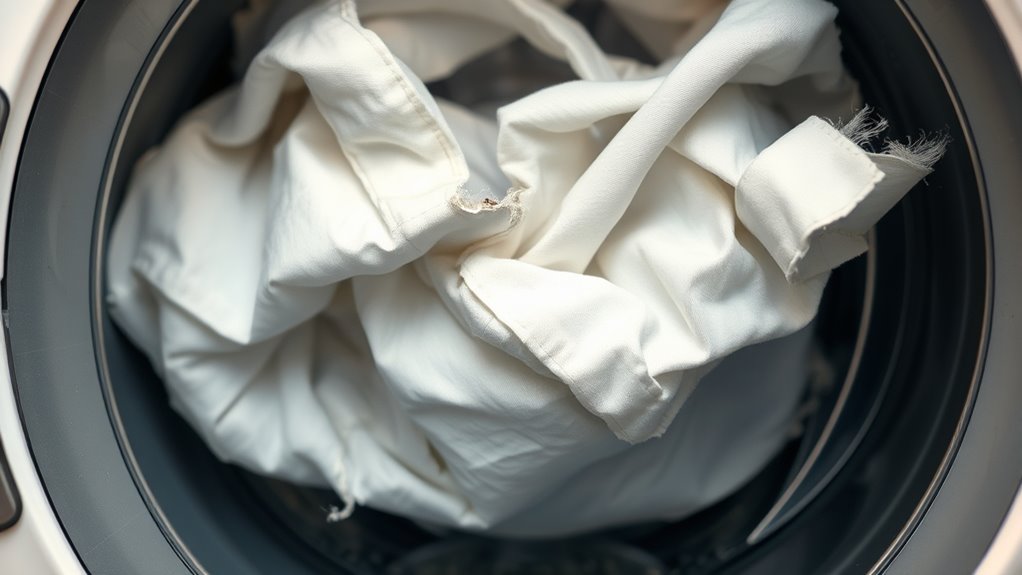
If you ignore fabric care labels, you risk damaging your clothes without realizing it. Misreading symbols or setting the wrong temperature can cause fading, shrinking, or stretching. Paying attention to instructions guarantees your clothes stay in great shape longer. Additionally, understanding fabric care labels helps you select appropriate cleaning methods, preventing unnecessary wear and tear. Recognizing proper washing techniques ensures your clothes are cared for correctly over time.
Misreading Care Symbols
Ignoring care symbols on clothing labels can lead to damage because these icons provide essential instructions for proper washing, drying, and ironing. Misreading these symbols might cause you to use the wrong cycle or neglect proper stain removal techniques, harming fabric softness and durability. For example, a symbol indicating gentle wash helps preserve delicate fibers, while overlooking it can cause pilling or tearing. Similarly, symbols for drying inform whether to tumble dry or air dry, affecting the fabric’s texture. Misinterpretation can also lead to improper ironing, which can scorch or weaken fibers. By paying close attention to care symbols, you ensure your clothes retain their softness and appearance longer, preventing unnecessary wear and tear caused by incorrect laundering methods.
Overlooking Temperature Settings
When you overlook the temperature settings on your laundry care labels, you risk damaging your clothes because each fabric type requires a specific heat level to stay in good condition. Temperature mismanagement can cause fibers to shrink, fade, or weaken over time. Sensitive fabrics like wool, silk, or delicate synthetics need cooler washes, while sturdier materials can handle higher temperatures. Ignoring these instructions leads to unnecessary wear and tear, gradually destroying the fabric’s integrity. Using the wrong temperature not only shortens the lifespan of your clothes but also causes colors to bleed or fabrics to become stiff. Paying attention to proper temperature settings guarantees your clothes stay vibrant and intact longer, avoiding this common laundry mistake that slowly destroys your wardrobe.
Ignoring Special Wash Needs
Neglecting to follow fabric care labels and instructions can cause serious damage to your clothes. If labels recommend avoiding fabric softeners or specify gentle washing, ignoring these guidelines can weaken fibers and cause premature wear. Using harsh stain removers on delicate fabrics may lead to discoloration or fabric breakdown. Conversely, skipping appropriate stain treatment can leave stains to set, making them harder to remove later. Always read labels carefully to determine the right wash cycle, water temperature, and products to use. Applying fabric softeners or stain removers without proper consideration can weaken clothing over time, reducing their lifespan. Respecting these instructions helps preserve fabric integrity and prevents costly damage caused by improper washing habits.
The Role of Harsh Chemicals in Clothing Damage
Harsh chemicals in laundry detergents and stain removers can considerably weaken fabric fibers, leading to faster wear and tear. These chemicals cause damaging chemical reactions within the fibers, breaking down their structure over time. Additionally, they can cause skin irritation for sensitive skin types, especially if residues remain on clothing. To minimize damage, check labels for gentler options.
| Harsh Chemicals | Effects |
|---|---|
| Strong detergents | Fabric weakening, accelerated wear |
| Bleaching agents | Color fading, fiber damage |
| Synthetic fragrances | Skin irritation, allergenic reactions |
| Optical brighteners | Residue buildup, fabric deterioration |
| Harsh stain removers | Fiber weakening, chemical reactions |
Frequently Asked Questions
How Does Frequent Washing Affect the Lifespan of Delicate Fabrics?
Frequent washing accelerates fabric deterioration and causes fiber damage in delicate fabrics. Every wash weakens the fibers, making them more prone to tearing and fraying over time. You might notice your delicate items losing their shape, color, or softness faster than they should. To extend their lifespan, wash delicate fabrics less often, use gentle cycles, and opt for cold water to minimize fiber damage and keep your clothes looking their best longer.
Can Using Cold Water Prevent Clothes From Fading Over Time?
Imagine your clothes as vibrant paintings that fade with harsh strokes. Using cold water helps preserve dye retention, keeping colors vivid and lively. It also enhances fabric preservation by reducing the heat’s damaging effects. When you wash with cold, you slow down the fading process, extending the life of your garments. So, yes, cold water considerably prevents clothes from fading over time, maintaining their original brilliance longer.
What Are the Signs That My Laundry Routine Is Damaging My Clothes?
You might notice fabric pilling or color bleeding as signs your laundry routine is damaging your clothes. Pilling occurs when fibers loosen and form small balls, while color bleeding happens when dyes wash out, dulling your garments. These issues often result from using harsh detergents, overloading the washer, or washing delicate fabrics at high temperatures. To protect your clothes, switch to gentle cycles, cold water, and avoid overstuffing the machine.
Are There Eco-Friendly Detergents That Are Gentler on Fabrics?
You’re in luck—there are eco-friendly detergents that are gentler on fabrics. Look for biodegradable formulas and plant-based cleansers, which clean effectively without harsh chemicals. These options are like a gust of fresh air for your clothes, helping them last longer. By choosing eco-conscious products, you’re killing two birds with one stone: protecting your wardrobe and supporting the environment. It’s a win-win situation!
How Often Should I Replace My Laundry Tools Like Brushes and Drying Racks?
You should replace your laundry tools like brushes and drying racks every 6 to 12 months to guarantee proper laundry tool maintenance. Regularly inspecting them helps prevent fabric wear and tear caused by worn-out tools. Over time, brushes lose bristles, and racks may become unstable, risking damage to your clothes. Replacing them when needed keeps your laundry routine effective and your clothes in great shape.
Conclusion
So, congratulations! By ignoring proper laundry habits, you’re slowly destroying your clothes without even realizing it. Overloading, harsh chemicals, or hot water might save time, but they’re secretly ruining your wardrobe piece by piece. Ironically, your efforts to keep things simple are actually making your clothes last less. Next time, maybe read those labels carefully—your favorite shirt will thank you, and so will your wallet in the long run.
Halloween Picks
halloween
As an affiliate, we earn on qualifying purchases.