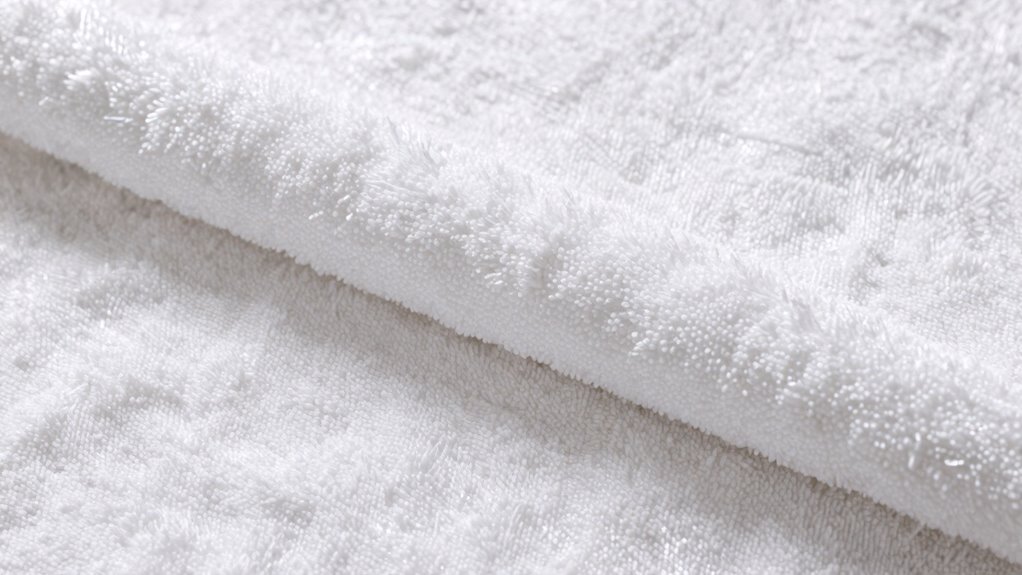

Fabric softener can make your towels worse by leaving a chemical residue that coats fibers, creating a slick, slimy feel over time. This buildup blocks water absorption, making your towels less effective at drying. It also weakens the fibers, causing them to break down faster and reducing softness and durability. If you keep using softener, your towels will become less fluffy and absorbent. Discover more about how to keep your towels fresh and plush without softener.
Key Takeaways
- Fabric softeners leave a residue that coats fibers, reducing their absorbency and making towels less effective at drying.
- Residue buildup causes towels to feel slimy, stiff, or less plush over time, diminishing their softness and comfort.
- The coating traps dirt and bacteria, leading to odors and decreased hygiene with repeated washes.
- Long-term softener use weakens fibers, accelerating fabric deterioration and shortening towel lifespan.
- Softener chemicals can harm the environment and reduce the overall durability and performance of towels.
How Does Fabric Softener Work on Towels?

Fabric softener works on towels by coating their fibers with a thin layer of chemicals that reduce static and make fabrics feel softer. This process involves fabric softener chemistry, where cationic surfactants bond to the towel’s fibers, smoothing the surface and decreasing friction. During the towel manufacturing process, fibers are spun and woven to create the absorbent material you use daily. When you add softener, it forms a lubricating layer that coats these fibers, giving towels a plush feel. This coating weakens the fabric’s natural structure slightly, helping them feel fluffier and reducing static buildup. The softener’s chemicals, consequently, modify the fiber surface, making your towels more pleasant to touch and easier to handle straight out of the dryer.
Why Softener Could Hurt Your Towels’ Absorbency
Using fabric softener can leave a residue on your towels that coats the fibers. This coating blocks water from being absorbed properly, making your towels less effective. Over time, it can also weaken the fabric, reducing their durability. Additionally, the buildup from softeners can diminish the towels’ color accuracy, leading to duller appearance and compromised visual quality over repeated washes.
Coats Fabric With Residue
Have you ever noticed your towels feel less absorbent after using fabric softener? That’s because softeners leave behind a thin coating of residue on your towels. Many fabric softener myths suggest they make towels softer and more plush, but in reality, this residue builds up over time. This film can trap dirt and reduce the towel’s ability to soak up water effectively. As a result, you might find yourself rewashing towels more often or using more product to achieve the same softness. To avoid this, follow proper towel care tips, like skipping fabric softener altogether or choosing alternatives like vinegar. Doing so keeps your towels absorbent and fresh, rather than coated with unnecessary residue.
Blocks Water Absorption
When fabric softeners coat your towels with a thin film, they create a barrier that prevents water from being absorbed effectively. This film results from fabric softener chemistry, which deposits hydrophobic molecules onto towel surfaces. These molecules fill in the towel’s natural pore structure, altering its material properties. As a result, water struggles to penetrate the fibers. Consider these points:
- Softener residues clog the towel’s porous structure, blocking water entry.
- The hydrophobic coating repels moisture, reducing absorbency.
- Over time, this film diminishes the towel’s natural ability to wick water away.
- This chemical change can also affect the towel’s longevity and overall softness over repeated washes.
Your towels become less effective at drying because the softener’s chemistry changes their material properties, making them less porous and more resistant to water absorption.
Reduces Fabric Durability
Fabric softeners can weaken your towels’ fibers over time, reducing their overall durability. This process impacts fabric strength and accelerates color fading, making your towels look old faster. When softeners coat fibers with chemicals, they break down the fabric’s natural structure, causing it to tear more easily. To understand this better, consider the following:
| Effect | Cause | Result |
|---|---|---|
| Decreased fabric strength | Chemical buildup from softeners | Towels rip more easily |
| Color fading | Breakdown of dyes | Towels look dull |
| Reduced absorbency | Coating fibers with softener | Less water absorption |
| Shorter lifespan | Weakened fibers | Need for frequent replacements |
How Residue From Softener Makes Towels Slimy
Residue from fabric softener can cause towels to become slimy over time, especially if you use too much or don’t rinse thoroughly. This residue builds up on towel fibers, impacting fabric composition and scent retention. As softener deposits accumulate:
- They create a slick surface that feels slimy to the touch, reducing absorbency.
- They block the towel’s natural fibers, preventing water from penetrating effectively.
- They trap dirt and bacteria, making towels smell less fresh and harder to rinse clean.
Proper rinsing and using the correct amount of softener can help prevent buildup and maintain towel quality.
This buildup mainly affects towels with certain fabric compositions more than others. Over time, the slimy layer diminishes towel softness and diminishes the pleasant scent you expect, turning your towels into a less effective and less pleasant experience.
What Softener Does to Towel Fibers Over Time

Over time, fabric softener coats towel fibers with residue, making them less absorbent. This buildup reduces their ability to soak up water effectively. Eventually, the fibers break down, shortening the lifespan of your towels. Using softeners that are not designed for towels can also damage the fibers, leading to fiber deterioration and compromised performance.
Coats Fibers With Residue
As you continue to use fabric softener on your towels, a thin layer of residue gradually builds up on their fibers. This coating causes fiber buildup, which can trap dirt and reduce absorbency. Over time, the softener’s residue also affects scent retention, making your towels smell less fresh even after washing. To understand this process better:
- The softener forms a film around each fiber, blocking water absorption.
- Residue accumulates with repeated use, creating a barrier that prevents towels from drying efficiently.
- Scent molecules get trapped in the softener coating, making it harder for towels to smell clean and fresh after each wash.
- Softener residue can also contribute to fabric deterioration, leading to thinner, less durable towels.
This buildup not only diminishes towel performance but also leaves behind a dull, coated surface that’s difficult to fully rinse away.
Reduces Absorbency Effectiveness
When fabric softener builds up on towel fibers, it creates a slick coating that hampers the towel’s ability to absorb water. This reduces its effectiveness over time, despite fabric softener myths that suggest it keeps towels soft and fluffy. Instead of enhancing towel fluffiness, softener deposits form a barrier that prevents water from soaking in properly. Furthermore, the buildup can lead to fabric deterioration, weakening the fibers and shortening the towel’s lifespan.
Causes Fiber Breakdown
Fabric softener can weaken towel fibers over time by breaking down the structural proteins that hold the fibers together. This process reduces fiber strength, making towels more prone to tearing and fraying. It also affects fabric colors, causing them to fade faster as the protective fibers degrade. Over repeated washes, softener residues build up, accelerating this damage. To understand this better, consider:
- Loss of fiber strength weakens towel durability.
- Fading fabric colors diminishes towel appearance.
- Continuous buildup leads to more fragile, less absorbent towels.
- The free-floating nature of softener particles allows them to settle into fibers, exacerbating the breakdown process.
How Can You Tell If Softener Is Damaging Your Towels?

Softener buildup can quietly damage your towels over time, making them less absorbent and fluffier. One way to spot damage is noticing a change in towel texture—if they feel slimy, stiff, or less plush, softener might be the culprit. Many fabric softener myths suggest it always softens; in reality, it can coat fibers and hinder absorption. A clear sign of harm is when towels no longer feel as soft or dry as they used to, despite regular washing. You might also observe that your towels take longer to dry or seem less fluffy after each wash. If these changes happen, it’s a sign that softener is creating a barrier on the fibers, diminishing their ability to absorb water. Additionally, softener can cause fiber coating, which further reduces towel effectiveness over time.
Better Ways to Keep Towels Soft Without Using Softener
Instead of relying on fabric softener, you can keep your towels soft by using natural alternatives and proper laundry techniques. Natural Alternatives like white vinegar, baking soda, or tennis balls can help restore softness without damaging fibers. DIY Solutions include adding half a cup of vinegar during the rinse cycle to soften towels, using baking soda with laundry detergent to break down residues, and tossing in clean tennis balls during drying to fluff fibers. These methods not only preserve towel quality but also reduce chemical buildup that softeners cause. Additionally, choosing electric bikes with appropriate horsepower can make your laundry routine more efficient, ensuring your towels are dried thoroughly and quickly. By choosing these natural options, you extend the lifespan of your towels while maintaining their softness and absorbency. Embracing simple, eco-friendly solutions ensures your towels stay plush and effective for longer.
How to Keep Towels Fresh and Absorbent Naturally
Keeping your towels fresh and absorbent naturally starts with proper washing and drying habits. Use hot water to remove oils and bacteria, and avoid overloading your machine to ensure thorough rinsing. Skip commercial softeners, which can coat fibers and reduce absorbency. Instead, try natural remedies like adding white vinegar or baking soda during wash cycles; they refresh towels and break down residues without harming the environment. Air drying in sunlight also kills bacteria and whitens fibers, maintaining freshness. Consider the table below for quick tips:
| Tip | Method | Environmental Impact |
|---|---|---|
| Use white vinegar | Add 1 cup during rinse | Eco-friendly, biodegradable |
| Baking soda | Add ½ cup to wash cycle | Natural odor absorber |
| Sunlight exposure | Air dry outdoors | Reduces energy use |
| Avoid fabric softeners | Skip or use natural remedies | Less pollution |
Additionally, choosing natural fiber towels can enhance durability and absorbency over time.
What Are the Long-Term Effects of Using Softener on Towels

Using fabric softeners regularly can have significant long-term effects on your towels. Over time, they can weaken fibers, reducing absorbency and softness. This deterioration means your towels won’t dry as well or feel as plush. To avoid this, consider eco friendly alternatives that support natural fabric care. These options include vinegar, baking soda, or wool dryer balls, which help maintain towel quality without harmful chemicals. Keep in mind:
Regular fabric softeners can weaken towel fibers and reduce absorbency over time.
- Fiber breakdown leading to less absorbent towels
- Accumulation of residues that diminish fluffiness
- Potential environmental impact from chemical softeners
Frequently Asked Questions
Can Softener Cause Towels to Develop a Strange Smell?
Yes, fabric softener can cause towels to develop a strange smell. When you use softener excessively, it leaves behind residue buildup on the fibers, trapping dirt and bacteria. This buildup can lead to odor retention, making your towels smell bad even after washing. To avoid this, try using less softener or switching to natural alternatives, and make sure to thoroughly rinse your towels to keep them fresh and odor-free.
Is There a Difference Between Fabric Softener and Dryer Sheets for Towels?
Using fabric softener and dryer sheets for towels offers different softening methods. Fabric softener is liquid and coats fibers, making towels feel softer, but can cause buildup over time. Dryer sheets are pre-treated and simply toss into the dryer, providing quick softness and static reduction. The main difference lies in their application and long-term effects; choosing wisely can keep your towels plush without sacrificing absorbency or causing residue.
How Often Should I Avoid Using Softener on My Towels?
You should avoid using fabric softener on your towels every third or fourth wash to prevent softener buildup. Frequent use can reduce towel absorbency and make them feel less fluffy. If you notice your towels aren’t drying well or feel slimy, it’s a sign to cut back on softener. Regularly skipping softener helps maintain their absorbency and keeps them fresh and fluffy longer.
Are There Natural Alternatives to Fabric Softener for Towels?
Looking for natural options to soften your towels without harsh chemicals? You can try vinegar or baking soda—both are scent-free alternatives that naturally soften fabric and remove residue. Have you considered using wool dryer balls? They help fluff towels and improve softness without artificial fragrances. These scent-free alternatives are eco-friendly, cost-effective, and gentle on your skin, making your towels feel plush and fresh without relying on conventional fabric softeners.
Does Water Temperature Affect Softener Buildup on Towels?
Yes, water temperature affects softener buildup on towels. Hot water can cause fabric softener residues to adhere more tightly to fibers, leading to residue buildup over time. This buildup can reduce towel absorbency and make them feel less fluffy. To minimize this, opt for cold or warm water when washing towels, and consider skipping fabric softener altogether or using natural alternatives to keep your towels soft and absorbent.
Conclusion
Remember, you are what you repeatedly do, so choosing natural methods to care for your towels keeps them soft and absorbent long-term. Skip the fabric softener to prevent residue buildup that makes towels slimy and less effective. Instead, opt for natural solutions like vinegar or baking soda. Your towels will thank you with better absorbency and freshness—proving that sometimes, less is more. Take care of your towels, and they’ll serve you well for years to come.