Choosing between an instant-read and a probe thermometer depends on your cooking needs. Use an instant-read for quick checks to make certain your food is safe or perfectly cooked without overdoing it. Opt for a probe thermometer when you’re roasting or slow-cooking, as it monitors temperature continuously over time. Knowing when to use each tool helps you cook safely and perfectly. Keep exploring to discover more tips for mastering your kitchen tools.

Prime made for students and young adults
- Fast, free delivery for dorm and study essentials
- Prime Video and Amazon Music included
- Member-only deals
Key Takeaways
- Instant-read thermometers provide quick temperature checks, ideal for final food safety verification and spot testing.
- Probe thermometers are best for continuous monitoring during long cooking processes like roasting or smoking.
- Use instant-read thermometers for quick, multiple food checks; use probes for maintaining consistent temperature over time.
- Instant-read tools prevent overcooking by offering rapid feedback; probes ensure safety during extended cooking.
- Both tools enhance cooking accuracy and safety when used appropriately for their specific tasks.
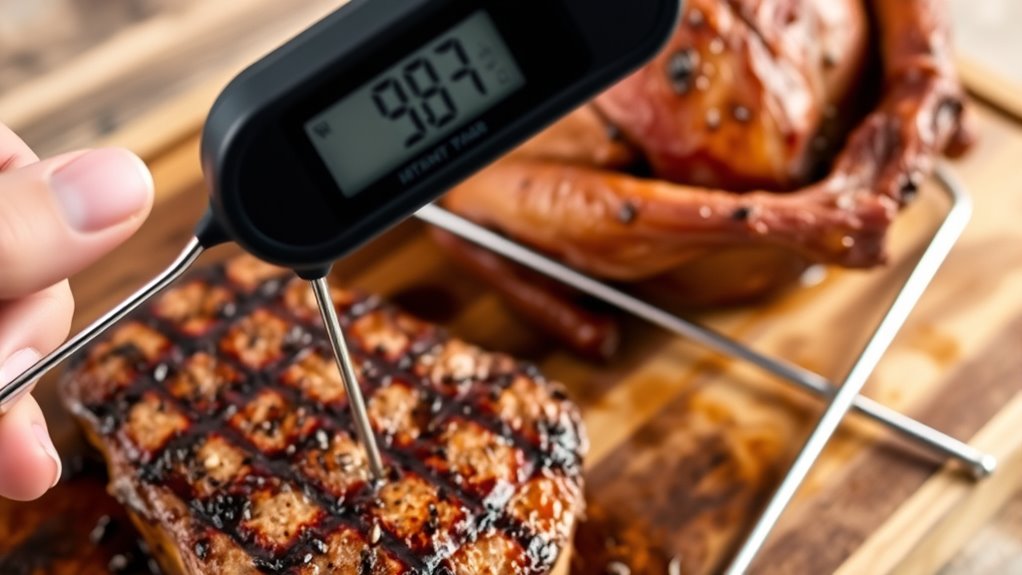
Food thermometers are indispensable tools for guaranteeing your meals are cooked safely and to the perfect temperature. When it comes to cooking safety, accurate temperature readings are vital to prevent foodborne illnesses and guarantee your dishes are thoroughly cooked. An instant-read thermometer and a probe thermometer serve different purposes, and knowing when each wins can make a significant difference in your kitchen.
Instant-read thermometers are your go-to for quick, precise temperature checks. If you’re grilling steaks, reheating leftovers, or testing the temperature of baked goods, these devices can give you a reading in seconds. Their design allows you to insert the probe into the food, see the temperature instantly, and then remove it. This rapid feedback helps you make immediate adjustments, especially when you’re monitoring multiple dishes or need to check a specific spot quickly. They’re particularly handy when you want to verify the final temperature of a dish, guaranteeing your food reaches the recommended safety standards without overcooking. Because they’re portable and easy to use, instant-read thermometers excel in scenarios demanding quick temperature accuracy, minimizing the risk of undercooking or overcooking.
Instant-read thermometers provide quick, accurate readings for grilling, reheating, and baking.
On the other hand, probe thermometers are designed for continuous temperature monitoring during longer cooking processes. These are the winners when you’re roasting a turkey, slow-cooking a roast, or smoking meats. With a probe thermometer, you insert the probe into the thickest part of the meat, then leave it in place while the device monitors temperature throughout the cooking process. This constant oversight helps you maintain consistent cooking conditions, preventing undercooking or drying out your food. Probe thermometers are especially valuable when precise cooking safety is vital, as they allow you to monitor real-time temperature changes without repeatedly opening the oven or grill. Their ability to track temperature over time makes them perfect for guaranteeing your meat reaches the safe internal temperature without guesswork. Additionally, some modern probe thermometers can connect to apps via wireless technology, enhancing their utility for energy-efficient cooking.
Knowing when each thermometer wins depends on the task at hand. Use an instant-read for quick checks, testing multiple foods, or verifying final temperatures. Rely on a probe thermometer when you need continuous, accurate temperature readings during long cooks. Both tools help you achieve ideal cooking safety and temperature accuracy, but choosing the right one for each situation guarantees your meals are safe, delicious, and perfectly cooked every time.
Frequently Asked Questions
What Is the Most Accurate Temperature Reading Method?
You’ll get the most precise accuracy with a probe thermometer, especially for ongoing measurement consistency. It stays in the food, providing continuous readings that help you monitor temperature changes over time. Instant-read thermometers are great for quick checks but may lack the consistency needed for precise measurements. For the best results, use a probe thermometer when precision accuracy matters most, like when cooking large cuts or managing food safety.
How Often Should I Calibrate My Food Thermometer?
You should calibrate your food thermometer at least once a year to guarantee maximum accuracy. If you use it frequently or notice inconsistent readings, consider calibrating it more often, perhaps every few months. Proper calibration maintains thermometer accuracy, which is essential for food safety. To calibrate, use the ice water method or boiling water test. Regular calibration helps you trust your thermometer’s readings and guarantees safe, properly cooked food.
Can I Use an Instant-Read Thermometer for Grilling?
Yes, you can use an instant-read thermometer for grilling, but keep in mind its limitations. Instant-read thermometers excel at providing quick, accurate readings of small food sections, ensuring grilling accuracy. However, they aren’t ideal for long, continuous use on a grill since they require removing the thermometer and risking heat damage. For consistent grilling accuracy, consider a probe thermometer designed for continuous monitoring.
Are Digital Thermometers Better Than Analog Ones?
Digital thermometers are generally better than analog ones because they offer quicker readings and clearer displays. You’ll find digital models tend to be more accurate, especially with modern features like calibration options. Analog thermometers can be reliable but often lack precision and can be harder to read. If you want consistent thermometer accuracy and easy use, go for a digital thermometer—it’s a smarter choice for precise cooking.
What Temperature Is Considered Safe for Cooked Poultry?
You should guarantee your poultry reaches an internal temperature of 165°F to maintain poultry safety. Use a food thermometer to check the thickest part of the meat, avoiding the bone. Proper cooking temperatures eliminate harmful bacteria, making your poultry safe to eat. Whether you’re using an instant-read or probe thermometer, consistent monitoring helps you avoid undercooking or overcooking, ensuring your poultry is both safe and delicious.
Conclusion
Just like a trusted compass guides your journey, choosing the right thermometer steers your cooking to perfection. Instant-read thermometers are your quick, sharp arrow for immediate targets, while probe thermometers are the steady lighthouse, monitoring from afar. Trust your tools, and let them be the symbols of confidence on your culinary voyage. With each precise measurement, you’re steering toward delicious, safe meals—your kitchen’s guiding stars shining bright.
Columbus Day / Indigenous Peoples' Day Picks
long weekend sales
As an affiliate, we earn on qualifying purchases.