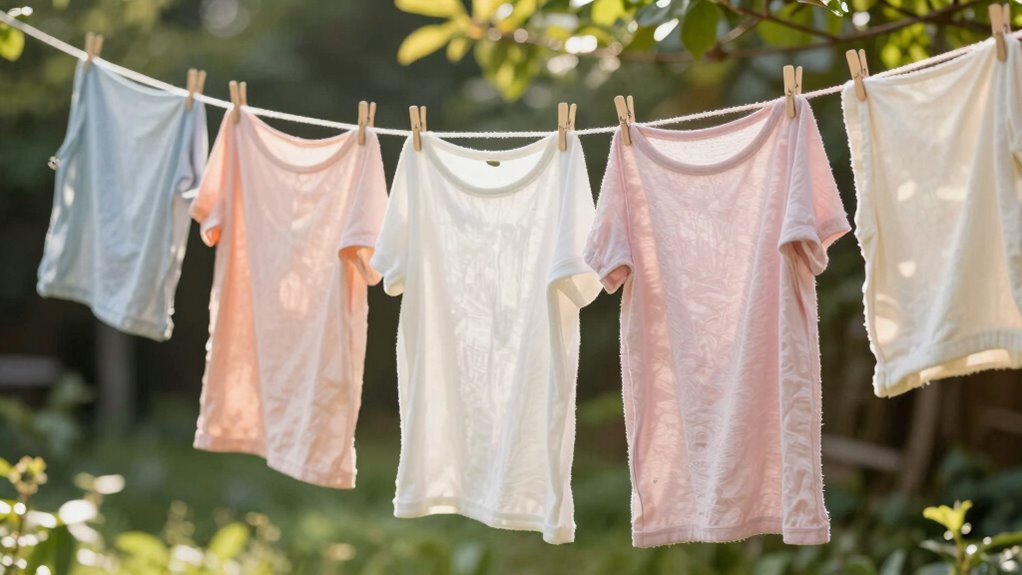

Air-drying helps your fabrics last longer because it’s gentler than machine drying, reducing wear and tear on fibers. You avoid harsh tumbling and high heat that weaken and damage fabrics over time. Proper air-drying prevents shrinking, fading, and brittleness, especially for delicate textiles like linen. It promotes even drying and maintains your clothes’ texture and strength. Want to discover more about how air-drying benefits your clothes? Keep exploring to learn additional tips.

Prime made for students and young adults
- Fast, free delivery for dorm and study essentials
- Prime Video and Amazon Music included
- Member-only deals
Key Takeaways
- Air-drying reduces wear and tear compared to machine drying, preventing fiber weakening and fabric damage.
- Gentle air circulation ensures even drying, minimizing stress and deformation of delicate fabrics like linen.
- Sunlight and fresh air naturally disinfect and remove odors, preserving fabric freshness without chemicals.
- Proper hanging techniques prevent stretching, shrinking, or misshaping, extending fabric longevity.
- Avoiding high heat and aggressive tumbling helps maintain the fabric’s strength, texture, and appearance over time.
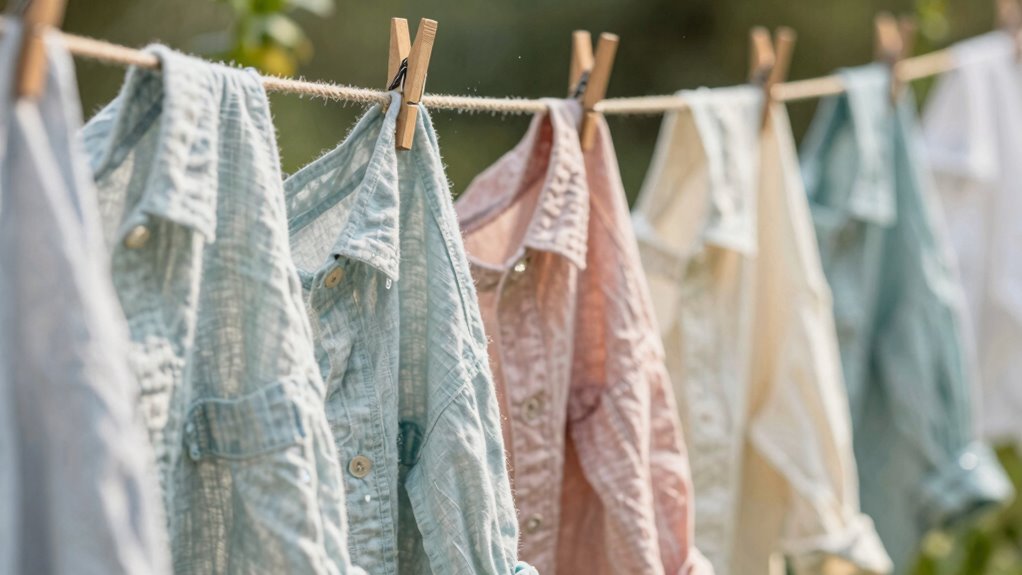
Air-drying fabrics offers a simple and eco-friendly way to care for your clothing. Unlike machine drying, it reduces wear and tear on your garments, helping them last longer. When you hang clothes to dry naturally, you avoid the aggressive tumbling and high heat that can weaken fibers over time. This gentle process is especially beneficial for delicate fabrics like linen, which are prone to damage from harsh drying methods. Linen preservation is easier when you let it dry in the open air because it maintains its strength and texture better. Linen fibers are better preserved through gentle drying methods, which help prevent brittleness and deformation. Linen preservation is easier when you let it dry in the open air because it maintains its strength and texture better. It also helps maintain the fabric’s natural appearance and feel. Plus, since air-drying doesn’t involve high temperatures, it profoundly reduces the risk of shrinking or fading, which are common issues with synthetic fabrics or dyed textiles. Additionally, proper drying techniques can further enhance fabric care by ensuring even and gentle drying, preventing unnecessary stress on the fibers. Using correct hanging methods can also prevent stretching or misshaping of garments during the drying process, contributing to longer-lasting clothing. Proper air circulation is essential to promote faster and more uniform drying, which further protects the fabric’s integrity.
Another key advantage of air-drying is odor control. When you hang your clothes outdoors or in a well-ventilated space, the fresh air helps eliminate lingering smells that can develop from sweat or moisture trapped inside fabrics. Sunlight, in particular, has natural disinfectant properties that can help reduce bacteria and mold, further improving odor control. This means your clothes smell cleaner and fresher without relying on chemical-laden fabric softeners or scent boosters. Plus, the natural evaporation process involved in air-drying doesn’t leave behind residues that could cause skin irritation or compromise fabric quality over time. Additionally, proper drying techniques can enhance overall fabric longevity by minimizing damage caused by improper handling. Proper technique also involves choosing suitable hanging methods to prevent stretching or misshaping of garments during the drying process. Moreover, using appropriate hangers and spacing can promote faster and more uniform drying, which further protects the fabric’s integrity.
As an affiliate, we earn on qualifying purchases.
Frequently Asked Questions
Does Air-Drying Work Better on Certain Fabric Types?
Yes, air-drying works better on certain fabric types like cotton, linen, and wool, which benefit from gentle drying techniques to preserve fabric longevity. Delicate fabrics such as silk or lace might also fare well with air-drying, but require extra care to avoid damage. Overall, air-drying reduces the risk of shrinkage and wear caused by high heat, making it a smart choice for prolonging the life of most fabrics.
Can Air-Drying Prevent Color Fading Over Time?
Sure, air-drying can help prevent color fading over time. By skipping harsh machine cycles and high heat, you’re actively preserving your fabric’s vibrant color retention and fading prevention. Think of it as giving your clothes a spa day—gentle, natural, and free from aggressive chemicals. This simple act keeps colors brighter longer, so you can enjoy that fresh, just-washed look without worrying about dullness creeping in too soon.
How Does Humidity Affect Air-Drying Effectiveness?
Humidity levels considerably impact air-drying effectiveness. In a high humidity environment, moisture in the air slows down evaporation, making fabrics take longer to dry and potentially leading to musty odors or mold. Conversely, a low humidity drying environment speeds up evaporation, helping fabrics dry faster and reducing the risk of damage. You should aim for a balanced humidity level to optimize air-drying and keep your fabrics in good condition.
Is Air-Drying Suitable for Heavily Soiled Clothes?
Air-drying isn’t ideal for heavily soiled clothes because it doesn’t offer the same stain removal power as machine washing. It also takes longer, which can prolong the time your clothes stay damp. If you want to improve drying speed and guarantee stain removal, pre-treat stains before air-drying. For heavily soiled items, machine washing and tumble drying are more effective, helping your clothes stay fresh and last longer.
Are There Specific Techniques to Speed up Air-Drying?
Yes, you can speed up air-drying by using quick drying methods and air circulation techniques. Hang clothes in a well-ventilated area, preferably outdoors, to maximize airflow. Use a fan or open windows to boost air circulation around your garments. Spreading clothes out evenly prevents overlapping, allowing air to reach all fabric parts. These techniques help reduce drying time while keeping your clothes in good condition.
As an affiliate, we earn on qualifying purchases.
Conclusion
By air-drying your clothes, you extend their lifespan and keep them looking new longer. Not only does it reduce wear and tear caused by dryers, but it also conserves energy. Imagine saving enough electricity in a year to power your entire home for over a week—that’s the impact of choosing air-drying. So next time, hang your laundry outside; your fabrics will thank you with durability and vibrant color for years to come.
As an affiliate, we earn on qualifying purchases.
outdoor clothesline for delicate fabrics
As an affiliate, we earn on qualifying purchases.
As an affiliate, we earn on qualifying purchases.
Halloween Picks
halloween
As an affiliate, we earn on qualifying purchases.