TL;DR
A trading market indicates speculation about whether the minimum temperature in a certain region will be below 79°F on September 7, 2026. No official weather forecast or scientific prediction confirms this yet, making the outcome uncertain.
Market activity on the trading platform Kalshi indicates ongoing speculation about whether the minimum temperature in a specified region will be below 79°F on September 7, 2026. For more details, see Will The Lowest Temperature In Tokyo Be 26°C On July 11?. However, no official weather forecast or scientific prediction has confirmed this outcome, and the event remains highly uncertain.
Kalshi, a regulated trading platform, has seen recent trades related to a forecast question: ‘Will the minimum temperature be below 79°F on September 7, 2026?’ The volume of these trades suggests that market participants are actively betting on this outcome, but these are based on market signals rather than scientific weather models.
There is no publicly available, peer-reviewed climate projection or meteorological forecast that specifically predicts minimum temperatures for that date nearly three years in advance. Climate models and long-term weather predictions are inherently uncertain, especially so far into the future. Weather forecasts typically extend only up to two weeks, and climate models do not provide precise daily temperature predictions so far into the future. You can explore Will The Maximum Temperature Be 94-95° On Aug 26, 2026? for more climate-related forecasts.
Experts emphasize that long-term weather predictions beyond a few months are inherently uncertain due to the complex, chaotic nature of climate systems. While climate trends can suggest general warming or cooling patterns, specific temperature thresholds on a particular day are not reliably forecasted so far ahead.
Implications of Market-Based Temperature Speculation
The active trading on Kalshi reflects a growing interest in using financial markets to gauge expectations about future climate conditions. While these bets are not scientific forecasts, they can influence public perception and highlight the increasing relevance of climate-related financial products. However, they should not be mistaken for verified weather predictions, especially so far in advance.
This development underscores the importance of understanding the difference between market speculation and scientific climate modeling. It also raises questions about how future climate risks might be assessed and managed through innovative financial instruments, even if current scientific capabilities do not support precise long-term temperature predictions.
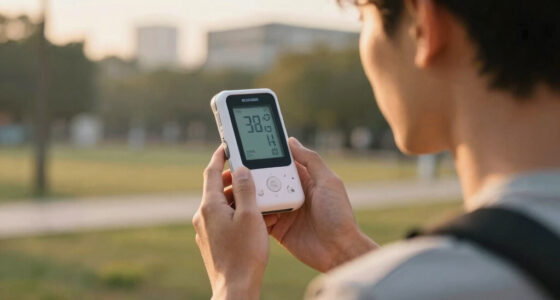
digital weather station with temperature display
As an affiliate, we earn on qualifying purchases.
As an affiliate, we earn on qualifying purchases.
Understanding Long-Term Climate and Weather Predictions
Climate science relies on models that simulate the Earth’s atmosphere, oceans, and land systems to project long-term trends rather than specific daily weather conditions. Typical weather forecasts are reliable only up to about two weeks due to the chaotic nature of atmospheric dynamics.
Forecasting the minimum temperature on September 7, 2026, is beyond current scientific capability, as climate models focus on broader trends such as average temperature increases over decades. The use of financial markets like Kalshi to speculate on such specific outcomes is a relatively new phenomenon, driven by increased interest in climate risk management and betting markets.
Interest in this particular question has spiked recently, possibly due to the growing visibility of climate-related trading platforms and the broader societal concern about climate change impacts. Nonetheless, it is important to recognize that these market signals are not based on scientific predictions but on collective betting behavior, which can be influenced by many factors unrelated to actual weather forecasts.
As an affiliate, we earn on qualifying purchases.
Limitations of Scientific and Market Predictions
It remains unclear whether any scientific or meteorological models will be able to provide reliable forecasts for minimum temperatures on September 7, 2026, as the date approaches. Currently, no official climate projection or weather forecast confirms what the temperature will be on that specific day.
Market activity on Kalshi indicates speculation rather than prediction, and the reliability of such bets is uncertain. The influence of external factors, such as sudden climate events or unanticipated atmospheric changes, could significantly alter the outcome, making the predictions highly uncertain.
Scientists emphasize that the inherent unpredictability of weather and climate systems limits the accuracy of forecasts beyond a few months, let alone years. Therefore, any claims about the temperature on September 7, 2026, should be viewed with caution and understood as speculative at best.
weather forecast radio with temperature sensor
As an affiliate, we earn on qualifying purchases.
As an affiliate, we earn on qualifying purchases.
Monitoring Scientific Forecasts and Market Trends
As the date approaches, meteorologists and climate scientists will update their models with new data, but precise forecasts for September 2026 remain unlikely. Researchers will continue refining long-term climate projections, but specific daily temperature predictions are not expected to be available soon.
Market activity on platforms like Kalshi will likely fluctuate, reflecting evolving trader sentiment rather than scientific certainty. Stakeholders should watch for official climate assessments and meteorological updates as the date nears.
Further investigation into how financial markets interpret and incorporate climate data may shed light on the evolving relationship between climate science and speculative trading, but current predictions remain highly uncertain.
solar-powered outdoor temperature monitor
As an affiliate, we earn on qualifying purchases.
As an affiliate, we earn on qualifying purchases.
Key Questions
Can we accurately predict the minimum temperature for September 7, 2026?
No, current scientific methods do not allow for precise weather predictions that far in advance. Climate models focus on long-term trends rather than specific daily conditions.
What does the market activity on Kalshi indicate about future temperatures?
The recent trades suggest traders are betting on whether the temperature will be below 79°F, but these are based on market speculation and do not reflect scientific forecasts.
Why is it difficult to forecast specific weather conditions so far ahead?
Weather systems are inherently chaotic, and small changes can lead to large differences over time. This limits the accuracy of forecasts beyond a few weeks.
Will scientific forecasts be available closer to September 2026?
Yes, as the date approaches, meteorologists will update forecasts based on new data, but precise predictions for that specific day remain unlikely for some time.
Is market betting a reliable way to gauge future climate conditions?
Market bets reflect collective expectations but are not scientifically reliable. They can be influenced by many factors unrelated to actual climate data.
Source: kalshi