
TL;DR
A recent market activity indicates a potential for maximum temperatures of 94-95°F on August 26, 2026. However, weather predictions for that far ahead are highly uncertain, and no official forecast confirms this temperature range.
Recent activity on a weather prediction market suggests there is a possibility that the maximum temperature in parts of the United States could reach between 94 and 95 degrees Fahrenheit on August 26, 2026. However, experts emphasize that weather forecasts this far into the future are highly uncertain, and no official meteorological agency has issued a forecast confirming such temperatures for that date. This development is notable because it reflects market speculation rather than scientific consensus, raising questions about the reliability of long-term temperature predictions.
The Kalshi trading platform has seen 68 recent trades on the question of whether the maximum temperature will hit 94-95°F on August 26, 2026. These trades indicate some market participants believe there is a measurable chance of reaching this temperature range, although the activity remains speculative.
Climate scientists and meteorologists caution that reliable weather forecasts generally extend only up to two weeks in advance, with accuracy decreasing rapidly over longer periods. For more on future temperature predictions, see this forecast question. As a result, predicting specific temperature ranges nearly four years ahead is not scientifically feasible, and such market activity should not be interpreted as a scientific forecast.
There is no official weather forecast or climate model prediction that supports the idea that temperatures will be in this specific range on that date. The activity appears to be driven by market speculation rather than scientific data, and experts warn against overinterpreting such signals.
Implications of Long-Term Temperature Market Activity
This activity highlights the growing role of prediction markets in gauging public perception and speculative expectations about future climate conditions. While these markets can reflect collective sentiment, they are not reliable tools for scientific forecasting, especially for specific temperature predictions several years ahead.
For policymakers, urban planners, and climate scientists, the key takeaway is that long-term weather predictions remain uncertain. The market activity does not alter the scientific understanding that climate variability and change are complex and cannot be precisely forecasted years in advance.
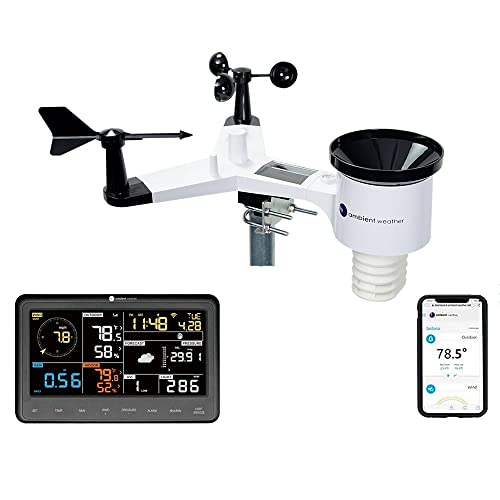
Ambient Weather WS-2902 Wi-Fi Smart Weather Station
- Complete Weather Station: Includes Osprey Sensor Array and LCD display
- Hyper-Local Weather Data: Wireless sensors measure wind, temperature, humidity, rainfall, UV, and solar radiation
- Smart Home Integration: Supports alerts and remote access via IFTT, Google Home, Alexa
As an affiliate, we earn on qualifying purchases.
As an affiliate, we earn on qualifying purchases.
Understanding Long-Range Climate Predictions and Market Speculation
Forecasting weather patterns more than a few weeks into the future is inherently uncertain due to the chaotic nature of atmospheric systems. Traditional meteorological models typically provide reliable forecasts up to 14 days ahead, with accuracy diminishing rapidly beyond that timeframe.
The activity on prediction markets like Kalshi reflects a different phenomenon: public speculation and betting based on perceived trends, such as climate change impacts, seasonal patterns, or other factors. These markets are not scientific tools but can sometimes influence public perception of future climate risks.
Historically, long-term climate projections focus on broader trends, such as average temperature increases over decades, rather than specific daily maximums. The current market activity is an example of how future climate uncertainties can be expressed through financial instruments, but it does not constitute a scientific forecast.
“Forecasting specific daily temperatures nearly four years in advance is beyond current scientific capabilities. Market activity should not be mistaken for reliable prediction.”
— Dr. Emily Carter, climate scientist at NOAA
As an affiliate, we earn on qualifying purchases.
Uncertainties Surrounding Long-Term Temperature Predictions
It remains unclear whether any scientific models or climate projections support the idea that temperatures will reach 94-95°F on August 26, 2026. No official forecasts or peer-reviewed climate models currently specify such precise temperature ranges for that date. The activity on the prediction market is speculative and should not be interpreted as scientific evidence.
Additionally, weather and climate systems are influenced by numerous variables, making precise long-term daily temperature predictions unreliable. The extent to which market activity reflects genuine climate expectations versus speculation is also uncertain.
As an affiliate, we earn on qualifying purchases.
Next Steps for Climate Forecasting and Market Monitoring
Scientists and meteorologists will continue to refine climate models to better understand long-term trends, but precise daily predictions for specific dates remain out of reach. Monitoring the activity on prediction markets can offer insight into public perception but should be interpreted with caution.
In the coming years, climate agencies are expected to release updated projections based on the latest data, but these will focus on broader trends rather than specific daily temperatures. Market activity related to specific dates will likely persist as a form of speculation rather than scientific forecasting.
As an affiliate, we earn on qualifying purchases.
Key Questions
Can weather forecasts reliably predict temperatures this far in advance?
No, current scientific methods do not support reliable forecasts of specific daily temperatures more than two weeks ahead. Predictions for 2026 are purely speculative at this stage.
What does the trading activity on Kalshi indicate about future temperatures?
The activity reflects market participants’ perceptions and expectations but does not constitute scientific evidence or reliable forecasts of actual weather conditions.
Are long-term climate models capable of predicting specific daily temperatures?
No, climate models typically project broader trends over decades rather than specific daily temperatures for individual dates years in advance.
Why is there interest in predicting temperatures so far ahead?
Some interest stems from climate change concerns, economic planning, and speculative markets, but scientific predictions remain focused on longer-term averages rather than specific days.
Source: kalshi