🔍 Read the full analysis: Unlock Your Business Potential With These 13 AI Automation Tools In 2026 on ThorstenMeyerAI.com

Prime made for students and young adults
- Fast, free delivery for dorm and study essentials
- Prime Video and Amazon Music included
- Member-only deals
TL;DR
In 2026, a curated list of 13 AI automation tools is transforming how businesses operate, as detailed in the original analysis. These tools enhance workflows, improve scalability, and support integration across various sectors, offering significant productivity gains.
In 2026, businesses seeking to enhance operational efficiency are turning to a curated selection of 13 AI automation tools, designed to streamline workflows, reduce manual effort, and support scalable growth. This list reflects the latest developments in AI-driven automation software, emphasizing tools that balance ease of use, advanced customization, and cost-effectiveness. These tools are now considered essential for companies aiming to stay competitive in an increasingly digital landscape, as discussed in Small Business AI Automation.
The list includes platforms like Google AI Studio, known for building scalable workflows, and Spec-Driven AI Testing, specialized in automation testing. Many tools support API integration and CI/CD pipelines, enabling seamless incorporation into existing development environments. Pricing varies from affordable tiered subscriptions suitable for small teams to enterprise-grade solutions with extensive features. The evaluation criteria prioritized tools that support complex workflows, offer active community support, and demonstrate long-term reliability.
Experts highlight that these tools are increasingly combining AI agents with minimal coding, allowing rapid deployment across platforms. While some platforms excel at testing automation and network operations, others focus on coding assistance and process optimization. The landscape remains dynamic, with continuous updates and new features emerging to meet evolving business needs.
The 13 picks
- 1
 Software Testing with Generative AIView on Amazon →
 - 2
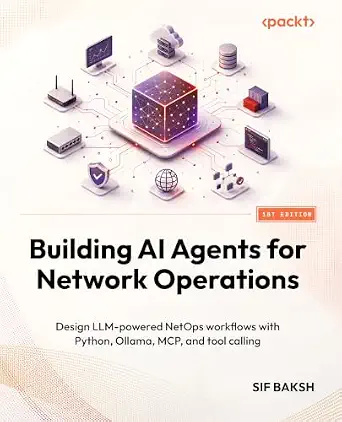 Building AI Agents for Network Operations: Design LLM-powered NetOps workflow…View on Amazon →
 - 3
 40 Python Programming Projects for AI Agents and AutomationsView on Amazon →
 - 4
 The Claude Code Operating Model: Build Scalable AI Coding Systems with Skills…View on Amazon →
 - 5
 Spec-Driven AI Engineering: Build Reliable Software from Requirements to Code…View on Amazon →
 - 6
 Building Agentic AI Systems: A Step-by-Step Guide to Creating LLM-Powered AI…View on Amazon →
 - 7
 AI for Quality Assurance and Software Testing: The Practitioner’s Complete Gu…View on Amazon →
 - 8
 Building Intelligent Applications with Claude AI: A Practical Guide to Creati…View on Amazon →
 - 9
 Spec-Driven Software Testing with AI: Build Reliable Test Suites from Specifi…View on Amazon →
 - 10
 Mastering Claude AI: The Complete Practical Guide to Prompt Engineering, Proj…View on Amazon →
 - 11
 Claude AI Automation & Monetization: Build AI-Powered Systems, Automate Workf…View on Amazon →
 - 12
 Google AI Studio Guide 2026: Master Google AI Studio to Build Intelligent AI…View on Amazon →
 - 13
 Agentic Coding with Claude Code (5-in-1): A Practical Developer’s Handbook fo…View on Amazon →
Why These 13 AI Tools Are Game-Changers in 2026
These AI automation tools are reshaping business operations by enabling faster, more reliable workflows with less manual intervention. They help companies reduce operational costs, improve scalability, and enhance agility in responding to market changes. For small teams, these tools offer affordable entry points, while larger enterprises benefit from extensive customization and integration capabilities. As AI-driven automation becomes a standard component of digital transformation, understanding these tools is critical for making strategic investments that drive long-term growth.
Popular right now

Ninja Luxe Café Premier 3-in-1 Espresso Machine, Drip Coffee & Cold Brew

Dyson Ball Animal Total Clean Upright Vacuum

De'Longhi Linea Classic Espresso Machine with Adjustable Milk Frother
As an affiliate, we earn on qualifying purchases.
Evolution of AI Automation in Business Operations
The adoption of AI automation software has accelerated over the past few years, driven by advancements in machine learning, cloud computing, and API integration. In 2024 and 2025, many organizations began integrating AI tools into their development and operational workflows, with a focus on testing, deployment, and network management. The 2026 landscape reflects a maturing market where vendors offer increasingly sophisticated solutions that cater to both technical and non-technical users. Previous trends showed a shift from basic automation to fully integrated AI-driven platforms capable of handling complex, multi-stage processes.
Major players like Google, Microsoft, and emerging startups have contributed to this evolution, emphasizing ease of use, scalability, and cost-efficiency. The current year’s top tools are distinguished by their support for API-based workflows, multi-platform deployment, and minimal coding requirements, making automation accessible across various business functions.
Unconfirmed Aspects of AI Automation Tool Adoption in 2026
While the top 13 tools are widely recognized, it is still unclear how many small and medium-sized enterprises fully adopt these platforms at scale or how their long-term reliability will hold up as new updates are released. Additionally, the competitive landscape may shift with new entrants or technological breakthroughs that could alter current rankings. The precise impact on job roles and operational costs remains to be thoroughly evaluated through ongoing case studies and user feedback.
Future Developments and Adoption Trends in AI Automation
In the coming months, expect further enhancements in AI automation tools, including increased support for low-code/no-code interfaces and more robust security features. Vendors are likely to expand their integrations with popular enterprise platforms and cloud services, making these tools even more accessible. Organizations should monitor ongoing updates, participate in pilot programs, and gather user feedback to optimize their automation strategies. Continued research and real-world case studies will clarify the long-term ROI and operational impact of adopting these tools at scale.
Key Questions
How do I choose the best AI automation tool for my business?
Evaluate your company’s specific needs, technical expertise, and budget. Consider factors like ease of use, integration capabilities, scalability, and support resources. Trial periods and user reviews can also help determine the best fit.
Can these AI automation tools integrate with existing development pipelines?
Yes, most top tools support integration with popular CI/CD platforms, APIs, and cloud services. Verify compatibility with your current systems before selecting a platform.
Are these tools suitable for small teams or only large enterprises?
Many tools offer tiered pricing and features suitable for small and medium-sized teams, emphasizing ease of use and quick setup. Larger organizations benefit from advanced customization and scalability options.
What are the main benefits of adopting AI automation tools in 2026?
They enable faster workflows, reduce manual effort, lower operational costs, and support scalable growth, helping businesses stay competitive in a rapidly evolving digital landscape.
What remains uncertain about the future of AI automation in business?
Long-term reliability, actual ROI, and the full impact on employment and operational costs are still being studied. Market shifts and technological advancements may also influence future adoption patterns.
Source: ThorstenMeyerAI.com