
TL;DR

Get school and study supplies delivered free — and shop member deals
- Fast, free delivery on millions of items
- Access to Prime Big Deal Days deals on October 6–7
- Prime Video, Amazon Music and more included
The northern lights are forecasted to be visible across 19 U.S. states tonight. This rare event is driven by solar activity, offering a rare viewing opportunity for many Americans. Details on timing and affected areas are provided.
Skywatchers across 19 U.S. states may see the northern lights, or aurora borealis, on Monday night, according to the latest forecast from space weather agencies. This rare display is driven by heightened solar activity and is significant for both amateur and professional astronomers. The event’s timing and geographic scope make it a notable occurrence for many in the northern U.S., providing a unique opportunity to observe one of nature’s most spectacular light displays.
The National Oceanic and Atmospheric Administration (NOAA) and other space weather organizations have issued alerts indicating that a geomagnetic storm caused by solar wind is expected to enhance auroral activity. As a result, the northern lights could be visible as far south as northern states such as Montana, North Dakota, Minnesota, and parts of Wisconsin, Michigan, and New York. The forecast suggests that the best viewing times will be between 9 p.m. and 2 a.m. local time, with clear, dark skies increasing the chances of seeing the aurora.
According to space weather experts, the solar activity responsible for this event stems from a coronal mass ejection (CME) that reached Earth over the weekend. This CME has increased geomagnetic activity, which enhances auroral displays. While the forecast indicates a high likelihood of aurora visibility, the exact intensity and coverage may vary depending on local weather conditions and atmospheric clarity.
Why the Aurora Visibility Matters for Viewers
This event offers a rare chance for many Americans to witness the northern lights without traveling to northern Canada or Scandinavia. For scientists, it provides an opportunity to observe geomagnetic effects and study space weather impacts on Earth’s atmosphere. For the general public, it sparks interest in astronomy and natural phenomena, fostering educational and recreational engagement. The event also underscores the importance of space weather monitoring and forecasting in understanding Earth’s environment and protecting technology infrastructure from solar storms.
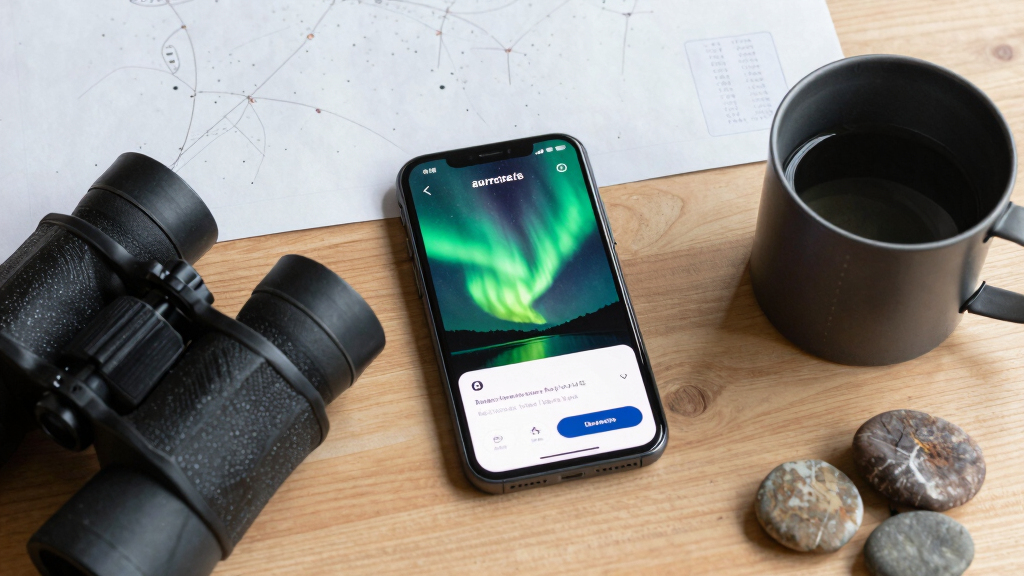
northern lights viewing binoculars
As an affiliate, we earn on qualifying purchases.
As an affiliate, we earn on qualifying purchases.
Recent Solar Activity and Aurora Forecasting Developments
Solar activity has been elevated over the past week, with multiple sunspots and solar flares detected by space agencies. The recent CME that triggered this aurora event was observed by satellites such as the Solar and Heliospheric Observatory (SOHO). Historically, geomagnetic storms of this magnitude have led to visible auroras across much of the northern U.S., but such events are still considered relatively rare and dependent on atmospheric conditions. This forecast builds on previous predictions of increased geomagnetic activity linked to ongoing solar phenomena.
“The geomagnetic storm caused by the recent CME is expected to produce visible auroras as far south as the northern United States. Clear skies will be key for observers tonight.”
— Dr. Emily Carter, NOAA Space Weather Prediction Center
portable telescope for aurora borealis
As an affiliate, we earn on qualifying purchases.
As an affiliate, we earn on qualifying purchases.
Factors That Could Affect Aurora Visibility Tonight
While forecasts predict aurora visibility across 19 states, the actual display depends heavily on local weather conditions, such as cloud cover and light pollution. The intensity of the geomagnetic storm may also fluctuate, potentially reducing the aurora’s brightness or coverage. Additionally, atmospheric disturbances or unexpected solar activity could alter the forecasted visibility window.
As an affiliate, we earn on qualifying purchases.
Future Aurora Events and Monitoring Efforts
Space weather agencies will continue monitoring solar activity, providing updates on potential future geomagnetic storms. Observers are advised to stay informed through NOAA alerts and local weather forecasts. The next significant solar event could extend aurora visibility further south or increase the intensity of displays, offering additional opportunities for viewing in coming weeks.
As an affiliate, we earn on qualifying purchases.
Key Questions
What is the northern lights?
The northern lights, or aurora borealis, are natural light displays caused by charged particles from the sun interacting with Earth’s magnetic field and atmosphere.
Which states are most likely to see the aurora tonight?
States including Montana, North Dakota, Minnesota, Wisconsin, Michigan, and parts of New York are most likely to witness the aurora, depending on local conditions.
What time should I look for the aurora?
The best viewing window is expected between 9 p.m. and 2 a.m. local time, with darker skies providing better visibility.
Will weather conditions affect the visibility?
Yes, cloud cover, light pollution, and atmospheric disturbances can significantly impact the ability to see the aurora even if geomagnetic conditions are favorable.
How often do such aurora events occur?
Geomagnetic storms capable of producing visible auroras in the northern U.S. are relatively infrequent, typically occurring a few times each year during periods of heightened solar activity.
Source: google-trends
Fall Picks
fall essentials
As an affiliate, we earn on qualifying purchases.