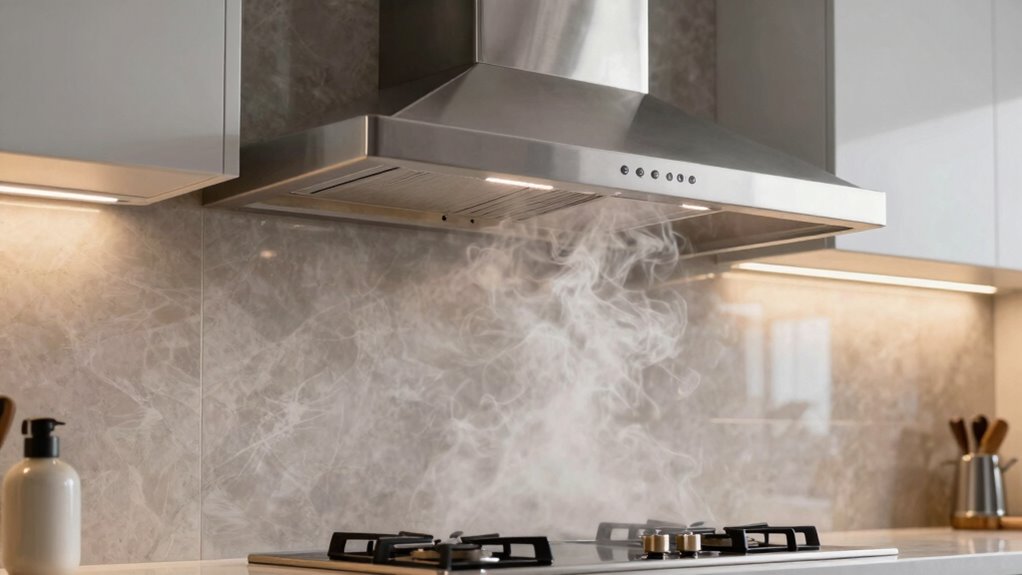
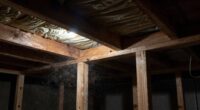
A common mistake is venting your range hood into the attic or garage, which can cause moisture buildup, mold, and fire hazards. Proper ventilation should always direct air outside to improve indoor air quality and safety. Choosing between ducted or ductless models requires considering your space and needs, while correct duct sizing and installation are essential for peak performance. Keeping your system maintained prevents issues and ensures effective ventilation—continue below to learn how to avoid these mistakes.
Key Takeaways
- Venting a range hood directly into the attic or garage causes moisture buildup, mold, and potential structural damage.
- Proper outside venting ensures effective removal of smoke, grease, and odors, maintaining indoor air quality.
- Incorrect duct installation, such as sharp bends or leaks, reduces airflow and diminishes venting efficiency.
- Using ductless hoods or venting into unvented spaces can circulate pollutants back into the kitchen.
- Regular maintenance and correct duct sizing are essential to prevent grease buildup, improve performance, and ensure safety.
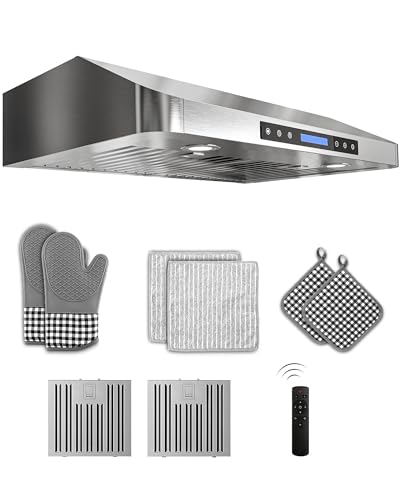
FlyPine 30 inch Stainless Steel Under Cabinet Range Hood – 900 CFM, Ultra-Quiet 4-Speed Vent, Touch/Remote Control LCD, LED Lights, External Venting
✨Transform your kitchen with a range hood built for power, style, and convenience
As an affiliate, we earn on qualifying purchases.
As an affiliate, we earn on qualifying purchases.
Why Proper Range Hood Venting Is a Must
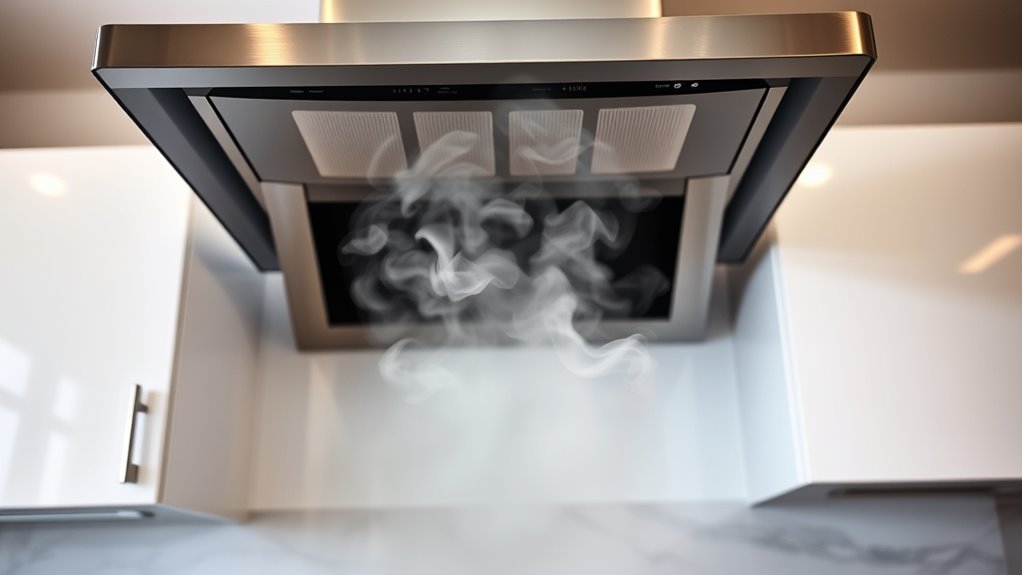
Proper range hood venting is essential because it directly impacts your home’s air quality and safety. When your venting system works correctly, it efficiently removes smoke, grease, and airborne contaminants generated during cooking. This helps prevent these particles from lingering in your kitchen and spreading throughout your home. Good venting also reduces odors, making your space more comfortable and inviting. Without proper venting, smoke and other pollutants can build up, leading to poor air quality and potential health issues over time. By ensuring your range hood is vented correctly, you improve smoke removal and maintain a healthier, cleaner environment. Proper venting isn’t just about convenience — it’s a key step in protecting your home’s air and your family’s well-being. Additionally, understanding venting options can help you choose the most effective system for your kitchen setup.

VIKIO HOME Under Cabinet Range Hood 30 Inch, 980CFM Fast Venting Ducted, Kitchen Hood With 3 Speed Gesture Sensing & Touch Control, Stainless Steel Stove Vent Hood With LED Light And 2 Baffle Filters
[Independent Duct + Upgraded Motor + 980 CFM] This 30" kitchen hood features an enhanced motor and independent…
As an affiliate, we earn on qualifying purchases.
As an affiliate, we earn on qualifying purchases.
Why Venting Your Range Hood Into the Attic or Garage Is a Mistake

Venting your range hood into the attic or garage might seem convenient, but it can cause serious problems. Attic venting allows moisture, grease, and cooking fumes to accumulate, leading to mold, rot, and structural damage over time. These harmful elements won’t escape your home but instead settle into insulation and rafters, creating health hazards. Garage exhaust from venting into the garage can circulate fumes, smoke, and grease back into your living space, compromising indoor air quality. This improper venting can also make your garage environment unsafe, especially if fumes contain carbon monoxide or other toxins. Always direct your range hood exhaust outside to prevent moisture buildup, reduce fire risk, and keep your home’s air clean and healthy. Proper ventilation practices are essential to maintaining a safe and healthy indoor environment.

FIREGAS Range Hood 30 Inch, Stainless Steel Wall Mount Kitchen Hood 450 CFM with 3 Speed Exhaust Fan, Ducted/Ductless Convertible, Stove Vent Hood for Kitchen with Aluminium Mesh and Charcoal Filters
GREAT SUCTION AND ULTRA QUIET: Powerful and convertible venting system with 450 CFM motor and 3-speeds fan ensures…
As an affiliate, we earn on qualifying purchases.
As an affiliate, we earn on qualifying purchases.
How to Choose Between Ducted and Ductless Range Hoods

Choosing between ducted and ductless range hoods depends on your kitchen layout and your ventilation needs. Ducted hoods vent air outside, improving air quality and maintaining energy efficiency, but require duct installation. Ductless hoods filter air through charcoal, recirculating it back into the kitchen, which can be easier to install but may compromise air quality. Consider these factors:
- Kitchen size and layout
- Existing ductwork possibilities
- Budget constraints
- Desire for improved air quality
- Energy efficiency preferences
Ducted hoods typically offer better ventilation and cleaner air, boosting air quality and saving energy. Ductless options are more flexible but might require more frequent filter changes, impacting overall energy efficiency. Your choice should align with your kitchen design and your air quality goals. Additionally, proper technology in range hoods can significantly influence their effectiveness and efficiency.

Tandefio 6" Dia Rectangular to Round Duct Transition 3-1/4" x 10" to 6" Galvanized Transition to Round HVAC Duct Adapter Microwave Vent Kit for Range Hood, Exhaust Vent
Package Content: the package comes inclusive of 1 single piece of our reliable microwave vent kit; This accessory…
As an affiliate, we earn on qualifying purchases.
As an affiliate, we earn on qualifying purchases.
How Incorrect Duct Installation Can Reduce Venting Effectiveness
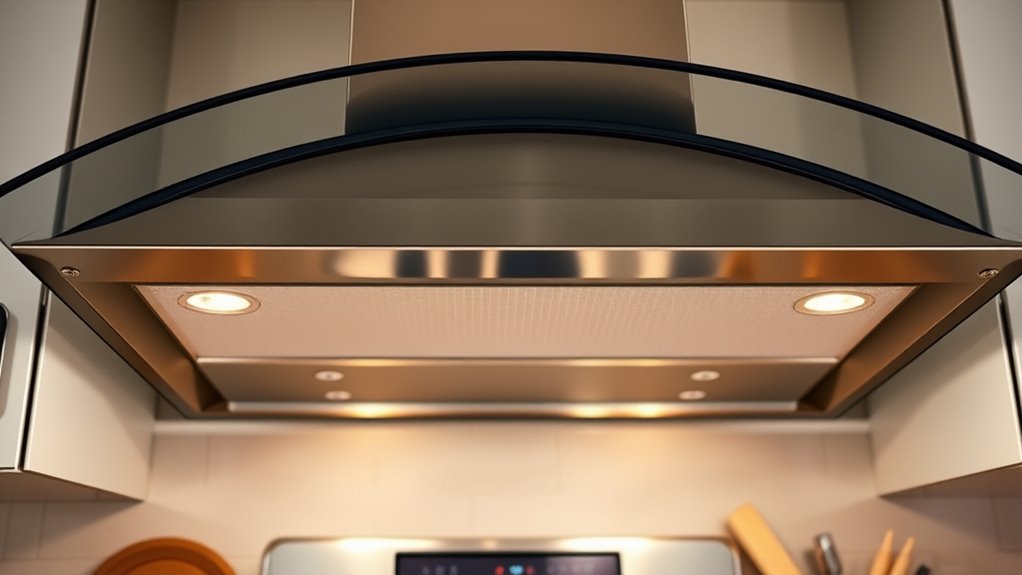
Incorrect duct installation can markedly weaken your range hood’s ability to vent smoke, odors, and grease effectively. Poor duct alignment causes airflow disruptions, reducing venting efficiency. If the duct isn’t straight or has sharp bends, air struggles to pass smoothly, leading to grease buildup and lingering odors. Seal integrity is equally critical; leaks allow contaminated air to escape before reaching the outside, diminishing overall performance. Ensuring proper duct alignment and a tight seal guarantees maximum airflow and prevents air leaks. Proper duct installation and secure sealing are essential for optimal venting performance and safety. Here’s a quick overview:
| Issue | Impact |
|---|---|
| Duct misalignment | Decreases airflow, increases grease buildup |
| Poor seal integrity | Leaks reduce venting efficiency, allow odors to escape |
Why Using the Correct Duct Size Matters for Good Ventilation
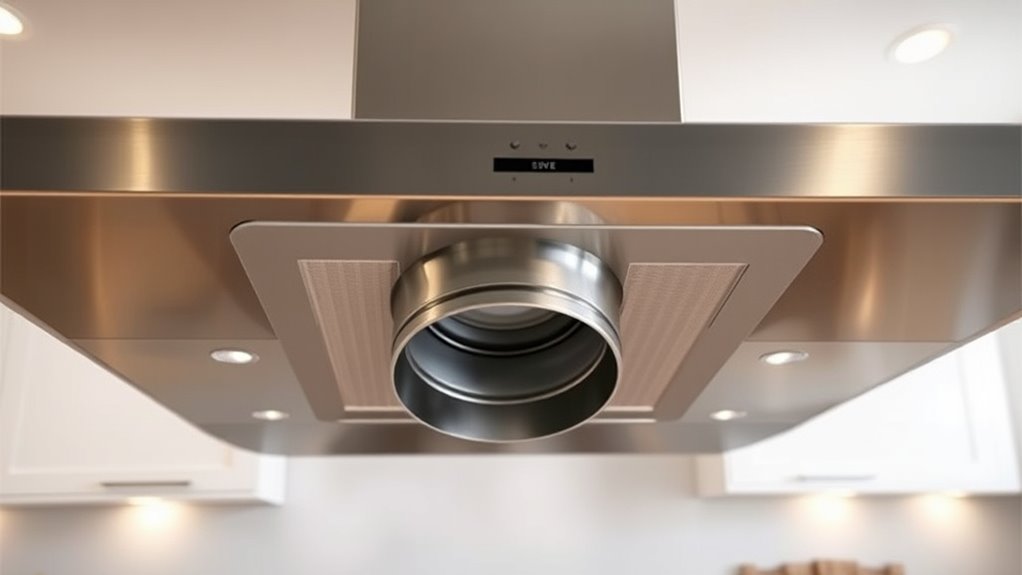
Using the correct duct size is essential for your range hood to perform effectively. A properly sized duct ensures ideal airflow efficiency, removing smoke, odors, and grease without backpressure or noise. When the duct is too small, airflow slows down, reducing ventilation effectiveness and increasing strain on your range hood. Conversely, an oversized duct can cause turbulence and noise, decreasing efficiency. To maximize performance, consider these key points:
Choosing the right duct size ensures optimal airflow, reducing noise, backpressure, and improving your range hood’s performance.
- Use duct sizes recommended by the manufacturer
- Avoid unnecessary duct length or sharp bends
- Maintain consistent duct diameter throughout the system
- Opt for smooth, rigid ducting over flexible tubing
- Regularly check for leaks or blockages in your ductwork
- Understanding the importance of duct sizing helps optimize your kitchen ventilation system.
Choosing the right duct size keeps airflow efficient, ensuring your kitchen stays fresh and safe.
How Regular Maintenance Keeps Your Range Hood Working Well

Regular maintenance is essential to keep your range hood operating at peak performance. Regularly cleaning the filter prevents grease buildup, ensuring efficient airflow and reducing fire hazards. Fan inspection is equally important; check for unusual noise or wobbling, which may indicate wear or damage. Incorporating seasonal checklists can help you stay on top of maintenance tasks and prevent costly repairs.
How to Spot Problems With Your Range Hood Venting
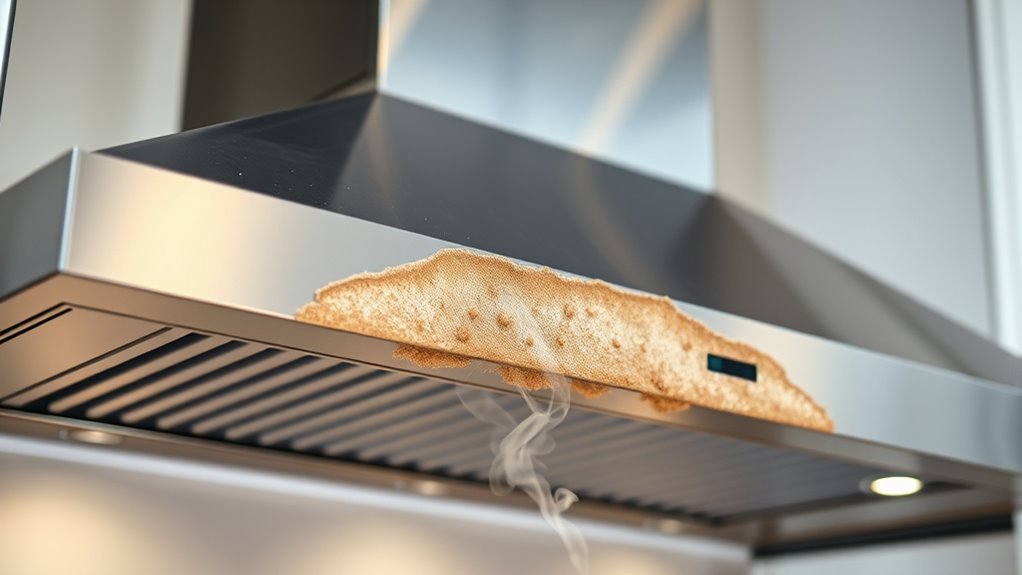
Venting problems in your range hood can often be spotted early by paying attention to certain signs. If you notice persistent cooking odors lingering, it indicates your vent isn’t removing air effectively. Excessive fan noise, especially if it suddenly increases, can signal a blockage or motor issue. Other warning signs include reduced airflow, strange smells coming from the vent, or the vent motor running continuously. Sometimes, silly mishaps during installation or maintenance can also lead to venting issues that are easy to overlook. Check for:
Venting issues show through persistent odors, loud fan noise, reduced airflow, or a constantly running vent motor.
- Lingering cooking odors despite use
- Unusual or loud fan noise
- Decreased airflow when the fan runs
- Visible grease buildup around the vent
- The vent motor running nonstop
Addressing these signs early prevents bigger problems and keeps your kitchen air fresh and healthy.
Frequently Asked Questions
How Often Should I Replace or Clean My Range Hood Filters?
You should clean your range hood filters every 1 to 3 months, depending on how often you cook. For filter maintenance, follow the manufacturer’s replacement schedule, which usually recommends replacing filters every 6 to 12 months. Regular cleaning prevents grease buildup and guarantees proper ventilation. Keep an eye on your filters, and replace or clean them promptly to maintain effective air flow and avoid kitchen air mistakes.
Can I Vent My Range Hood Outdoors Through a Wall?
Yes, you can vent your range hood outdoors through wall venting with outdoor ducting. Just guarantee you install a proper wall vent cap and use durable, heat-resistant ducting designed for outdoor use. Keep the ducting clear of obstructions and avoid sharp bends to maintain airflow. Proper outdoor ducting reduces kitchen odors and smoke, improving air quality while preventing moisture buildup inside your home.
What Are the Best Materials for Ducting to Ensure Safety?
For duct material selection, you should opt for smooth, rigid metal ducts like aluminum or galvanized steel, as they minimize grease buildup and guarantee proper airflow. Safety considerations include avoiding plastic or flexible ducts, which can trap grease and pose fire hazards. Rigid metal ducts also resist moisture and pests, making them the safest choice for venting your range hood outdoors. Proper installation and sealing are essential for maximum safety.
How Does Humidity Affect Range Hood Performance?
Humidity issues turn your range hood into a sluggish sailboat, struggling against moisture impact. Excess humidity makes the air heavy, reducing the fan’s ability to vent smoke and odors effectively. When moisture builds up, it can cause corrosion and mold, jeopardizing safety and performance. To keep your kitchen air flowing smoothly, manage humidity levels with proper ventilation and avoid excess moisture, ensuring your range hood works at full throttle.
Are There Eco-Friendly Options for Range Hood Venting?
Yes, there are eco-friendly ventilation options for your kitchen. You can choose range hoods with energy-efficient motors that reduce power consumption. Installing sustainable ducting materials, like recycled or biodegradable options, makes your venting more environmentally conscious. Look for models with low noise levels and high extraction efficiency, ensuring good airflow without wasting energy. By opting for eco-friendly ventilation, you help reduce your carbon footprint while maintaining a healthy, well-ventilated kitchen.
Conclusion
Did you know that improper venting can lower your kitchen air quality by up to 50%? Taking the time to choose the right venting method, install correct duct sizes, and perform regular maintenance can make all the difference. By avoiding common mistakes like venting into the attic or garage, you guarantee healthier air and better kitchen performance. Proper venting isn’t just a detail—it’s your home’s first line of defense against lingering smoke, odors, and pollutants.