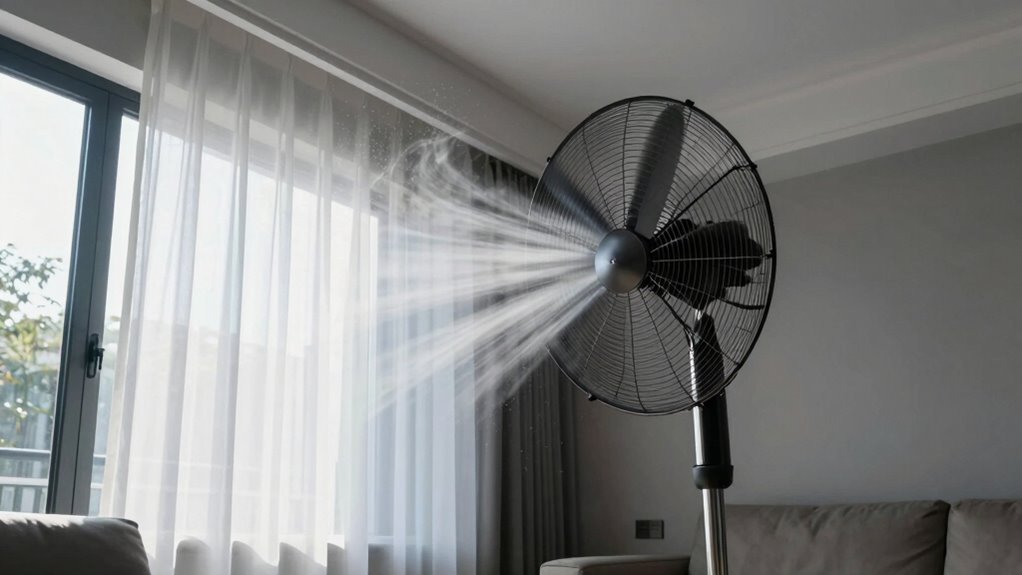

A bigger fan doesn’t always mean better airflow or comfort because blade design, pitch, and efficiency matter more than size alone. An oversized fan with poor blades can underperform and consume more energy, creating unnecessary noise. Proper placement and speed control also influence how well a fan circulates air without wasting power or causing discomfort. Keep in mind that choosing the right size and features is key—if you want to discover how to optimize your space, continue exploring.

Prime made for students and young adults
- Fast, free delivery for dorm and study essentials
- Prime Video and Amazon Music included
- Member-only deals
Key Takeaways
- Larger fans with inefficient blades may move less air than smaller, well-designed models.
- Fan size alone doesn’t guarantee better airflow; blade shape and pitch are critical.
- Oversized fans can consume more energy without improving circulation or comfort.
- Proper placement and design are more important than size for effective air movement.
- Bigger fans often generate more noise and may be impractical or disruptive in small spaces.
energy efficient ceiling fan with blade design
As an affiliate, we earn on qualifying purchases.
As an affiliate, we earn on qualifying purchases.
Understanding Fan Size and Airflow Capacity

While larger fans often seem like the obvious choice for better airflow, size alone doesn’t determine how much air a fan moves. Fan blade efficiency plays a vital role in airflow capacity, meaning bigger isn’t always better. An oversized fan with inefficient blades can underperform compared to a smaller, well-designed model. Proper airflow optimization depends on how effectively the fan blades move air, not just their size. You should focus on the fan’s design features, like blade shape and pitch, which influence how efficiently air is circulated. Remember, a fan’s ability to move air depends on its overall efficiency, not just its diameter. Fan efficiency is a key factor to consider when selecting the right unit for your space, especially since blade design directly impacts how well a fan performs. Additionally, understanding auditory processing can help you recognize sound levels and vibrations that might affect comfort in a space with a fan. Moreover, considering energy consumption can ensure that your fan operates sustainably while providing optimal airflow.
quiet airflow fan for living room
As an affiliate, we earn on qualifying purchases.
As an affiliate, we earn on qualifying purchases.
The Role of Fan Blade Design and Pitch

Fan blade design and pitch directly impact how efficiently a fan moves air. The blade curvature influences airflow direction and volume, while the pitch angle determines the force exerted on the air. Properly designed blades can produce more airflow with less energy. Key factors include:
- Ideal blade curvature for smooth airflow
- Correct pitch angle to balance force and efficiency
- Aerodynamic shaping to reduce noise and drag
- Blade material for durability and weight reduction
- Blade count and spacing to maximize coverage
- Blade aerodynamics play a crucial role in optimizing fan performance and energy savings. Additionally, understanding airflow dynamics can help improve overall efficiency and reduce energy consumption.
adjustable speed oscillating fan
As an affiliate, we earn on qualifying purchases.
As an affiliate, we earn on qualifying purchases.
Room Size and Fan Placement Strategies
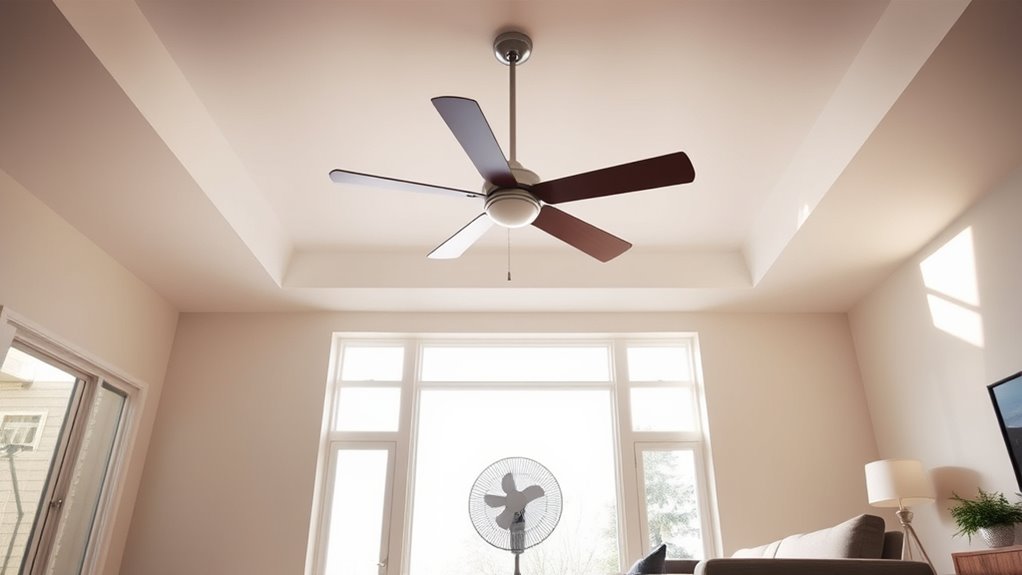
Your room size directly impacts where you should place your fan for maximum efficiency. A small space benefits from a fan positioned near the center, while larger rooms need strategic placement to circulate air effectively. Understanding how room dimensions influence fan placement helps you prevent wasting energy and ensures better comfort. Proper airflow management also involves considering airflow dynamics to optimize circulation throughout the space. Additionally, integrating technological tools like smart fans can further enhance airflow control and efficiency. To achieve optimal airflow, selecting the right projector setup can also contribute to comfort by reducing glare and improving visual clarity. Recognizing room size considerations enables more precise fan placement and airflow management strategies. Incorporating essential oils for respiratory health can help improve air quality and create a more comfortable environment overall.
Optimal Fan Positioning
To achieve the most effective cooling, you need to position your fan thoughtfully based on your room’s size. Proper placement guarantees ideal airflow and comfort. Place fans near windows or doorways to promote cross-ventilation, but avoid blocking vents or air sources. Keep fans away from walls or furniture that can obstruct airflow. Regular fan maintenance keeps blades clean and functioning efficiently. Consider aesthetic designs that blend with your decor, making placement easier. Keep in mind:
- Position fans at ear level for direct cooling
- Use oscillating fans for wider coverage
- Avoid placing fans in corners, which can cause uneven airflow
- Adjust fan angles for maximum effect
- Ensure safety by securing cords and avoiding clutter
Additionally, understanding airflow dynamics helps in choosing the best fan placement for your space, especially when considering smart home automation features that can optimize fan operation based on room conditions. Being aware of air circulation principles allows you to fine-tune your setup for enhanced comfort and energy savings. Incorporating ventilation strategies can further enhance overall airflow and cooling efficiency.
Room Size Considerations
Choosing the right fan placement depends heavily on the size of your room. Smaller spaces benefit from compact fans positioned near seating areas to maximize airflow without overwhelming the room’s proportions. Larger rooms require fans that can circulate air effectively across greater distances, so consider larger or multiple fans for even coverage. Personalized fan choices allow you to select models that fit your room’s specific layout and aesthetic considerations, ensuring they blend seamlessly with your decor. Keep in mind that oversized fans in small rooms can feel intrusive, while small fans in large rooms may lack effectiveness. Proper placement and size are vital to optimize comfort and air circulation, making your space more inviting without sacrificing style or functionality. Understanding room proportions is essential for selecting the appropriate fan size and placement to create a comfortable environment. Additionally, airflow efficiency plays a crucial role in ensuring your chosen fan setup performs optimally for your specific space. For example, considering room airflow dynamics can help you make better decisions about fan positioning and size to achieve consistent comfort. Recognizing fan performance factors can further enhance your ability to select the best fan for your needs.
As an affiliate, we earn on qualifying purchases.
Energy Efficiency and Power Consumption
While a larger fan might seem like it should move more air efficiently, bigger isn’t always better when it comes to energy consumption. Larger fans often consume more power, especially if their fan motor efficiency isn’t optimized. Poor motor efficiency can lead to higher energy bills without markedly better airflow. Additionally, blade material durability impacts long-term energy use—less durable blades may warp or degrade, reducing efficiency over time. To save energy, consider fans with high-efficiency motors and sturdy blades. Moreover, selecting the appropriately sized fan for the space ensures optimal airflow performance and energy savings. Understanding energy consumption patterns can help in choosing the most efficient fan for your needs. Proper fan sizing is also crucial to prevent unnecessary energy use and ensure effective cooling or ventilation. Selecting fans with energy-efficient motors can further enhance overall performance and reduce operating costs, especially when paired with performance cookies that monitor efficiency metrics.
Noise Levels and User Comfort

You might think a louder fan means better airflow, but that’s not always true. Higher noise levels can make your space feel less calm and more stressful. Sometimes, quieter fans provide more comfort without sacrificing performance.
Louder Isn’t Always Better
Louder fans aren’t necessarily better because increased noise levels can quickly become disruptive and uncomfortable. When choosing a fan, focus on quieter operation to improve your comfort. The noise often comes from factors like fan blade materials, which can amplify sound, or poor electrical wiring that causes buzzing. A louder fan might seem more powerful, but it can be irritating and hinder relaxation or sleep. Keep in mind:
- Fan blade materials influence noise; plastic blades tend to be quieter than metal.
- Poor electrical wiring can produce humming or buzzing sounds.
- Larger fans aren’t always louder; design matters more than size.
- Quieter fans often have better motor insulation.
- Noise levels impact your overall comfort and concentration.
Prioritize noise ratings and construction quality to find a fan that cools effectively without disturbing your peace.
Higher Noise, Less Calm
Higher noise levels from a fan can substantially affect your sense of calm and overall comfort. When a fan produces loud or constant noise, it can create distraction or irritation, making relaxation difficult. Even if a fan looks sleek or fits well with your decor, excessive sound can undermine its aesthetic appeal. Additionally, the noise level often relates to the energy sources powering the fan; larger or more powerful fans tend to consume more energy and generate more noise. This increased noise can disturb your focus, sleep, or conversations, reducing your overall comfort. Choosing a fan that balances performance with quieter operation ensures that you don’t sacrifice peace for airflow. Remember, a quieter fan can provide better comfort without compromising on function or style.
Comfort Over Decibels
While powerful fans can move air effectively, prioritizing comfort means paying attention to noise levels. Fan blade curvature influences how smoothly air flows, reducing the motor noise that can disrupt your peace. A well-designed blade shape minimizes vibration and sound, making your environment more comfortable. Keep in mind, larger fans aren’t always quieter—sometimes, bigger blades create more noise due to increased motor strain. To guarantee comfort, consider:
- Fan blade curvature that promotes quiet airflow
- Low motor noise ratings
- Blades designed for smooth operation
- Adjustable speed settings for noise control
- Quality materials that dampen vibrations
Focusing on these aspects helps you get the cooling you need without sacrificing tranquility. Noise levels matter, so choose a fan that balances power with quiet operation for ideal comfort.
The Impact of Ceiling Height on Fan Effectiveness

Ceiling height plays a vital role in how effectively a fan circulates air in a room. Taller ceilings require fans with longer blades and sturdy fan blade materials to generate sufficient airflow. If your ceiling is high, choosing a fan style designed for large spaces ensures better air distribution. Low ceilings benefit from compact, flush-mount styles that prevent headroom issues, while high ceilings need fans with downrods to position blades closer to the living space. The fan blade materials also matter; lightweight materials like plastic or aluminum can spin faster and move more air in high-ceiling rooms. Ultimately, selecting the right ceiling fan style and blade materials based on ceiling height ensures ideal circulation, rather than simply opting for larger fans that may be less effective in your space.
How Air Circulation Differs From Air Quality Improvement
While fans can move air around your space, they don’t necessarily guarantee air quality. Circulation mainly ensures even airflow, but it doesn’t remove pollutants or odors. To truly improve air quality, you need effective purification methods beyond just circulating air with a fan.
Circulation vs. Purification
Have you ever thought about how air circulation and air purification differ? While fans excel at moving air around, they don’t necessarily improve air quality. Circulation simply redistributes air, which can spread dust, allergens, and pollutants if not filtered properly. Purification, on the other hand, involves removing harmful particles and contaminants directly from the air. Fan technology varies, and choosing a fan designed for purification often uses less energy than oversized models that only circulate air. Be aware of these points:
- Circulation improves airflow but doesn’t eliminate pollutants
- Purifiers actively filter and clean the air
- Bigger fans may increase energy consumption without improving air quality
- Proper filtration is essential for healthier indoor air
- Combining circulation with purification yields the best results
Understanding this difference helps you make smarter choices for healthier indoor environments.
Effective Air Mixing Techniques
Effective air mixing techniques focus on distributing indoor air evenly throughout a space to improve comfort and ventilation. By achieving uniform air circulation, you can better control humidity levels, preventing excess moisture or dryness that can cause discomfort or mold growth. Proper mixing also enhances aesthetic appeal by eliminating drafts and cold spots, creating a more visually pleasing environment. Using strategic placement of fans or diffusers helps guarantee air reaches all corners without creating turbulence or noise. This approach promotes a balanced atmosphere, making the space feel more inviting and comfortable. Remember, effective air mixing isn’t about moving a large volume of air quickly but about achieving consistent, gentle circulation that supports both humidity control and aesthetic harmony.
Limitations of Fans
Fans are primarily designed to move air, which means their main role is to create circulation rather than improve indoor air quality. While a larger fan or higher speed might seem effective, limitations exist. The fan motor’s power determines how much air it can move, but a bigger fan doesn’t always mean better airflow. Blade curvature influences how efficiently air is circulated; improper design can cause turbulence and reduce effectiveness. Remember:
- Larger fans can be noisier without increasing air quality
- High-speed fans may circulate stale air rather than fresh air
- Poor blade curvature reduces efficiency and airflow
- Fans mainly distribute existing air, not filter or purify
- Air quality improvements require filtration, not just circulation
Understanding these limits helps you avoid overestimating what fans can do for your indoor environment.
The Importance of Speed Settings and Adjustability

Adjusting the speed settings on a fan is essential because it directly impacts comfort and energy efficiency. When you choose the right setting, you can better control airflow and avoid wasting electricity. A good fan motor allows smooth speed adjustments, giving you flexibility to find the perfect comfort level. The blade materials also matter; lightweight blades respond more quickly to speed changes, providing more precise control. If your fan has only high and low options, it might not suit your needs, leading to discomfort or unnecessary energy use. Adjustable speed settings let you balance airflow and noise levels, helping you create a comfortable environment without overdoing it. Proper control ensures you don’t rely on larger fans when smaller, adjustable fans can do the job better.
When Larger Fans Are Actually Beneficial
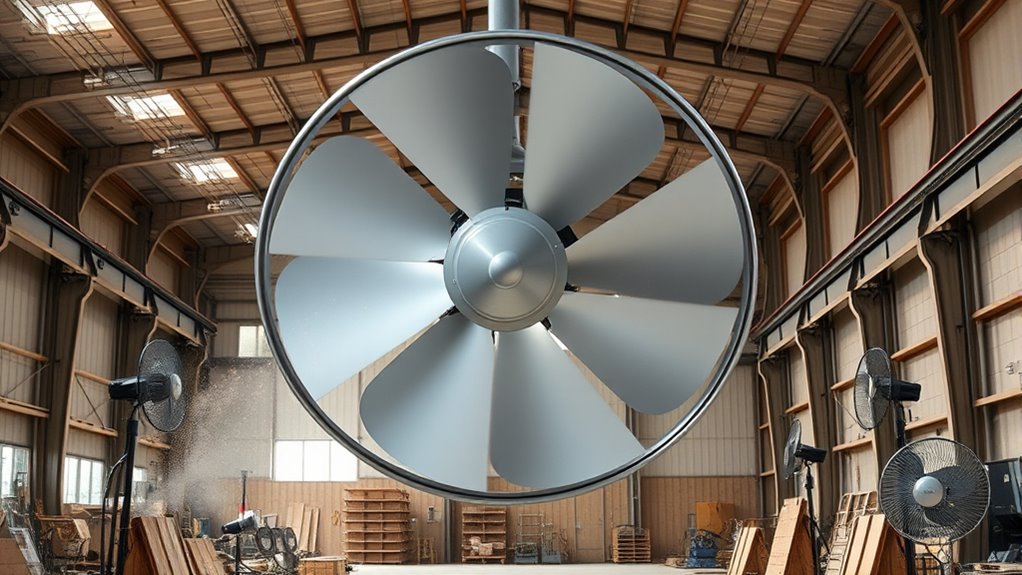
While smaller fans with adjustable speeds work well in many situations, larger fans can be more effective in certain circumstances. When you need to cool large spaces or improve air circulation efficiently, bigger fans excel. They often feature robust fan motor types that provide sustained power and durability. Additionally, blade materials like high-impact plastics or metal enhance strength and performance. Consider these benefits:
- Better airflow over wide areas
- Improved ventilation in industrial or commercial settings
- More consistent air movement with less noise
- Reduced need for multiple smaller fans
- Compatibility with high-performance motor types for longevity
Larger fans are ideal when you prioritize powerful, steady air movement, especially in spaces where air stagnates. Properly selected, they can outperform smaller fans in specific applications.
Tips for Choosing the Right Fan for Your Space
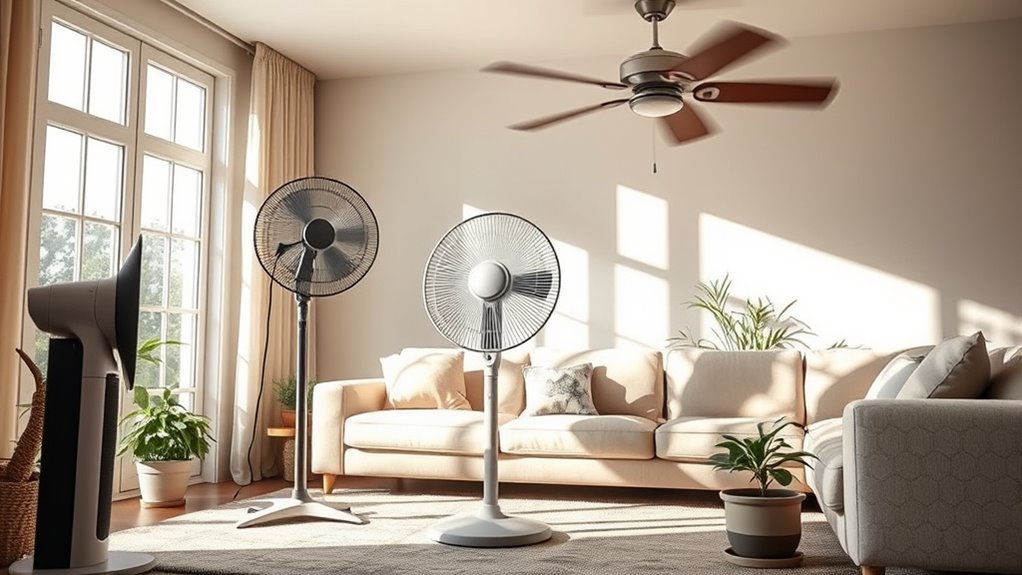
Choosing the right fan for your space starts with evaluating your specific cooling or ventilation needs. Consider the fan blade materials, as some materials like plastic are lightweight and quieter, while metal blades tend to be more durable and effective at moving air. Think about noise levels and energy efficiency when selecting blade types. Additionally, look for remote control features to enhance convenience—these allow you to adjust speed, oscillation, and timers without getting up. Measure your room size accurately to ensure the fan’s size and airflow capacity match your space. Don’t overlook the importance of adjustable settings and ease of use. By focusing on these aspects, you’ll find a fan that not only fits your room but also provides ideal comfort and control.
Frequently Asked Questions
How Does Room Layout Affect Fan Effectiveness?
Your room layout greatly impacts fan effectiveness because airflow patterns are influenced by obstacles and space. If furniture or walls block the fan’s path, airflow won’t circulate evenly, reducing efficiency. Position your fan in open areas where it can create smooth airflow patterns, avoiding obstacle interference. Proper placement guarantees better air circulation, making your fan work smarter, not just bigger, for a more comfortable environment.
Can a Smaller Fan Outperform a Larger One?
A smaller fan can outperform a larger one if you optimize fan placement and manage noise levels effectively. Proper placement guarantees better airflow, making the smaller fan more efficient in circulating air. Plus, smaller fans tend to be quieter, allowing you to keep comfort without disturbance. So, don’t assume size alone determines performance—focus on positioning and noise control to get the best results from your fan.
What Maintenance Is Needed for Optimal Fan Performance?
You need to regularly clean your fan blades and check for dust buildup to guarantee ideal airflow patterns. Inspect the motor and power connections for loose or damaged parts, and lubricate moving components if needed. Follow a maintenance checklist that includes verifying blade balance and tightening screws. Doing these simple tasks keeps your fan running efficiently, maximizes airflow, and prolongs its lifespan, regardless of its size.
Do Different Fan Types Impact Airflow Differently?
Different fan types impact airflow because of their blade design and motor efficiency. For example, axial fans move air straight through and are great for high-volume, low-pressure needs, while centrifugal fans generate higher pressure but move less air. You’ll notice that better blade design and a more efficient motor improve airflow regardless of fan size. So, choosing the right fan type depends on your airflow requirements, not just size.
How Do Seasonal Changes Influence Fan Use?
Seasonal changes affect your fan use by impacting humidity control and noise levels. In summer, you’ll want a fan that promotes airflow without adding humidity, so a larger, more powerful fan helps. During winter, smaller fans can circulate warm air quietly. Adjusting fan speed and type according to the season ensures ideal comfort, while also minimizing noise and humidity issues, making your space more comfortable year-round.
Conclusion
Remember, bigger fans don’t always mean better airflow. For example, a small, well-placed ceiling fan can cool a room more effectively than a large, underpowered one. Focus on factors like blade design, placement, and speed options to get the best results. When choosing a fan, consider your room size and specific needs. By doing so, you’ll guarantee the best comfort without wasting energy or creating unnecessary noise.
Fall Picks
fall essentials
As an affiliate, we earn on qualifying purchases.