

To find moisture sources quickly, use the Musty Smell Map by following odor clues in your home. Focus on areas with persistent musty odors, which point to hidden mold or dampness. Investigate hotspots such as bathrooms, basements, behind walls, and around windows. Address leaks, improve ventilation, and use moisture barriers to fix issues. Keep monitoring these spots so you can effectively tackle moisture problems before they worsen. If you want to learn more, keep exploring these proven strategies.

Get school and study supplies delivered free — and shop member deals
- Fast, free delivery on millions of items
- Access to Prime Big Deal Days deals on October 6–7
- Prime Video, Amazon Music and more included
Key Takeaways
- Use the Musty Smell Map to identify areas with persistent odors indicating hidden moisture sources.
- Focus inspection efforts on spots with the strongest smells, such as behind walls or under floors.
- Trace odor patterns to common moisture hotspots like bathrooms, basements, or around windows.
- Look for signs like water stains, peeling paint, or condensation in areas with musty odors.
- Regularly monitor and maintain ventilation in high-humidity zones to prevent moisture buildup and odors.
air purifiers with HEPA filters for mold spores
As an affiliate, we earn on qualifying purchases.
As an affiliate, we earn on qualifying purchases.
What Causes Musty Smells in Your Home?
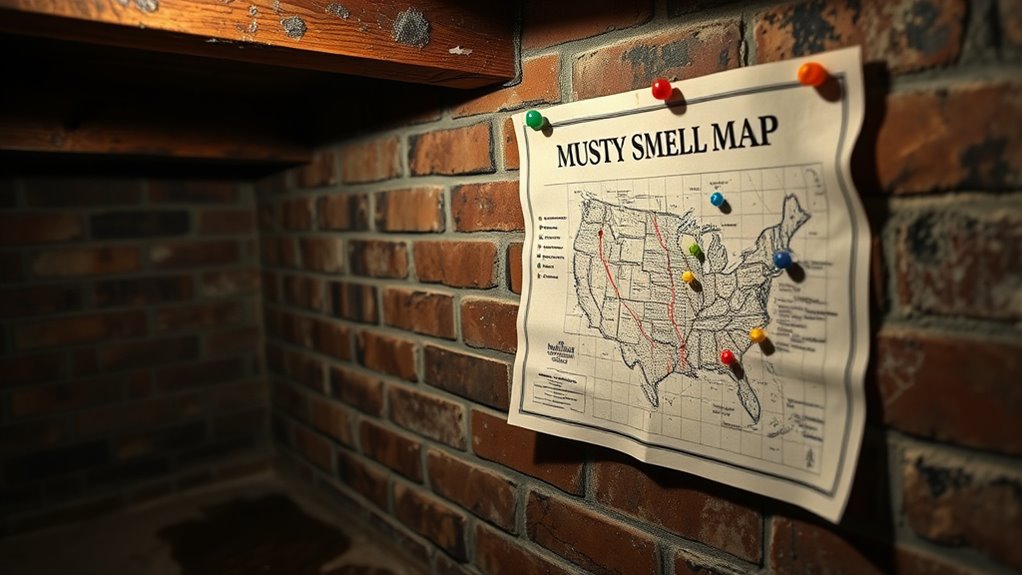
Musty smells in your home typically originate from mold and mildew growth, which thrive in damp, poorly ventilated areas. When moisture accumulates in places like basements, bathrooms, or behind walls, mold spores begin to grow. This growth not only causes the distinct musty odor but also impacts your indoor air quality. Poor ventilation traps humidity, creating an ideal environment for mold to flourish. As mold spreads, it releases spores and volatile organic compounds (VOCs) that worsen air quality and can cause health issues. Identifying the source of mold growth is key to eliminating the smell. Improving ventilation, controlling humidity, and addressing leaks can reduce mold presence and restore fresh air in your home. Additionally, using air purifiers with HEPA filters can help remove airborne mold spores and VOCs, further improving indoor air quality.
moisture meters for home inspection
As an affiliate, we earn on qualifying purchases.
As an affiliate, we earn on qualifying purchases.
How Does the Musty Smell Map Help You Find Moisture?

The Musty Smell Map is a valuable tool that helps you quickly identify areas in your home where moisture may be lurking. By analyzing the pattern of musty odors, you can pinpoint spots prone to moisture infiltration. The map guides your odor detection efforts, revealing hidden sources of humidity that might not be obvious visually. When you notice strong, persistent smells in certain areas, the map suggests likely moisture problems behind walls, under floors, or in hidden corners. This targeted approach saves you time and effort, allowing you to focus on the spots most likely to cause mold growth or structural damage. Additionally, understanding home moisture management can help you take preventive steps to avoid future issues. Ultimately, the Musty Smell Map turns your sense of smell into a practical tool for faster, more accurate moisture source identification.
mold and mildew odor eliminators
As an affiliate, we earn on qualifying purchases.
As an affiliate, we earn on qualifying purchases.
How to Use the Musty Smell Map Step by Step

Start by identifying where the musty smells are strongest on the map. Then, follow those locations to trace back to potential moisture sources. This step-by-step process helps you pinpoint problem areas quickly and effectively. Being aware of common moisture issues, such as water intrusion, can further streamline your inspection process.
Identify Smell Locations
To effectively identify smell locations on the Musty Smell Map, you should begin by examining the map closely and noting the areas where the scent is strongest. Focus on spots where mold growth or other odor sources seem most prominent. Pay attention to patterns or clusters of smell intensity, as these indicate likely trouble spots. Be thorough—mark every area with noticeable mustiness, even if it’s faint. This helps you pinpoint where moisture might be fueling mold growth and causing the odor. Remember, the map is a guide to visualize scent distribution, so trust your senses and observations. Accurate identification of these smell locations is essential for targeting your inspection and resolving the underlying moisture problems efficiently. Understanding moisture sources is key to addressing the root causes of musty odors effectively.
Trace Moisture Sources
After pinpointing the areas with the strongest musty odors on the map, you can begin tracing the moisture sources responsible for the smell. Look for signs of mold growth or water leaks near these spots. Check for airflow problems, which can trap humid air and promote mold development. Use the following table to identify common moisture sources:
| Possible Source | How to Check | |
|---|---|---|
| Leaking pipes or roof | Inspect for water stains or drips | |
| Poor ventilation or airflow | Notice stagnant air or condensation | |
| Excess humidity | Use a hygrometer to monitor moisture levels | Additionally, understanding free floating moisture issues can help you address hidden sources that might not be immediately visible. |
ventilation fans for bathrooms and basements
As an affiliate, we earn on qualifying purchases.
As an affiliate, we earn on qualifying purchases.
Where Are the Moisture Hotspots in Your Home?
You should start by checking common moisture areas like bathrooms, kitchens, and basements. Don’t forget to look for hidden leak spots behind walls or under sinks that could be causing trouble. Controlling humidity in these zones helps prevent future musty odors and damage. Additionally, inspecting moisture sources early can help identify potential problems before they worsen.
Common Moisture Areas
Moisture hotspots in your home are often hidden in plain sight, lurking in areas where humidity tends to accumulate or water leaks go unnoticed. Common moisture areas include bathrooms, kitchens, laundry rooms, and basements—places with frequent water use or poor ventilation. To keep these spots dry, implement ventilation tips like running exhaust fans during and after showers or cooking. Proper airflow helps reduce humidity and prevents mold growth. Check for leaks under sinks, around appliances, and in crawl spaces regularly. Addressing these moisture-prone areas promptly is key to mold prevention and maintaining a healthy indoor environment. Keep an eye on damp spots and ensure your home’s ventilation works efficiently to minimize moisture buildup. Additionally, understanding energy-efficient cloud solutions can help reduce overall environmental impact while maintaining your home’s comfort.
Hidden Leak Spots
Have you checked the hidden leak spots that can silently cause moisture buildup? Plumbing behind walls, under sinks, or around appliances often leak without obvious signs. These leaks can create persistent dampness, leading to mold growth and musty odors. To catch them early, use ventilation tips like inspecting vents and exhaust fans regularly, ensuring they’re working properly. Look for water stains, peeling paint, or warped materials, which hint at hidden leaks. Sealing these spots not only prevents further damage but also supports mold prevention. Keep an eye on less obvious areas such as around toilets, under bathtubs, or near windows with poor seals. Additionally, understanding contrast ratio helps identify areas where lighting or moisture might affect visibility during inspections. Addressing these hidden leak spots quickly helps maintain a dry, healthy home and avoids costly repairs later.
Humidity Control Zones
Identifying the key humidity control zones in your home is essential for preventing excess moisture buildup. Focus on areas prone to high humidity, such as bathrooms, kitchens, laundry rooms, and basements. These humidity zones often attract mold and musty odors if not properly ventilated. Effective airflow management is vital—use exhaust fans, vents, and dehumidifiers to reduce moisture levels. Pay attention to poorly ventilated corners or spaces behind appliances where humidity can linger. By targeting these hotspots, you can control airflow and keep moisture in check. Regularly inspecting and maintaining ventilation systems ensures these humidity zones stay dry and mold-free. Proper airflow management in these areas is your best defense against moisture buildup and musty smells. Moisture control is crucial for maintaining a healthy indoor environment and preventing long-term damage.
What Hidden Moisture Sources Should You Watch For?

Ever wonder where hidden sources of moisture can quietly cause musty odors? These sneaky issues often hide behind walls or beneath floors, making detection tricky. Watch for signs like persistent condensation buildup on windows or pipes, which can lead to hidden mold growth. Hidden mold thrives in moist, dark areas and can be a health hazard. Be vigilant around areas with poor ventilation or leaks, as these promote moisture accumulation over time. Proper home maintenance and regular inspections can help catch these issues early before they cause significant damage. Here’s a quick overview:
| Moisture Source | Common Locations | Signs to Watch For |
|---|---|---|
| Hidden mold | Behind walls, under sinks | Musty smell, discoloration |
| Condensation buildup | Windows, pipes, walls | Water droplets, peeling paint |
| Leaky plumbing | Under sinks, basements | Water stains, mold spots |
| Poor ventilation | Attics, bathrooms | Excess humidity, mold growth |
| Roof leaks | Attic, ceiling spaces | Water stains, peeling drywall |
How Can You Fix Moisture Problems Once Found?
Once you’ve pinpointed the sources of moisture, the next step is to take targeted action to fix them. Improving ventilation is key—consider installing exhaust fans in bathrooms and kitchens, or upgrading your home’s ventilation system to promote better airflow. This helps reduce humidity levels and prevents moisture buildup. Additionally, use moisture barriers, such as plastic sheeting or specially designed paints, in areas prone to dampness—like basements and crawl spaces. These barriers help prevent moisture from seeping into walls and floors. Fix leaks promptly and ensure gutters direct water away from your home’s foundation. By combining ventilation improvements with moisture barriers, you effectively reduce excess moisture, preventing future musty smells and protecting your home’s structure.
How to Prevent Musty Smells and Keep Your Home Dry

To prevent musty smells and keep your home dry, maintaining consistent moisture control is essential. Good air quality depends on reducing excess humidity, which discourages mold growth and stops odors before they start. Use dehumidifiers in damp areas like basements and bathrooms, and ensure proper ventilation by opening windows or running exhaust fans. Fix leaks promptly and seal any cracks that allow moisture in. Keep gutters clear to prevent water accumulation near your home’s foundation. Regularly inspect areas prone to dampness and dry them thoroughly. By managing moisture levels effectively, you create an environment less hospitable to mold and unpleasant odors. Consistent moisture control is your best defense for fresh air quality and mold prevention, helping your home stay dry and odor-free.
When Should You Call a Professional for Moisture Issues?
Knowing when to call a professional for moisture issues is essential because some problems can worsen if left unaddressed. If DIY remedies like ventilation or moisture barriers don’t eliminate the smell or dampness, it’s time to seek expert help. Persistent musty odors, visible mold, or hidden water damage signal underlying issues that DIY solutions can’t fix. Ignoring these signs may lead to costly repairs later, such as structural damage or extensive mold remediation. If moisture problems recur despite your efforts, or if you notice high humidity levels or leaks, professional assessment is necessary. Professionals have the tools and expertise to identify hidden sources of moisture and prevent further damage. Don’t hesitate to call in experts early to avoid more significant, costly repairs down the line.
Frequently Asked Questions
Can the Musty Smell Map Detect Hidden Mold Behind Walls?
Yes, the Musty Smell Map can help you detect hidden mold behind walls by pinpointing moisture sources and wall infiltration areas. It identifies areas where mold concealment might occur, even if you can’t see it directly. By analyzing the map, you can target specific spots for further inspection or testing, saving time and effort in locating concealed mold and preventing potential health issues.
Is the Musty Smell Map Effective in Outdoor Environments?
You might think the musty smell map isn’t effective outdoors, but it can help if you consider outdoor humidity and wind patterns. These factors influence moisture levels and smell dispersion, making the map useful in identifying areas with excess moisture. By analyzing wind flow and humidity, you can locate moisture sources outside more accurately, preventing mold and damage. Just remember, outdoor conditions are more variable, so combine this with visual inspection for best results.
What Tools or Devices Are Recommended for Accurate Moisture Detection?
You should use moisture meters and humidity sensors for accurate moisture detection. Moisture meters quickly identify damp spots in walls, floors, or materials, helping you locate hidden leaks or mold-prone areas. Humidity sensors monitor ambient moisture levels, giving you real-time data on indoor air quality. Together, these tools provide precise readings, allowing you to target moisture sources efficiently and prevent musty smells before they become a problem.
How Often Should I Reassess My Home Using the Musty Smell Map?
You should reassess your home using the musty smell map at least every three to six months, especially after heavy rain or changes in weather. Regular inspection frequency helps you catch moisture issues early and maintain a proper moisture assessment. If you notice persistent musty odors or increased humidity, increase inspection frequency to prevent mold growth and structural damage, ensuring your home stays dry and healthy.
Are There Specific Materials More Prone to Moisture Buildup and Odors?
You might notice that certain building materials and textile fabrics are more prone to moisture buildup and odors. Materials like drywall, carpet, and insulation tend to trap moisture, creating perfect breeding grounds for mold. Textile fabrics such as curtains, upholstery, and rugs also absorb humidity, making odors harder to remove. To keep your home fresh, regularly check these materials, especially in humid areas, and address any moisture issues promptly.
Conclusion
Just like Sherlock Holmes solves mysteries, use the musty smell map to uncover hidden moisture sources before they turn into bigger problems. Acting quickly keeps your home dry and odor-free, preventing the kind of long-term issues that lurk in unseen corners. Remember, a vigilant eye and timely action can save you from a future filled with mold and mildew. Don’t wait for the smell to reveal the secret—take charge now, and keep your home a sanctuary.
Halloween Picks
halloween
As an affiliate, we earn on qualifying purchases.