
If indoor CO2 levels reach 1,000 ppm or higher, it signals that the air is becoming stale and ventilation is needed quickly. Elevated CO2 indicates poor air exchange, making the environment uncomfortable and possibly affecting your health. Monitoring these levels actively helps you identify when to air out rooms or improve ventilation. Want to learn more about how to keep your indoor air fresh and healthy? Keep exploring for practical tips.
Key Takeaways
- CO2 levels exceeding 1,000 ppm often indicate stale, poorly ventilated indoor air.
- Readings above 800-1,000 ppm signal that fresh air exchange is insufficient.
- CO2 levels rising rapidly toward 1,200 ppm suggest quick buildup of stale air.
- Persistent CO2 above 1,000 ppm is a clear sign to increase ventilation immediately.
- Monitoring trends helps detect when CO2 approaches thresholds signaling stale air formation.
Understanding Indoor CO2 Levels and Their Significance

Indoor CO2 levels serve as a key indicator of air quality and ventilation efficiency. When CO2 rises, it often signals increased air pollution from human activity, making the environment feel stale. High CO2 levels mean your indoor air isn’t circulating well, which can lead to discomfort and health issues. You can improve air quality naturally by adding indoor plants, which help reduce some pollutants and boost oxygen levels. Monitoring CO2 is essential because it helps you identify when ventilation needs a boost before air quality worsens. Regular air exchange can significantly help keep CO2 levels in check and maintain a healthier indoor environment. Proper ventilation plays a crucial role in maintaining healthy indoor CO2 levels and overall air quality. Understanding air circulation patterns can help optimize natural ventilation strategies for better air quality and efficient airflow management. Being aware of ventilation effectiveness ensures that your efforts to improve air quality are actually making a difference.
The Threshold at Which Air Quality Declines
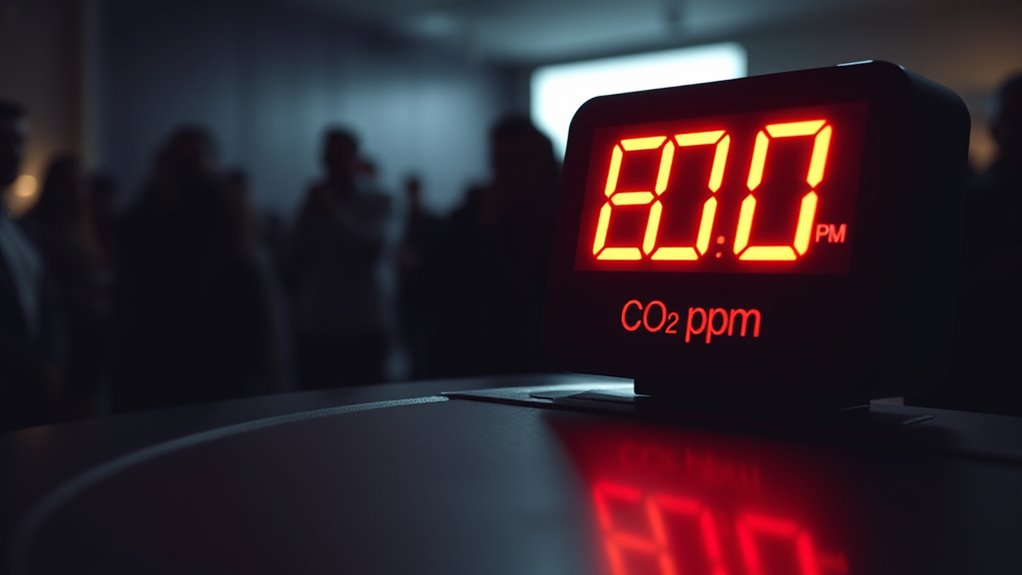
Understanding the specific CO2 levels that signal declining air quality is essential for maintaining a healthy indoor environment. When indoor CO2 reaches around 800 to 1000 ppm, it indicates inadequate air exchange and the beginning of pollutant buildup. At this threshold, your indoor air starts to feel stale, and the concentration of airborne contaminants increases. Recognizing these levels helps you know when to improve ventilation or increase fresh air flow. Maintaining CO2 below 800 ppm guarantees proper air exchange, preventing pollutant buildup and keeping your indoor space safe and comfortable. Regularly monitoring indoor air quality can help you stay aware of these critical levels and act proactively. Elevated CO2 levels also serve as an indicator of ventilation effectiveness, guiding necessary adjustments to maintain a healthy environment. Proper air circulation and ventilation strategies are vital to ensure the air remains fresh and free from stale pollutants. Additionally, understanding air quality metrics can help you implement smarter solutions for maintaining optimal indoor conditions. In addition, understanding the CO2 threshold helps you establish targeted ventilation goals to improve overall air health.
How CO2 Accumulation Affects Comfort and Health
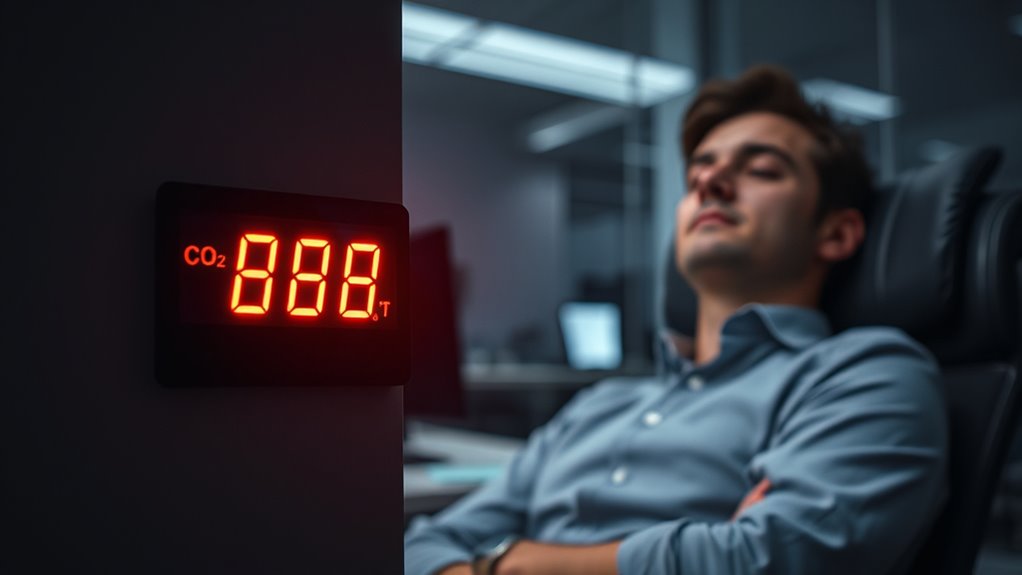
As CO2 levels rise beyond the 800 to 1000 ppm range, you’ll notice how your comfort and health can quickly decline. Elevated CO2 contributes to increased air pollution indoors, making the air feel stale and stuffy. This buildup can also lead to poor indoor air quality, which exacerbates health issues over time. This can lead to headaches, fatigue, and difficulty concentrating. Over time, poor air quality from high CO2 levels can impair your respiratory health, especially if you already have underlying conditions. You might start experiencing shortness of breath or coughing more often. The buildup of CO2 signals that fresh air isn’t circulating properly, which can worsen overall air pollution. Monitoring CO2 levels with appropriate devices is crucial for maintaining good indoor air quality and ensuring proper ventilation. Proper ventilation and air exchange are essential to prevent dangerous CO2 accumulation. Keeping CO2 levels in check is essential for maintaining a comfortable, healthy environment indoors, ensuring you breathe cleaner, fresher air and reduce the risks associated with stale air and compromised respiratory health. Understanding haute couture can inspire innovative approaches to designing sustainable and eco-friendly fashion collections that prioritize healthy air quality.
Monitoring Methods for Indoor CO2 Concentration
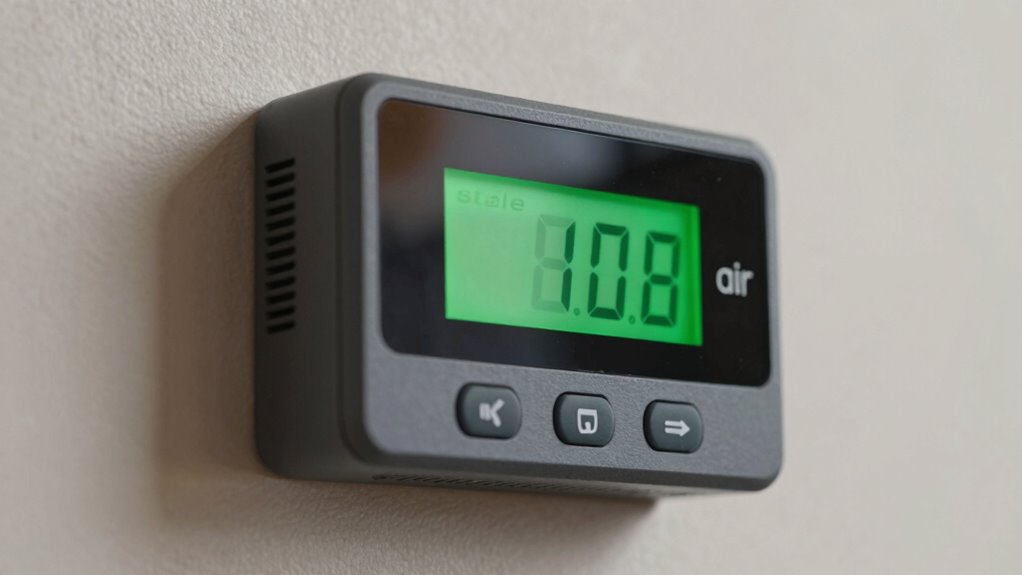
To effectively monitor CO2 levels in your indoor environment, you need reliable measurement methods that provide real-time data. Air quality sensors are your best tools, offering instant readings and alerts when CO2 exceeds safe thresholds. You can choose from portable devices or fixed sensors installed in key areas. Proper monitoring helps you assess your ventilation strategies, ensuring fresh air circulation. Keep these tips in mind:
- Use digital air quality sensors for accurate, real-time CO2 data
- Regularly calibrate sensors for reliable readings
- Position sensors away from air vents or direct sunlight
- Track trends over time to adjust ventilation strategies effectively
- Understanding air exchange rates is crucial for maintaining optimal indoor air quality. Additionally, knowing your ventilation effectiveness can help optimize airflow and reduce CO2 buildup. Optimizing airflow patterns within your space can further improve air quality and prevent stale air issues. Incorporating proper sensor placement strategies ensures that measurements accurately reflect the overall room conditions. Ensuring proper sensor calibration is essential for maintaining measurement accuracy over time.
Practical Steps to Maintain Fresh Air Indoors
To keep your indoor air fresh, start by regularly monitoring CO2 levels so you know when fresh air is necessary. Improving your ventilation system guarantees continuous airflow and reduces stale air buildup. Simple adjustments like opening windows or using exhaust fans can make a noticeable difference in air quality. Additionally, maintaining proper air circulation helps prevent the buildup of indoor pollutants and keeps your environment healthier. Incorporating smart ventilation systems can further optimize airflow based on real-time indoor air quality data, ensuring consistent freshness. Embracing Free Floating techniques in airflow management can enhance the natural movement of air, promoting a healthier indoor environment. Regularly inspecting and adjusting piercing jewelry placements can also improve overall air flow around sensitive areas. Furthermore, understanding the CO2 level that signals “stale air” can help you respond promptly to maintain optimal indoor air quality.
Monitor CO2 Levels
Monitoring CO2 levels is a practical way to guarantee your indoor air stays fresh. When you keep an eye on the numbers, you can act before stale air becomes a problem. Use a reliable CO2 monitor to track levels regularly. To improve air quality, add indoor plants that naturally absorb CO2 and release oxygen. Air purifiers with activated carbon filters can also help reduce pollutants and odors that contribute to stale air. Consider these tips for better airflow:
- Place monitors in high-traffic rooms
- Use indoor plants like snake plants or pothos
- Keep air purifiers running during busy hours
- Ventilate when CO2 levels rise above 1,000 ppm
Enhance Ventilation Systems
Enhancing your ventilation system is one of the most effective ways to maintain fresh indoor air. Improving air exchange guarantees stale air is replaced with fresh air more quickly, reducing CO2 buildup. To boost ventilation efficiency, consider upgrading your HVAC system or adding exhaust fans in key areas like kitchens and bathrooms. Regularly check and replace filters to prevent blockages that hinder airflow. If natural ventilation is viable, open windows and create cross-ventilation routes to promote consistent air movement. Use ceiling or oscillating fans to circulate air better, helping fresh air reach all parts of your space. By focusing on these steps, you optimize air exchange and ensure your indoor environment stays fresh and healthy. Proper ventilation directly impacts indoor air quality, lowering stale air and CO2 levels effectively.
Recognizing the Signs of Poor Air Quality in Real Time
You might notice your breathing becomes heavier or your concentration drops, signaling poor air quality. Unpleasant odors and stale smells can also serve as warning signs that the air isn’t fresh. Additionally, lingering fatigue despite rest can indicate elevated CO2 levels and stale indoor air.
Elevated CO2 Levels
Have you noticed a stale or stuffy feeling in the air? Elevated CO2 levels often cause this sensation, signaling poor air quality. When CO2 rises, your indoor environment feels less fresh. To spot this quickly:
- You breathe more heavily or feel tired despite minimal activity
- Air circulation seems sluggish, and the room feels stagnant
- Indoor plants struggle to thrive or show signs of stress
- You notice a lack of fresh air flow, even with windows open
Monitoring CO2 levels with a sensor helps you react fast. Improving air circulation by opening windows or using fans can reduce CO2 buildup. Indoor plants can also help absorb excess CO2, making your space feel fresher and healthier.
Unpleasant Odors Emerge
As indoor air quality declines, unpleasant odors often become noticeable long before other signs of poor ventilation appear. When air circulation slows, odors from cooking, pets, or musty environments can build up quickly. You’ll notice a persistent, often foul smell that signals odor detection issues. These odors serve as an immediate indicator that fresh air isn’t replacing stale air effectively. Poor air circulation traps pollutants and smells, making the environment uncomfortable. Recognizing these odors early helps you take action before airborne contaminants affect your health. By paying attention to the smell, you can identify when ventilation needs improvement, ensuring your indoor space remains fresh and safe. Odor detection is a simple yet powerful cue for evaluating air quality in real time.
Lingering Fatigue Sets In
Lingering fatigue can be an early warning sign of poor indoor air quality, often creeping in even when other indicators aren’t obvious. When air circulation is weak, pollutant buildup happens faster, making you feel tired without clear reasons. You might notice:
- Feeling unusually sluggish after being indoors
- A drop in motivation or focus
- Headaches or lightheadedness
- A sense of heaviness or lethargy that won’t go away
These signs happen because stale air with high CO2 levels and accumulated pollutants hampers your body’s oxygen intake. Poor air circulation traps these particles, leading to fatigue that’s hard to shake. Recognizing this early can help you improve ventilation and prevent longer-term health issues.
Frequently Asked Questions
How Does Outdoor Pollution Impact Indoor CO2 Levels?
Outdoor pollution can increase indoor CO2 levels, especially if your ventilation strategies rely on windows or passive airflow. Air filtration systems help reduce pollutants, but they don’t lower CO2. To keep indoor air fresh, you should improve ventilation—like using exhaust fans or air exchange systems—and incorporate proper air filtration. This way, you minimize the impact of outdoor pollution on your indoor environment and maintain healthier air quality.
Can Plants Effectively Reduce Indoor CO2 Concentrations?
Like Pandora’s box, many wonder if plants truly help with co2 mitigation indoors. Yes, plants effectively reduce indoor co2 concentrations through plant absorption, making the air fresher. They act as natural air purifiers, absorbing carbon dioxide and releasing oxygen. While they won’t eliminate all indoor CO2, adding houseplants can markedly improve air quality and create a healthier environment, especially in spaces with limited ventilation.
What Are the Long-Term Health Effects of Chronic High CO2 Exposure?
Chronic high CO2 exposure can negatively impact your health, causing headaches, fatigue, and difficulty concentrating. Poor indoor air quality often results from inadequate ventilation strategies, trapping CO2 and other pollutants indoors. Over time, these effects may worsen, potentially leading to respiratory issues or other health problems. To protect yourself, guarantee proper ventilation and monitor indoor air quality, reducing CO2 buildup and maintaining a healthier indoor environment.
Do Different Room Sizes Require Different CO2 Thresholds?
While larger rooms demand higher CO2 thresholds, you should adjust based on room size and ventilation rate. Bigger spaces naturally accumulate CO2 faster if ventilation isn’t upgraded, so thresholds like 800 ppm might be too low. Smaller rooms need stricter limits to prevent stale air. Always consider both room size and ventilation efficiency when setting CO2 limits, ensuring proper air quality and comfort for everyone inside.
How Often Should CO2 Sensors Be Calibrated for Accuracy?
You should calibrate your CO2 sensors at least once every six months to guarantee accuracy maintenance. Regular sensor calibration helps detect and correct any drift in readings, keeping your air quality measurements reliable. If your environment has high humidity or pollutants, consider calibrating more frequently—every three to four months. Consistent calibration ensures your sensors provide precise data, helping you maintain a healthy indoor atmosphere.
Conclusion
By keeping an eye on that 800 ppm CO2 threshold, you can guarantee your space stays fresh—no need to wait for a plague doctor to diagnose stale air. Regular monitoring and good ventilation help you breathe easy, whether you’re in a modern office or a castle’s great hall. Remember, clear air isn’t just a luxury, it’s your health’s best armor, so stay vigilant and keep those windows open like a true air quality knight!