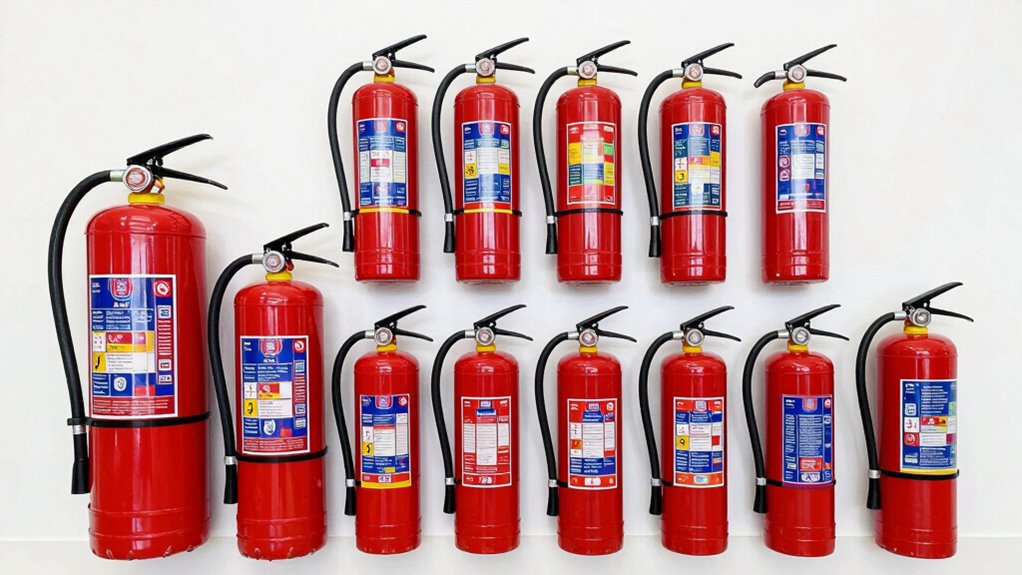

Fire extinguishers are categorized into classes based on the type of fire they combat: Class A for solids like wood and paper, Class B for flammable liquids, Class C for electrical fires, Class D for metals, and Class K for kitchen oils. Using the correct extinguisher guarantees hazards and guarantees safety. Recognizing the color labels and fire behavior helps you choose wisely. Keep exploring to understand how to handle each fire type effectively.
Key Takeaways
- Fire classes categorize fires by fuel source, guiding selection of appropriate extinguishers for safety and effectiveness.
- Different fire classes (A, B, C, D, K) require specific extinguishing agents like water, foam, CO₂, or dry powder.
- Proper extinguisher use involves aiming at the fire’s base and employing techniques such as sweeping motions.
- Color-coded labels and symbols on extinguishers help quickly identify suitable fire types for each device.
- Matching extinguisher type to fire class and following safety protocols ensures effective firefighting and personal safety.

Kidde, FA110G, Multi Purpose Fire Extinguisher for Home, Office, Dorm, Residential, 1A10BC
Reliable Fire Protection: Stop basic home fires involving trash, wood, paper, liquids, gases, and electrical equipment
As an affiliate, we earn on qualifying purchases.
As an affiliate, we earn on qualifying purchases.
What Are Fire Classes and Why Do They Matter?
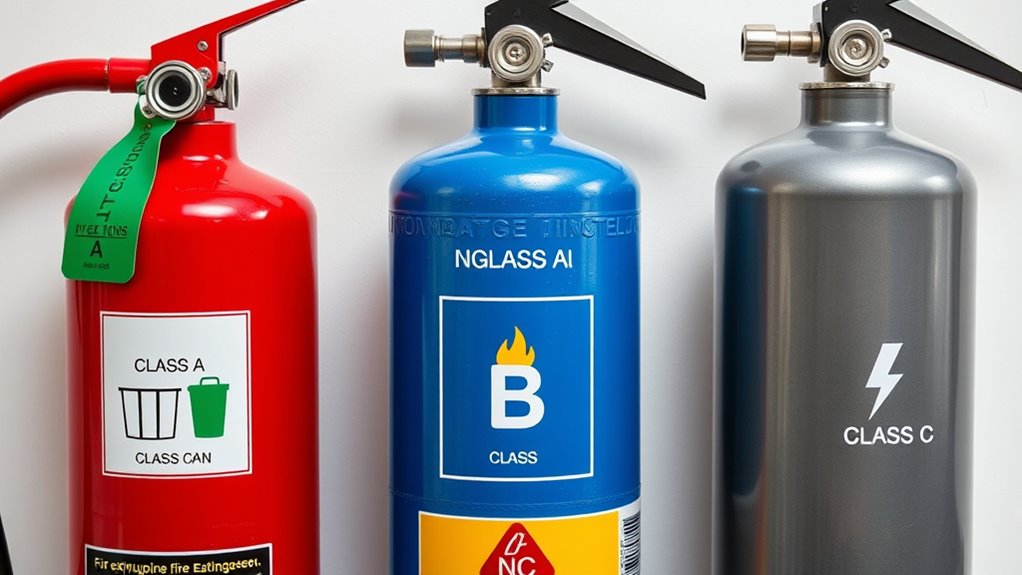
Have you ever wondered why fire extinguishers are labeled with different classes? The fire class history dates back to efforts to standardize safety and improve fire response. Fire classification standards were established to categorize fires based on their fuel sources, making it easier to select the right extinguisher. These standards help prevent confusion and guarantee effective firefighting. Recognizing the fire class is vital because using the wrong extinguisher on a specific fire can be ineffective or even dangerous. For example, Class A fires involve solids like wood and paper, while Class B involves flammable liquids. Understanding fire classes and the standards behind them allows you to respond quickly and safely during emergencies, minimizing damage and protecting lives. European standards in firefighting equipment help ensure consistency and safety across different regions.

Amerex 322 CO2 Class B C Fire Extinguisher, 5 lb.
Carbon dioxide, Class B:C Extinguisher
As an affiliate, we earn on qualifying purchases.
As an affiliate, we earn on qualifying purchases.
How Do You Identify Class A Fires and Extinguish Them?
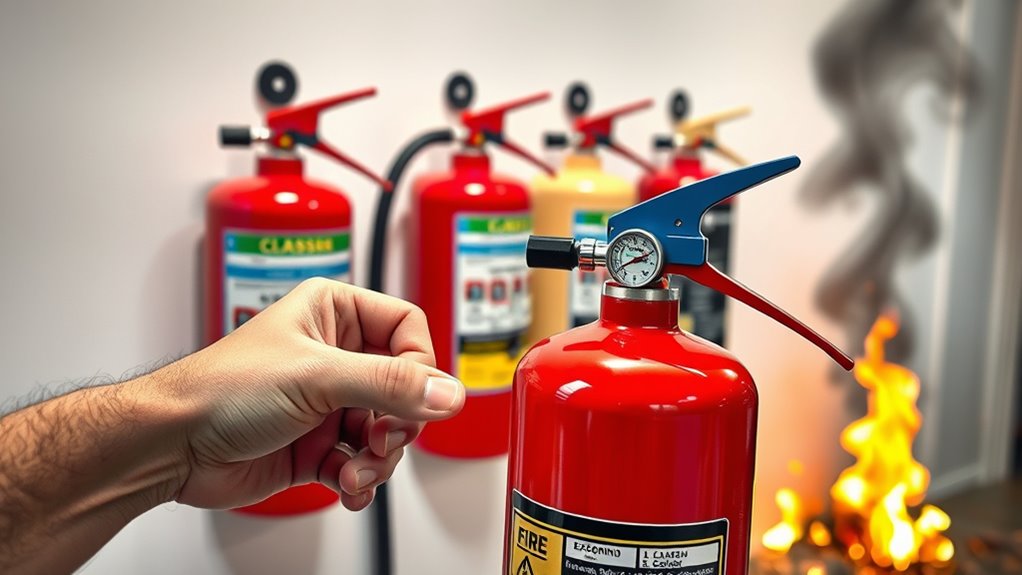
Recognizing a Class A fire starts with identifying the common signs of burning solids like wood, paper, or cloth. You’ll see visual cues such as glowing embers, ash, and charred material, along with smoke and heat. To effectively fight these fires, you need a suitable extinguisher, typically water or foam-based. Proper fire prevention measures help reduce the risk of Class A fires, but regular extinguisher maintenance guarantees they’re ready when needed. Check for proper pressure, clear labels, and easy accessibility. When extinguishing, aim at the base of the fire and use sweeping motions. Remember, understanding how to identify and respond to Class A fires not only protects property but also keeps everyone safe. Consistent fire prevention and extinguisher maintenance are key to effective fire management. Maintaining fire safety protocols ensures readiness for any fire emergency.

Kidde Fire Extinguisher for Kitchen, Residential, Single-Use, 711A
Reliable Fire Protection: Stop tough grease fires
As an affiliate, we earn on qualifying purchases.
As an affiliate, we earn on qualifying purchases.
What Makes Class B Fires Different and How to Fight Them?
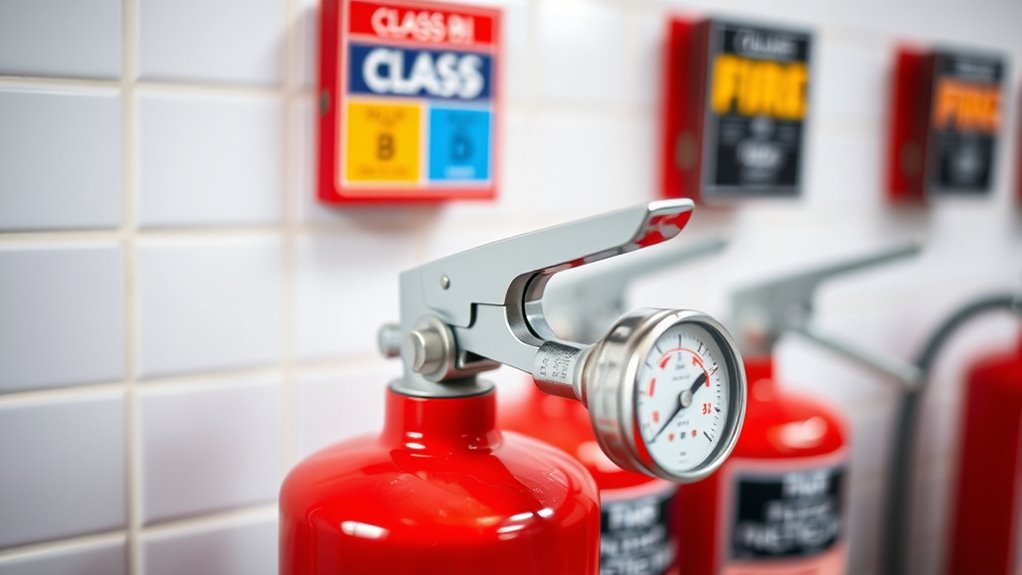
Class B fires involve flammable liquids that ignite easily and spread quickly. You need specific extinguishing techniques that smother the flames without spreading the fuel. Always follow safety precautions to protect yourself when fighting these fires.
Flammable Liquids Characteristics
What makes flammable liquids so challenging to extinguish is their ability to ignite easily and spread quickly across surfaces. The characteristics of flammable liquids include rapid vaporization and low flash points, which mean they create flammable vapors at relatively low temperatures. To picture this, consider:
- They produce vapors that ignite before the liquid itself is hot enough to burn.
- They spread across surfaces, creating a large area of fire in a short time.
- Their liquids often float on water, making water-based extinguishers ineffective and dangerous.
Understanding these properties helps you recognize why specialized extinguishing agents are necessary. Flammable liquids demand specific handling because their characteristics of flammable liquids make standard extinguishing methods insufficient, requiring more targeted approaches to control the fire safely and effectively.
Extinguishing Techniques Specifics
Fires involving flammable liquids require specialized extinguishing techniques because they behave differently from other types of fires. To effectively suppress Class B fires, you need to use extinguishers that cut off oxygen or remove the fuel source, such as foam, dry chemical, or CO2. These methods prevent re-ignition and guarantee safe fire suppression. Proper extinguisher maintenance is essential; check pressure gauges, ensure no damage, and replace expired agents regularly. Understanding the differences in extinguishing techniques helps you act quickly and effectively. The table below highlights key factors:
| Technique | Effective For | Limitations |
|---|---|---|
| Smothering | Flammable liquids | Cannot penetrate deep fires |
| Cooling | To lower temperature | Less effective alone |
| Chemical suppression | Interrupts chemical chain reaction | Requires proper application |
Using the right technique enhances fire suppression success and safety. Additionally, familiarity with fire behavior helps inform the most effective response strategies in various scenarios.
Safety Precautions for B Fires
Because flammable liquids behave differently from other fuels, it’s vital to follow specific safety precautions when dealing with Class B fires. These fires involve combustible liquids like gasoline, oil, or paint, which can spread quickly. To ensure effective fire safety and emergency preparedness, keep these tips in mind:
- Never use water on a Class B fire; it can spread the flames.
- Use a fire extinguisher rated for Class B fires, such as foam or dry chemical types.
- Evacuate immediately if the fire is uncontrolled, and call emergency services.
- Regular maintenance of your fire safety equipment ensures proper functionality in emergencies.
Understanding the unique behavior of B fires helps you respond safely and effectively, reducing risks and protecting yourself and others during emergencies.
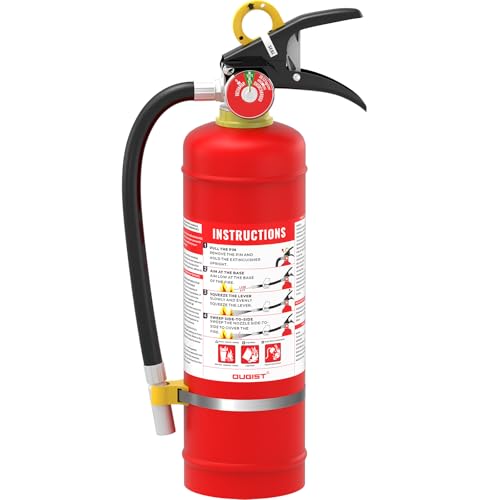
Ougist ABC Dry Powder Fire Extinguisher, 5 lb – 2-A:10-B:C Rated for Home, Office & Vehicle, Quick Release, Easy-Grip Handle, Ideal for Electrical & Grease Fires, Car Extinguisher, Model FF2KG
IMMEDIATE RESPONSE FROM A SAFE DISTANCE WITH PATENTED HANDLE DESIGN:Act swiftly from a safe distance up to fifteen…
As an affiliate, we earn on qualifying purchases.
As an affiliate, we earn on qualifying purchases.
How Do You Safely Extinguish Electrical Fires (Class C)?
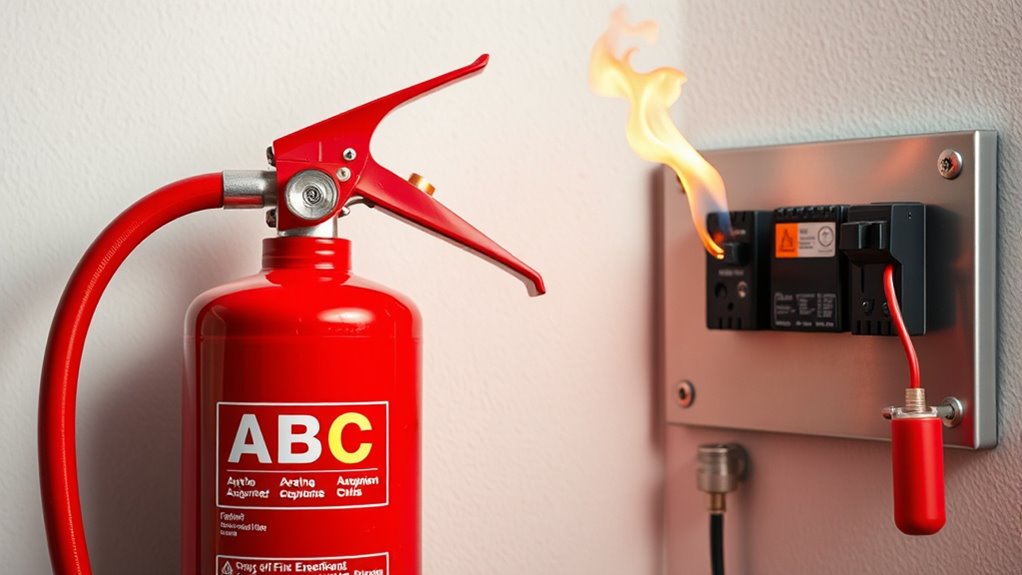
Ever wonder how to safely put out an electrical fire? The key is to prioritize electrical safety and avoid making the fire worse. First, unplug the device if it’s safe to do so, reducing power and preventing escalation. Never use water, as it conducts electricity and can cause shock or spread the fire. Instead, grab an appropriate fire extinguisher—specifically a Class C or a multi-purpose ABC extinguisher. Aim the nozzle at the base of the flames and sweep gently. Remember, fire prevention is your best defense, so regularly inspect electrical cords and appliances for damage. If the fire grows or you’re unsure, evacuate immediately and call emergency services. Staying calm and knowing how to act ensures your safety and helps prevent electrical fires from causing further harm. Proper fire extinguisher use is crucial for effectively managing electrical fires.
What Are Class D Fires and Which Extinguishers Work Best?
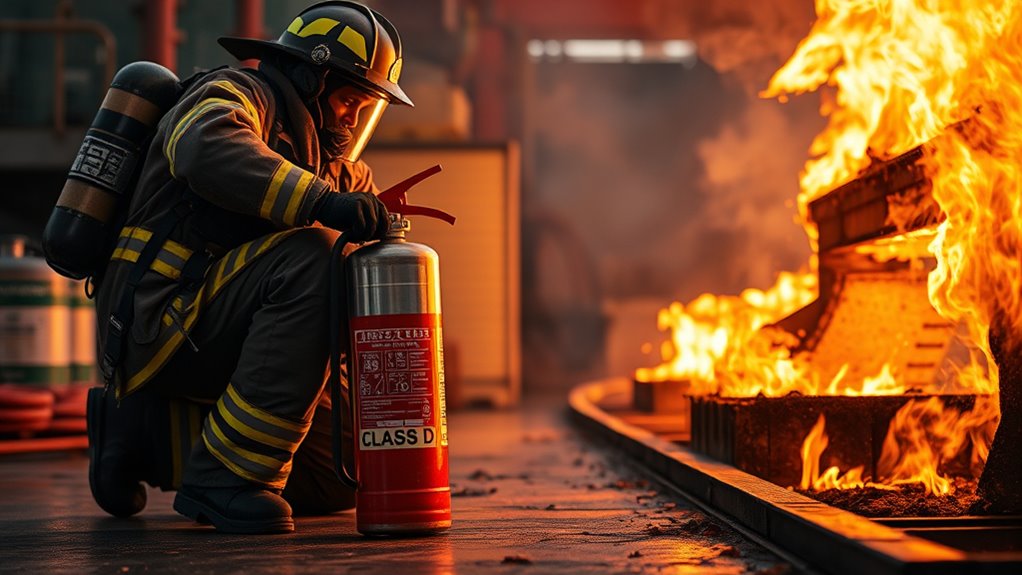
Have you ever encountered a fire caused by combustible metals? These are known as Class D fires and require special attention. Metal fires involve materials like magnesium, titanium, or sodium, which burn intensely and can react explosively with water. To fight these fires effectively, you need the right extinguisher. Here’s what you should know:
Metal fires like magnesium or sodium require dry powder extinguishers—never use water.
- Dry powder extinguishers are specifically designed for metal fires, smothering the flames and preventing oxygen from feeding the fire.
- They contain special agents that absorb heat and isolate the burning metal from the oxygen supply.
- Using water or other common extinguishers can worsen metal fires, making dry powder extinguishers your best choice for safety and effectiveness.
- Understanding the fire classes and extinguisher types is crucial for proper safety measures during emergencies.
How Can You Recognize Class K Fires in the Kitchen?
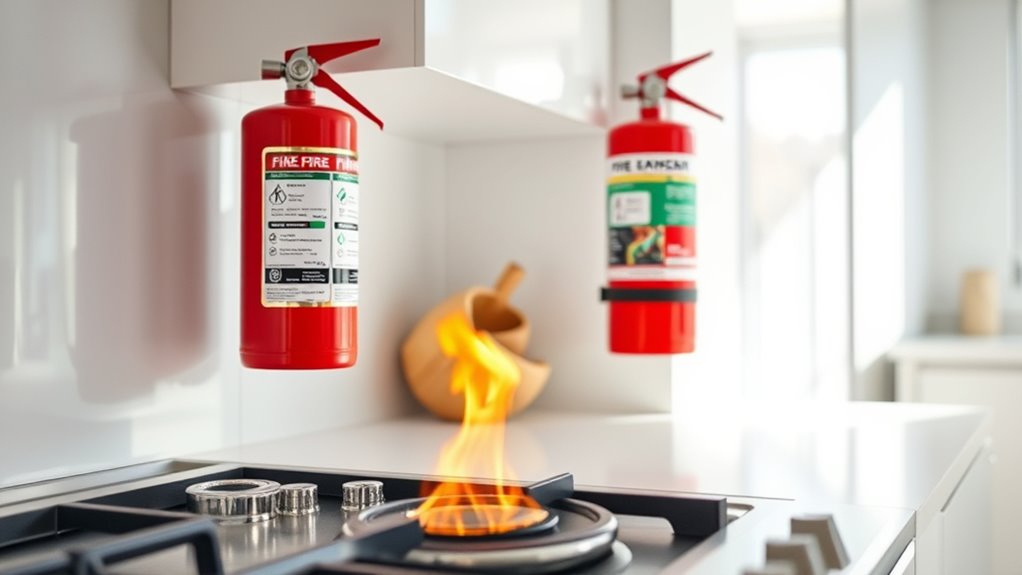
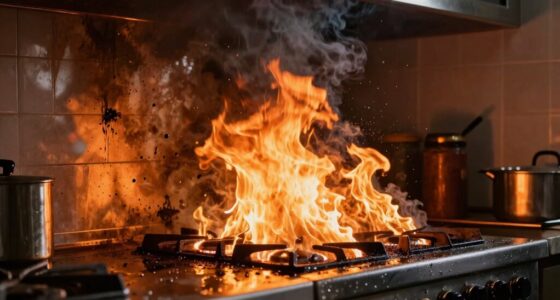
In the kitchen, fires can ignite from cooking oils and fats, which behave differently from other types of fires. Recognizing a Class K fire involves spotting small, intense flames on the surface of cooking oils or fats, often bubbling or splattering as they burn. These fires are common kitchen fire hazards, especially when cooking at high temperatures or without proper attention. If you see smoke or flames emerging from a pan filled with grease or oil, it’s likely a Class K fire. Cooking safety emphasizes acting quickly and using the right extinguisher designed for these fires. Remember, water can make a Class K fire worse, so don’t attempt to put it out with water. Instead, use a Class K fire extinguisher or cover the flames with a metal lid to smother the fire. Understanding the behavior of fats and oils can help in preventing and responding effectively to such fires.
What Is the Color-Coded Label System on Extinguishers?
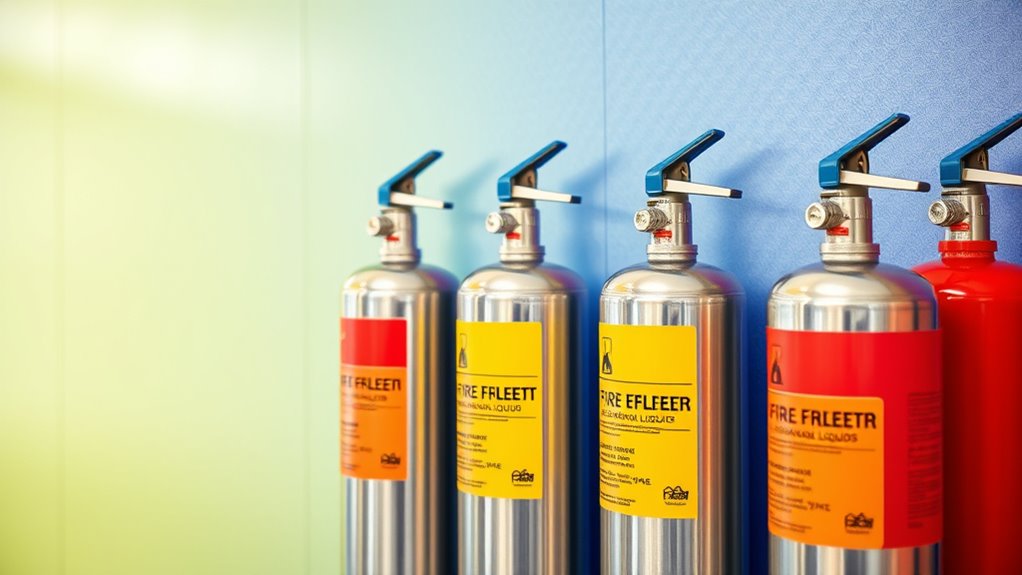
You’ll notice fire extinguishers have color-coded labels that quickly reveal their purpose. These colors follow specific standards and correspond to different types of fires you might encounter. Knowing these labels helps you choose the right extinguisher efficiently in an emergency. Affiliate disclosure
Color Identification Standards
The color-coded label system on fire extinguishers provides an easy way to identify the type of fire extinguisher and the fires it can effectively combat. This system enhances fire safety awareness and helps with proper extinguisher maintenance. Here’s what you see on a typical extinguisher:
- Bright, bold colors like red, blue, or yellow, indicating different fire classes.
- Clear labels with symbols and words matching the fire type it’s designed for.
- Consistent placement of colors and symbols to quickly guide you during emergencies.
Corresponding Fire Types
Have you ever wondered what the different colors on fire extinguisher labels mean? The fire extinguisher history reveals that color coding was introduced to simplify fire safety education, making it easier for people to identify the right extinguisher quickly. Each color corresponds to specific fire types: red for Class A fires involving solids like wood and paper, blue for Class C electrical fires, yellow for Class D combustible metals, and black or gray for Class K kitchen fires. This color-coded label system helps you recognize which extinguisher to use in an emergency, reducing confusion and saving time. Understanding these distinctions is essential for effective fire safety, ensuring you select the right extinguisher promptly when it matters most.
Practical Selection Tips
Ever wondered how to quickly identify the right fire extinguisher during an emergency? The color-coded label system simplifies this process. It helps you select the correct extinguisher based on fire type, guaranteeing effective use. Here’s what to look for:
- Red label: For ordinary combustibles like paper and wood (Class A).
- Blue label: For fires involving flammable liquids like oil or gasoline (Class B).
- Cream or white label: For electrical fires (Class C).
Knowing these labels is vital for fire safety training and proper fire extinguisher maintenance. Regularly check labels to make sure they’re visible and legible. This quick recognition saves time and reduces damage during emergencies, making your response more effective.
How Do You Pick the Right Extinguisher for Your Space?
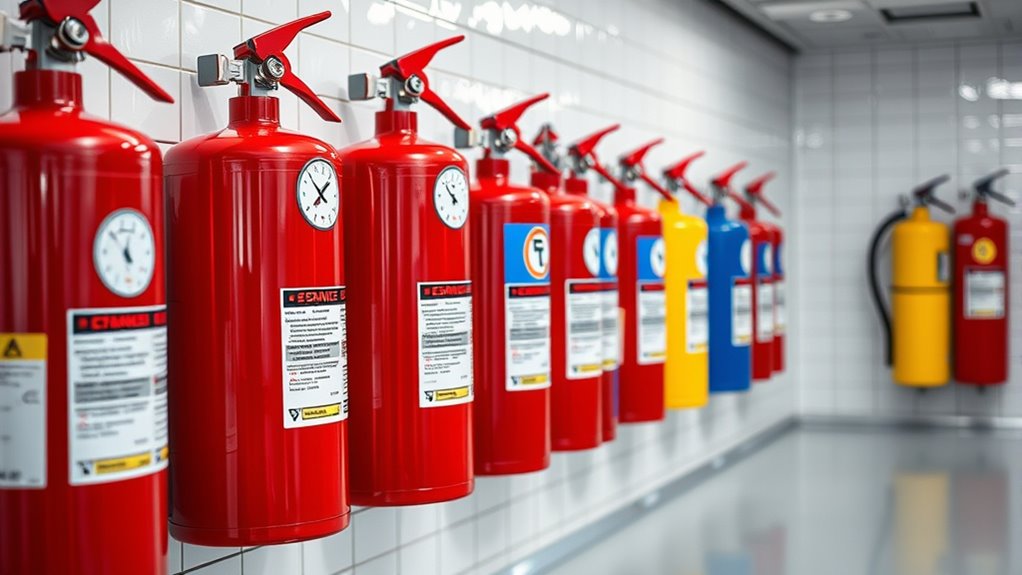
Choosing the right fire extinguisher for your space involves considering the types of fires you’re most likely to encounter and matching them with the appropriate extinguisher class. For example, kitchen areas need Class K extinguishers for grease fires, while offices benefit from ABC multipurpose models. Once you select the appropriate extinguisher, guarantee proper fire extinguisher maintenance to keep it ready for use. Regular inspections check for pressure, corrosion, and accessibility. Storage safety is also vital—place extinguishers in visible, easy-to-reach spots, away from heat sources and potential obstructions. Properly maintained and correctly stored extinguishers ensure quick response during emergencies and extend their lifespan, helping protect your space and everyone in it. Proper maintenance practices are essential to ensure that fire extinguishers remain effective when needed most.
What Are Best Practices for Using Fire Extinguishers Safely?
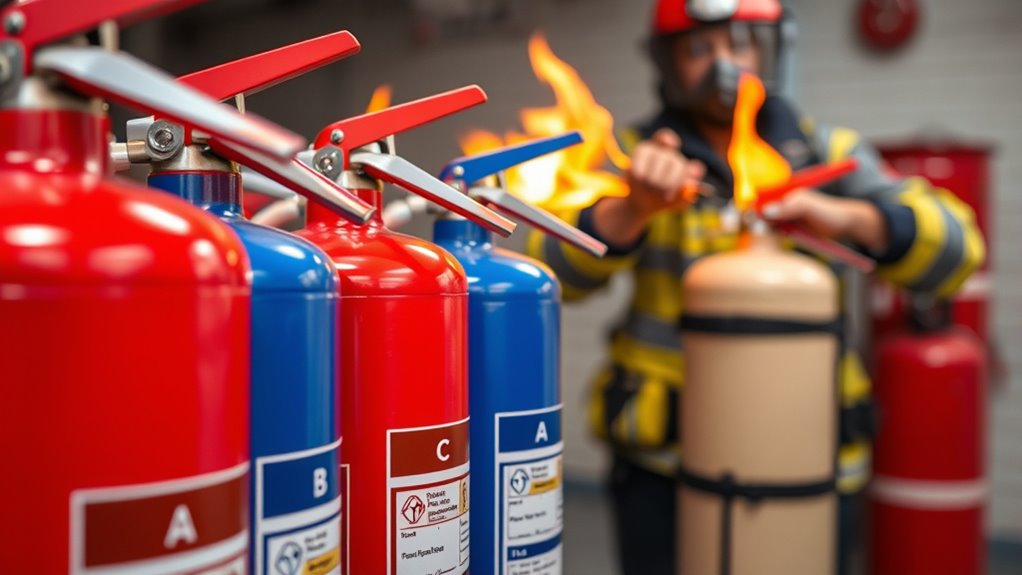
Using a fire extinguisher safely is crucial to effectively suppress a fire and prevent injury. To guarantee proper use, follow these best practices for fire safety and emergency preparedness:
Proper fire extinguisher use is essential for safety and effective fire suppression.
- Assess the fire: Make sure it’s small enough to handle and that you have the right extinguisher for the fire type. Never attempt to extinguish a large or spreading fire.
- Use the PASS technique: Pull the pin, Aim at the base of the fire, Squeeze the handle, and Sweep side to side.
- Maintain situational awareness: Keep an exit behind you, and if the fire grows or your safety is compromised, evacuate immediately.
- Be aware of fire class and extinguisher types: Different classes of fire require specific extinguishing agents, which is critical for safety and effectiveness.
Following these steps helps you respond effectively and safely, minimizing risk during fire emergencies.
Frequently Asked Questions
How Often Should Fire Extinguishers Be Inspected and Maintained?
You should inspect your fire extinguishers monthly to make certain they’re in working order and maintain a regular maintenance schedule every year. This inspection frequency helps catch any issues early, like pressure loss or damage. Additionally, professional maintenance should be done annually, especially for commercial settings. Following these guidelines ensures your fire extinguisher is ready when needed, keeping you safe and compliant with safety regulations.
Can a Fire Extinguisher Be Reused After Use?
Think of a fire extinguisher like a superhero’s gadget—once used, it might still have some life left. Yes, rechargeable extinguishers can be reused after proper refilling and inspection. However, if it’s a single-use model, it’s time for disposal according to guidelines. Always check the label and follow disposal guidelines to guarantee safety and compliance, turning a used extinguisher into a safe, recycled hero.
What Are the Common Mistakes to Avoid When Using a Fire Extinguisher?
When using a fire extinguisher, you should focus on proper technique and avoid common pitfalls. Always aim at the base of the fire, sweep side to side, and keep a safe distance. Don’t forget to check the pressure gauge and make certain the extinguisher is accessible. Avoid rushing or using the wrong class of extinguisher for the fire. Staying calm and following correct steps can prevent accidents and improve effectiveness.
How Do Temperature and Environment Affect Extinguisher Effectiveness?
Temperature and environmental factors substantially impact your fire extinguisher’s effectiveness. Extreme temperatures can cause the extinguisher’s chemicals to freeze or dry out, reducing its ability to work properly. High humidity or wind can also hinder your efforts by dispersing the suppressant or causing corrosion. To guarantee ideal performance, store extinguishers in temperature-controlled environments and inspect them regularly for signs of environmental damage.
Are There Specific Extinguishers for Outdoor Versus Indoor Fires?
Yes, there are specific extinguishers for outdoor versus indoor fires. For outdoor hazards, you should use rugged, weather-resistant extinguishers, like ABC or foam types, that can manage elements and larger fires. For indoor safety, you’ll want portable, easy-to-use extinguishers suited for typical household or office fires, such as ABC or CO2. Using the right extinguisher helps guarantee effective fire suppression and keeps you safe in both environments.
Conclusion
Understanding fire classes and proper extinguisher use can save lives, but the true test is how you respond when fire strikes. Will you recognize the danger quickly and act confidently? Remember, knowing isn’t enough—your reaction matters most. The next time flames threaten, will you be prepared to make the right choice, or will hesitation cost you everything? Stay vigilant, stay ready. The fire’s next move is unpredictable—are you prepared to face it?