
To create an emergency contacts list you’ll actually need, focus on people you trust—family, close friends, neighbors—who can provide emotional support, transportation, or safety assistance. Prioritize key contacts like local emergency services, healthcare providers, and nearby hospitals. Keep your list accessible in both digital and paper formats, regularly update it, and customize it for different risks like medical, fire, or natural disasters. Stay prepared by knowing who to call instantly—more tips await if you keep looking.
Key Takeaways
- Prioritize essential contacts like emergency services, medical providers, and trusted support persons for quick access during crises.
- Maintain updated, accessible lists in both digital and paper formats to ensure reliability and immediate availability.
- Clearly define the roles of each contact for emotional support, safety, transportation, and practical assistance.
- Research local emergency resources such as hospitals, shelters, and community services tailored to specific risks.
- Regularly review, practice, and update your emergency contact list to adapt to changing circumstances and ensure preparedness.

Emergency Medical Information Kit for Fridge – “File of Life” Style Magnet Packet with In Case of Emergency Forms, Medication List & Contact Cards – For Seniors, Elderly, EMTs & First Responders
- Placed on Refrigerator for Easy Access: EMT-expected location for quick access
- Provides Clear Medical Details: Instantly shows medications, conditions, contacts
- Holds All Critical Documents: Stores forms, IDs, DNR, POA, and contacts
As an affiliate, we earn on qualifying purchases.
As an affiliate, we earn on qualifying purchases.
Decide Who To Include on Your Emergency List
Have you thought about who should be on your emergency contacts list? Start with contact prioritization—decide who to reach first in an emergency. Consider including close family members, friends, or neighbors who know your routines and can act quickly. Customize your list based on your needs; not everyone needs to be listed. Think about trusted individuals who can provide support or access emergency services if needed. Keep in mind that some contacts might be unreachable or unavailable, so include alternates. Regularly review and update your list to reflect changes in contact information or relationships. A well-thought-out, customized list ensures you’re prepared and that emergency responders can quickly reach the right people when it matters most. Additionally, understanding home theater projector technology can help you make informed decisions if you need to share detailed information with emergency responders about your setup in case of specialized assistance.

Waterproof Notebook, 8 Pack Top-Spiral Pocket Notepad, 3" x 5" NotePad
- Waterproof and durable: Resists water, mud, and laundry accidents
- Compact pocket size: Measures 3×5 inches for portability
- Versatile use: Suitable as notepad, diary, or memo
As an affiliate, we earn on qualifying purchases.
As an affiliate, we earn on qualifying purchases.
Know Which Emergency Contacts Are Most Important

Knowing which contacts are most essential can save you time during an emergency. Make sure to include immediate contact numbers, medical emergency contacts, and trusted support people. Prioritizing these helps you get quick help when it matters most. Recognizing common safety risks can also help you prepare the right contacts in advance.
Immediate Contact Numbers
When an emergency strikes, having the most important contact numbers readily accessible can make all the difference. These immediate contact numbers should include local emergency services, such as police, fire, and ambulance. Keep these numbers in your emergency preparedness kits and on your phone’s speed dial. Prioritize contacts that guarantee medication safety, like your pharmacy or healthcare provider, to prevent medication errors during crises. Also, include trusted neighbors or family members who can assist if you’re unable to communicate. Knowing who to call instantly can save valuable time and reduce panic. Make sure these numbers are up-to-date and easy to find, so you’re prepared to act swiftly when every second counts. Family Photoshoot Fails can sometimes lead to unexpected situations, so having a quick way to contact support can be crucial.
Medical Emergency Contacts
Which emergency contacts are truly essential during a medical crisis? First, include your local emergency services number, like 911, for immediate help. Next, add contacts for your primary healthcare provider and any specialists relevant to your condition. These contacts are crucial for coordinating first aid and ensuring proper treatment. If you take medication regularly, keep a list of your prescriptions and dosage details easily accessible. In case of an emergency, this information supports medication management and prevents errors. Also, include nearby hospitals or urgent care centers where you can quickly seek treatment. Having these contacts readily available ensures you can act swiftly, communicate effectively, and get the appropriate care without delay. Your preparedness can make a critical difference during a medical emergency. Accurate contact information is essential for effective communication and timely intervention.
Trusted Support System
Building a trusted support system means identifying the emergency contacts who can provide the most immediate and effective assistance during a crisis. Focus on trustworthy relationships with people you can rely on, such as close friends, family members, or neighbors. Knowing their preferred communication methods—phone calls, texts, or messaging apps—ensures quick contact when needed. Prioritize those who respond promptly and remain calm under pressure. Establish clear roles for each contact, whether to provide emotional support, help with transportation, or manage safety concerns. A reliable support system reduces stress and increases your chances of getting help fast. Regularly update your list and confirm that your contacts are aware of their roles, so you’re prepared when emergencies happen. Understanding the importance of emergency preparedness can further enhance your readiness.

Emergency Contact
- Send Emergency Email: Custom emergency message via email
- Personal Information Setup: Enter personal, medical, and insurance info
- Manage Emergency Data: Save, load, delete emergency info
As an affiliate, we earn on qualifying purchases.
As an affiliate, we earn on qualifying purchases.
Family and Friends You Can Count On
Your trusted emergency contacts include immediate family members and close friends who are dependable and available when you need support. Keep their contact information handy so you can reach out quickly during a crisis. Having these people listed ensures you have a strong support network you can count on anytime. Additionally, maintaining a list of entertainment ideas can help lift your spirits and stay positive during stressful times.
Trusted Emergency Contacts
Having trusted family and friends nearby can make all the difference during an emergency. They can offer emotional support, help you stay calm, and assist with mental health concerns when stress runs high. These connections also play an essential role in your financial planning, especially if you face unexpected expenses or need someone to help manage financial decisions. Knowing you can reach out to trusted contacts ensures you’re not alone when facing tough situations. Keep their contact information accessible and communicate your needs clearly. Building a network of reliable people helps ensure you receive timely assistance, whether it’s emotional reassurance or practical support. Trustworthy contacts can be your safety net, giving you peace of mind knowing someone’s got your back when it matters most. Additionally, understanding electric bike capabilities can be useful if you rely on alternative transportation during emergencies.
Immediate Family Members
Immediate family members—such as parents, siblings, or close relatives—are often the first people you turn to during an emergency. Keeping their contact information accessible ensures quick family communication when it matters most. These relatives are central to your emergency planning, providing immediate support and helping coordinate actions. Regularly update their details and discuss roles beforehand so everyone knows what to do if disaster strikes. Clear communication with your immediate family minimizes confusion and delays, making response efforts more effective. Including trusted family members on your emergency contacts list guarantees that someone close is always reachable, ready to help or provide essential updates. Prioritizing your immediate family in your emergency contacts creates a reliable foundation for handling crises swiftly and efficiently. Familiarity with emergency communication protocols can further enhance your preparedness for unforeseen events.
Close Friends for Support
Who can you count on when your family isn’t immediately available? Your close friends can be a vital source of emotional support and social connections during tough times. They’re the people who genuinely listen, offer comfort, and understand your struggles. These friends become your go-to for reassurance and companionship when you need it most. Keep an emergency contacts list that includes those trusted friends. Consider including friends who:
- Are good listeners and empathetic
- Offer consistent support and advice
- Share your values and understanding
- Are available during emergencies
- Help you stay grounded emotionally
Having these close friends on your support list ensures you’re never alone when facing challenges. Building strong social connections with trusted friends can make a real difference in navigating life’s unpredictable moments, especially within fan culture where community and shared understanding are vital.

HEABY Medical Alert ID Bracelet Laser Engraved Blood THINNER Adjustable Wristband for Women Emergency First Aid
- Medical Condition Label: Laser engraved 'BLOOD THINNER'
- Material: 316L stainless steel and silicone
- Waterproof and hypoallergenic: Waterproof, low-allergy material
As an affiliate, we earn on qualifying purchases.
As an affiliate, we earn on qualifying purchases.
Find Local Emergency Resources You Should Save

Are you prepared to respond quickly in an emergency? One key step is finding local resources to save on your emergency contacts list. Start by researching nearby community clinics—they provide essential medical care and can be lifesavers during health crises. Also, connect with your neighborhood watch program; they’re valuable for local safety updates and assistance. Keep a list of these resources, including emergency numbers for hospitals, fire departments, and police stations. Knowing where to turn locally guarantees you won’t waste precious time during urgent situations. Save these contacts in your phone and on a physical list in an accessible spot. Being proactive by identifying and saving local emergency resources empowers you to respond swiftly and confidently when it matters most.
Keep Your Emergency List Handy and Up-to-Date
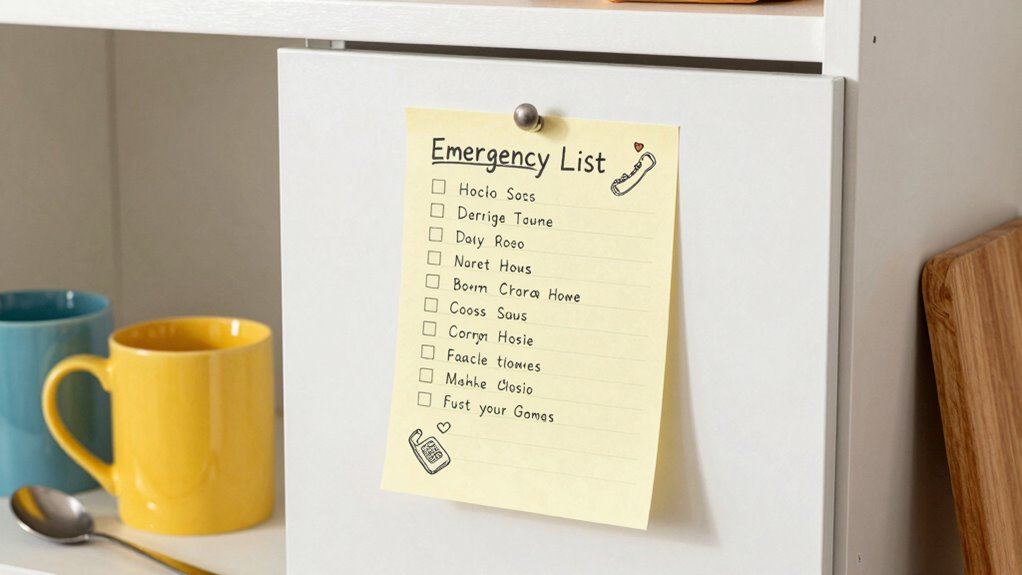
Keeping your emergency contacts list easily accessible and current is essential for quick response during a crisis. Regularly updating your list ensures you have accurate information when it matters most. To stay prepared, focus on effective communication planning by reviewing and confirming contact details. Keep your emergency kit contents in mind, making sure your list includes key contacts like family, neighbors, and emergency services. Store your list in multiple places, such as your phone and a physical copy. Consider these tips:
- Review and update contacts monthly
- Store printed copies in your emergency kit
- Save digital versions in secure cloud storage
- Include alternative contacts in case primary ones are unreachable
- Practice your communication plan regularly
Incorporate fundamentals of preparedness into your planning to ensure all aspects of your safety are covered. Staying proactive guarantees swift action when emergencies strike.
Choose Between Digital or Paper Lists
Deciding whether to keep a digital or paper emergency contacts list depends on your lifestyle and preferences. Digital lists are convenient, easy to update, and accessible through emergency contact apps. Paper lists, however, don’t rely on technology and can be stored anywhere, making them reliable if devices fail. Consider this comparison:
| Aspect | Digital Lists | Paper Lists |
|---|---|---|
| Accessibility | Anywhere via devices | Only where stored |
| Ease of Updates | Quick, simple with apps | Manual rewriting |
| Reliability | Requires power/internet | No tech needed |
Choose what works best for you based on convenience and reliability. Some people prefer both, combining the quick access of digital with the dependability of paper.
Tailor Your Contacts for Different Emergency Situations
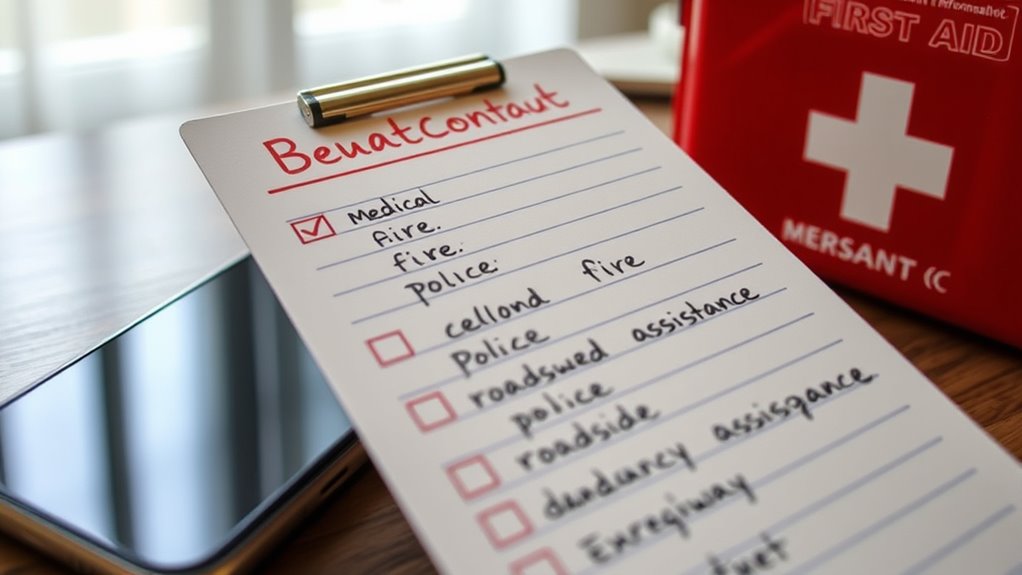
While having a general emergency contacts list is helpful, customizing it to different situations guarantees you get the right help quickly. Your safety planning should include contacts tailored for specific emergencies, like natural disasters, medical crises, or fires. For example, if you have an emergency kit for natural events, include local emergency services, utility companies, and nearby shelters. For medical emergencies, list your doctor, urgent care, and poison control. Fire-related incidents require contact with firefighters and building management. Consider adding mental health support contacts for emotional crises. Tailoring your list ensures you’re prepared for various scenarios, making it easier to act swiftly and efficiently when seconds matter. This targeted approach maximizes your safety and peace of mind.
Frequently Asked Questions
How Often Should I Review and Update My Emergency Contacts?
You should review and update your emergency contacts at least once every six months. Regular updating frequency guarantees that your contact information remains current, and contact verification confirms details are accurate. Life changes happen, so it’s essential to keep your list reliable. Set a reminder to check your emergency contacts periodically, especially after moves, new phone numbers, or when someone’s contact details change. This way, you’re always prepared in emergencies.
Should I Include Healthcare Providers or Only Personal Contacts?
Think of your emergency contacts like a safety net. Including healthcare providers, like your doctor and mental health contacts, is vital—they’re essential for medical emergencies or mental health crises. I once had a friend who needed quick access to a therapist’s number during a panic attack. Keep these contacts updated; they’re your safety net when life throws unexpected challenges your way.
How Can I Ensure My Emergency List Is Accessible During a Power Outage?
To guarantee your emergency list is accessible during a power outage, you should store it on a device with reliable battery life or offline access, like a charged smartphone or portable charger. Use digital security measures, such as password protection, and take advantage of emergency app features that allow offline access or emergency mode. Keep a printed copy as a backup, so your contacts are always within reach, no matter the situation.
What Are the Best Ways to Share My Emergency Contacts Securely?
To share your emergency contacts securely, you should use encrypted messaging apps or password-protected documents. Prioritize your contacts based on their importance, like family or close friends, to guarantee quick access. Keep digital security in mind by avoiding public platforms and regularly updating your contact list. You can also share printed copies with trusted individuals, but always store digital copies securely to prevent unauthorized access.
Should I Include Contacts for Non-Emergency Situations, Like Community Services?
Yes, including contacts for non-emergency situations like community support and local resources can be beneficial. These contacts provide quick access to help with daily needs, mental health, or social services, which can be vital during times of stress or uncertainty. By having these contacts handy, you make sure you can easily connect with the right support networks when needed, making your emergency contact list more detailed and useful in various situations.
Conclusion
Your emergency contacts are the lifelines that anchor you in stormy seas. Keep this list close, like a compass guiding you through chaos, and update it regularly so it remains sharp and reliable. Whether digital or paper, your carefully chosen contacts form a safety net beneath your feet. With this essential map in hand, you’re ready to navigate any emergency, confident that help is just a call away—your personal lighthouse in the darkest night.