
Choosing the best energy recovery ventilator involves balancing efficiency, ease of installation, and budget. The Panasonic Intelli-Balance Elite Plus ERV stands out as the overall top pick for its high performance and quiet operation. The Pioneer ECOasis offers a versatile ductless option ideal for single rooms, while the Broan B210E75RT provides strong airflow capacity for larger spaces. Each model presents tradeoffs—higher efficiency often comes with increased cost, while compact designs might sacrifice some airflow. Continue reading to see how these options compare and which best fits your needs.
Listen free for 30 days with Audible
Thousands of audiobooks and originals — cancel anytime.
Start your free trialAs an affiliate, we earn on qualifying purchases.
Key Takeaways
- Top-performing models like the Panasonic FV-12ESC1 balance high airflow with energy efficiency, making them ideal for whole-house ventilation.
- Ductless options such as the Pioneer ECOasis are best suited for single-room setups and easier installations, but may lack capacity for larger spaces.
- Features like Wi-Fi control and LCD screens enhance usability but often increase the price, appealing to tech-savvy buyers.
- A larger airflow capacity generally indicates better performance for bigger homes, though it can mean higher energy consumption.
- Build quality and noise levels vary significantly; quieter, more durable units tend to cost more but offer longer-term value.
| Panasonic WhisperComfort 60 ERV Ventilation Fan | 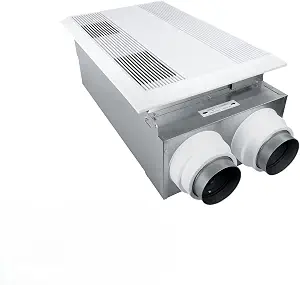 | Best for Simple, Energy-Efficient Whole-House Ventilation | CFM: 20-60 | Energy Recovery: Yes | Mounting Options: Ceiling or wall | VIEW LATEST PRICE | See Our Full Breakdown |
| Panasonic FV-12ESC1 Intelli-Balance Elite Plus ERV, 120 CFM |  | Best for Quiet, High-Performance Indoor Ventilation with Custom Controls | Power Source: AC/DC | Room Type: Bathroom | Special Features: Manual | VIEW LATEST PRICE | See Our Full Breakdown |
| Pioneer ECOasis 150 Ductless Wall-Mounted Single-Room Wi-Fi Energy Recovery Ventilator |  | Best for Smart, Space-Saving Room Ventilation | Coverage Area: up to 500 sq. ft. | Filtration: HEPA & Activated Charcoal (4-stage) | Energy Recovery Efficiency: 82% | VIEW LATEST PRICE | See Our Full Breakdown |
| Broan B160H65RS AI 150 CFM Wall or Ceiling Mounted Heat Recovery Ventilator |  | Best for Versatile, High-Flow Ventilation with Advanced Technology | CFM: 150 | Mounting: Wall or Ceiling | Technology: VIRTUO™ Air Technology | VIEW LATEST PRICE | See Our Full Breakdown |
| Aprilaire V22BEC Energy Recovery Ventilator (ERV), 120 CFM for Homes up to 6,000 Sq. Ft. |  | Best for Large Home Climate Control and Cost Savings | CFM: 120 | Suitable Area: up to 6,000 sq. ft. | Type: Energy Recovery Ventilator (ERV) | VIEW LATEST PRICE | See Our Full Breakdown |
| Broan B160E65RT AI 142 CFM Wall or Ceiling Mounted Energy Recovery Ventilator with LCD Screen |  | Best Overall for Advanced Residential Use | CFM: 35, 142 | Duct Size: 5″ Round | Height: 21-1/2″ | VIEW LATEST PRICE | See Our Full Breakdown |
| Broan B210E75RT AI 206 CFM Wall or Ceiling Mounted Energy Recovery Ventilator |  | Best for High-Capacity Ventilation | CFM: 206 | Mounting: Wall or Ceiling | Ports: Top ports | VIEW LATEST PRICE | See Our Full Breakdown |
| VENTS-US TwinFresh Comfo RB1-50-2 Ductless Energy Recovery Ventilator – 30 CFM with Remote Control |  | Best for Compact, Ductless Spaces | Airflow: 30 CFM | Coverage Area: up to 500 sq ft | Energy Recovery Efficiency: 88% | VIEW LATEST PRICE | See Our Full Breakdown |
| Awoco 6” Vent Energy Recovery Ventilator (ERV) System with Control Panel, Various Speeds, 100 CFM |  | Best for Attic or Specialized Ventilation | Power Source: AC | Room Type: Attic | Special Features: Energy Recovery, Variable Speeds | VIEW LATEST PRICE | See Our Full Breakdown |
| Wi-Fi-Enabled Pioneer 50 Single-Room Wall-Mounted Energy Recovery Ventilator |  | Best for Smart, Single-Room Ventilation | Power Supply: 110-240 VAC, 50-60 Hz | Dimensions: 9-3/8″ x 19-5/8″ x 10-1/8″ | Weight: 11 lbs | VIEW LATEST PRICE | See Our Full Breakdown |
| LINGGONGAIR 4 Inch Ceramic Core Heat Recovery Reversible Wall Ventilator |  | Best for Residential Space Efficiency | Filter Type: Ceramic heat exchange core | Color: White | Power Voltage: 110 volts | VIEW LATEST PRICE | See Our Full Breakdown |
| 6 Inch Heat Recovery Ventilator with Ceramic Heat Exchanger |  | Best for Whole-Home Ventilation with Smart Control | Size: 6 Inch | Heat Exchanger: Ceramic | Airflow Modes: Fresh Air, Exhaust, Recirculation | VIEW LATEST PRICE | See Our Full Breakdown |
| Broan B210E75RS AI 206 CFM Wall or Ceiling Mounted Energy Recovery Ventilator |  | Best for Versatile Installation and High Airflow | CFM: 206 | Mounting: Wall or Ceiling | Type: Energy Recovery Ventilator | VIEW LATEST PRICE | See Our Full Breakdown |
| ACiQ Energy Recovery Ventilator ERV 150 CFM, All Climate |  | Best for Continuous Ventilation in All Climates | CFM: 150 | Type: Energy Recovery Ventilator | Climate suitability: All climates | VIEW LATEST PRICE | See Our Full Breakdown |
More Details on Our Top Picks
Panasonic WhisperComfort 60 ERV Ventilation Fan
This model stands out for offering a straightforward, energy-efficient solution with customizable airflow, making it ideal for those who want balanced ventilation without complex controls. Compared to the Pioneer ECOasis 150, it provides a lower capacity but simplifies installation and maintenance. Its ability to recover heat and moisture enhances indoor comfort efficiently. However, the lack of detailed noise specifications and absence of advanced features like timers or sensors means it may not suit users seeking smart integration or quiet operation. Overall, this pick makes the most sense for homeowners needing reliable, balanced ventilation that’s easy to install and operate.
Pros:- Customizable airflow with multiple speed settings
- Easy to install on ceiling or wall
- Energy-efficient with heat and moisture recovery
Cons:- No mention of noise level specifications
- Requires access ports for airflow verification
- Limited details on additional features like timers or sensors
Best for: Homeowners seeking a simple, energy-efficient ventilation solution for multiple rooms
Not ideal for: Individuals wanting advanced smart controls or ultra-quiet operation, as it lacks detailed noise specs and smart features
- CFM:20-60
- Energy Recovery:Yes
- Mounting Options:Ceiling or wall
- Certification:HVI
Our verdict“This ERV is best for those prioritizing straightforward, energy-saving ventilation for whole-home use.”
Panasonic FV-12ESC1 Intelli-Balance Elite Plus ERV, 120 CFM
The Panasonic FV-12ESC1 offers a higher capacity of 120 CFM, making it suitable for larger indoor spaces or homes requiring robust ventilation. Its SmartFlow ECM motors deliver quiet, adjustable airflow, which is a step above the simpler WhisperComfort. The inclusion of high-quality MERV 13 filters improves indoor air quality significantly, appealing for allergy sufferers or health-conscious users. Its flexible installation options support various indoor setups. The main tradeoff is that installation complexity may require professional help, and the control options, while customizable, might seem limited without additional accessories. Compared with the Pioneer ECOasis, it focuses more on indoor air quality and quiet operation but at a potentially higher installation effort.
Pros:- Energy-efficient SmartFlow ECM motors provide quiet, adjustable airflow
- High-quality MERV 13 filters improve indoor air quality
- Flexible installation options suit various indoor spaces
Cons:- Complex installation may require professional assistance
- No detailed warranty or price info provided
- Control options might be limited without additional accessories
Best for: Homeowners needing high-capacity, quiet ventilation with advanced filter options and flexible installation
Not ideal for: DIYers seeking a straightforward, plug-and-play unit, as installation can be complex and might require professional help
- Power Source:AC/DC
- Room Type:Bathroom
- Special Features:Manual
- Air Flow Capacity:120 cfm
- Control Method:Touch
- Motor Type:Brushless
Our verdict“Ideal for users seeking a high-capacity, quiet ERV with superior filtration and flexible installation options.”
Pioneer ECOasis 150 Ductless Wall-Mounted Single-Room Wi-Fi Energy Recovery Ventilator
This ductless unit excels for single-room applications up to 500 sq. ft., integrating smart Wi-Fi control and advanced air purification with a 99% efficiency. Its 4-stage filtration system, including HEPA and activated charcoal, provides superior indoor air quality, making it perfect for bedrooms or living rooms. The unit’s quiet operation and sensors for PM2.5 and CO2 enable smart monitoring and scheduling, reducing utility costs. However, its limited coverage area and higher initial cost make it less suitable for larger homes or budget-conscious buyers. Compared with the Broan B160H65RS, it focuses more on smart features and purification, but sacrifices some capacity and installation flexibility.
Pros:- High purification efficiency with advanced sensors and filtration
- Smart Wi-Fi control for remote monitoring and scheduling
- Quiet operation suitable for bedrooms and living areas
Cons:- Limited to room sizes up to 500 sq. ft.
- Requires wall-mount installation which may not suit all spaces
- Higher initial cost compared to basic units
Best for: Individuals wanting a smart, space-efficient air purification option for a specific room
Not ideal for: Large households or whole-home ventilation needs, since it’s limited to 500 sq. ft. and wall-mount only
- Coverage Area:up to 500 sq. ft.
- Filtration:HEPA & Activated Charcoal (4-stage)
- Energy Recovery Efficiency:82%
- Power Consumption:35W
- Noise Level:23-37.9 dB(A)
- Control:Wi-Fi, touch screen, remote
Our verdict“Best for users seeking a smart, quiet, and effective room-specific air quality solution.”
Broan B160H65RS AI 150 CFM Wall or Ceiling Mounted Heat Recovery Ventilator
The Broan B160H65RS AI provides a solid 150 CFM airflow with versatile mounting options, suitable for larger spaces or continuous ventilation needs. Its use of VIRTUO™ air technology and side ports signals an emphasis on enhanced indoor air quality and efficient heat recovery. Compared with the Pioneer ECOasis, it offers higher capacity and more installation flexibility, making it better suited for larger or multi-zone applications. However, detailed product information is limited, and it may come at a higher price point due to its advanced features. This unit is best for those who need robust ventilation combined with sophisticated air quality management.
Pros:- Efficient heat recovery technology
- Versatile mounting options for wall or ceiling
- Enhanced air quality features
Cons:- Limited product details available
- Potentially higher cost due to advanced features
Best for: Homeowners or contractors requiring high airflow and flexible installation options for larger or multiple rooms
Not ideal for: Small spaces or those seeking a budget-friendly, simple solution, as detailed specs and cost may be higher
- CFM:150
- Mounting:Wall or Ceiling
- Technology:VIRTUO™ Air Technology
- Ports:Side Ports
Our verdict“Suitable for larger or multi-zone applications needing high airflow and advanced indoor air quality technology.”
Aprilaire V22BEC Energy Recovery Ventilator (ERV), 120 CFM for Homes up to 6,000 Sq. Ft.
The Aprilaire V22BEC ERV stands out for its capacity to serve large homes up to 6,000 sq. ft., making it ideal for whole-house ventilation where balancing humidity and temperature is vital. Its energy-efficient design helps reduce HVAC costs by exchanging stale indoor air with fresh outdoor air across various climates. Compared to the Pioneer ECOasis, it offers a higher capacity suitable for bigger spaces but may involve more complex installation. Its lack of specific noise level data and pricing details might be a concern for some buyers. This unit is best positioned for homeowners seeking comprehensive, whole-home ventilation that reduces utility bills and maintains comfort year-round.
Pros:- Improves indoor air quality by exchanging stale air with fresh outdoor air
- Energy-efficient design helps reduce heating and cooling costs
- Suitable for various climates, maintaining consistent comfort
Cons:- Installation may require wall, ceiling, or floor expertise
- Limited information on noise levels
- No specific pricing or customer ratings available
Best for: Large households or homes seeking whole-home ventilation with climate balancing capabilities
Not ideal for: Small or single-room applications, or buyers with limited installation expertise, due to potentially complex setup
- CFM:120
- Suitable Area:up to 6,000 sq. ft.
- Type:Energy Recovery Ventilator (ERV)
Our verdict“Best for large homes needing efficient, whole-house ventilation that supports energy savings and climate control.”
Broan B160E65RT AI 142 CFM Wall or Ceiling Mounted Energy Recovery Ventilator with LCD Screen
The Broan B160E65RT AI stands out for integrating VIRTUO™ Air Technology to maintain continuous, filtered fresh air, making it ideal for homeowners seeking high-tech solutions. Compared with the Wi-Fi Pioneer ERV-50, this model offers more robust diagnostics and auto-balancing, which simplifies maintenance and ensures consistent performance. However, its installation is restricted to wall or ceiling mounts, and upgrades to higher MERV filters come with additional costs. The LCD screen provides real-time diagnostics, while the energy-efficient PMSM ECM motor keeps noise levels low. This pick is perfect for those prioritizing advanced features and reliable air quality management in a dedicated indoor space.
Pros:- Advanced VIRTUO™ Air Technology for continuous, filtered fresh air
- Easy installation with auto-balancing and LCD diagnostics
- Energy-efficient motor with quiet operation
Cons:- Limited to wall or ceiling mounting, restricting placement options
- Filtering upgrades to MERV 13 incur extra costs
Best for: Homeowners seeking a sophisticated, easy-to-monitor ventilation system with integrated diagnostics
Not ideal for: Renters or DIYers with limited installation experience due to the professional setup required
- CFM:35, 142
- Duct Size:5″ Round
- Height:21-1/2″
- Width:21″
- Depth:16-3/10″
- Amperage:1.36A
- Voltage:120V
- Wattage:163W
- Refrigerant:R 410A
Our verdict“This model is best suited for homeowners who want a feature-rich, reliable ERV with smart diagnostics.”
Broan B210E75RT AI 206 CFM Wall or Ceiling Mounted Energy Recovery Ventilator
The Broan B210E75RT AI offers a higher airflow capacity at 206 CFM, making it suitable for larger spaces or homes with multiple rooms. Its high-performance HRV core enhances indoor air quality by effectively exchanging stale air with fresh outdoor air. Compared to the Broan B160E65RT AI, it sacrifices some diagnostic features but excels in delivering more substantial airflow. Its installation is flexible, supporting wall or ceiling mounting, but detailed specifications and customer feedback are limited, which could be a concern for cautious buyers. This unit is ideal for those needing robust ventilation without overly complex controls.
Pros:- High airflow capacity for extensive ventilation needs
- Flexible mounting options for various installation scenarios
- Effective HRV core for energy-efficient air exchange
Cons:- Limited product details and customer reviews available
- Lacks advanced diagnostics or smart features
Best for: Large homes or spaces requiring significant air exchange capacity
Not ideal for: Small apartments or rooms with limited space for larger units
- CFM:206
- Mounting:Wall or Ceiling
- Ports:Top ports
- Core:HRV
Our verdict“This ventilator is best for users prioritizing high airflow and flexible installation over smart features.”
VENTS-US TwinFresh Comfo RB1-50-2 Ductless Energy Recovery Ventilator – 30 CFM with Remote Control
The VENTS-US TwinFresh Comfo RB1-50-2 excels in providing a compact solution for room-specific ventilation needs, especially in smaller areas up to 500 sq ft. Its ductless design with wireless remote control simplifies installation in tight or retrofit spaces, outperforming bulkier ducted systems like the Broan B160E65RT where ductwork isn’t feasible. With an energy recovery efficiency of 88%, it significantly cuts heating and cooling costs. Still, its limited airflow (30 CFM) makes it unsuitable for larger rooms or whole-house applications. This model is ideal for individuals seeking a quiet, space-efficient ERV for specific rooms or apartments.
Pros:- Ductless, easy to install in tight spaces
- Quiet operation at 0.2-0.5 sones
- High energy recovery efficiency of 88%
Cons:- Limited to 500 sq ft coverage, not for whole-house use
- Filters require regular replacement for optimal performance
Best for: Small rooms or apartments where ductwork isn’t practical
Not ideal for: Larger homes or spaces requiring high airflow
- Airflow:30 CFM
- Coverage Area:up to 500 sq ft
- Energy Recovery Efficiency:88%
- Power Consumption:4.5 watts
- Sound Level:0.2-0.5 sones
- Temperature Range:down to -4°F
Our verdict“This ductless ERV is perfect for small spaces needing efficient ventilation without extensive ductwork.”
Awoco 6” Vent Energy Recovery Ventilator (ERV) System with Control Panel, Various Speeds, 100 CFM
The Awoco 6” ERV System provides a balanced ventilation solution ideal for attic spaces or specialized air circulation, with an airflow of 100 CFM. Its adjustable speeds and washable filters give it an advantage over simpler models like the VENTS-US TwinFresh RB1-50-2, especially for users who want customizable airflow and easy maintenance. While its noise level of 50 dB is acceptable for attic placement, it might be noticeable in quieter environments. Its energy efficiency and low noise make it suitable for those prioritizing controlled ventilation in non-living spaces, but less so for main living areas.
Pros:- Adjustable speeds offer customizable airflow
- Includes washable filters for low maintenance
- Energy-efficient with low noise levels
Cons:- Limited to attic use, not suitable for living spaces
- Requires specific duct sizes and installation expertise
Best for: Attic installations or spaces requiring variable airflow control
Not ideal for: Main living rooms or spaces demanding near-silent operation
- Power Source:AC
- Room Type:Attic
- Special Features:Energy Recovery, Variable Speeds
- CFM:100
- Noise Level:50 dB
- Wattage:60 watts
Our verdict“This ERV is suited for attic or auxiliary space ventilation where adjustable airflow is valued.”
Wi-Fi-Enabled Pioneer 50 Single-Room Wall-Mounted Energy Recovery Ventilator
The Pioneer ERV-50 makes a compelling choice for tech-savvy users wanting a quiet, smart-controlled ventilation system for a single room. Its 35.3 CFM airflow and 97% heat recovery efficiency outperform many basic models like the Broan B160E65RT in energy savings. The Wi-Fi control and real-time air quality monitoring elevate user convenience, but the limited airflow capacity suits smaller spaces and may not suffice for larger areas. Installation requires proper wall space and some technical setup, making it less ideal for non-technical users. This pick is perfect for those prioritizing continuous air quality management with integrated smart features.
Pros:- High 97% heat recovery efficiency for energy savings
- Wi-Fi control through smartphone app
- Super-silent operation at 32.7 dB
Cons:- Limited airflow capacity for larger spaces
- Requires proper wall installation and setup
Best for: Tech-savvy homeowners desiring smart control and high efficiency in small rooms
Not ideal for: Large families or spaces needing high airflow capacity
- Power Supply:110-240 VAC, 50-60 Hz
- Dimensions:9-3/8″ x 19-5/8″ x 10-1/8″
- Weight:11 lbs
- Airflow (Max):35.3 CFM
- Water-Resistance Rating:IPX4
- Control Methods:Smartphone App, Onboard, Remote
Our verdict“This ERV is ideal for users wanting smart features and efficient air exchange in small, single rooms.”
LINGGONGAIR 4 Inch Ceramic Core Heat Recovery Reversible Wall Ventilator
This wall-mounted unit excels in delivering high heat recovery efficiency with a ceramic core that captures up to 97% of heat, making it ideal for homeowners seeking to reduce heating costs. Unlike the larger 6-inch models, it offers a compact footprint and a remote-controlled reversible airflow, providing flexibility without requiring complex installation. The stainless steel rain hood enhances outdoor durability, yet the need for wall drilling might be a barrier for renters or those with limited DIY skills. Its low power draw—only 5W—keeps energy use minimal, but it lacks inverter technology, which limits variable speed control. Compared to the 6 Inch Heat Recovery Ventilator, this unit is less versatile for larger spaces but shines in smaller, retrofit-friendly applications.
Pros:- Energy-efficient with a quiet 5W EC motor
- Reversible remote control for flexible airflow management
- Durable stainless steel rain hood suitable for outdoor use
- Reusable ceramic core filter reduces maintenance
Cons:- Requires drilling for wall installation, which may deter some users
- No inverter functionality limits variable speed options
Best for: Homeowners wanting an efficient, quiet, and reversible ventilation option for individual rooms or small spaces
Not ideal for: Renters or those unwilling to drill into walls, as installation is invasive and permanent
- Filter Type:Ceramic heat exchange core
- Color:White
- Power Voltage:110 volts
- Wattage:5 watts
- Control Method:Remote control
- Installation Type:Through the wall
- Application:Residential
- Additional Features:Reversible airflow, corrosion-resistant rain hood, washable filter
Our verdict“This pick is perfect for small-scale residential setups where efficiency and reversibility are priorities but invasive installation is acceptable.”
6 Inch Heat Recovery Ventilator with Ceramic Heat Exchanger
Compared with the smaller LINGGONGAIR, this 6-inch model offers a higher airflow capacity and slightly lower heat recovery efficiency—up to 90%—but compensates with smart WiFi and remote control features. Its quiet operation—under 30dB—and energy-efficient 8.5W motor make it suitable for continuous, multi-room ventilation. Its adjustable installation range from 250mm to 500mm simplifies setup, yet it requires wall space and proper mounting, which could be challenging in tight spaces. While it excels in providing flexible, whole-home ventilation, its larger size and more complex wiring make it less suited for small or retrofit installations. It’s an ideal choice where higher airflow and smart integration are valued over ultra-high heat recovery efficiency.
Pros:- High heat recovery efficiency up to 90%
- Smart WiFi control and remote app access
- Quiet operation under 30dB
- Easy-to-adjust installation range
Cons:- Requires wall mounting and sufficient space
- Limited to single-room or small-area ventilation
- Filter replacement may need periodic maintenance
Best for: Homeowners seeking a scalable, quiet, WiFi-enabled ventilation solution for entire house comfort
Not ideal for: Small apartments or renters with limited wall space who prefer simple, no-frills units
- Size:6 Inch
- Heat Exchanger:Ceramic
- Airflow Modes:Fresh Air, Exhaust, Recirculation
- Motor Power:8.5W
- Noise Level:Under 30dB
- Voltage:100–240V
- Installation Range:250mm to 500mm
Our verdict“This model suits larger homes and tech-savvy users prioritizing smart features and higher airflow capacity over installation simplicity.”
Broan B210E75RS AI 206 CFM Wall or Ceiling Mounted Energy Recovery Ventilator
This ERV stands out with a robust 206 CFM airflow capacity and flexible mounting options, suitable for both wall and ceiling installations—ideal for larger spaces or retrofit projects. Its high-performance ERV core ensures efficient heat and moisture transfer, directly improving indoor air quality. Compared to smaller or less adaptable models, the Broan B210E75RS offers a balanced approach between capacity and installation versatility, though it provides limited detailed specifications and lacks smart control options. Its straightforward design makes it a reliable choice for those prioritizing air exchange volume, but the absence of advanced features like app control or detailed diagnostics might make it less appealing for tech enthusiasts or those wanting smart integration.
Pros:- High airflow of 206 CFM enhances ventilation effectiveness
- Suitable for wall or ceiling mounting, offering installation flexibility
- High-performance ERV core for efficient heat and moisture exchange
Cons:- Limited detailed specs and no smart features
- Potentially higher installation complexity for DIY users
- No integrated control or monitoring system
Best for: Homeowners or contractors needing a high-capacity, versatile ERV for large or multi-room applications
Not ideal for: Small apartments or users seeking smart connectivity, as this model is more utilitarian
- CFM:206
- Mounting:Wall or Ceiling
- Type:Energy Recovery Ventilator
- Ports:Side Ports
- Core Performance:Superior ERV Core
Our verdict“This ERV is well-suited for large or retrofit projects where airflow capacity and installation flexibility take precedence over smart features.”
ACiQ Energy Recovery Ventilator ERV 150 CFM, All Climate
The ACiQ ERV 150 CFM emphasizes continuous fresh air exchange, making it ideal for health-conscious households wanting consistent indoor air quality. Its 150 CFM capacity balances well with energy efficiency, thanks to advanced heat and moisture transfer technology. Compared with the smaller LINGGONGAIR or the larger 6 Inch model, it offers a middle ground—suitable for various climate conditions and spaces. Its flexible installation options and 8-year warranty appeal to those looking for durability and reliability, though professional setup might be necessary for optimal operation. The limited warranty registration could impact coverage, and it’s less suitable for users who want smart integration or high airflow volume.
Pros:- Provides continuous air exchange for healthier indoor environments
- Energy-efficient with heat and moisture transfer technology
- Flexible installation options across various climates
- Long 8-year limited warranty for peace of mind
Cons:- Professional installation recommended for best results
- Limited warranty coverage if unregistered
Best for: Families or individuals wanting a reliable, all-climate ERV with continuous ventilation and good warranty support
Not ideal for: Those seeking smart home features or high-volume ventilation for large spaces
- CFM:150
- Type:Energy Recovery Ventilator
- Climate suitability:All climates
- Warranty:8-year limited or 5-year if unregistered
Our verdict“This ERV offers steady, reliable ventilation suited for diverse climates but may lack some smart features and high airflow capacity for larger spaces.”
How We Picked
The products in this roundup were selected based on a combination of performance metrics, usability, build quality, and value. We prioritized models with proven efficiency, reliable airflow rates, and features that support easy installation and operation. Cost-effectiveness was also a key factor, ensuring options cater to different budgets without sacrificing core functionality. The ranking reflects a balance between high-end features and practical performance, helping buyers identify models suitable for both novice and experienced users.Factors to Consider When Choosing Best Energy Recovery Ventilator
When choosing an energy recovery ventilator, several factors influence which model is best suited to your home and lifestyle. Understanding these considerations helps prevent common mistakes such as overpaying for unnecessary features or selecting a unit with insufficient capacity. Carefully weighing your needs against these factors ensures long-term satisfaction and energy savings.Capacity and Airflow Rate
Matching the ventilator’s airflow capacity to your home size is essential. A unit that’s too small won’t adequately ventilate your space, while an oversized model can waste energy and increase operational noise. Consider your home’s square footage and occupancy levels to choose a model with appropriate CFM ratings. For larger homes or spaces with high air quality demands, investing in a higher-capacity unit makes sense, even if it costs more upfront.
Efficiency and Heat Recovery Effectiveness
The core benefit of an energy recovery ventilator lies in its ability to transfer heat efficiently. Look for models with high heat recovery efficiency—typically above 70%. These units reduce energy costs by minimizing heating and cooling loads. However, higher efficiency often correlates with increased initial investment, so evaluate whether the savings over time justify the price premium.
Ease of Installation and Maintenance
Some ERVs are designed for straightforward DIY installation, especially ductless models, while others require professional setup. Consider your technical skills and whether you prefer a unit with features like accessible filters or clear maintenance indicators. Regular upkeep is crucial for performance; units with easy-to-access components tend to be more cost-effective over their lifespan.
Additional Features and Controls
Features like Wi-Fi connectivity, remote controls, and LCD screens enhance user experience, allowing for convenient operation and monitoring. While these add to the cost, they can also improve energy management and system integration. Decide which features align with your tech preferences and budget, but remember that simpler models can still provide effective ventilation without these extras.
Budget and Long-term Value
Balancing initial cost with long-term savings is key. Cheaper units might save money upfront but could lack durability or efficiency, leading to higher operating costs. Premium models often provide better reliability, quieter operation, and higher efficiency, which justify their higher price over time. Consider your budget in conjunction with your home’s needs to find the best overall value.
Frequently Asked Questions
How do I know if an energy recovery ventilator is right for my home?
If your home is well-insulated or has limited natural ventilation, an ERV can significantly improve air quality and reduce energy costs. They are especially beneficial in climates with extreme temperatures, where controlling heat transfer is valuable. Consider your local climate, indoor air quality needs, and existing ventilation system to determine if an ERV makes sense for your situation.
Can I install an energy recovery ventilator myself?
Many ductless models are designed for straightforward installation and can be a good DIY project if you are comfortable with basic electrical and plumbing work. Larger, ducted models may require professional installation to ensure proper airflow, sealing, and compliance with building codes. Evaluate your technical skills and the complexity of the unit before attempting installation yourself.
Are more expensive ERVs worth the extra cost?
Higher-priced units often offer better efficiency, durability, and noise reduction, translating into lower operational costs and longer lifespan. If your home benefits from consistent, high-quality ventilation or you prioritize energy savings, investing in a premium model can pay off over time. For smaller spaces or budget-conscious buyers, mid-range options can provide sufficient performance without the higher upfront investment.
What maintenance is required for an energy recovery ventilator?
Regular maintenance typically includes cleaning or replacing filters, inspecting fans, and checking for blockages or leaks. Some units have indicator lights or alerts for maintenance needs, which simplify upkeep. Proper maintenance ensures optimal performance, energy efficiency, and prolongs the lifespan of the system. Always follow the manufacturer’s guidelines for maintenance intervals and procedures.
How do I choose the right size of ERV for my home?
Accurate sizing depends on your home’s square footage, occupancy, and air quality requirements. A unit with too low a capacity won’t adequately ventilate, while an oversized unit may waste energy and create unnecessary noise. Consulting a professional or using online calculators can help determine the ideal CFM rating. Proper sizing ensures effective ventilation without excess energy use.
Conclusion
The best overall energy recovery ventilator for most homes is the Panasonic FV-12ESC1 Intelli-Balance Elite Plus, thanks to its high efficiency and quiet operation. For those on a tighter budget or seeking simplicity, the VENTS-US TwinFresh Comfo RB1-50-2 offers reliable performance with ductless convenience. Premium buyers aiming for maximum energy savings should consider models like the Broan B210E75RT with higher airflow capacity and advanced features. Beginners or small-space owners might find the Pioneer ECOasis the easiest to install. Ultimately, your choice depends on your home’s size, your budget, and your desired features—use this guide to match a model that fits your specific needs.
As an affiliate, we earn on qualifying purchases.NFL season / tailgating Picks
team gear