
Your dishwasher smells mainly because of unseen food debris, mold, and mineral buildup trapped inside. Food particles unscreened find their way into filters and crevices, encouraging bacteria and mold growth in damp areas. Clogged filters and hoses worsen the smell by trapping debris and moisture. Hard water deposits also contribute to foul odors over time. To uncover more hidden causes and how to fix them, keep exploring.
Key Takeaways
- Food debris and residue buildup create bacteria, mold, and foul odors inside the dishwasher.
- Mold and mildew thrive in damp, poorly ventilated areas with deteriorated seals.
- Clogged filters and hoses trap debris and moisture, leading to unpleasant smells.
- Hard water deposits harbor bacteria and trap food particles, causing odor issues.
- Using improper or incomplete cleaning cycles allows residue and mold to develop unnoticed.

Dishwasher Cleaner Brush Kit – 6PCS Deep Cleaning Tools with Pick, Scraper, Straw Brush, Gap & Angle Brush, Flexible Tubes Brush for Spotless Dishwasher
Deep Clean Every Corner Tackle hidden grime with our 6-piece brush kit! Includes a pick, silicone scraper, straw…
As an affiliate, we earn on qualifying purchases.
As an affiliate, we earn on qualifying purchases.
How Food Debris Causes Dishwasher Odors

Food debris that remains on dishes or gets trapped in the dishwasher can quickly lead to unpleasant odors. When food particles aren’t properly rinsed away, they settle inside the machine, providing a breeding ground for bacteria and mold. Over time, these particles can cause drain clogs, blocking the flow of water and soap. This buildup creates a damp, sticky environment that intensifies foul smells. If you notice a persistent odor, it’s often due to trapped food debris and clogged drains. Regularly cleaning your dishwasher’s filter and running hot water cycles helps prevent food from accumulating and keeps drain lines clear. Staying vigilant about removing food particles ensures your dishwasher stays fresh and odor-free. Additionally, understanding how food debris influences odors can help you adopt better cleaning habits to maintain a fresh-smelling dishwasher.

Affresh Dishwasher Cleaner, Helps Power Away Odor Causing Bacteria, Limescale, Mineral Deposits & Grime Inside Pump, Tub & Hoses, 6 Tablets, 6 Month Supply
HELPS POWER AWAY SMELLS created by odor causing bacteria, foggy limescale and mineral deposits hiding deep inside the…
As an affiliate, we earn on qualifying purchases.
As an affiliate, we earn on qualifying purchases.
Why Mold and Mildew Develop in Damp Areas

Mold and mildew thrive in damp areas because moisture creates the perfect environment for their growth. If your dishwasher isn’t properly ventilated or has seal deterioration, moisture can linger, encouraging mold development. Poor ventilation issues trap humidity inside, giving mold a constant water source. Seal deterioration allows water to seep into hidden crevices, prolonging dampness and preventing proper drying. To prevent this, regularly check and replace worn seals and ensure your dishwasher is well-ventilated. Proper airflow helps moisture escape, reducing the chances of mold and mildew. Ignoring these issues can lead to persistent odors and health concerns. Keeping your dishwasher dry and sealed tight is key to stopping mold from taking hold in damp, hidden spots. Additionally, understanding pump and dump schemes can help you avoid risky market behaviors that could impact your investments.
Drain Device, AC Drain Line Cleaner Device, AC Drains Line Unclogger Tool, with 6 Unthreaded CO2 Cartridges, with a Flexible Hose to Clear All HVAC Clogs,16 Gram Unthreaded CO2,Black
EASY TO USE & LIGHTWEIGHT – The Drain Device Gun Kit has everything needed to instantly clear backed-up…
As an affiliate, we earn on qualifying purchases.
As an affiliate, we earn on qualifying purchases.
How Clogged Filters and Hoses Lead to Smells
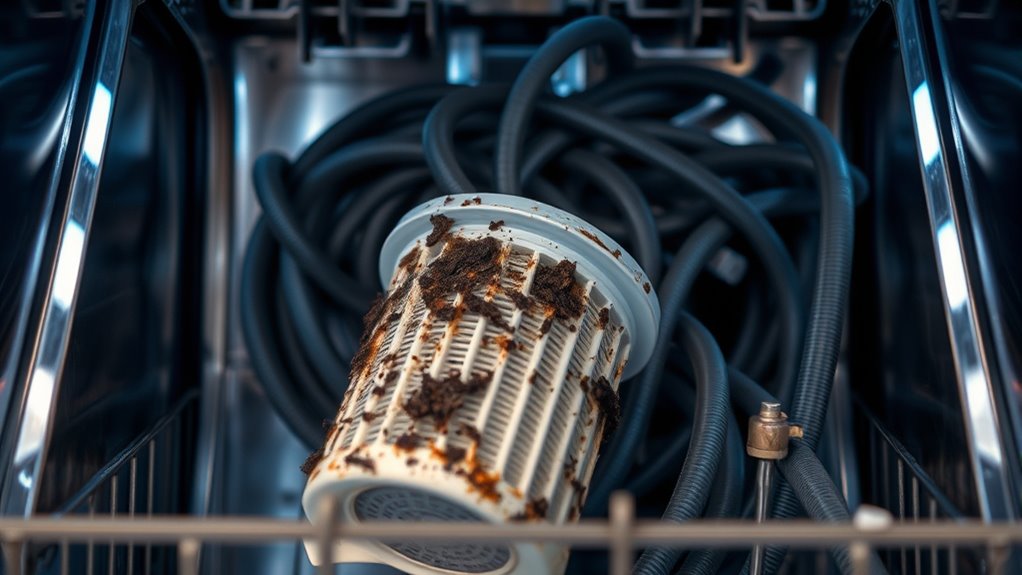
Clogged filters and hoses are common culprits behind unpleasant dishwasher odors because they trap debris and trapped water that can decay over time. Regular filter maintenance is essential to prevent buildup of food particles and grease that contribute to bad smells. When filters aren’t cleaned, they become breeding grounds for bacteria and mold, which can emit foul odors. Hoses can also become clogged or develop blockages, restricting proper water flow and causing stagnation. Additionally, vent blockage can trap moisture inside the dishwasher, creating a damp environment perfect for mold growth. To avoid these issues, check and clean your filters regularly, ensure hoses are clear, and keep vents unobstructed. Properly maintaining ventilation and airflow can also help prevent moisture buildup and odors inside your dishwasher. Doing so will help keep your dishwasher smelling fresh and functioning efficiently.

W11177741 Dishwasher Door Seal for Whirlpool Maytag KitchenAid Kenmore – Dishwashers Door Gasket Replaces W10300924 W10660528 W10300924V
MODEL NUMBER:W11177741 Dishwasher door seal
As an affiliate, we earn on qualifying purchases.
As an affiliate, we earn on qualifying purchases.
The Impact of Hard Water Deposits on Odors
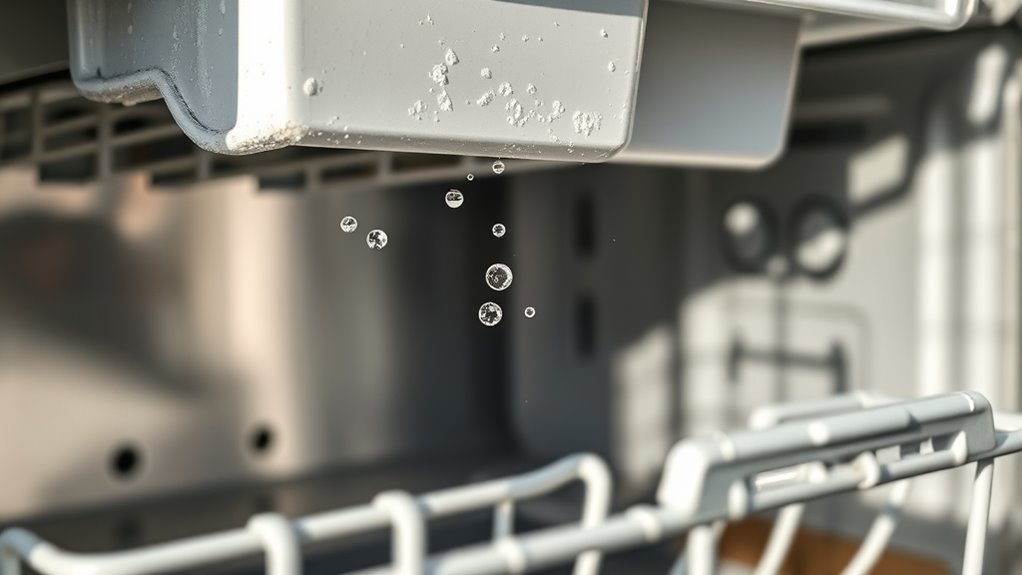
Hard water deposits can considerably contribute to unpleasant dishwasher odors because they leave mineral buildup on internal components. This buildup occurs when water quality is poor, causing minerals like calcium and magnesium to accumulate over time. These deposits can trap food particles and bacteria, creating a breeding ground for foul smells. To prevent this, you should:
Hard water deposits trap debris and bacteria, causing foul dishwasher odors. Regular cleaning helps prevent this buildup.
- Regularly inspect and clean the spray arms and filters to reduce mineral buildup.
- Use water softeners or descaling agents to improve water quality.
- Run vinegar or commercial descaling products periodically to dissolve mineral deposits.
- Implementing a water treatment system can significantly reduce mineral deposits and prevent odors in the long term.
Why Improper Cleaning Cycles Allow Residue Buildup
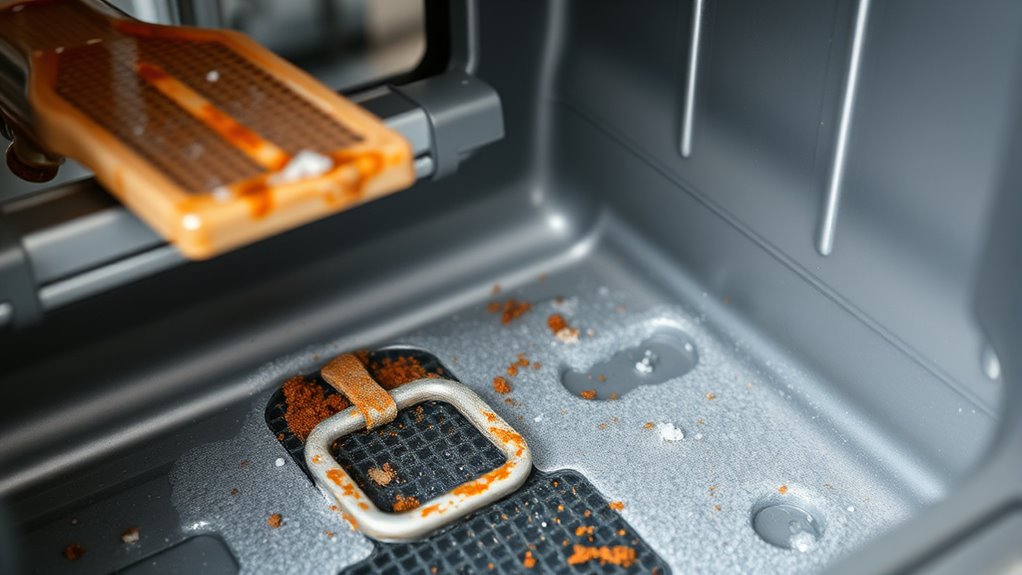
When your dishwasher runs through improper cleaning cycles, leftover food particles and soap scum aren’t fully rinsed away, leading to residue buildup inside the appliance. A poor cleaning schedule or choosing the wrong cycle can leave deposits behind, creating pockets for mold and bacteria to thrive. For example, using a quick wash for heavily soiled dishes might not provide enough heat or water to remove residues effectively. Similarly, skipping longer or more intensive cycles allows grime to accumulate over time. To prevent this, select the appropriate cycle based on your load size and soil level, and follow a consistent cleaning schedule. Regularly maintaining your appliance ensures residues are thoroughly rinsed away, keeping your dishwasher fresh and odor-free.
Frequently Asked Questions
Can Using DIY Cleaning Solutions Prevent Dishwasher Odors Effectively?
Yes, using DIY cleaning solutions with natural ingredients like vinegar can effectively prevent dishwasher odors. Vinegar cleaning helps break down grease and mineral buildup that cause smells, keeping your appliance fresh. Regularly running a vinegar cycle or combining it with baking soda can eliminate lingering odors without harsh chemicals. This natural approach is affordable, eco-friendly, and simple to maintain, ensuring your dishwasher stays clean and odor-free with minimal effort.
How Often Should I Run a Cleaning Cycle to Avoid Smells?
Did you know that neglecting cleaning can cause your dishwasher to develop odors within just a month? To prevent this, run a cleaning cycle at least once a month. Consistent maintenance routines keep your appliance fresh and odor-free. Adjust your cleaning frequency based on usage—more often if you run it daily. Staying on top of maintenance routines guarantees your dishwasher stays clean, odorless, and working efficiently.
Are There Specific Dishwasher Models More Prone to Odors?
Some dishwasher models are more prone to odors due to their design and brand reputation. Models with tight seals or complex drainage systems tend to trap food debris and moisture, leading to smells. Additionally, brands with a reputation for poor maintenance features may have more odor issues. You should research specific models’ design flaws and reviews to find those less likely to develop odors, ensuring your dishwasher stays fresh longer.
What Are the Signs That Mold Is Developing Inside My Dishwasher?
Like a silent shadow lurking, mold inside your dishwasher shows itself through a musty odor, slimy spots, or dark patches on the door seal and racks. You might notice lingering grime even after cleaning. To prevent this, prioritize regular dishwasher maintenance, including cleaning filters and running hot cycles. Recognizing these signs early helps you combat mold, ensuring your appliance runs smoothly and stays fresh through proper mold prevention.
Does the Type of Detergent Influence Dishwasher Odor Formation?
Yes, the type of detergent can influence dishwasher odors. Detergent chemistry affects how well it breaks down food and soap scum, reducing mold buildup. Some detergents contain scent additives, which can sometimes contribute to lingering smells if they don’t fully rinse away. Using the right detergent, especially one designed for your dishwasher, and avoiding overly fragrant options help prevent odors and keep your dishwasher smelling fresh.
Conclusion
Just like Pandora’s box, your dishwasher can secretly harbor odors if you don’t keep it clean. By removing food debris, checking filters, and running proper cycles, you prevent mold and buildup from taking over. Think of your dishwasher as a garden—you’re the gardener, so tend to it regularly to keep it fresh and odor-free. With a little effort, your appliance will stay as clean and inviting as a spring garden in full bloom.