
Surfactants are the active ingredients in soap that help you clean by lowering water’s surface tension and trapping dirt and oil. They have two ends: one that loves water (hydrophilic) and one that clings to oils and grease (hydrophobic). These molecules form tiny structures called micelles, which surround and lift away stubborn grime. By understanding how surfactants work, you’ll see how they make cleaning so effective—and there’s more to discover about their fascinating behavior.
Key Takeaways
- Surfactants reduce surface tension between water and oils, allowing them to mix and be rinsed away effectively.
- They have hydrophilic (water-loving) heads and hydrophobic (oil-loving) tails that attach to dirt and grease.
- Surfactants form micelles, which trap and suspend oils and dirt, making cleaning easier.
- They break the adhesion of grease and dirt to surfaces, facilitating their removal.
- The molecular structure and type of surfactant influence cleaning power and environmental impact.

MRS. MEYER'S CLEAN DAY Liquid Dish Soap Refill, Basil, 48 fl. oz
- Cleans and brightens dishes: Cuts through grease effectively
- Thoughtfully formulated: Contains cleaning agents and quality ingredients
- Fresh basil scent: Uplifting and grounding fragrance
As an affiliate, we earn on qualifying purchases.
As an affiliate, we earn on qualifying purchases.
What Are Surfactants and Why Do They Matter?
Have you ever wondered what makes soap and shampoo effective at cleaning? It’s all about surfactants, the active ingredients that lower surface tension and help remove dirt and oils. Surfactants are essential for various applications, from personal care to industrial cleaning. However, biodegradability concerns are increasingly relevant; some surfactants don’t break down easily in the environment, leading to pollution. That’s why scientists develop eco-friendly options that maintain cleaning power while minimizing ecological impact. These molecules work by attaching to greasy dirt, lifting it away from surfaces. To sum up, surfactants matter because they enable effective cleaning across many products, but their environmental effects also drive innovation toward safer, biodegradable formulations. Understanding surfactants helps you appreciate how everyday cleaning agents work and their role in sustainability. Moreover, the development of energy-efficient cloud servers aligns with sustainable practices by reducing environmental footprints in the tech industry.

PressureTek Elemonator: House Wash Surfactant for Siding, Roof and Concrete Cleaning, Bleach Additive, Soft Wash Soap, 1/2 Gallon, 64 Fl Oz (QTY 1)
- Size Options: Available in 64oz and 1-gallon containers
- Bleach Compatibility: Formulated to work safely with bleach
- Foaming and Rinsing: Provides rich foam and easy rinsing
As an affiliate, we earn on qualifying purchases.
As an affiliate, we earn on qualifying purchases.
How Are Surfactant Molecules Structured?
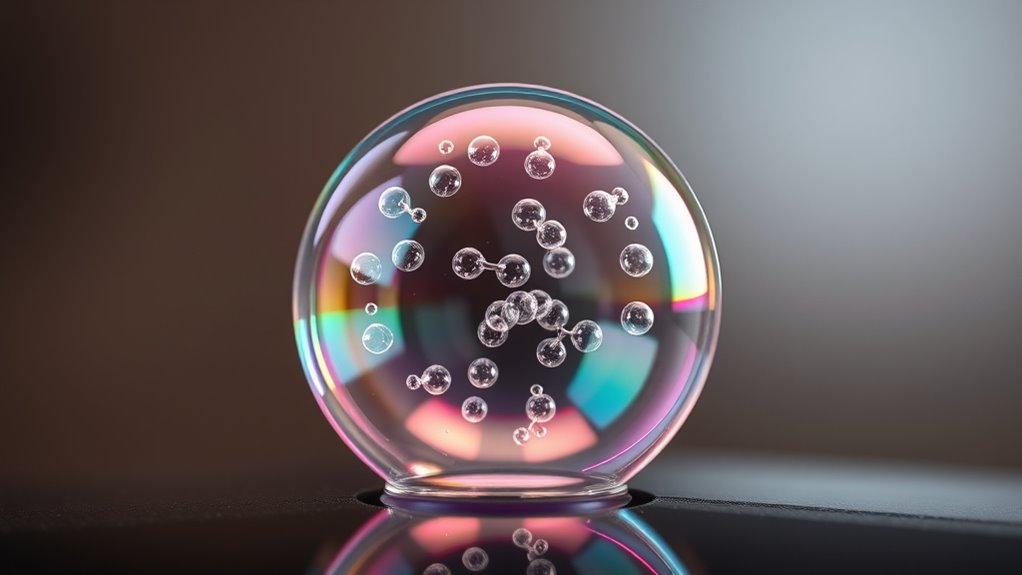
You’ll notice that surfactant molecules have two distinct ends: one loves water, while the other avoids it. This amphiphilic structure allows them to interact with both oil and water effectively. Understanding this dual nature is key to grasping how surfactants work in cleaning and emulsifying. Vetted – Deals Buy
Hydrophobic and Hydrophilic Ends
Ever wonder how surfactant molecules can interact with both water and oils? It all comes down to their structure, specifically the hydrophobic and hydrophilic ends. These ends are shaped during surfactant synthesis, influenced by molecular polarity. The hydrophobic tail repels water but attracts oils, while the hydrophilic head loves water and dissolves easily. This dual nature allows surfactants to act as bridges between water and greasy dirt, breaking down oils and lifting them away. Understanding this structure helps explain why soaps and detergents are so effective. The key is the molecule’s ability to orient itself at interfaces, reducing surface tension and enabling cleaning. This clever design is what makes surfactants essential in countless cleaning and personal care products. Additionally, the molecular polarity of surfactants determines how effectively they align at interfaces, impacting their cleaning efficiency.
Amphiphilic Molecule Structure
Surfactant molecules are uniquely structured with two distinct parts that work together to perform their cleaning functions. One part has a specific molecular polarity, making it hydrophilic, while the other is hydrophobic, avoiding water. This amphiphilic molecule structure allows surfactants to interact with both water and oils, forming micelles that trap dirt and grease. The molecular polarity determines how the surfactant aligns itself at surfaces and interfaces, which is vital for various surfactant applications. In cleaning products, this structure helps suspend oily residues in water so they can be rinsed away easily. The dual affinity of surfactants is essential for their effectiveness, allowing them to break down and remove stubborn stains and grime efficiently. Understanding surfactant structures is critical for developing more effective cleaning agents and environmentally friendly formulations.

Surfactants in Precision Cleaning: Removal of Contaminants at the Micro and Nanoscale
As an affiliate, we earn on qualifying purchases.
As an affiliate, we earn on qualifying purchases.
How Do Surfactants Interact With Water and Oil?
How do surfactants manage to bridge the gap between water and oil, which naturally repel each other? It all comes down to surfactant biochemistry and water-oil interactions. Surfactants have molecules with distinct ends: one loves water (hydrophilic), and the other loves oil (hydrophobic). When added, they position themselves at the interface, with their hydrophilic end in water and hydrophobic end in oil. This creates a stable bridge that reduces surface tension and allows water and oil to mix. These properties are essential for effective outdoor cleaning, especially when removing oily residues from gear or skin.
Surfactants act as molecular bridges, allowing water and oil to mix by reducing surface tension at their interface.
- Surfactants lower the energy barrier for mixing
- They form micelles that trap oil particles
- Their structure disrupts water-oil separation
- They enable cleaning by emulsifying oils
Surfactants in Precision Cleaning: Removal of Contaminants at the Micro and Nanoscale
As an affiliate, we earn on qualifying purchases.
As an affiliate, we earn on qualifying purchases.
What Are Hydrophobic and Hydrophilic Ends of Surfactants?
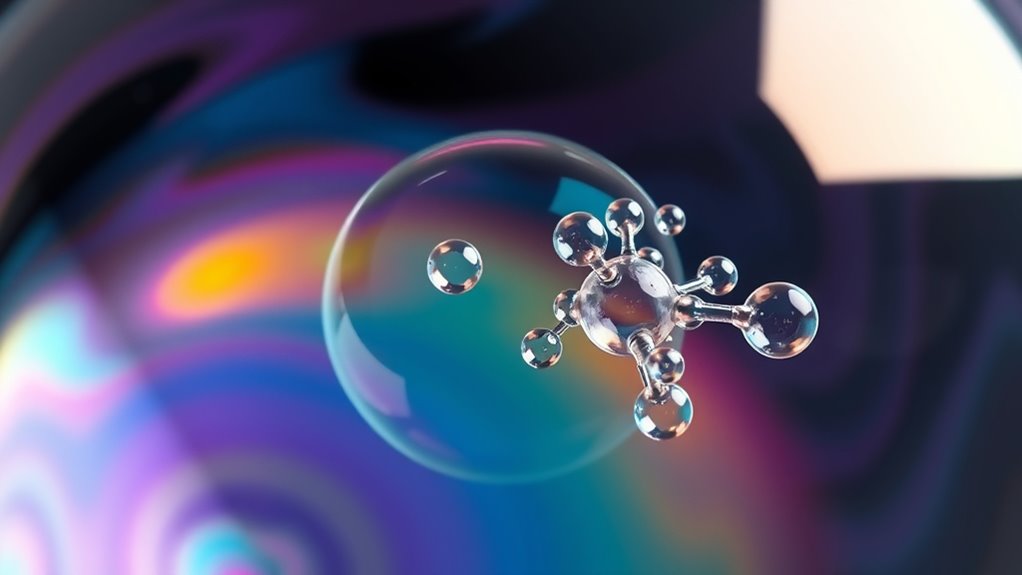
Surfactants have two distinct ends with different molecular structures that determine how they interact with water and oil. The hydrophilic end attracts water, while the hydrophobic end repels it but bonds with oil and grease. This balance plays a vital role in how effectively surfactants clean and remove dirt. Attention to detail is important in designing surfactants that optimize cleaning performance.
Molecular Structure Differences
Understanding the molecular structure of surfactants reveals why they can interact with both water and oil. The key lies in their molecular geometry and chemical bonding, which create distinct hydrophilic and hydrophobic ends. The hydrophilic head is polar, allowing it to bond with water molecules, while the hydrophobic tail is nonpolar, making it compatible with oils and grease. This dual nature enables surfactants to bridge water and oil, forming stable emulsions. The chemical bonding within these molecules ensures the separation of polar and nonpolar regions, giving rise to their unique properties.
- Molecular geometry determines the shape of surfactants, influencing how they orient at interfaces
- Chemical bonding creates polar heads and nonpolar tails within a single molecule
- Hydrophilic ends form hydrogen bonds with water
- Hydrophobic ends avoid water and attract oils
Interaction With Water and Oil
Have you ever wondered what makes surfactants able to interact with both water and oil? It all comes down to molecular polarity. Surfactants have two different ends: one is hydrophilic, meaning it loves water, and the other is hydrophobic, meaning it repels water and attracts oil. During surfactant synthesis, these molecules are designed with this dual nature so they can position themselves at the water-oil interface. The hydrophilic end interacts with water, while the hydrophobic end attaches to oil or grease. This unique structure allows surfactants to reduce surface tension and emulsify oils, making cleaning effective. Additionally, Free Floating properties of surfactants enable them to spread easily across surfaces and penetrate dirt and oils effectively. So, their ability to interact with both water and oil results from carefully crafted molecular polarity during surfactant synthesis.
Role in Cleaning Efficiency
Ever wonder how surfactants boost cleaning power? It all comes down to their two ends: hydrophobic and hydrophilic. The hydrophobic end repels water but bonds with oils and grease, helping lift stains from fabrics. The hydrophilic end loves water, allowing the dirt and grease to be rinsed away easily. This dual nature makes surfactants essential in cleaning efficiency. During surfactant synthesis, scientists optimize these ends to improve performance, including fabric softening and stain removal. The hydrophobic tail captures oils, while the hydrophilic head ensures water can carry away the grime. This balance results in cleaner clothes and surfaces with less effort. Understanding these ends highlights how surfactants work behind the scenes to make your cleaning routine more effective. Additionally, grasping the science of surfactants can inspire more innovative and environmentally friendly cleaning solutions.
How Do Micelles Form and Help Clean?

How do micelles form and assist in cleaning? When soap molecules encounter water and grease, micelle formation occurs. The soap’s hydrophobic tails cling to oily dirt, while the hydrophilic heads face outward into the water. This creates tiny, spherical structures called micelles. These micelles trap dirt and grease inside their cores, effectively encapsulating unwanted substances. This process enhances the cleaning mechanism by pulling grease away from surfaces and suspending it in water, allowing you to rinse it away easily. The formation of micelles is essential for soap’s effectiveness, turning oily messes into manageable particles that can be rinsed away with water, leaving your skin or surfaces clean. Micelle formation is a key step in the cleaning process that relies on the unique properties of soap molecules.
What Types of Surfactants Are Used in Soap and Detergents?

What types of surfactants are used in soap and detergents? You’ll find both natural surfactants and synthetic surfactants in cleaning products. Natural surfactants are derived from plants, such as coconut or palm oil, making them eco-friendly options. Synthetic surfactants, on the other hand, are man-made chemicals like sodium lauryl sulfate, which create effective cleaning power but may be harsher on skin and the environment. Some common types include:
- Anionic surfactants, known for their excellent grease-cutting abilities
- Nonionic surfactants, gentle and often used in delicate formulations
- Amphoteric surfactants, mild and often found in baby soaps
- Natural surfactants, derived from renewable resources for eco-conscious cleaning
Both types serve different purposes, depending on cleaning needs and environmental considerations. Surfactant chemistry plays a crucial role in determining the cleaning efficiency and environmental impact of different formulations.
How Do Surfactants Break Down Grease and Dirt?
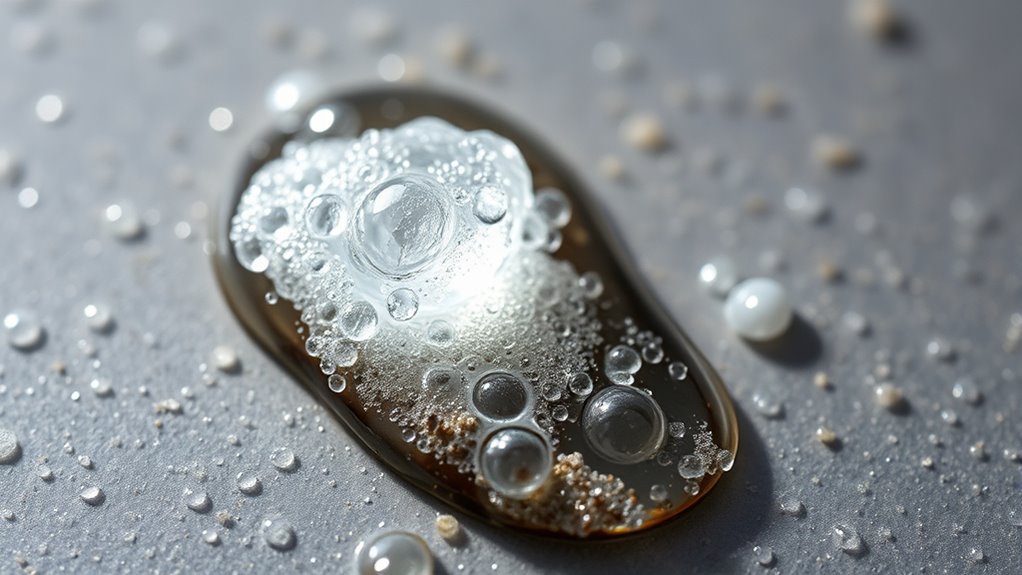
Surfactants work by reducing the surface tension between grease, dirt, and water, allowing them to mix more easily. When you use soap, surfactants surround and break down greasy residues through emulsification, making grease removal effortless. They form micelles—tiny spheres—that trap dirt and oil, lifting them from surfaces. The following table shows how surfactants facilitate this process:
| Step | Action | Result |
|---|---|---|
| 1 | Surfactant molecules attach to grease and dirt | Breaks their adhesion to surfaces |
| 2 | Surfactants form micelles | Encapsulate dirt and grease |
| 3 | Water washes away micelles | Clean surface |
| 4 | Emulsification occurs | Dirt and grease disperse |
| 5 | Surface is cleaned | Grease removal achieved |
This process makes cleaning effective by transforming stubborn dirt and grease into manageable particles.
What Is the Environmental Impact of Surfactants?
Have you ever wondered about the environmental footprint of surfactants? Many concern themselves with biodegradability and aquatic toxicity, which are crucial factors in evaluating their impact. Surfactants that aren’t biodegradable can persist in ecosystems, harming wildlife and polluting water sources. Aquatic toxicity becomes a problem when surfactants affect fish and aquatic invertebrates, disrupting ecosystems.
Considering surfactant biodegradability and aquatic toxicity is key to protecting ecosystems and wildlife.
- Some surfactants break down quickly, reducing long-term environmental harm
- Conventional surfactants may accumulate, posing risks to aquatic life
- Eco-friendly options aim for higher biodegradability to lessen impact
- Proper wastewater treatment can minimize surfactant-related pollution
Understanding these issues helps you make more sustainable choices and supports efforts to reduce environmental harm caused by surfactants.
What Are the Latest Innovations in Surfactant Technology?
Recent advances in surfactant technology are driven by the demand for more sustainable and efficient products. Researchers are developing surfactants with improved biodegradation processes, reducing environmental impact after use. These innovations focus on creating sustainable formulations that break down more quickly and completely in nature, minimizing pollution. New surfactants are derived from renewable sources, such as plant-based materials, instead of traditional petrochemicals. Additionally, formulas now incorporate biodegradable surfactants that maintain cleaning power while being eco-friendly. These innovations help industries meet stricter environmental regulations and consumer expectations for sustainability. By combining advanced chemistry with eco-conscious design, surfactant technology is evolving to deliver high performance without compromising the planet’s health. This progress guarantees safer, greener cleaning solutions for everyone.
Frequently Asked Questions
Are All Surfactants Safe for Skin and Health?
Not all surfactants are safe for your skin and health. Some can cause skin sensitivity or irritation, especially if you have sensitive skin. It’s important to check the chemical safety of the surfactants in your products. Look for gentle, skin-friendly options and avoid those with harsh chemicals. Being mindful of ingredient labels helps protect your skin from irritation and potential health issues caused by unsafe surfactants.
How Do Biodegradable Surfactants Differ From Conventional Ones?
Imagine your soap as a tiny army of cleaners, actively breaking down dirt and oils. Biodegradable surfactants differ from conventional ones because they break down naturally in the environment, turning into harmless substances. These eco-friendly alternatives help reduce pollution and protect aquatic life. By choosing biodegradable options, you’re supporting a cleaner planet, ensuring your cleaning routine is effective while being gentle on nature’s delicate balance.
Can Surfactants Cause Allergies or Skin Irritation?
Yes, surfactants can cause allergies or skin irritation, especially if you have sensitive skin. Some people might experience allergic reactions like redness, itching, or rash after contact with certain surfactants. To minimize this risk, choose products labeled for sensitive skin and avoid harsh or synthetic surfactants. Always test new products on a small skin area first, and if irritation occurs, discontinue use and consult a dermatologist.
What Are the Challenges in Developing Eco-Friendly Surfactants?
You face the challenge of creating eco-friendly surfactants, as only 10% of existing options are biodegradable. Developing these involves sourcing renewable raw materials, which can be limited or costly. Manufacturing processes must also be optimized to reduce environmental impact, but balancing performance with sustainability proves tricky. You need innovative methods to make eco-friendly surfactants both effective and affordable, all while protecting our planet’s resources.
How Do Surfactants Impact Aquatic Life and Water Quality?
You should know that surfactants can harm aquatic life by increasing toxicity to aquatic organisms and contributing to water pollution effects. When surfactants enter water bodies, they may disrupt the natural balance, harming fish, plants, and other aquatic creatures. Their presence can degrade water quality, making it unsafe for ecosystems. To protect aquatic environments, it is crucial to develop and use eco-friendly surfactants that minimize these negative impacts.
Conclusion
Now that you understand how surfactants work, you’re equipped to see soap’s magic everywhere. These tiny molecules unleash a cleaning power so incredible, it’s like a superhero saving your day from grease and grime! By grasping their structure and function, you’ll appreciate why soap is an unstoppable force in hygiene. So next time you wash your hands, remember—you’re wielding a microscopic army fighting dirt with superpowers!