Excess moisture is the main cause of warped and damaged wood floors. When humidity levels climb or water spills aren’t promptly cleaned, wood absorbs moisture, causing it to expand, warp, or buckle. Poor ventilation and leaks only make the problem worse. To protect your floors, control moisture with barriers, proper cleaning, ventilation, and regular checks. Keep going to discover more tips for preventing costly damage and maintaining your wood floors beautifully.
Key Takeaways
- Excess moisture causes wood expansion, leading to warping, buckling, and gaps in floors.
- Proper moisture barriers and ventilation prevent water infiltration and humidity buildup.
- Regularly monitor indoor humidity levels (35-55%) to minimize wood movement.
- Immediate cleanup of spills and correct cleaning techniques protect floors from water damage.
- Long-term environmental control and inspections help maintain floor stability and prevent warping.

ROBERTS 70-115 Moisture Barricade Underlayment Film, for Vinyl, Laminate SPC, Engineered Wood Floors, 6 mil. Thick, Polyethylene, 120 Sq. Foot Roll, Black
For use as a vapor barrier when installing Vinyl, laminate, SPC and engineered wood flooring
As an affiliate, we earn on qualifying purchases.
As an affiliate, we earn on qualifying purchases.
How Moisture Affects Your Wood Floors

Moisture can substantially impact the stability and appearance of your wood floors. When moisture levels rise, your wood boards can experience wood expansion, causing gaps or buckling. Excess moisture weakens the bond between planks and can lead to warping over time. Installing moisture barriers during installation helps prevent water from seeping into the subfloor, reducing the risk of damage. These barriers act as a shield, controlling moisture entry and maintaining a balanced environment for your floors. Without proper moisture control, your wood floors are vulnerable to changes in humidity, which can distort their shape and surface. Regularly monitoring humidity levels and using moisture barriers where needed keeps your floors stable, beautiful, and long-lasting. Proper moisture control techniques are essential for maintaining the integrity of your wood flooring over the years.

TempPro TP50 Digital Hygrometer Indoor Thermometer Room Thermometer and Humidity Gauge with Temperature Humidity Monitor(Previously ThermoPro)
Wellness Indicator: This humidity meter with humidity level icon indicates air conditions – DRY/COMFORT/WET, allowing this humidity sensor…
As an affiliate, we earn on qualifying purchases.
As an affiliate, we earn on qualifying purchases.
What Causes Excess Moisture in Your Home?
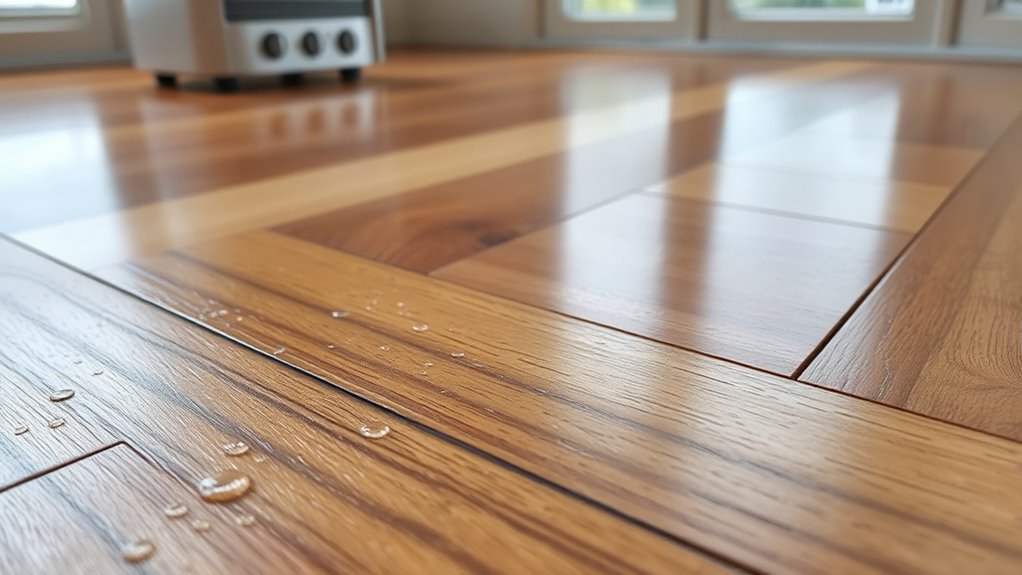
Excess moisture in your home often results from everyday activities like cooking, showering, and laundry, which release water vapor into the air. This moisture can accumulate if your home has air leaks or plumbing leaks, making it harder for humidity to escape. Air leaks around windows, doors, or vents allow humid air to enter and trap moisture inside. Plumbing leaks from pipes or fixtures add continuous water sources, increasing indoor humidity. To prevent excess moisture, check for:
Excess indoor moisture from daily activities can cause damage; check for leaks and improve ventilation to keep your home dry.
- Gaps around windows and doors
- Damaged or unsealed vents
- Leaking pipes or fixtures
- Poor ventilation systems
Addressing these issues helps control humidity levels, preventing wood floors from absorbing too much moisture and warping over time. Being proactive keeps your home dry and your floors safe. Additionally, understanding the importance of dehumidification can further help in maintaining proper moisture levels indoors.

Impresa Wood Water Mark Remover Spray – Water Ring Removal & Wood Floor Cleaner – Concentrated Oil Formula & Furniture Polish – 4 fl oz, Pack of 1
Reliable Furniture Care: IMPRESA Water Mark Remover Wood Cleaner Spray rejuvenates and protects wooden furniture with ease. Its…
As an affiliate, we earn on qualifying purchases.
As an affiliate, we earn on qualifying purchases.
How to Spot Water Damage and Warping
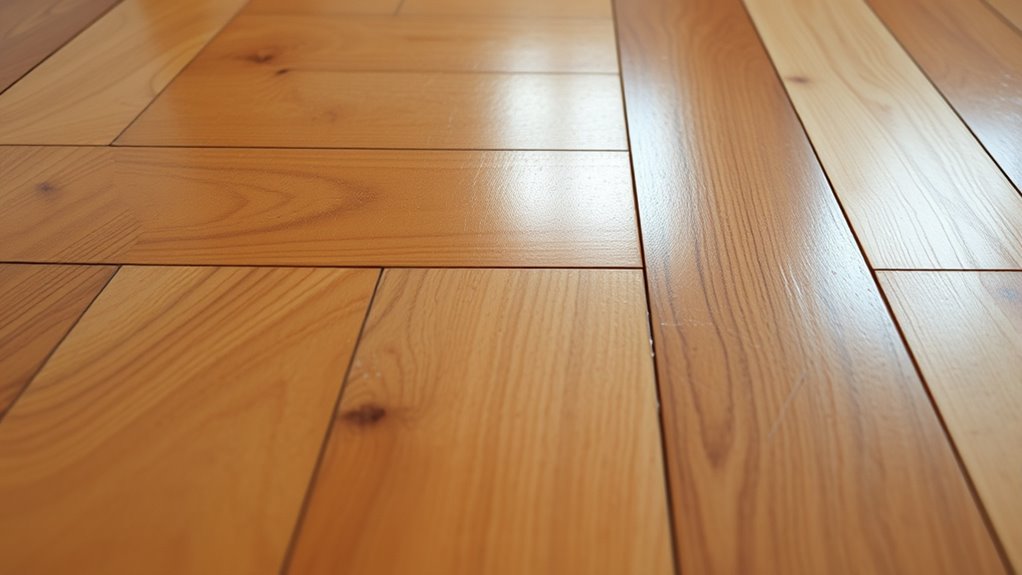
Water damage and warping often show up as visible signs on your wood floors, making it important to inspect regularly. Look closely at the grain pattern; warping can cause the boards to buckle or lift, disrupting the smooth surface. You might also notice areas where the grain appears distorted or uneven. Color fading is another indicator—water stains can dull the natural hue or create dark spots. Pay attention to changes in the floor’s texture, such as softness or swelling. These signs are often subtle at first but can worsen if ignored. Regularly checking for irregularities in the grain pattern and discoloration helps you catch water damage early, preventing more extensive warping and costly repairs down the line. Additionally, understanding smart home technology can help you monitor humidity and water leaks remotely, enabling faster detection and response.

2500 Sq.Ft Dehumidifier for Basement with Drain Hose Max 34 Pints, VEAGASO Dehumidifiers for Home, Large Room, Bathroom, Bedroom, Three Modes, Intelligent Humidity Control, Dry Clothes, 24HR Timer
Three Smart Modes Dehumidifiers – Our dehumidifier for basements come with 3 smart modes that make choosing between…
As an affiliate, we earn on qualifying purchases.
As an affiliate, we earn on qualifying purchases.
Simple Ways to Protect Your Floors From Moisture

To keep your wood floors looking their best, it’s essential to stay on top of moisture. Make sure to keep the floors dry and wipe up spills immediately. Controlling indoor humidity levels also helps prevent warping and damage over time. Additionally, using proper ventilation can help manage moisture and maintain a stable environment for your floors.
Keep Floors Dry
Moisture is one of the biggest threats to your wood floors, so taking steps to keep them dry is essential for their longevity. Regularly clean your floors to remove dirt and moisture that can seep in and cause warping. Use proper wood floor cleaning techniques, avoiding excess water, which can lead to swelling. Applying wood floor polishing not only enhances shine but also creates a protective barrier against moisture. To further protect your floors, consider these tips:
- Wipe up spills immediately
- Use doormats to trap dirt and moisture
- Avoid walking on wet or damp shoes
- Maintain good ventilation to prevent humidity buildup
- Be aware that proper ventilation helps reduce humidity and protect wood from moisture damage
Staying vigilant with these simple steps helps prevent moisture from damaging your wood floors over time.
Control Indoor Humidity
Controlling indoor humidity is essential to protecting your wood floors from damage caused by excess moisture. When humidity levels fluctuate, wood can expand or contract, leading to warping or gaps. To maintain ideal humidity control, use a hygrometer to monitor indoor moisture levels, ideally between 35% and 55%. Humidity control devices like humidifiers or dehumidifiers help stabilize the environment. Keep vents and windows well-sealed to prevent drafts that cause humidity swings. Avoid placing heat sources directly beneath floors, as they can dry out the wood unevenly. Consistent humidity levels minimize wood expansion and contraction, preserving your floors’ stability and appearance. By managing indoor humidity, you reduce the risk of moisture-related damage and prolong the life of your wood flooring. Innovative European cloud servers are designed to support sustainable and secure solutions, emphasizing the importance of environmental control in technology environments.
What to Do When Water Damage Occurs

When water damage occurs on your wood floors, quick action is essential to minimize damage and prevent long-term issues. First, immediately remove any standing water using towels or a wet/dry vacuum. Then, avoid walking on the wet surface to prevent further damage. It’s important to:
- Dry the affected area thoroughly with fans and dehumidifiers
- Avoid using heat or high humidity, which can cause warping
- Inspect for swelling or buckling and address issues promptly
- Consider professional hardwood cleaning and assessment for extensive damage
- Ensure proper ventilation considerations to facilitate drying and prevent mold growth
If you’re planning a new wood floor installation, ensure the subfloor is completely dry beforehand. Acting swiftly helps preserve your flooring’s integrity and minimizes costly repairs later.
Keeping Moisture Levels in Check Long-Term

To keep your wood floors looking their best for years to come, maintaining consistent moisture levels is essential. Use moisture meters regularly to monitor humidity in your home, especially during seasonal changes. This ensures your wood doesn’t absorb excess moisture or dry out, which can cause warping or gaps. Applying quality wood floor seals creates a protective barrier against moisture infiltration, helping stabilize the wood’s environment. Keep indoor humidity between 35-55% for ideal conditions. Regularly check for signs of moisture issues, like buckling or cupping, and address them promptly. Proper airflow around the unit and maintaining a clean environment further help prevent excess moisture buildup. By staying proactive with moisture meters and sealing, you prevent long-term damage and preserve the beauty and integrity of your wood floors. Consistent moisture management is your key to durability.
Tips for Maintaining Beautiful, Damage-Free Wood Floors
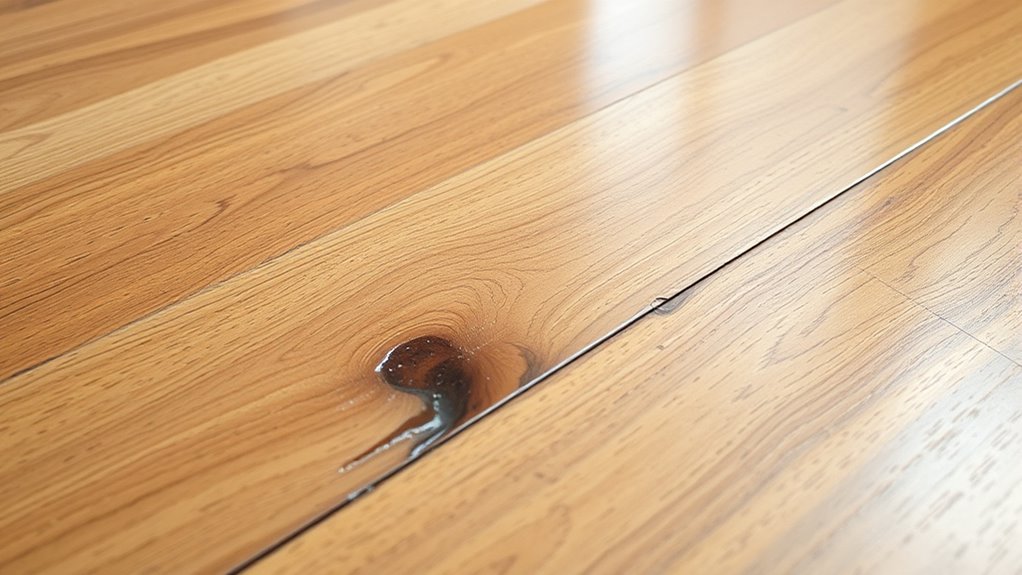
Maintaining the beauty of your wood floors requires regular care and attention to detail. To prevent damage caused by wood expansion, keep moisture levels stable and use moisture barriers in high-humidity areas. Proper cleaning is essential—use damp mops instead of soaking wet ones. Place protective pads on furniture legs to avoid scratches. Keep your home’s humidity between 35-55% to minimize wood movement. Regularly inspect and replace worn moisture barriers to prevent moisture intrusion. Avoid high heels and pet claws that can scratch or dent the surface. Use area rugs in high-traffic zones to reduce wear. Additionally, understanding the thermal behavior of wood can help you better anticipate and manage expansion and contraction caused by temperature fluctuations. By controlling moisture and protecting the surface, you’ll preserve your floors’ natural beauty and prevent warping or buckling over time.
Frequently Asked Questions
Can Seasonal Humidity Changes Damage Wood Floors?
Yes, seasonal humidity fluctuations can damage your wood floors. When humidity drops, the wood contracts, leading to gaps, while increased humidity causes expansion, which can warp or buckle the boards. You can prevent this by maintaining consistent humidity levels and using a humidifier or dehumidifier as needed. Properly managing moisture helps minimize wood expansion and contraction, keeping your floors looking great and intact through seasonal changes.
How Quickly Does Water Damage Become Permanent?
Water damage can become permanent within a few days if water absorption and moisture migration are severe. You might notice warping, cupping, or staining quickly, especially if water seeps into the wood and isn’t dried promptly. To prevent lasting damage, address spills immediately, control humidity levels, and guarantee proper ventilation. Acting fast minimizes moisture migration and helps preserve your wood floors’ integrity, avoiding costly repairs later on.
Are Certain Wood Floor Types More Resistant to Moisture?
Certain wood species and flooring finishes offer better resistance to moisture. For example, hardwoods like oak and hickory are more moisture-resistant than softer woods like pine. Additionally, finishes such as polyurethane or epoxy create a protective barrier, preventing water from penetrating the wood. You should choose these durable options if you want your floors to withstand moisture exposure, reducing warping and damage over time.
What Are the Signs of Hidden Water Damage Beneath Floors?
Imagine your floor whispering secrets of hidden trouble. You might notice squeaks, buckling, or dark spots—clues hiding water damage. Beneath the surface, look for signs like hidden mold or subfloor rot, which can silently undermine your home’s foundation. Keep an eye out for musty smells or uneven boards, because these are your warning signals that moisture is lurking below, ready to cause more damage if ignored.
How Does Indoor Plant Watering Affect Floor Moisture Levels?
When you water your indoor plants, plant transpiration increases humidity levels in your home. This added moisture can raise the moisture content in your floors, especially if you don’t manage humidity properly. To prevent warping or damage, use a dehumidifier or ensure good ventilation. Regularly monitor your floor’s moisture levels and avoid overwatering plants, as excess humidity can lead to warping and other moisture-related issues.
Conclusion
If you ignore the signs and let moisture accumulate, your beautiful wood floors could face irreversible damage. But don’t wait until it’s too late—staying vigilant and taking quick action can save your investment. The key is understanding what causes excess moisture and how to keep it in check. Are you ready to protect your floors and avoid costly repairs? The next step could make all the difference—are you prepared to act now?