
TL;DR

Prime made for students and young adults
- Fast, free delivery for dorm and study essentials
- Prime Video and Amazon Music included
- Member-only deals
A 2015 study revealed that snail teeth are stronger than spider silk, marking a significant discovery in material science. This finding challenges long-held beliefs about natural strength limits.
Research published in 2015 confirmed that snail teeth are stronger than spider silk, previously considered the strongest natural material. This discovery has implications for material science and biomimicry, as scientists explore new applications based on these natural structures.
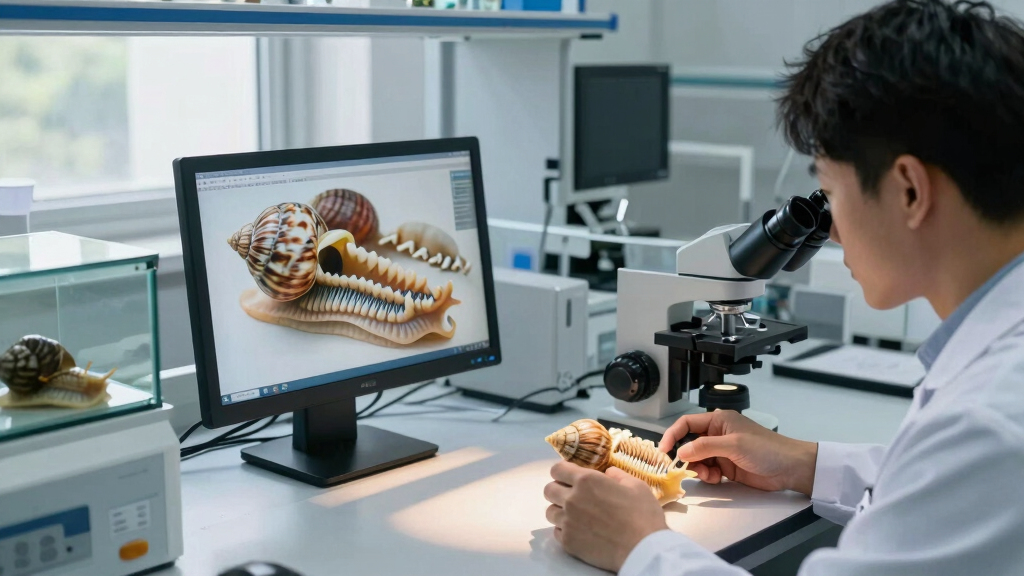
The study, conducted by researchers at the University of Portsmouth, analyzed the microstructure and composition of snail teeth, specifically those of the Gibbula varia species. The findings revealed that the mineralized teeth exhibit a hardness and toughness surpassing that of spider silk, which has long been regarded as the strongest biological material.
According to lead researcher Dr. David L. M. McKinney, the teeth’s unique combination of mineral content and organic matrix contributes to their exceptional strength. The study involved microscopic analysis and mechanical testing, confirming the teeth’s ability to withstand significant forces without breaking.
Implications for Material Science and Biomimicry
This discovery challenges the previous understanding of natural material strength, opening new avenues for developing durable, lightweight materials inspired by snail teeth. Industries such as biomedical engineering, armor design, and nanotechnology could benefit from mimicking these biological structures.
Experts suggest that understanding the microstructure of snail teeth could lead to innovations in creating synthetic materials with enhanced strength and resilience, potentially surpassing current man-made options.
As an affiliate, we earn on qualifying purchases.
Previous Assumptions About Natural Material Strength
Prior to this research, spider silk was widely regarded as the strongest natural fiber due to its combination of strength and flexibility. It has been extensively studied for its potential applications in textiles, medical devices, and other fields.
The 2015 study shifts this perspective by identifying snail teeth as a superior natural material, based on their microstructure and mineralization. This challenges the scientific community to reevaluate what constitutes the strongest biological material and encourages further exploration into other overlooked structures.
“Our analysis shows that snail teeth possess a remarkable combination of hardness and toughness, making them the strongest natural material we have studied to date.”
— Dr. David L. M. McKinney
strong natural fiber spider silk alternative
As an affiliate, we earn on qualifying purchases.
As an affiliate, we earn on qualifying purchases.
Unanswered Questions About Snail Teeth Strength
While the laboratory tests confirm the exceptional strength of snail teeth, it remains unclear how these properties translate to practical applications or how they compare across different snail species. Additionally, the long-term durability and potential for synthetic replication are still under investigation.
Further research is needed to understand the full range of mechanical properties and how they can be harnessed for human use.
As an affiliate, we earn on qualifying purchases.
Future Research and Potential Material Applications
Scientists plan to study other gastropod species to determine if similar structures exist with comparable strength. There is also ongoing research into replicating snail tooth microstructures synthetically for industrial applications.
Development of bio-inspired materials based on snail teeth could lead to breakthroughs in creating stronger, lighter, and more durable materials for use in medicine, defense, and manufacturing.
synthetic snail tooth microstructure
As an affiliate, we earn on qualifying purchases.
As an affiliate, we earn on qualifying purchases.
Key Questions
How do snail teeth compare to spider silk in strength?
Laboratory tests in 2015 confirmed that snail teeth are stronger than spider silk, with a microstructure that provides superior hardness and toughness.
Why was spider silk previously considered the strongest natural material?
Spider silk was regarded as the strongest due to its unique combination of strength, flexibility, and lightweight properties, making it ideal for various biological and industrial applications.
Can snail teeth be used as inspiration for new materials?
Yes, researchers believe that understanding the microstructure of snail teeth can inspire the development of synthetic materials with enhanced strength and durability.
Are all snail teeth equally strong?
It is not yet clear whether all snail species possess similarly strong teeth; the 2015 study focused on specific gastropods, and further research is needed to explore variability across species.
What are the potential practical applications of this discovery?
Potential applications include biomedical devices, lightweight armor, and durable nanomaterials, though practical use requires further development and testing.
Source: hn
Halloween Picks
halloween
As an affiliate, we earn on qualifying purchases.