Your sanding quality depends more on choosing the right abrasive than on investing in expensive tools because the abrasive type and grit directly influence finish smoothness, efficiency, and surface durability. High-quality abrasives last longer, cut better, and need fewer passes, saving you time and hassle. Cheaper abrasives wear out faster, causing rework and lower results. When you understand how abrasive selection impacts your project, you’ll see why the right choice makes all the difference—more insights await if you continue exploring.
Key Takeaways
- The abrasive’s durability directly affects surface finish, often more than the tool’s cost or quality.
- Proper abrasive selection ensures efficient cutting and smoother surfaces, reducing rework regardless of tool price.
- High-quality abrasives maintain consistent performance longer, impacting final surface quality more than the tool’s expense.
- Abrasive compatibility with material and grit choice determines sanding outcome, overshadowing tool cost considerations.
- Investing in durable abrasives yields better results and efficiency than simply opting for more expensive tools.
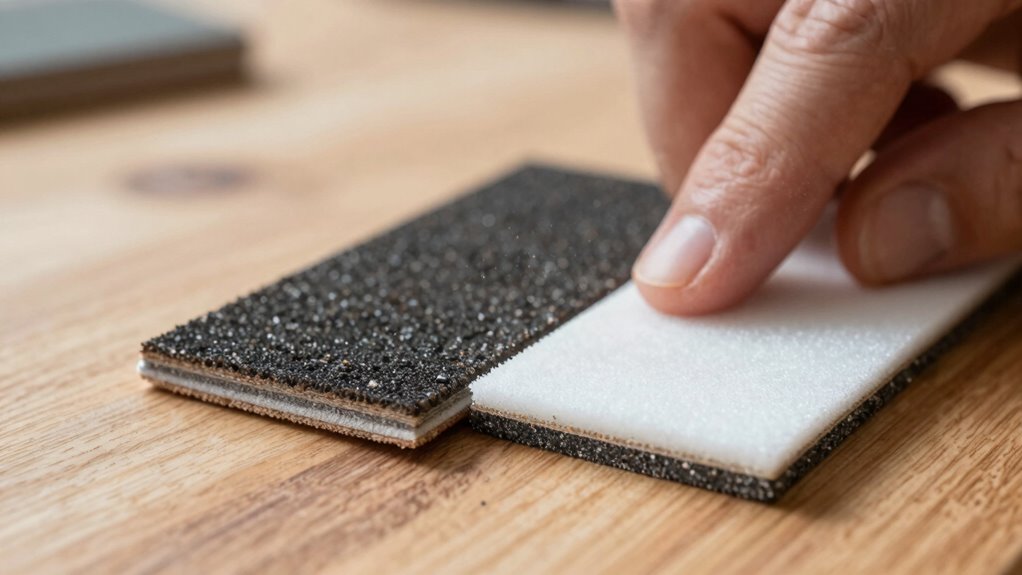
Choosing an abrasive suited to your material and finish goals, you ensure a smoother surface with fewer passes, saving you time and effort. A key factor that often gets overlooked is abrasive durability. The durability of an abrasive determines how long it will last under repeated use and how well it maintains its cutting ability. Higher-quality abrasives tend to last longer, allowing you to complete your project without constantly switching out worn-out tools. This durability also means less waste and fewer replacements, which can save you money in the long run. When your abrasive wears out quickly, you may think you’re saving money by opting for cheaper options, but the reality is that frequent replacements and additional sanding can quickly add up. abrasive durability plays a crucial role in achieving consistent performance and a professional finish. Investing in a more durable abrasive ensures better surface preparation, leading to a polished, high-quality look. Additionally, abrasive selection influences the overall efficiency and outcome of your sanding process, making it essential to choose wisely. While tool cost might seem like the main expense in your sanding projects, it’s often the abrasive itself that makes the bigger difference in the final result. A less expensive tool might seem appealing initially, but if its abrasive wears out quickly or doesn’t produce a smooth surface, you’ll end up redoing the work or applying extra coats of finish. High-quality abrasives, though sometimes pricier upfront, deliver better surface preparation, reducing the need for additional work. They cut more efficiently, last longer, and produce a more refined finish. This means that your investment in a good abrasive ultimately pays off through improved quality and efficiency, rather than just the cost of the tool itself. Moreover, choosing the right abrasive grit can significantly impact the speed and quality of your sanding, making it a critical consideration in your project planning. Selecting the appropriate abrasive material compatibility ensures optimal results tailored to your specific project needs.

Benchmark Abrasives 4.5" x 7/8" Zirconia Type 29 Flap Discs, 40 Grit
HIGH-DENSITY JUMBO DESIGN: Type 29 flap discs with a high-density jumbo layout support surface blending, beveling, grinding, deburring,…
As an affiliate, we earn on qualifying purchases.
As an affiliate, we earn on qualifying purchases.
Frequently Asked Questions
How Does Abrasive Material Impact Sanding Durability?
Choosing the right abrasive grain directly impacts sanding durability because it determines how well the abrasive resists wear and maintains its cutting edge. A high-quality abrasive material produces a more consistent surface finish and reduces the need for frequent replacements. When you select an appropriate abrasive, you guarantee a longer-lasting tool that delivers a smoother, more durable surface finish, ultimately saving you time and money in your sanding projects.
Can Cheaper Abrasives Outperform Expensive Ones?
Cheaper abrasives can sometimes outperform expensive ones regarding abrasive longevity and cost effectiveness, especially for light or short-term projects. However, for demanding tasks, high-quality abrasives typically last longer and provide smoother finishes, making them more cost-effective over time. It’s vital to match abrasive type and quality to your specific project needs, as choosing the right abrasive ensures better results and overall value, regardless of initial cost.
What’s the Best Abrasive for Delicate Surfaces?
For delicate surfaces, you should choose a gentle abrasive like fine-grit sponge or non-woven pads. These abrasives provide ideal surface preparation without causing damage, ensuring abrasive compatibility with sensitive materials. You avoid scratches and preserve surface integrity by selecting the right abrasive. Always test on a small area first to confirm compatibility, and use light pressure for the best results, maintaining quality and preventing surface harm.
How Often Should Abrasives Be Replaced During Sanding?
Ever wondered how often you should replace abrasives during sanding? Typically, you’ll need to change them when their abrasive lifespan diminishes, which usually means replacing them after several uses or when they become clogged or worn out. Replacement frequency depends on the material you’re working on and the abrasive type. Keep an eye on performance—if sanding slows or scratches appear, it’s time for a fresh abrasive to maintain peak results.
Do Abrasive Shapes Affect Sanding Efficiency?
Yes, abrasive shapes markedly affect sanding efficiency. You’ll find that abrasive texture and shape customization help match the tool to your specific task, improving material removal and finish quality. For example, contoured shapes can reach tight spots, while flat abrasives are better for broad surfaces. Choosing the right shape allows you to optimize your sanding process, reducing time and effort while achieving a smoother, more consistent finish.

4 Inch Diamond Polishing Pads with 5/8’’-11 Backer Pad, 12PCS Wet/Dry Granite Stone Polish Pad Kit for Drill, Grinder, Polisher, 50-6000 Grit Polishing Pad for Concrete Marble Rock Countertop Quartz
HIGH PERFORMANCE GRANITE POLISHING PADS: The granite diamond polishing pads are made of premium diamond and resin. Fast…
As an affiliate, we earn on qualifying purchases.
As an affiliate, we earn on qualifying purchases.
Conclusion
Choosing the right abrasive is like selecting the perfect brush for a masterpiece—you need quality over cost to achieve a smooth, flawless finish. No matter how fancy your tool, if the abrasive isn’t up to par, your work suffers. Think of it as planting seeds—quality abrasives nurture better results, ensuring your project blossoms beautifully. Focus on the right abrasive, and you’ll turn rough surfaces into polished works of art with less effort and better results.

Walrus Oil – Non-Woven Sanding/Polishing Pads for Woodworking and Metal Buffing, Size 6"x9" – Pack of 10 (0000 Non-Abrasive)
Fine Sanding – Sand and polish wood surfaces without the mess of steel wool.
As an affiliate, we earn on qualifying purchases.
As an affiliate, we earn on qualifying purchases.

Romeda 8-Pack Sanding Sponge, Four Grits Per Pack 60/80/120/220, Washable and Reusable Handmade Sandpaper Block, Drywall Sandpaper Blocks for Wooden Drywall Sheetrock and Metal Glazing
【ASSORTED GRIT SANDING BLOCKS】 8 sand blocks, 4 sizes from coarse to ultra-fine sand, 60/80/120/220 grit, 2 blocks…
As an affiliate, we earn on qualifying purchases.
As an affiliate, we earn on qualifying purchases.