Finding the right science experiment kit for students involves balancing engagement, educational value, and safety. The National Geographic Mega Science Lab stands out as the best overall choice, offering a wide variety of experiments suitable for kids aged 8-12. For those interested in electronics, the Sntieecr Electric Circuit Motor Kit provides hands-on STEM learning, while the National Geographic Amazing Chemistry Set excels for budding chemists. Many kits face tradeoffs between complexity, cost, and the range of experiments—more extensive kits may be more educational but also more complicated. Keep reading for a detailed breakdown of these options and help you find the best fit for your student’s interests and skill level.

Prime made for students and young adults
- Fast, free delivery for dorm and study essentials
- Prime Video and Amazon Music included
- Member-only deals
Key Takeaways
- Top kits stand out for their variety of experiments and educational depth, especially for specific interests like chemistry or physics.
- Price varies significantly; more comprehensive kits tend to cost more but offer better long-term value for dedicated learners.
- Safety and age-appropriateness are crucial, with some kits better suited for younger children and others for high school students.
- Ease of setup and durability impact ongoing usability—kits with complex assembly or fragile components may be less practical.
- Brands like National Geographic consistently offer reliable quality, but lesser-known options can provide unique experiments at a lower cost.
| National Geographic Mega Science Lab with 75 Experiments for Kids 8-12 |  | Best Overall for Diverse Science Exploration | Number of Experiments: 75 | Age Range: 8-12 | Includes: Earth science, chemistry, and science magic experiments, rock and mineral specimens | VIEW LATEST PRICE | See Our Full Breakdown |
| Sntieecr Electric Circuit Motor Kit – STEM Educational Science Experiment Set for Kids |  | Best for Hands-On Electrical Circuit Learning | Includes: instructions, crocodile clip leads, bulbs, motors, switches, propellers, buzzer, bulb holders, battery holders | Battery: AA size 1.5V batteries (not included) | Recommended Age: 8+ years | VIEW LATEST PRICE | See Our Full Breakdown |
| National Geographic Earth Science Kit with 100+ Activities for Kids 8-12 | 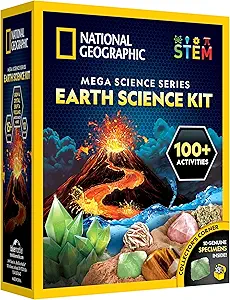 | Best for In-Depth Earth Science Exploration | Number of Activities: 100+ | Recommended Age: 8-12 | Includes: Crystal growing, volcano experiments, rock collection, geologic dig kits | VIEW LATEST PRICE | See Our Full Breakdown |
| National Geographic Amazing Chemistry Set with 100+ Experiments for Kids Ages 8-12 |  | Best for Creative Chemistry Exploration | Number of Experiments: 100+ | Age Range: 8-12 | Includes: Test tubes, beakers, pipettes, crystal growing materials | VIEW LATEST PRICE | See Our Full Breakdown |
| EUDAX Physics Science Lab Learning Circuit Kit, Electricity Experiment Set for Students |  | Best for Fundamental Electrical Principles | Includes: Electrical components, English instructions, plastic storage box | Note: Does not contain two AA batteries | Suitable Age: 7th to 9th grade | VIEW LATEST PRICE | See Our Full Breakdown |
| STEM Electric Circuit Kits – 8 Experiments in 7 Sets for Students |  | Best for Independent Learning and Basic Electrical Concepts | Number of Experiments: 8 | Number of Sets: 7 | Recommended Age: 8+ | VIEW LATEST PRICE | See Our Full Breakdown |
| National Geographic Science Magic Kit – 100+ Experiments and Magic Tricks for Kids |  | Best for Fun and Creative STEM Learning Through Magic | Number of Experiments: 100+ | Magic Tricks Included: 20 | Bonus Experiments: 85+ | VIEW LATEST PRICE | See Our Full Breakdown |
| UNGILINGA 150 Experiments Science Kits for Kids, STEM Educational Project Toys for Boys and Girls |  | Best for Wide Range of STEM Topics and Sustained Engagement | Number of Experiments: 150 | Suitable for: Kids | Educational Focus: STEM | VIEW LATEST PRICE | See Our Full Breakdown |
| EUDAX School Physics Labs Basic Electricity Discovery Circuit and Magnetism Experiment Kits for High School Students |  | Best for High School-Level Electricity and Magnetism | Items Included: 56 for Electricity, 21 for Magnetism, 2 repair tools | Manual: Color page manual | Batteries Needed: 3 AA batteries (not included) | VIEW LATEST PRICE | See Our Full Breakdown |
| Evviva Sciences Microbiology Science Project Kit with Pre-Poured Agar Plates |  | Best for Microbiology Experiments with Ready-to-Use Plates | Agar Plates: 10 pre-poured | Cotton Tipped Sticks: 10 | Pipette: 1 | VIEW LATEST PRICE | See Our Full Breakdown |
| The Everything Kids’ Science Experiments Book: Boil Ice, Float Water, Measure Gravity | 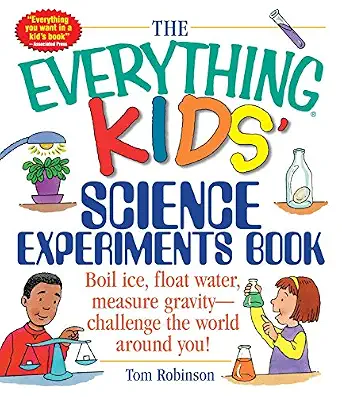 | Best for Curious Young Minds Exploring Basic Concepts | VIEW LATEST PRICE | See Our Full Breakdown | |||
| Science Kit for Kids, 80 Experiments, STEM Educational Toy with Scientific Tools, Birthday Gift for Ages 6-9 |  | Best Value for Extensive Hands-On Science Exploration | Number of Experiments: 80 | Age Range: 6-9 years | Included Components: Goggles, chemicals, petri dishes, balloons, pigments, effervescent tablets, measuring cups, test tubes, gloves, rubber bands, droppers, straws, toothpicks, rotary needles, measuring spoons, rainbow candy, color changing flower | VIEW LATEST PRICE | See Our Full Breakdown |
| National Geographic Junior Chemistry Set with 50 Experiments for Kids |  | Best for Early Chemistry Exploration with Household Items | Number of Experiments: 50 | Lab Tools: 20+ | Recommended Age: 4+ | VIEW LATEST PRICE | See Our Full Breakdown |
| Mysterystone Electricity and Magnetism Science Experiment Kit for Kids |  | Best for Kids Interested in Electricity and Magnetism Projects | Number of Items: 55 | Manual Included: Yes | Suitable for: Kids, Students | VIEW LATEST PRICE | See Our Full Breakdown |
More Details on Our Top Picks
National Geographic Mega Science Lab with 75 Experiments for Kids 8-12
This comprehensive kit stands out for its wide range of 75 experiments spanning earth science, chemistry, and magic tricks, making it ideal for curious kids eager to explore multiple scientific fields. Compared with the National Geographic Earth Science Kit, it offers a broader scope, including magic experiments to boost engagement. However, its extensive content can be overwhelming for younger children or beginners, and some experiments may require adult supervision due to messiness or safety concerns. The inclusion of real rock and mineral specimens adds a tactile dimension that enhances learning, while the bonus activities promote creativity beyond the core experiments. Overall, this kit suits ambitious learners ready for in-depth exploration, but less so for those seeking quick, simple projects.
Pros:- Includes 75 experiments covering earth science, chemistry, and magic, providing extensive variety
- Contains real rock, mineral, and crystal specimens for tactile, hands-on learning
- Encourages creativity with magic tricks and science activities
Cons:- Requires adult supervision for many experiments due to potential mess and safety issues
- Some experiments need household items not included, adding preparation time or extra shopping
- Limited safety guidance may leave parents unsure about precautions
Best for: Families or educators seeking a versatile, all-in-one science kit that covers multiple disciplines for ages 8-12
Not ideal for: Parents looking for a quick, low-mess activity or for children under 8 who may find the experiments complex
- Number of Experiments:75
- Age Range:8-12
- Includes:Earth science, chemistry, and science magic experiments, rock and mineral specimens
Our verdict“This kit is ideal for eager young scientists ready to dive into multiple science topics with plenty of experiments, though it demands parental oversight for safety and mess management.”
Sntieecr Electric Circuit Motor Kit – STEM Educational Science Experiment Set for Kids
This kit excels at teaching fundamental electrical principles through interactive building and exploration, making it a strong choice for children interested in electronics. Unlike the National Geographic Mega Science Lab, which offers broad scientific topics, this set focuses intensely on circuits and electrical components, providing depth for budding engineers. Its variety of parts, including bulbs, motors, and switches, supports multiple project types, fostering problem-solving skills. However, safety requires close supervision, as the electrical components pose risks of short circuits or burns if mishandled. Batteries are not included, which can be inconvenient, especially for quick classroom setups. This kit is best suited for students or hobbyists eager to understand and experiment with electricity in a controlled, educational way.
Pros:- Includes a variety of electrical components for multiple experiments and projects
- Promotes STEM learning through practical circuit building
- Suitable for classroom and at-home educational use
Cons:- Requires adult supervision due to electrical safety risks
- Batteries are not included, adding extra cost or planning
- Potential for short circuits if used improperly
Best for: Middle school students and educators looking for a detailed, hands-on introduction to electrical circuits
Not ideal for: Parents seeking a simple or low-maintenance activity, as it requires supervision and additional batteries
- Includes:instructions, crocodile clip leads, bulbs, motors, switches, propellers, buzzer, bulb holders, battery holders
- Battery:AA size 1.5V batteries (not included)
- Recommended Age:8+ years
- Voltage Range:1.5V-3V
Our verdict“This kit is perfect for middle schoolers eager to master electrical concepts through hands-on experimentation, provided adult supervision is available.”
National Geographic Earth Science Kit with 100+ Activities for Kids 8-12
Compared to the National Geographic Mega Science Lab, this Earth Science-specific kit offers a more focused collection of over 15 detailed experiments like volcano eruptions and geologic digs, making it ideal for young explorers particularly interested in geology and earth sciences. Its extensive activity list—over 100 options—keeps children engaged through hands-on experiments and a comprehensive learning guide. While the variety is impressive, some activities may require adult supervision, especially those involving messy or delicate procedures. The inclusion of rock and mineral kits adds a tactile, real-world element that deepens understanding. This kit makes the most sense for children with a keen interest in earth sciences and geology, but less so for those seeking a broader science curriculum.
Pros:- Offers over 100 activities focused on earth sciences, geology, and volcanology
- Includes real rock and mineral specimens for tactile learning
- Detailed guide enhances understanding of geological processes
Cons:- Some experiments require adult supervision due to mess or safety concerns
- Could be messy, particularly during digging and erupting volcano activities
Best for: Parents and educators seeking a detailed, earth science-focused kit for curious kids aged 8-12
Not ideal for: Children not particularly interested in geology or those who prefer quick, simple experiments
- Number of Activities:100+
- Recommended Age:8-12
- Includes:Crystal growing, volcano experiments, rock collection, geologic dig kits
Our verdict“This kit is ideal for young earth science enthusiasts wanting in-depth, hands-on geological exploration with a wealth of activities and specimen insights.”
National Geographic Amazing Chemistry Set with 100+ Experiments for Kids Ages 8-12
This chemistry set offers a wide array of over 100 experiments, including color-changing solutions and glowing test tubes, making it ideal for children who love vibrant, visually engaging science. Unlike the more geology-focused Earth Science Kit, this set emphasizes chemical reactions and creative experimentation, supported by a bonus of 85 additional activities using household items. While the variety is impressive, some experiments demand adult oversight, especially those involving chemicals or glassware. The inclusion of test tubes, beakers, and pipettes ensures students can perform multiple experiments without additional supplies, but some household items may not be included, requiring extra preparation. This kit is perfect for kids interested in hands-on chemistry and visual effects, but less suited for purely theoretical learners or very young children.
Pros:- Over 100 experiments focused on chemical reactions and visual effects
- Includes all necessary materials for 15 experiments plus bonus activities
- Encourages creativity and STEM learning through vibrant experiments
Cons:- Requires adult supervision due to chemical handling and glassware
- Some household items needed may not be included in the kit
- Limited to age 8-12, may be too complex for younger children
Best for: Parents and educators seeking an engaging, colorful chemistry kit that fosters creativity and STEM skills in children aged 8-12
Not ideal for: Parents seeking a low-mess, straightforward activity or for children under 8 who may find chemical experiments challenging
- Number of Experiments:100+
- Age Range:8-12
- Includes:Test tubes, beakers, pipettes, crystal growing materials
- Bonus Experiments:85
Our verdict“This set excels for children who enjoy colorful, hands-on chemistry experiments and visual effects, provided proper supervision is available.”
EUDAX Physics Science Lab Learning Circuit Kit, Electricity Experiment Set for Students
Designed for middle school students, this kit provides a straightforward introduction to basic electrical circuits, including series and parallel configurations. Compared with the Sntieecr Electric Circuit Motor Kit, which offers a broader project variety, this set focuses on core concepts, making it ideal for foundational learning. Its clear English instructions and included components support independent exploration, fostering problem-solving and critical thinking skills. However, it only includes basic circuit types, limiting advanced experimentation, and does not come with batteries, which requires additional planning. Its simplicity makes it less suitable for older students seeking more complex projects or for those who want to explore electromagnetism in depth. This kit is best for middle schoolers starting their journey in electrical engineering, but not for those wanting advanced or varied electrical experiments.
Pros:- Provides hands-on learning of basic electrical circuits
- Includes clear, easy-to-follow English instructions
- Compact plastic storage box for organization
Cons:- Does not include batteries, requiring additional purchase
- Limited to basic series and parallel circuits
- Not suitable for exploring more advanced electrical concepts
Best for: Middle school students and teachers seeking a simple, safe introduction to basic electrical circuits
Not ideal for: Parents or students looking for advanced physics experiments or comprehensive electromagnetism exploration
- Includes:Electrical components, English instructions, plastic storage box
- Note:Does not contain two AA batteries
- Suitable Age:7th to 9th grade
Our verdict“This kit is perfect for middle school learners beginning their electrical education with straightforward, safe experiments, but not for those seeking advanced circuits or electromagnetism studies.”
STEM Electric Circuit Kits – 8 Experiments in 7 Sets for Students
This kit stands out for its comprehensive set of experiments that introduce fundamental electrical principles, making it ideal for students beginning their exploration of electronics. Unlike larger kits like the National Geographic Science Magic Kit, which combines magic tricks with science, this kit focuses strictly on electrical circuits, offering clarity and depth for foundational understanding. The inclusion of 8 experiment types and detailed diagrams promotes critical thinking without overwhelming learners. However, the need for separate AA batteries and the potential requirement for adult supervision on some projects could limit its ease of use for younger children or those without adult help. Compared with more advanced kits, it offers a balanced introduction but doesn’t support more complex projects.
Pros:- Includes detailed experiment materials and instructions
- Encourages critical thinking and creativity in electrical concepts
- Suitable for independent or parent-guided learning
Cons:- Batteries are not included, requiring an additional purchase
- Some experiments may need adult supervision
Best for: Students aged 8+ who want to develop a solid understanding of basic electrical circuits independently or with minimal supervision
Not ideal for: Parents seeking a highly advanced electronics kit or those looking for comprehensive science fair projects, as the scope remains basic
- Number of Experiments:8
- Number of Sets:7
- Recommended Age:8+
- Includes Batteries:AA batteries required separately
Our verdict“This kit makes the most sense for young beginners interested in electrical fundamentals and independent exploration.”
National Geographic Science Magic Kit – 100+ Experiments and Magic Tricks for Kids
This kit excels at blending entertainment with education, offering over 100 experiments plus 20 magic tricks that demonstrate physics and chemistry principles. Compared to the UNGILINGA 150 Experiments Science Kit, which covers a broader array of science topics but without the magic element, this kit emphasizes engaging, visually impressive experiments that foster curiosity. The inclusion of a magic wand, gloves, and a bonus guide encourages creativity and hands-on learning in a playful context. Nevertheless, the complexity of some tricks and experiments suggests it’s better suited for older children, and adult supervision is often necessary. Additionally, some household items needed may not be included, which could hinder immediate use.
Pros:- Encourages STEM learning through fun magic tricks
- Includes all necessary materials and accessories
- Bonus experiment guide offers additional activities
Cons:- Requires adult supervision for some experiments
- Some experiments may need household items not included
Best for: Kids who enjoy entertainment and want to see science in action through magic and illusions, especially ages 8-12
Not ideal for: Parents seeking a purely serious science kit or for younger children who may find the tricks too complex
- Number of Experiments:100+
- Magic Tricks Included:20
- Bonus Experiments:85+
- Suitable for:Kids
Our verdict“This kit is perfect for children who learn best through interactive, magical demonstrations of science concepts.”
UNGILINGA 150 Experiments Science Kits for Kids, STEM Educational Project Toys for Boys and Girls
This extensive kit offers a vast variety of 150 experiments across earth sciences, chemistry, and physics, making it ideal for curious children eager to explore multiple scientific fields. Compared with the EUDAX School Physics Labs Basic Electricity Discovery Kit, which is more focused on electricity and magnetism, the UNGILINGA kit provides a broader STEM experience with less depth in any one area but more variety overall. Its high-quality tools and illustrated manual help children perform experiments safely and confidently. On the downside, the large number of experiments often requires household items, and some tools may be too small for very young kids, which could limit its usability for younger children or those without adult help.
Pros:- Provides a wide variety of experiments to stimulate curiosity
- Includes high-quality tools and materials for safe, hands-on learning
- Easy-to-follow, illustrated manual suitable for children
Cons:- Requires household items for many experiments
- May need adult supervision for younger children
- Some tools may be small for very young kids
Best for: Children who enjoy exploring diverse science topics and need a comprehensive, all-in-one kit to sustain interest over time
Not ideal for: Parents seeking a more focused or advanced science kit in specific areas like electronics or microbiology
- Number of Experiments:150
- Suitable for:Kids
- Educational Focus:STEM
- Materials Included:Tools and kid-friendly materials
Our verdict“This kit makes the most sense for young scientists eager for a broad, engaging STEM experience across multiple disciplines.”
EUDAX School Physics Labs Basic Electricity Discovery Circuit and Magnetism Experiment Kits for High School Students
This kit is tailored for high school students studying electricity and magnetism, offering a solid collection of 79 items to build circuits, electromagnets, and simple models. Compared to the National Geographic Science Magic Kit, which leans towards general science and fun, this set prioritizes hands-on understanding of core physics concepts with detailed projects suited for grades 9-11. Its color manual and comprehensive parts make it suitable for classroom or serious hobbyist use. The main tradeoff is that batteries are not included, and some projects may require prior knowledge, making it less ideal for absolute beginners or much younger students. Its focus on electricity and magnetism limits its scope for broader science topics.
Pros:- Comprehensive set for hands-on learning in electricity and magnetism
- Includes detailed manual and all necessary components
- Suitable for high school STEM education
Cons:- Batteries not included, requiring additional purchase
- Some projects need prior basic knowledge
- Limited to students in grades 9-11
Best for: High school students or educators seeking a focused, in-depth experience with electricity and magnetism
Not ideal for: Younger children or those looking for a general science exploration kit, as the complexity and focus are quite advanced
- Items Included:56 for Electricity, 21 for Magnetism, 2 repair tools
- Manual:Color page manual
- Batteries Needed:3 AA batteries (not included)
Our verdict“This kit is best suited for high school learners or educators focused on electrical and magnetic principles at an advanced level.”
Evviva Sciences Microbiology Science Project Kit with Pre-Poured Agar Plates
This microbiology kit simplifies microbiology experiments by providing 10 pre-poured agar plates, which makes setting up experiments straightforward and less messy. Compared with the National Geographic Science Magic Kit, which focuses on physics and chemistry, this kit centers on microbiology, making it ideal for older students interested in bacteria and growth studies. The inclusion of tools, an educational ebook, and durable packaging enhance its value. However, its age recommendation of 15+ and limited number of plates restrict its scope for extensive experimentation or younger students. The pre-poured plates are convenient but also limit the number of experiments that can be performed with this kit alone.
Pros:- Pre-poured agar plates for easy setup
- Includes comprehensive tools and instructions
- Educational ebook with step-by-step experiments
Cons:- Suitable only for ages 15 and older
- Limited number of plates for extensive experiments
Best for: Older teens or college-bound students interested in microbiology who prefer quick setup and straightforward experiments
Not ideal for: Younger children or beginners in microbiology, since the kit is tailored for more mature students and limited in quantity
- Agar Plates:10 pre-poured
- Cotton Tipped Sticks:10
- Pipette:1
- Plastic Vial:1
- Age Range:15+
- Includes:Educational experiment ebook
Our verdict“This kit is ideal for serious microbiology students who want quick, reliable experiments with minimal prep time.”
The Everything Kids’ Science Experiments Book: Boil Ice, Float Water, Measure Gravity
This book stands out for its engaging approach to sparking curiosity through simple yet fascinating experiments. Unlike the more comprehensive kits like the Science Kit for Kids, 80 Experiments, it requires no additional tools or materials, making it ideal for quick, on-the-spot activities. However, the lack of detailed instructions for some experiments may leave younger children or beginners uncertain about execution. This makes it less suitable for structured classroom settings but perfect for parents and guardians looking to foster basic scientific thinking at home. Its strength lies in encouraging hands-on learning with minimal setup, though it doesn’t offer the same variety or depth as physical kits.
Pros:- Engaging and educational for young children
- Includes a variety of simple, fun experiments
- Encourages hands-on learning with minimal setup
Cons:- Lacks detailed instructions for some activities
- No materials or tools are included, requiring additional supplies
Best for: Parents seeking a straightforward, educational activity book to inspire early curiosity in science concepts without the need for extra materials.
Not ideal for: Kids who want more interactive, hands-on experiences with physical tools and materials; it’s less suited for those needing guided experiments or structured lessons.
Our verdict“This book makes the most sense for parents and educators who want quick, easy-to-understand science activities to inspire basic curiosity without extra prep.”
Science Kit for Kids, 80 Experiments, STEM Educational Toy with Scientific Tools, Birthday Gift for Ages 6-9
Compared with the National Geographic Junior Chemistry Set, this kit offers a broader range of experiments—80 versus 50—with a focus on STEM activities that combine fun with learning. It includes safety gear and detailed guidance, making it suitable for young children ready for more involved projects. However, some experiments require adult supervision, and the chemical materials stored in bottles demand careful handling, which might limit independent exploration. Its value lies in providing a large variety of experiments that keep children engaged over time, but it may be overwhelming for parents seeking simpler, less resource-intensive options.
Pros:- Provides 80 engaging experiments to promote discovery
- Includes safety gear and detailed guidance
- Great as a birthday or holiday gift for young science lovers
Cons:- Some experiments require adult supervision
- Chemical materials need careful handling, not fully child-proof
Best for: Parents of children aged 6-9 who want a comprehensive set of experiments and are comfortable supervising chemical activities.
Not ideal for: Older children or those seeking more advanced, independent projects; it’s less suitable for kids under 6 or for parents preferring mess-free, easy-to-setup experiments.
- Number of Experiments:80
- Age Range:6-9 years
- Included Components:Goggles, chemicals, petri dishes, balloons, pigments, effervescent tablets, measuring cups, test tubes, gloves, rubber bands, droppers, straws, toothpicks, rotary needles, measuring spoons, rainbow candy, color changing flower
Our verdict“This kit is ideal for parents wanting a large, versatile collection of experiments suitable for children who can handle supervised chemical activities.”
National Geographic Junior Chemistry Set with 50 Experiments for Kids
This award-winning set offers an accessible introduction to chemistry, with over 50 experiments using common household items like baking soda and vinegar. Unlike the Science Kit for Kids, 80 Experiments, it emphasizes simplicity and safety, making it perfect for children as young as 4 years old. The included 20+ child-safe lab tools and illustrated instructions are designed to foster early science curiosity. While it’s excellent for beginners, the limited scope—focused on basic chemistry—may not satisfy older kids seeking more complex experiments. Its ease of use and safety features make it a strong choice for early learners, though more advanced science kits will be needed as children grow.
Pros:- Includes 50 interactive, household-based experiments
- Comes with over 20 child-safe lab tools
- Easy-to-follow illustrated instructions for young learners
Cons:- Limited to basic chemistry experiments
- May be too simple for children over 6
- Uses household items which still require supervision
Best for: Parents with preschool or early elementary children interested in foundational chemistry concepts using household materials.
Not ideal for: Older children or those seeking advanced or specialized experiments; it’s too simple for kids over age 6 or those ready for more elaborate STEM projects.
- Number of Experiments:50
- Lab Tools:20+
- Recommended Age:4+
- Awards:Toy of the Year Award
Our verdict“This set is perfect for early learners starting to explore chemistry with safe, simple experiments that foster curiosity and foundational understanding.”
Mysterystone Electricity and Magnetism Science Experiment Kit for Kids
Compared with the National Geographic Mega Science Lab, which covers a wider range of scientific topics, the Mysterystone Electricity and Magnetism Kit narrows its focus to electrical and magnetic phenomena, making it ideal for kids fascinated by circuits and electromagnetism. With over 50 experiments, including circuit boards and electromagnets, it encourages creative project-building. However, some experiments may require adult supervision, and the manual’s complexity might be overwhelming for very young children. Its comprehensive set and specific focus make it a strong choice for dedicated STEM exploration in electricity and magnetism, though it may be too specialized for general science curiosity.
Pros:- Includes over 50 experiments related to electricity and magnetism
- Comprehensive set with 55 items and detailed manual
- Fosters hands-on exploration and creative project design
Cons:- Some experiments need adult supervision
- Manual can be complex for very young children
- Packaging could be more compact for storage
Best for: Parents or teachers seeking a detailed, hands-on kit focused specifically on electricity and magnetism for children aged around 8 and up.
Not ideal for: Younger children or those with limited interest in electrical concepts; it’s better suited for kids ready for more technical projects and capable of handling complex instructions.
- Number of Items:55
- Manual Included:Yes
- Suitable for:Kids, Students
- Topics Covered:Electricity, Magnetism, Circuit Boards, Electromagnetism
Our verdict“This kit is well-suited for children interested in electrical engineering concepts, offering a detailed and engaging set of experiments.”
How We Picked
We evaluated each science experiment kit based on several key factors: the variety and educational value of experiments, age-appropriateness, build quality, safety features, ease of use, and overall value. Kits that offered a balance of engaging content and durability ranked higher, especially if they included detailed instructions and safety instructions suitable for the target age group. We also considered customer reviews and brand reputation to ensure reliability. The ranking reflects a combination of these criteria, prioritizing kits that provide meaningful learning experiences while remaining user-friendly and safe for students.Factors to Consider When Choosing Science Experiment Kits For Students
Choosing the right science experiment kit involves understanding what factors truly impact the learning and enjoyment experience. The complexity of experiments should match the child’s age and skill level, while safety features are non-negotiable. Budget considerations also play a role, as more extensive kits tend to cost more but can deliver greater educational value. Additionally, the variety of experiments and included tools can influence how engaging and long-lasting the kit will be. Finally, consider whether the kit aligns with your child’s specific interests, such as chemistry, physics, or biology, to keep their curiosity thriving.Age Appropriateness and Safety
Ensuring the kit is suitable for your child’s age is essential for both safety and engagement. Kits designed for younger children typically have safer, simpler experiments and include safety gear like goggles and gloves. For older students, more complex experiments with electrical or chemical components require additional caution and supervision. Picking age-appropriate kits reduces frustration and risk, making the experience enjoyable and educational rather than overwhelming or unsafe.
Experiment Variety and Educational Depth
Look for kits that offer a broad range of experiments, which can maximize learning and engagement. A kit with multiple disciplines—like chemistry, physics, and biology—can provide well-rounded exposure. However, more experiments often mean a higher price and increased complexity. Balance the number of experiments with quality and depth; a smaller set of well-designed experiments can sometimes be more effective than a larger, superficial collection.
Ease of Use and Setup
Simplicity in setup and clear instructions make a big difference, especially for younger students or beginners. Kits with complicated assembly or fragile parts can hinder the learning process and lead to frustration. Well-organized kits with step-by-step guides and visual aids help maintain interest and reduce the need for adult supervision. Durability of tools and components also influences how often the kit can be used over time.
Cost and Long-Term Value
While budget is a key consideration, investing a bit more in a comprehensive kit often pays off through richer content and durability. Cheaper kits may be attractive initially but could lack the experiment variety or quality to sustain interest. Consider whether the kit includes reusable tools or if additional purchases are necessary for continued learning. The best value often combines reasonable price with high educational quality and durable materials.
Interest Alignment and Future Growth
Select a kit that matches your child’s current interests but also encourages exploration of related sciences. For example, a chemistry set might spark a love for experiments involving reactions, while an electronics kit could lead to coding or engineering pursuits. Look for kits that can grow with your child’s skills, offering more advanced experiments as they progress. This strategic choice supports sustained curiosity and ongoing learning.
Frequently Asked Questions
Are these kits safe for young children?
Most kits designed for children include safety features like goggles, gloves, and non-toxic materials, but supervision is always recommended. Age labels provided by manufacturers serve as a good guideline to ensure safety and appropriate complexity. Always read the instructions carefully before allowing children to use a kit, and supervise experiments involving chemicals or electricity. When in doubt, choose kits explicitly rated for your child’s age group to minimize risks.
How many experiments can I expect from a typical kit?
The number of experiments varies widely; some kits include 20-50 experiments, while others focus on fewer, more detailed activities. Kits with more experiments tend to be larger and may cover multiple scientific disciplines, providing more hours of engagement. However, quality matters more than quantity—well-designed experiments with clear learning outcomes make a more meaningful experience. Check the product details to see if the experiments align with your child’s interests and skill level.
Can these kits be used for homeschool or classroom settings?
Many science experiment kits are suitable for both home and classroom use, especially those that include comprehensive instructions and safety information. Larger kits with multiple experiments and detailed guides can support curriculum-based learning or independent study. It’s important to consider the number of participants and whether additional tools or supplies are needed. Some kits are designed specifically for teachers or group settings, offering more robust instructions and multiple sets of materials.
Are electronic or chemistry kits more challenging for beginners?
Electronics kits often require some basic understanding of circuitry and may involve soldering or assembling components, which can be challenging for complete beginners. Chemistry sets, on the other hand, tend to focus on reactions and experiments that are easier to handle but still require safety precautions. For absolute beginners, starting with simpler chemistry kits or those explicitly labeled as beginner-friendly is advisable. As confidence and skills grow, more complex electronic kits can provide a rewarding next step.
What should I consider if I want a kit that can grow with my child’s skills?
Look for kits that include basic components and offer options for more advanced experiments as your child’s skills develop. Kits with modular or expandable features allow for continued learning without needing a complete replacement. Brand reputation and reviews can also indicate whether a kit is designed to be versatile and future-proof. Investing in a flexible kit encourages ongoing interest and helps your child build a deeper understanding of scientific principles over time.
Conclusion
For parents seeking the overall best experience, the National Geographic Mega Science Lab offers a balanced mix of variety, safety, and educational quality. Those on a budget might prefer the Science Kit for Kids with 80 Experiments for its affordability and broad content. If you’re looking for a premium option, the National Geographic Amazing Chemistry Set provides in-depth chemistry experiments for serious young scientists. Beginners and younger children will benefit most from simpler, guided kits like the Science Kit for Ages 6-9, while advanced students interested in electronics or physics should consider kits like the Sntieecr Electric Circuit Motor Kit or the EUDAX Physics Lab. Matching the kit to your child’s interests and skill level will ensure a rewarding and safe learning experience.