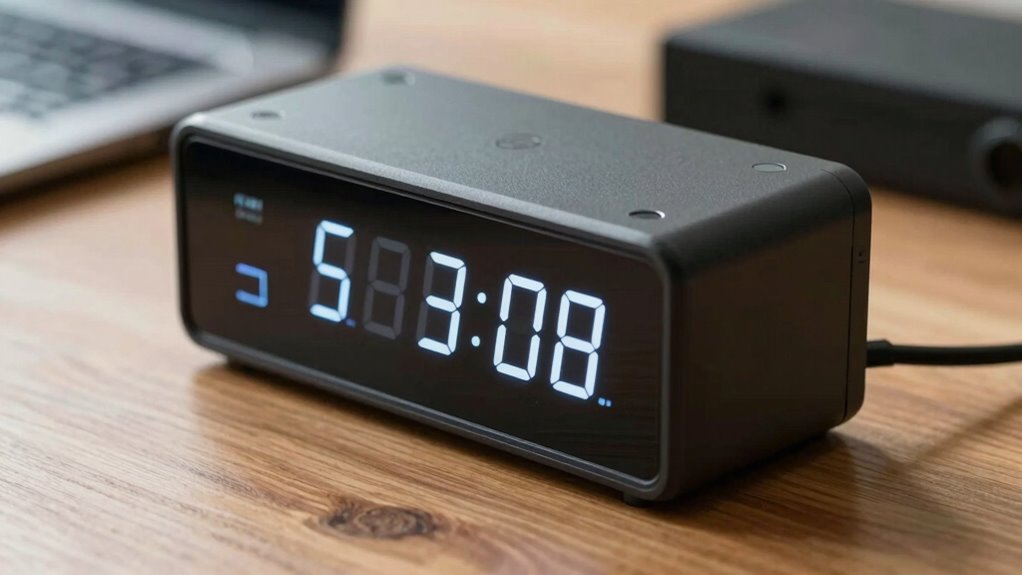

Watt-hours measure the total energy a battery or power source can deliver over time, combining voltage and capacity into a single number. They help you predict how long your devices can run before needing a recharge, making it easier to plan backup power and compare options. Knowing the watt-hour rating gives you a clearer picture of energy storage. Want to understand how this number influences your backup time? Keep exploring to find out more.
Key Takeaways
- Watt-hours measure the total energy a battery can store and deliver over time.
- They help estimate how long a device can run on a given battery capacity.
- 100 watt-hours mean the battery can supply 100 watts for one hour.
- Comparing watt-hour ratings allows accurate assessment of different power sources.
- Higher watt-hours generally indicate longer backup times for essential devices.

Have you ever wondered what a watt-hour actually measures? It’s a fundamental unit that helps you understand how much energy a device can store or use over time. When talking about battery capacity, watt-hours play a vital role because they give you a clear picture of how long a power source can keep your devices running. Instead of just knowing the battery’s voltage and milliamp-hours, which are useful but less straightforward, watt-hours combine these factors into a single, easy-to-understand measure of energy. This way, you can compare different batteries or power sources more accurately, knowing exactly how much energy they hold.
Understanding energy measurement through watt-hours means you’re looking at the total amount of work a battery can do. For example, a battery rated at 100 watt-hours can theoretically provide 100 watts of power for one hour, or 50 watts for two hours, and so on. This makes it simple to estimate how long your backup power will last during an outage or how long a portable charger can keep your gadgets alive. It’s especially useful because battery capacity isn’t just about size or voltage; it’s about how much energy is stored and available for use. Watt-hours give you a practical way to gauge this capacity across different devices and energy storage systems.
When you’re comparing batteries or energy storage options, look at the watt-hour rating. It tells you the total energy measurement, which directly influences backup time. If you have a backup generator or a solar power bank, knowing the watt-hours helps you plan better—so you don’t run out of power unexpectedly. For instance, if your essential devices need 50 watts to operate, a power bank with 200 watt-hours could theoretically run those devices for four hours (200 ÷ 50 = 4). Keep in mind, though, that actual runtime can vary due to efficiencies and other factors, but watt-hours provide a reliable starting point for your calculations. Energy measurement is a key concept in understanding and comparing different power sources effectively.

65W Power Bank, 25000mAh Travel Essential USB C Laptop Portable Charger, 100W Total Fast Charging Battery Pack for MacBook Dell XPS iPad Tablet Steam Deck iPhone 17-12 Series Samsung Switch and More
【100W Total Power Bank to Share】Distribute 100W total across two devices, with a single device receiving up to…
As an affiliate, we earn on qualifying purchases.
As an affiliate, we earn on qualifying purchases.
Frequently Asked Questions
How Do Watt-Hours Differ From Amp-Hours?
Watt-hours measure your battery capacity in overall energy, combining voltage and amp-hours into a single number. Amp-hours only tell you how much charge a battery holds, but don’t specify how much energy it contains. So, watt-hours give you a clearer picture of your battery’s energy measurement, helping you understand how long your device can run. Basically, watt-hours are more holistic for predicting backup time and overall energy capacity.
Can Watt-Hours Be Used to Compare Different Battery Types?
Yes, watt-hours help you compare different battery types by considering energy density and battery chemistry. You see, higher watt-hours mean more stored energy, regardless of battery size or chemistry. When comparing lithium-ion and lead-acid batteries, for example, watt-hours reveal which one offers more energy capacity. This makes it easier for you to choose the right battery for your needs based on overall energy storage, rather than just size or weight.
What Is the Significance of Watt-Hours in Solar Power Systems?
Watt-hours are vital in solar power systems because they measure your battery capacity and help determine how much energy your system can store and deliver. This energy measurement guides you in choosing the right batteries to meet your needs, especially during cloudy days or at night. Understanding watt-hours guarantees you have enough backup power, maximizing your system’s efficiency and reliability for continuous energy supply.
How Are Watt-Hours Calculated for Portable Devices?
Think of watt-hours as a fuel tank for your device. To calculate it, you multiply the battery capacity (measured in milliamp-hours or mAh) by the voltage (V), then divide by 1000 to convert to watt-hours. This power measurement tells you how much energy your portable device can store and use. Knowing this helps you estimate how long your device will run before needing a recharge.
Do Higher Watt-Hours Always Mean Longer Backup Time?
Higher watt-hours don’t always mean longer backup time because battery lifespan and energy efficiency matter too. If a device isn’t energy-efficient, it’ll drain power faster, even with a higher watt-hour rating. Plus, a battery’s age or how it’s maintained can impact backup time. So, while higher watt-hours generally help, other factors like device efficiency and battery health influence how long your backup lasts.
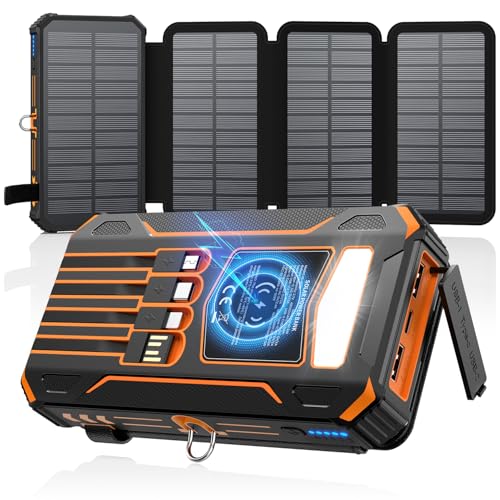
SOARAISE Solar Charger Power Bank – 48000mAh Wireless Portable Charger Built-in 4 Cables and 4 Solar Panels, PD QC 3.0 Fast Charging USB C Battery Pack with Flashlight for Camping Travel
Upgraded High-Efficiency 4 Solar Panels: Equipped with 4 premium solar panels, this solar panel charger charges up to…
As an affiliate, we earn on qualifying purchases.
As an affiliate, we earn on qualifying purchases.
Conclusion
Understanding watt-hours is like revealing a secret code to your device’s backup life. Now that you know what those numbers mean, you’re better equipped to choose power sources that keep your gadgets alive when you need them most. Remember, watt-hours aren’t just a number—they’re the heartbeat of your device’s endurance. So, the next time you see those figures, think of them as your device’s promise to stay powered, no matter what adventures lie ahead.

Westinghouse 12500 Watt Dual Fuel Home Backup Portable Generator, Remote Electric Start, Transfer Switch Ready, Gas and Propane Powered
9500 Running Watts and 12500 Peak Watts (Gasoline); 8500 Running Watts, 11200 Peak Watts (Propane); Remote Start with…
As an affiliate, we earn on qualifying purchases.
As an affiliate, we earn on qualifying purchases.

Portable Charger Power Bank 50000mAh, USB-C PD 30W Fast Charging, High Capacity External Battery Pack for Camping, Portable Phone Charger for iPhone 17/16/15/14/13/12/11 Samsung Android (Black)
Massive Capacity: The Seaistar portable charger features a high-density polymer battery, providing 11 charges for an iPhone 13…
As an affiliate, we earn on qualifying purchases.
As an affiliate, we earn on qualifying purchases.