Screws fail in soft materials because these materials can’t handle the stress from tightening, causing local deformation and thread stripping. Over-tightening worsens this by pushing the material past its elastic limit, leading to permanent damage. Properly selecting the right fastener size, thread type, and installation method can help prevent these issues. Continuing to explore this topic will give you more tips to ensure secure and durable fastening in soft materials.

Prime made for students and young adults
- Fast, free delivery for dorm and study essentials
- Prime Video and Amazon Music included
- Member-only deals
Key Takeaways
- Soft materials deform plastically under screw stress, leading to thread stripping and reduced holding power.
- Over-tightening causes localized stress and material compression beyond elastic limits, resulting in failure.
- Improper fastener selection and design can concentrate stress, increasing the risk of screw failure.
- Inadequate installation techniques, like sudden tightening or lack of pilot holes, exacerbate material deformation.
- Using fasteners suited for soft materials and proper installation methods prevents premature screw failure.
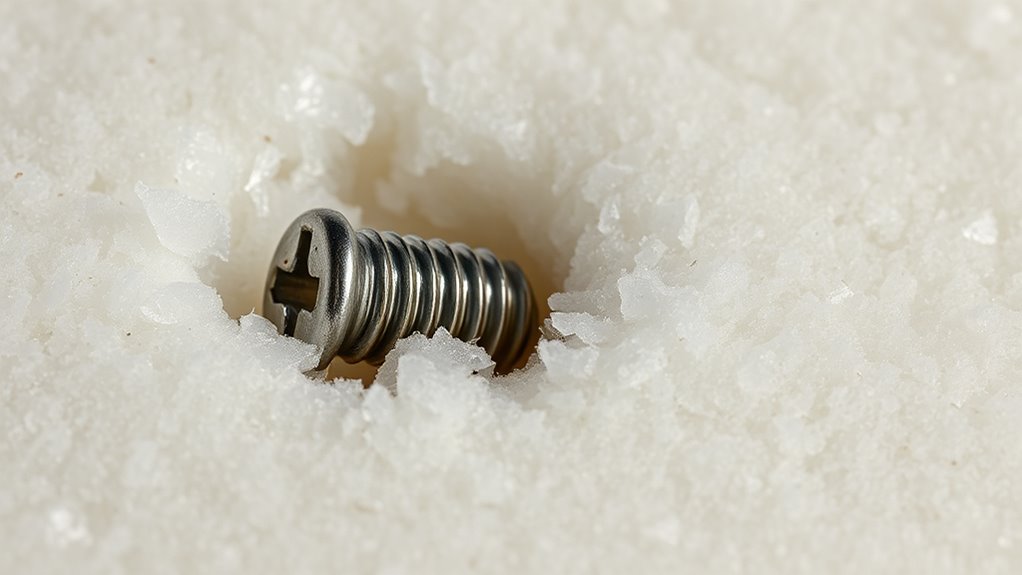
Fasteners are crucial components that hold objects together, and understanding their different types and uses is key to any project. When working with soft materials like plastics, soft metals, or composites, you might encounter issues where the fastener fails prematurely. One common problem is thread strip, which occurs when the screw’s threads tear through the material instead of securely engaging. This failure is often linked to material deformation, where the soft material around the threads becomes distorted or compressed beyond its elastic limit, leading to loss of holding power. Recognizing how different factors contribute to these failures helps you select the right fastener and installation method to prevent problems down the line.
Thread strip happens when the material can’t withstand the stress exerted by the screw’s threads during tightening. As you turn the screw, the threads press into the material, creating localized stress points. If the material is too soft or thin, it deforms plastically—that is, it doesn’t return to its original shape after the force is removed. This material deformation causes the threads to strip out, and the fastener loses its grip. In soft materials, the deformation isn’t distributed evenly; instead, it concentrates around the thread contact points, weakening the material’s structure. Over-tightening only exacerbates this issue, pushing the material past its elastic limit and causing permanent deformation or cracking. To avoid this, you need to understand the material’s mechanical properties, such as its shear and tensile strength, and choose a fastener with appropriate thread design and size.
Thread strip occurs when soft materials deform plastically under screw stress, causing loss of grip and fastener failure.
The thread strip problem highlights the importance of selecting the proper fastener type and size for soft materials. Using a screw with a coarse thread, for instance, can distribute stress over a larger area, reducing the risk of material deformation and thread stripping. Additionally, employing a thread strip insert or a washer can help distribute force more evenly, protecting the soft material from damage. Proper installation techniques matter too—tighten the screw gradually and stop once you feel resistance, rather than forcing it in. Pre-drilling a slightly larger pilot hole can also reduce stress on the material, preventing excessive deformation during installation.
Understanding the interplay between the screw threads and the material deformation process is crucial if you want your fasteners to hold securely over time. By considering the material’s properties, the thread design, and installation methods, you can prevent failures like thread strip and ensure a durable, reliable connection. Being aware of these factors allows you to make smarter choices, ultimately saving you time, effort, and the frustration of having a project fail due to preventable fastener issues.
As an affiliate, we earn on qualifying purchases.
Frequently Asked Questions
How Do Temperature Changes Affect Screw Performance in Soft Materials?
Temperature changes impact screw performance in soft materials by causing thermal expansion and contraction, which can loosen or tighten the screw unexpectedly. As the material expands, it may lead to material debonding around the screw, reducing holding strength. Conversely, cooling can cause contraction, increasing stress on the screw and the surrounding material. These fluctuations can compromise the connection’s stability, making it essential to contemplate thermal effects when designing or installing fasteners in soft materials.
What Types of Lubricants Are Best for Soft Material Fastenings?
Think of your screw as a dance partner; you want smooth moves without stumbles. For soft materials, choose lightweight lubricants like specialized thread lubrication or anti-seize compounds. These reduce friction, prevent galling, and make tightening easier without damaging the material. Be cautious to apply sparingly, ensuring the fastener stays secure. Proper lubrication keeps your fastening dance effortless and long-lasting, preventing failures in delicate soft materials.
Can Different Screw Head Designs Prevent Failure in Soft Materials?
Using the right screw head design can prevent failure in soft materials by distributing force evenly and reducing stress concentration. Choose head designs like pan, round, or countersunk that are compatible with your material and application. Material compatibility is vital—select screws with appropriate coatings or materials to avoid stripping or deformation. Proper head design ensures better engagement, minimizes damage, and enhances the screw’s hold in soft materials.
How Does Moisture Exposure Impact Screw Longevity in Soft Substrates?
Moisture exposure acts like a sneaky tide that erodes your screw’s strength over time. You’ll see corrosion risks rise, weakening the bond and making your screw prone to failure. To keep this at bay, you should use moisture barriers—coatings or sealants—that act as shields, blocking water from invading. By doing so, you extend your screw’s life and make certain your soft substrate stays firmly anchored, even in damp conditions.
Are There Specific Fastener Coatings Recommended for Soft Material Applications?
For soft material applications, you should choose fasteners with coatings that guarantee coating durability and corrosion resistance. Zinc or galvanized coatings are common choices, providing excellent protection against moisture and corrosion. For harsher environments, consider stainless steel or coated fasteners with specialized finishes like epoxy or ceramic coatings, which enhance durability and resistance. These options help prevent fastener failure, extending the lifespan of your project.
coarse thread screws for plastics
As an affiliate, we earn on qualifying purchases.
As an affiliate, we earn on qualifying purchases.
Conclusion
So, next time your screw wobbles out of place, remember it’s not just a failed fastener—it’s a drama queen craving softer materials. Maybe it’s just too lazy to hold on, or perhaps it’s auditioning for a role in “The Great Screw Escape.” Either way, don’t blame the soft material alone; maybe it’s time to pick a better screw or accept that some fasteners just can’t handle the pressure. Keep your fasteners happy, or they’ll keep falling apart!
thread insert for soft materials
As an affiliate, we earn on qualifying purchases.
As an affiliate, we earn on qualifying purchases.
pilot drill bits for soft materials
As an affiliate, we earn on qualifying purchases.
As an affiliate, we earn on qualifying purchases.
Evergreen bestsellers Picks
bestsellers
As an affiliate, we earn on qualifying purchases.