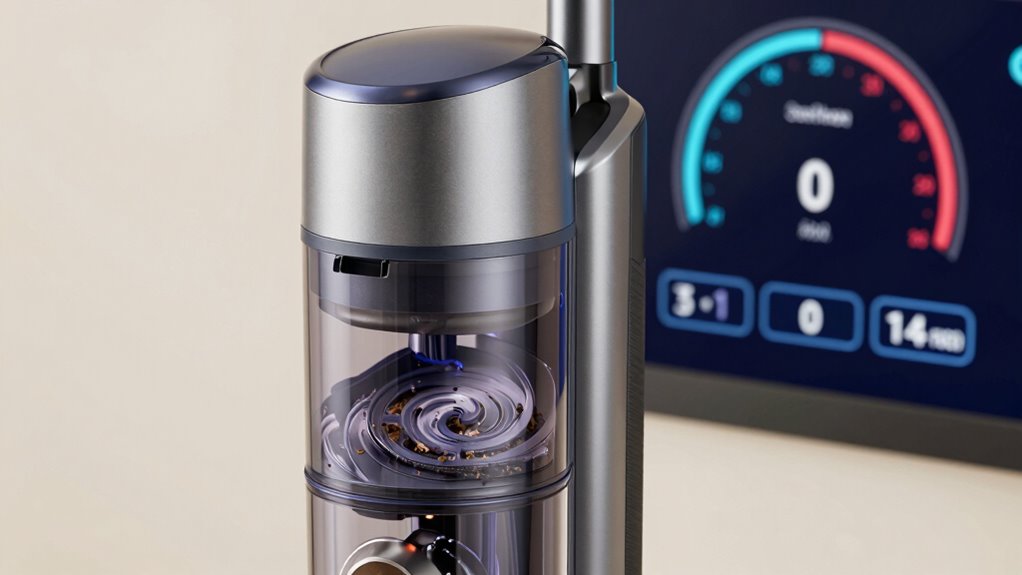

When choosing a vacuum, understanding how suction, airflow, and sealed pressure work together is key. Suction measures how well the vacuum lifts dirt, while airflow refers to how air moves through the system, impacting suction strength. Sealed pressure indicates how well the vacuum maintains power and prevents leaks. A balance of all three guarantees effective cleaning performance. Keep exploring to discover how these specs influence long-term durability and cleaning efficiency.
Key Takeaways
- Suction efficiency measures dirt pickup strength but must be supported by good airflow for optimal cleaning.
- Airflow dynamics influence how effectively air carries debris to the vacuum’s bin or filter.
- Proper airflow management ensures consistent suction and prevents power loss along the airflow path.
- Sealed pressure indicates the vacuum’s ability to maintain internal pressure, reducing leaks and maintaining performance.
- The interplay of suction, airflow, and sealed pressure determines overall cleaning effectiveness and device durability.
Are you overwhelmed by the variety of vacuum specs and unsure which ones matter most? It’s common to feel confused by the technical details tossed around when choosing a vacuum cleaner. But understanding key specs like suction efficiency, airflow dynamics, and sealed pressure can help you make smarter decisions and find a machine that truly meets your needs. Let’s start with suction efficiency. This term refers to how well a vacuum can lift dirt and debris from surfaces. A high suction efficiency means your vacuum can generate strong enough pull to pick up dirt effectively, especially on carpets and textured floors. However, suction efficiency doesn’t tell the whole story by itself. It’s influenced by airflow dynamics, which describe how air moves through the vacuum’s system. If airflow isn’t optimized, even a vacuum with high suction efficiency might struggle to perform well because air isn’t moving swiftly enough to carry debris into the bin or filter.
Optimal airflow management is essential for maintaining consistent cleaning performance. Airflow dynamics are impacted by factors like hose design, motor power, and the vacuum’s internal pathways. A vacuum with excellent airflow will maintain consistent suction at the nozzle, ensuring dirt gets lifted and sucked in without loss along the way. Conversely, poor airflow can cause a drop in suction as you work, especially if there are blockages or restrictive parts. So, when evaluating vacuums, look for models that balance strong suction efficiency with good airflow dynamics—this combo ensures you get effective cleaning across different surfaces.
Sealed pressure, another important spec, measures how well a vacuum maintains suction when all parts are sealed tightly. It’s often tested in lab conditions to see how much pressure the vacuum can hold internally without leaks. While sealed pressure isn’t something you might check directly during shopping, a high sealed pressure rating typically indicates better overall performance and less loss of suction due to leaks. This means your vacuum will stay powerful longer, especially when cleaning in tight spaces or around complex attachments.
In essence, understanding how suction efficiency, airflow dynamics, and sealed pressure work together simplifies your choice. A vacuum with good suction efficiency and optimized airflow will be more effective and easier to use, providing consistent cleaning power. Remember, specs like sealed pressure reinforce the vacuum’s reliability, helping you avoid models that lose power over time. By paying attention to these specs and how they interplay, you can select a vacuum that offers the right balance of strength, efficiency, and durability—making your cleaning routine less frustrating and more effective.

ZARIMI Portable Cordless Car Vacuum – 50,000Pa High-Power Brushless Motor, Rechargeable Handheld Vacuum Cleaner with 2 Batteries & Charger, 6-in-1 Vacuum Cleaners for Home, Keyboard, Pet Hair, Black
- Powerful Suction: 50,000Pa high-strength suction for deep cleaning
- Brushless Motor: High-speed brushless motor for efficient performance
- Multi-Functional 6-in-1: Vacuuming, blowing, inflating, and more
As an affiliate, we earn on qualifying purchases.
As an affiliate, we earn on qualifying purchases.
Frequently Asked Questions
How Do Vacuum Specs Vary Across Different Industries?
You’ll notice vacuum specs vary across industries because of industry-specific standards and application variations. For example, manufacturing might prioritize high airflow for material handling, while healthcare demands sealed pressure for sterile environments. You should consider these differences when selecting a vacuum, ensuring it meets your industry’s standards. Understanding these variations helps you choose the right vacuum system, optimizing performance and safety tailored to your specific application needs.
What Safety Precautions Should Be Taken With High-Suction Vacuums?
When working with high-suction vacuums, you should always wear appropriate safety gear like gloves and eye protection. Make certain that emergency procedures are clear and accessible, such as knowing how to shut off the vacuum quickly if needed. Keep the work area clear of obstructions, and never bypass safety features. Regularly inspect equipment for damage, and train yourself on proper handling to prevent accidents and injuries.
How Does Temperature Affect Vacuum Performance?
Temperature fluctuations can impact vacuum performance by disrupting temperature stability, causing the materials to expand or contract due to thermal expansion. When temperatures rise, components may loosen or deform, reducing efficiency. Conversely, cold temperatures can make parts brittle or less responsive. Maintaining a stable temperature environment helps guarantee ideal vacuum function, preventing performance issues caused by thermal expansion or contraction, and prolonging the lifespan of your vacuum system.
Can Vacuum Specs Change Over Time With Use?
Sure, your vacuum’s specs can change over time, thanks to the joys of performance degradation. As you use it, wear and tear, plus dust buildup, can mess with calibration, making it less powerful or efficient. Don’t worry—regular maintenance helps keep those specs accurate. So, if your vacuum’s not acting right, it might just need a quick tune-up to restore its original glory and prevent ongoing performance declines.
What Maintenance Is Required to Keep Vacuum Specs Accurate?
To keep your vacuum specs accurate, you should perform regular calibration, ideally every 6 to 12 months, depending on usage. Check for component wear, especially seals and filters, which can affect suction, airflow, and sealed pressure. Replace worn parts promptly and clean filters regularly. Proper maintenance guarantees your vacuum operates at peak performance and maintains precise specifications over time.

Wylarven 2 Pack 1/4" Mega Flow Valve Core Removal Tool, Vacuum-Rated to 20 Microns, Fast Recovery & Evacuation, HVACR Service Tool with Magnetic Hanger, for A/C Refrigeration Systems, Cars, Trucks
- Compatibility: Fits 1/4 inch service ports
- Vacuum Rating: Rated to 20 microns for deep vacuum
- Pressure Resistance: Withstands 800 PSI working pressure
As an affiliate, we earn on qualifying purchases.
As an affiliate, we earn on qualifying purchases.
Conclusion
Think of vacuum specs like a car’s engine—each part needs to work together for smooth driving. Understanding suction, airflow, and sealed pressure helps you choose the right vacuum for your needs. Don’t let confusing numbers steer you wrong; now you’re in the driver’s seat. With this knowledge, you can navigate the cleaning world confidently, making your home feel like a well-oiled machine. Ready to hit the road to a cleaner space?

Eureka WhirlWind Bagless Canister 2.5L Vacuum Cleaner, Lightweight Vac for Carpets and Hard Floors, NEN110A, Blue
- Multi-Surface Cleaning: Suitable for carpets, upholstery, and hard floors
- Integrated Airflow Control: Easily switch airflow at handle
- Powerful 960W Motor: Deep cleaning performance
As an affiliate, we earn on qualifying purchases.
As an affiliate, we earn on qualifying purchases.

Shark Upright Vacuum Cleaner | Navigator Lift-Away Deluxe | Pet Hair, Carpet & Hard Floor Cleaning | Upholstery & Crevice Tool | HEPA Filter | Swivel Steering | Large Dust Cup Capacity | Blue | NV360
- Powerful Multi-Surface Suction: Cleans carpets and hard floors effectively
- Lift-Away for Above-Floor Cleaning: Detachable pod for stairs and furniture
- Pet Hair Removal: Specialized tools for pet hair cleanup
As an affiliate, we earn on qualifying purchases.
As an affiliate, we earn on qualifying purchases.