
Taking regular recovery breaks during work sessions is more vital than you might realize. These breaks help you reset your focus, prevent fatigue, and reduce stress, which boosts your overall productivity and well-being. Proper ergonomic setups and mindful pauses support your health and sustain your energy levels. Ignoring recovery can lead to burnout and physical discomfort over time. If you keep exploring, you’ll discover simple strategies to make your work routine healthier and more effective.
Key Takeaways
- Recovery prevents mental and physical fatigue, sustaining focus and productivity over longer periods.
- Short breaks and mindfulness reduce stress, lowering burnout risk and promoting overall well-being.
- Ergonomic adjustments during recovery time enhance comfort, preventing strain and long-term injuries.
- Regular pauses allow the brain to process information, boosting creativity and problem-solving skills.
- Prioritizing recovery supports sustainable work habits, leading to better health and sustained performance.

Taking regular breaks between work sessions is essential for maintaining focus and productivity. When you step away from your tasks, you give your mind and body a chance to reset, which can profoundly boost your overall performance. It’s not just about preventing fatigue; it’s about actively nurturing your well-being. Incorporating mindfulness techniques during these breaks helps you become more aware of your mental state, reducing stress and preventing burnout. Simple practices like deep breathing, mindful stretching, or brief meditation can clear your mind and improve concentration when you return to work. These techniques also foster a sense of calm that enhances your ability to stay focused over longer periods.
Taking regular breaks with mindfulness techniques boosts focus, reduces stress, and supports overall well-being.
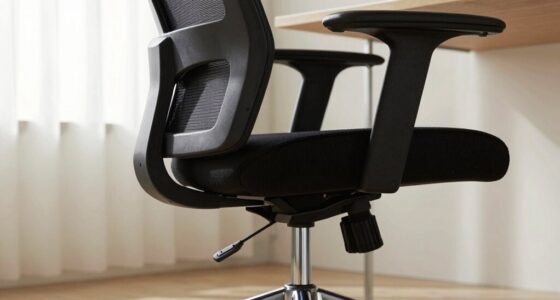
Equally important is the physical environment in which you work. An ergonomic setup isn’t just about comfort; it’s about protecting your body from strain and injury. When your workstation is properly adjusted—your chair supports your lower back, your monitor is at eye level, and your keyboard and mouse are positioned to reduce tension—you’re less likely to experience discomfort that distracts you from your tasks. An ergonomic setup encourages better posture and circulation, enabling you to work more efficiently and with less fatigue. During your breaks, taking a moment to adjust your workspace or perform light stretches can reinforce these benefits, helping you maintain good habits throughout the day. Additionally, ergonomic principles can guide you in creating a healthier workspace that supports sustained productivity. Paying attention to workspace ergonomics also minimizes physical discomfort, allowing you to focus better and work longer without strain. Regularly evaluating your workspace and making small adjustments can further optimize your comfort and efficiency, ultimately supporting your overall well-being. Incorporating proper ergonomic practices can further enhance your comfort and prevent long-term issues.
The importance of recovery extends beyond just physical comfort. When you consciously schedule time to pause and reset, you’re giving your brain a chance to process information and rest. This mental downtime can lead to creative insights and better problem-solving when you resume work. You might find that a few minutes of mindfulness or a quick change in your ergonomic setup can make a noticeable difference in your alertness and motivation. Creating a dedicated recovery space or area for breaks can further help in separating work from relaxation, making these pauses more effective. Over time, these small investments in recovery become crucial components of your productivity routine, ensuring that you’re not just working harder but smarter.
Ultimately, recovery isn’t a luxury; it’s a necessity. When you prioritize regular breaks, incorporate mindfulness techniques, and optimize your ergonomic setup, you’re actively supporting your mental and physical health. This approach helps prevent burnout, enhances focus, and sustains your energy levels throughout the day. Recognizing and respecting the importance of these pauses allows you to work more sustainably, making each session more effective and less draining. In the long run, this mindful balance between work and recovery will empower you to achieve better results, both professionally and personally.
ergonomic office chair with lumbar support
As an affiliate, we earn on qualifying purchases.
As an affiliate, we earn on qualifying purchases.
Frequently Asked Questions
How Long Should Recovery Breaks Typically Last?
Recovery breaks should typically last around 5 to 10 minutes for short duration work sessions. This duration allows your mind and body to reset, boosting focus and productivity. The ideal timing depends on the task intensity—more demanding tasks may require slightly longer breaks. By taking these brief pauses, you prevent burnout, maintain energy levels, and enhance overall performance. Remember, strategic recovery is key to staying efficient throughout your work.
Can Recovery Improve Long-Term Productivity?
Think of recovery as the secret ingredient to long-term productivity. Yes, it can substantially improve your focus and efficiency over time. By incorporating mindfulness practices during breaks and adopting nutrition strategies, you recharge both mind and body. These habits create a ripple effect, boosting your resilience and mental clarity. When you prioritize quality recovery, you’re not just working harder—you’re working smarter, paving the way for sustained success.
What Are the Best Activities During Recovery Breaks?
During recovery breaks, you should focus on mindfulness exercises and physical stretches. Mindfulness exercises help you reset mentally, reducing stress and increasing focus. Physical stretches loosen tight muscles, improving circulation and preventing fatigue. These activities are quick and effective, allowing you to return to work refreshed and more productive. Incorporate deep breathing or gentle stretches into your breaks to maximize the benefits of your recovery time.
Does Recovery Affect Mental Health?
Did you know that taking regular recovery breaks can improve mental health by 30%? Recovery directly affects your mental health by providing stress reduction and mental refreshment. When you pause between work sessions, you give your mind a chance to reset, reducing anxiety and preventing burnout. This mental clarity boosts overall well-being, making you more resilient and focused. Prioritizing recovery isn’t just good for productivity—it’s essential for your mental health.
How Does Recovery Vary by Work Type?
Recovery varies by work type because different tasks demand different forms of rest. For physical labor, you need physical rest to prevent fatigue and injury, while mental tasks require mental refresh to maintain focus and creativity. If you’re doing repetitive or intense work, take breaks that include stretching or quick walks. For cognitively demanding work, short mental refreshes like mindfulness or brief breaks help you stay sharp and productive.
adjustable monitor stand for desk
As an affiliate, we earn on qualifying purchases.
As an affiliate, we earn on qualifying purchases.
Conclusion
Remember, taking regular breaks isn’t just a nice idea—it’s essential. Studies show that just a 5-minute recovery period can boost your productivity by up to 13%. By giving your brain time to rest, you prevent burnout and stay sharper longer. So next time you’re feeling overwhelmed, pause briefly. The small act of recovery can make a big difference in how much you accomplish and how you feel throughout the day. Your work—and well-being—will thank you.

Wireless Keyboard and Mouse Combo, 2.4G Ergonomic Wave Keys(Black)
- Wave Ergonomic Design: Fits fingers and relieves wrist strain
- Adjustable Keyboard Stand: Customize height for comfort
- Contoured Wireless Mouse: Fits palm naturally for comfort
As an affiliate, we earn on qualifying purchases.
As an affiliate, we earn on qualifying purchases.
As an affiliate, we earn on qualifying purchases.