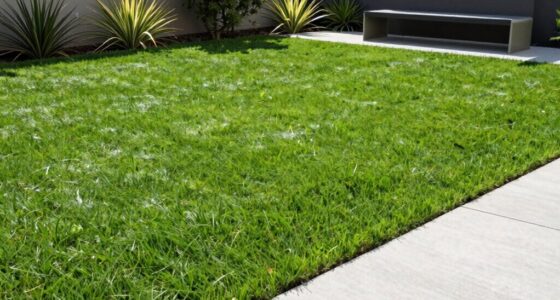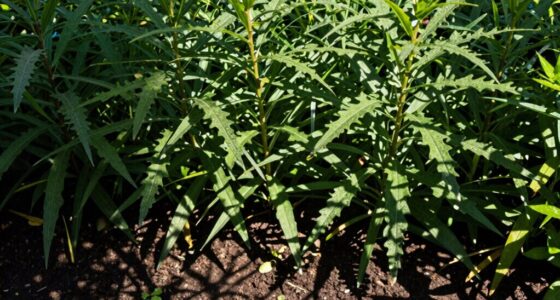
Persistent wet spots and muddy patches are your clearest clues for predicting problem areas in your yard’s drainage. If you notice areas that stay soggy after rain or have standing water, it indicates poor drainage or water pooling. Vegetation struggling in these spots or soil that stays saturated are signs you should take action. Keep going to uncover more about how soil, vegetation, and water patterns help identify and fix drainage issues effectively.

Prime made for students and young adults
- Fast, free delivery for dorm and study essentials
- Prime Video and Amazon Music included
- Member-only deals
Key Takeaways
- Presence of water-loving vegetation like moss, rushes, or cattails indicates poor drainage and potential muddy spots.
- Persistent muddy patches after rainfall signal areas where soil retains water due to low permeability.
- Soil that remains waterlogged or has a muddy texture suggests inadequate drainage and future muddy problem zones.
- Compact or clay-heavy soil often correlates with slow water movement, leading to muddy patches.
- Uneven or patchy plant growth, especially in low-lying areas, can predict where muddy conditions are likely to develop.
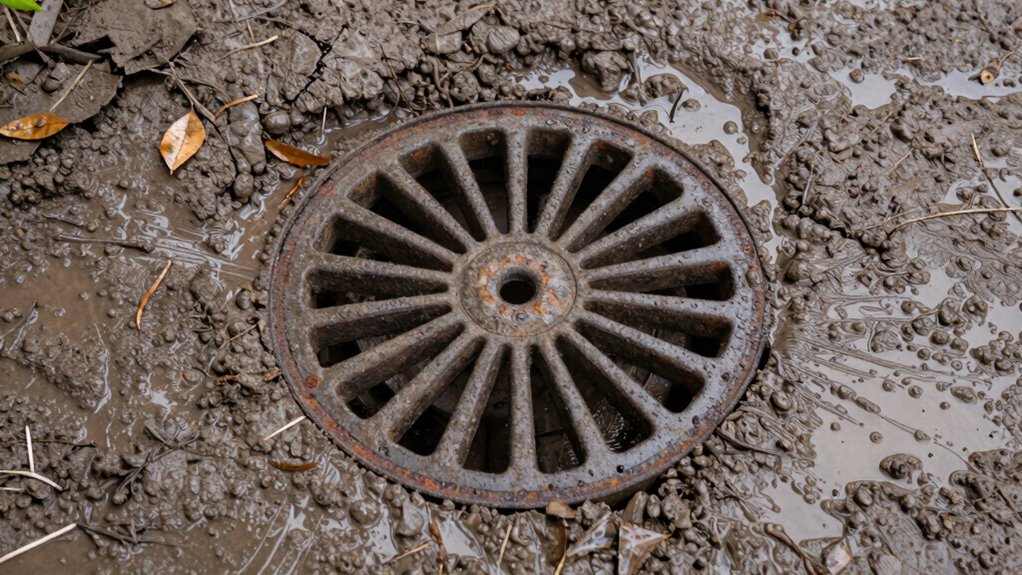
When you notice persistent muddy patches in your yard, they often point to underlying drainage issues. These soggy spots aren’t just an eyesore; they’re a sign that water isn’t draining properly and is pooling in certain areas. To understand why, you need to look closer at the soil composition and vegetation indicators around your yard. The soil’s makeup plays an essential role in how water moves and settles. For example, if your soil is heavy with clay, it tends to retain water longer because clay particles are tiny and tightly packed, creating a dense barrier that prevents water from seeping through. Conversely, sandy soils drain quickly but might not hold enough moisture for plants to thrive, leading to uneven wetness and dryness. Loamy soil, which is a balanced mixture of sand, silt, and clay, typically offers the best drainage, reducing the chances of persistent muddy patches. So, examining your soil’s texture and composition can give you clues about potential drainage problems. Additionally, understanding the soil’s texture can help you determine the best ways to improve drainage if needed. Recognizing the soil’s permeability can also assist in planning effective drainage solutions and plant choices. Proper assessment of soil properties can help you select appropriate drainage improvements for your yard. Vegetation indicators also serve as natural signs of drainage issues. If you see certain plants thriving in wet areas—such as cattails, rushes, or moss—these are clear signals that excess water is lingering there. These plants are adapted to moist conditions and tend to grow in poorly drained spots. Their presence suggests that the soil remains saturated long after rainfalls, which can cause muddy patches to persist. Moreover, areas with poor drainage often experience erosion or soil compaction, further exacerbating the muddy conditions. Furthermore, plant growth patterns can offer insights into water movement and saturation levels across your yard. On the other hand, if your yard has patches of grass that look yellow, patchy, or struggle to grow, it might be an indication that water is pooling and preventing roots from establishing properly. Healthy, lush vegetation generally indicates good drainage, while uneven or sparse growth points to areas where water stagnates or drains poorly.
As an affiliate, we earn on qualifying purchases.
Frequently Asked Questions
How Can I Differentiate Between Natural and Man-Made Drainage Issues?
You can differentiate natural from man-made drainage issues by observing the landscape. Natural formations usually have irregular shapes, consistent slopes, and are part of the natural terrain. Man-made alterations often include straight channels, drainage pipes, or constructed berms. If you notice abrupt changes or artificial structures disrupting the terrain’s natural flow, it’s likely a man-made issue. Understanding these signs helps you identify whether drainage problems stem from nature or human activity.
What Tools Are Best for Assessing Drainage Problems?
You need powerful tools to assess drainage problems effectively. Use a soil moisture meter to gauge irrigation issues and soil permeability tests to reveal how water moves through your soil. A drainage inspection camera can give you a close-up view of underground pipes, while a water flow meter helps measure runoff speed. These tools give you a clear picture of where water’s sneaking in or pooling, saving your landscape from muddy chaos.
How Often Should Drainage Inspections Be Conducted?
You should conduct drainage inspections at least once a year, especially after heavy rains or seasonal changes. During these checks, soil testing helps identify problematic areas, guiding your drainage planning efforts. Regular inspections allow you to catch issues early, preventing muddy spots and water damage. Keep a detailed record of findings to adjust your drainage strategies proactively, ensuring your landscape stays dry and healthy throughout the year.
Can Landscaping Improve Drainage Problem Spots?
You can definitely improve drainage problem spots through landscaping. For example, if you notice pooling water after heavy rain, redesigning your garden with proper garden design principles and adding soil amendments like organic matter can help. You might create a gentle slope or install a rain garden, which directs water away from problem areas. These strategies enhance soil absorption and promote better drainage, reducing muddy spots effectively.
Are There Environmental Factors Influencing Drainage Problems?
Environmental factors like soil composition and climate impact considerably influence drainage problems. You’ll notice that clay soils retain water and cause muddy spots, while sandy soils drain too quickly. Climate factors, such as heavy rainfall or prolonged droughts, also affect how water moves through your landscape. By understanding these elements, you can better plan your drainage solutions, adjusting for soil type and climate to prevent muddy problem areas effectively.
As an affiliate, we earn on qualifying purchases.
Conclusion
By paying close attention to drainage clues, you can spot muddy problem spots before they take over your yard. Think of your landscape as a living puzzle—each clue is a piece that reveals the bigger picture. When you understand these signs, you’re like a detective uncovering hidden trouble spots, guiding you to take action. Addressing drainage issues early keeps your yard from turning into a swamp, turning chaos into a well-orchestrated symphony of balance.
drainage solution for muddy yard
As an affiliate, we earn on qualifying purchases.
As an affiliate, we earn on qualifying purchases.
waterproof garden soil amendments
As an affiliate, we earn on qualifying purchases.
As an affiliate, we earn on qualifying purchases.
Halloween Picks
halloween
As an affiliate, we earn on qualifying purchases.