Using the wrong nailer for your project can cause poor results and safety risks. For example, using a framing nailer for finish work may leave visible damage, while a finish nailer can’t handle heavy framing tasks. Selecting an incorrect category can also lead to jams, misfires, and damaged materials, increasing costs. Knowing the differences helps you avoid mistakes and achieve better results. Stick around to discover how choosing the right tool makes all the difference.

Get school and study supplies delivered free — and shop member deals
- Fast, free delivery on millions of items
- Access to Prime Big Deal Days deals on October 6–7
- Prime Video, Amazon Music and more included
Key Takeaways
- Using the wrong nailer category for a specific task can cause poor results and damage the workpiece.
- Selecting an inappropriate nailer increases the risk of jams, misfires, and safety hazards.
- Mistaking finish, framing, or roofing nailers leads to inefficient work and potential material waste.
- Improper tool choice compromises safety features, raising the likelihood of accidents.
- Failing to match the nailer type to the project can result in misalignment and subpar finish quality.
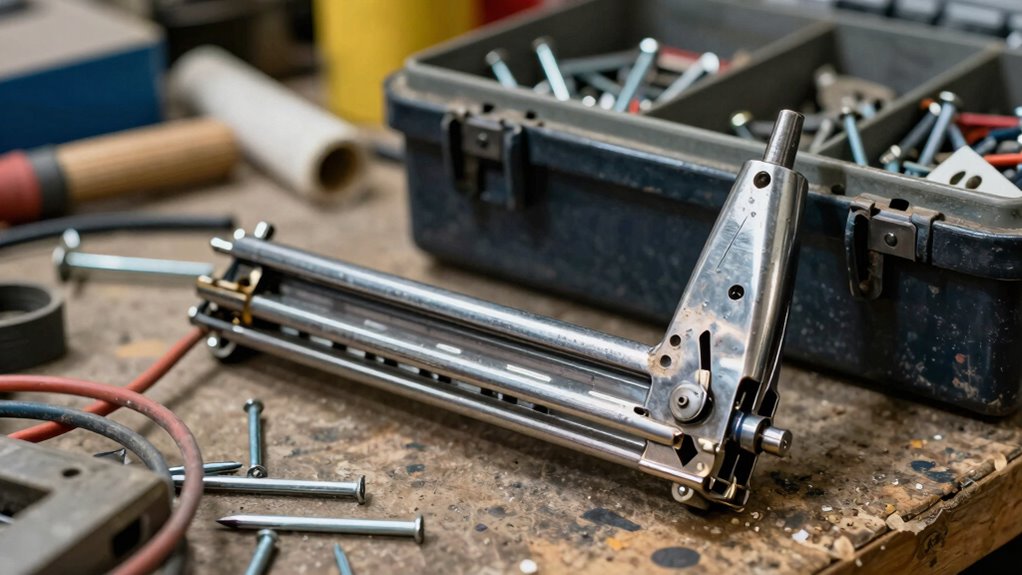
Have you ever mistaken one type of nailer for another, only to realize it caused more problems than it solved? It’s a common mistake, especially when you’re in a hurry or unfamiliar with the different categories of nailers. Picking the wrong nailer can lead to poor results, wasted materials, and even safety hazards. That’s why understanding the specific purpose of each nailer category is essential. When you use the right tool for the job, you not only improve your efficiency but also guarantee nailer safety. Using the wrong nailer can cause jams, misfires, or damage to your workpiece, which could have been avoided with proper knowledge.
Another key point is proper nailer maintenance. Regularly inspecting and maintaining your nailer helps prevent malfunctions that could compromise safety or lead to inaccurate nailing. When you neglect maintenance, parts wear out faster, and dirt or debris can cause misfires or jams. This not only reduces the lifespan of your tool but also increases the risk of accidents. Proper nailer maintenance involves cleaning the tool after each use, lubricating moving parts, and checking for any signs of damage. When you keep your nailer in good shape, you minimize the risk of sudden malfunctions that could injure you or damage your work. Additionally, understanding the categories of nailers and their specific uses can help you select the right tool for each task, avoiding common mistakes. Recognizing the differences between nailer types is crucial for selecting the proper tool and ensuring optimal results. Knowing the safety features of each nailer type can also significantly reduce the risk of injury during operation. Being aware of tool-specific safety protocols further enhances safe handling and reduces accidents.
As an affiliate, we earn on qualifying purchases.
Frequently Asked Questions
How Can I Identify if I’M Making the Nailer Category Mistake?
You can identify if you’re making the nailer category mistake by noticing if you’re misjudging situations due to classification errors. If you’re treating different scenarios as the same when they require distinct approaches, that’s a category misjudgment. Pay attention to whether you’re applying generic solutions across varied contexts or ignoring unique details. Regularly question your assumptions, and double-check if your labels genuinely fit the specific circumstances you’re facing.
What Are Common Signs of Misclassification in Project Categories?
You’ll notice category misclassification if your project categorization feels off—like tasks seem out of place or your results don’t align with expectations. Watch for inconsistent prioritization, unexpected delays, or resource misallocation. If team members express confusion about project scope or objectives, that’s a clear sign. These signs indicate you might be misclassifying projects, which hampers efficiency and leads to poor outcomes. Correcting category misclassification keeps your projects on track.
Does the Mistake Affect Project Timelines or Budgets?
Over 40% of projects face delays or budget overruns due to misclassification errors. When you mislabel project categories, it skews resource allocation and hampers effective risk management. This mistake often leads to underestimated timelines and costs, causing unforeseen issues. By correctly categorizing your projects, you improve resource planning and risk assessment, helping you stay on schedule and within budget, ultimately boosting your project’s success and organizational efficiency.
Are There Tools to Prevent Category Mistakes Early?
Yes, you can use tools like classification algorithms and category overlap detection software to prevent mistakes early. These tools analyze data to improve classification accuracy and flag overlaps that might cause confusion. By setting clear criteria and leveraging machine learning models, you guarantee categories are distinct, reducing errors. Implementing these tools early helps you catch potential misclassifications, saving time, avoiding costly rework, and maintaining project quality.
How Does This Mistake Impact Team Collaboration and Decision-Making?
Like a ship veering off course, a category mistake can throw your team into chaos. It hampers category awareness, leading to misunderstandings and misaligned goals. This weakens team dynamics, causing unnecessary conflicts and slow decision-making. When everyone doesn’t share a clear understanding of categories, collaboration suffers, and your team struggles to find cohesive solutions. Maintaining sharp category awareness helps keep your team focused, aligned, and effective.
As an affiliate, we earn on qualifying purchases.
Conclusion
If you ignore the nailer category mistake, you’ll find yourself building on shaky ground, like trying to nail down a moving target. Precision and understanding are your steady hands, guiding each shot straight and true. When you choose the right tool for the job, your project becomes a solid foundation, not a fragile illusion. Remember, the right choice isn’t just about the nailer—it’s about ensuring your work stands tall and lasts long, like a well-built bridge.
roofing nailer with safety features
As an affiliate, we earn on qualifying purchases.
As an affiliate, we earn on qualifying purchases.
As an affiliate, we earn on qualifying purchases.
Halloween Picks
halloween
As an affiliate, we earn on qualifying purchases.