In real projects, choosing between MIG, TIG, and stick welding depends on your specific needs. MIG welders are beginner-friendly, great for quick and thick metal work. TIG offers precision, perfect for detailed or thin materials. Stick welding is versatile and effective outdoors or on rusty surfaces. Each method has safety considerations, so understanding their differences helps you make the best choice. Keep exploring to discover which welding technique suits your project best.
Key Takeaways
- MIG welding is ideal for quick, strong joins on thicker materials, suitable for beginners and large projects.
- TIG welding offers precision and clean welds, perfect for detailed work and thin metals.
- Stick welding is versatile, effective outdoors, and handles rusted or dirty metals well.
- Equipment choice affects safety, with MIG and TIG requiring different setups and safety precautions.
- Understanding project needs helps determine whether MIG, TIG, or Stick welding is the best fit.
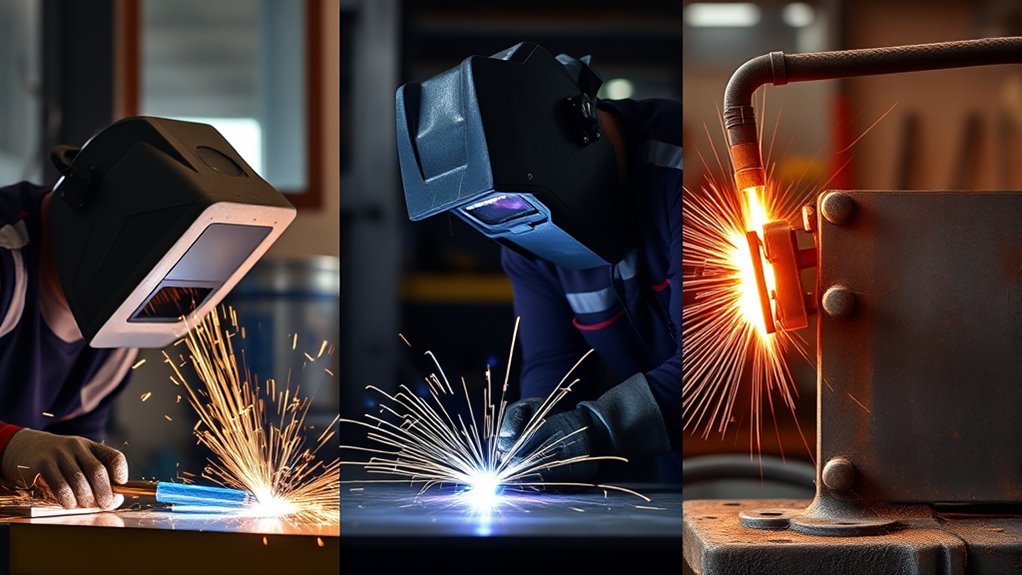
Have you ever wondered what it takes to join metals securely? If you’re venturing into welding, understanding the basics is essential, especially when it comes to welding safety and the right welding equipment. Welding involves high heat and intense light, so safety should always be your top priority. Before you even start, make sure you have proper protective gear—welding helmets with auto-darkening lenses, gloves, long sleeves, and sturdy boots. This gear shields you from sparks, UV radiation, and hot metal splashes. Equipment safety checks are equally important; inspect your welding machines, cables, and grounding connections for any damage. Properly maintained equipment reduces the risk of electrical shocks and malfunctions, ensuring a safer working environment.
When selecting welding equipment, consider the type of project you’re tackling. MIG welders, for example, are known for their ease of use and speed, making them ideal for beginners or projects requiring quick turnaround. They use a continuous wire feed and shielding gas to protect the weld from contamination. TIG welders, on the other hand, offer more precision, making them suitable for detailed metalwork and thinner materials. They require more skill because you control the torch and filler metal simultaneously, but they produce cleaner, more refined welds. Stick welders are versatile and excellent for outdoor or rusty metal projects. They use an electrode coated in flux, which creates a protective slag over the weld. However, stick welding can be messier and less precise, so it’s best for heavy-duty tasks.
No matter which type you choose, understanding how to operate your equipment safely is vital. Always read the manufacturer’s instructions and follow recommended procedures to avoid accidents. Properly setting up your welding station, including ventilation and fire safety measures, helps prevent hazards. Keep your workspace organized, and never weld in confined or poorly ventilated areas, as fumes and gases can pose health risks. Remember that welding safety isn’t just about protecting yourself; it also involves safeguarding others around you. Use screens or curtains to shield bystanders from sparks and intense light. Additionally, being aware of welding technology advances can help you select the right tools that maximize safety and efficiency.
Frequently Asked Questions
Which Welding Method Is Safest for Beginners?
For beginners, MIG welding is the safest choice because it’s easier to learn and requires less hazard awareness. You should always wear proper safety gear like gloves, goggles, and a welding helmet to protect yourself. While working, stay alert to potential hazards like fumes and sparks. Using MIG reduces complexity, but safety gear remains essential to prevent injuries, making it a safer option for those new to welding.
Can MIG, TIG, and Stick Be Used Together?
Yes, you can use multi-method welding or combined techniques, but it’s not as simple as switching between MIG, TIG, and Stick at will. Each method has unique settings and safety considerations, so careful planning and proper equipment are essential. When done right, combining techniques can give you stronger, more precise welds. Just remember, mastering each process individually first makes multi-method welding safer and more effective.
What Are the Maintenance Requirements for Each Welder?
You need to regularly inspect your welders for electrode maintenance, ensuring electrodes are clean and undamaged. Check and replace shielding gas cylinders as needed for consistent flow, especially for MIG and TIG welders. Clean and lubricate moving parts to prevent wear. For stick welders, examine the electrode holder and cables. Proper upkeep of shielding gas systems and electrodes keeps your welder functioning smoothly and extends its lifespan.
How Do Environmental Conditions Affect Welding Quality?
Environmental conditions markedly impact your welding quality. Climate impact, like high humidity or extreme temperatures, can cause surface contamination, leading to weak welds or defects. Wind or drafts may blow away shielding gases, especially in MIG and TIG welding, compromising weld integrity. To maintain quality, control your environment as much as possible, use proper shielding, and clean surfaces thoroughly before welding. This guarantees stronger, cleaner welds despite challenging conditions.
Are There Specific Materials Better Suited for Each Welding Type?
You’ll find that certain materials are better suited for each welding type, so it’s not a one-size-fits-all. For example, MIG works well with thin metals like aluminum, while TIG is ideal for precision work on stainless steel and aluminum. Stick welding handles thicker, more corrosion-prone materials like cast iron or steel. Keep in mind, material compatibility and welding material limitations play a big role in choosing the right method—don’t bite off more than you can chew.
Conclusion
No matter which welding method you choose—MIG, TIG, or Stick—remember that practice makes perfect. It’s normal to feel overwhelmed at first, but don’t let that stop you from trying. With patience and consistent effort, you’ll improve your skills and tackle real projects confidently. So, don’t be discouraged by initial difficulties; every expert started just like you. Keep practicing, stay safe, and you’ll master welding in no time.