Workholding is often the most difficult aspect of CNC routing because it directly affects your precision, safety, and efficiency. Choosing the right clamping methods and designing fixtures that hold your workpiece securely without damage can be tricky. Proper setup guarantees stability and reduces errors or accidents. If you want to master effective workholding techniques and overcome these challenges, there’s more you need to know to get the best results.
Key Takeaways
- Proper workholding ensures stability, precision, and safety during CNC routing, making it a critical challenge to address.
- Selecting appropriate clamping techniques prevents workpiece movement and damage, which is often more complex than the cutting process itself.
- Designing effective fixtures tailored to material and project specifics is essential for reliable and efficient CNC operation.
- Inadequate or improper workholding can lead to inaccuracies, material waste, tooling damage, and safety hazards.
- Planning and implementing secure, accessible, and quick-release fixtures are key to overcoming workholding difficulties in CNC routing.
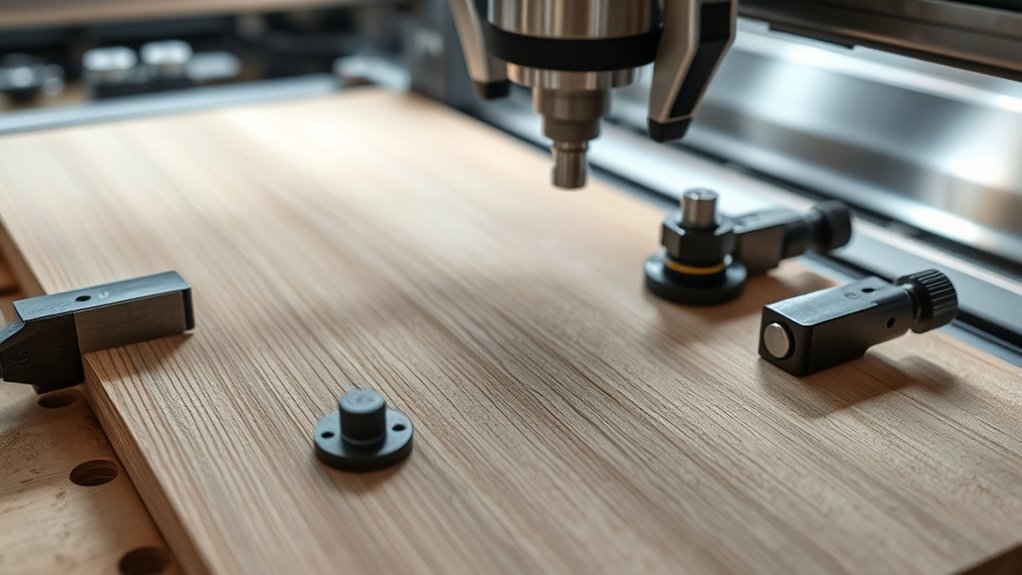
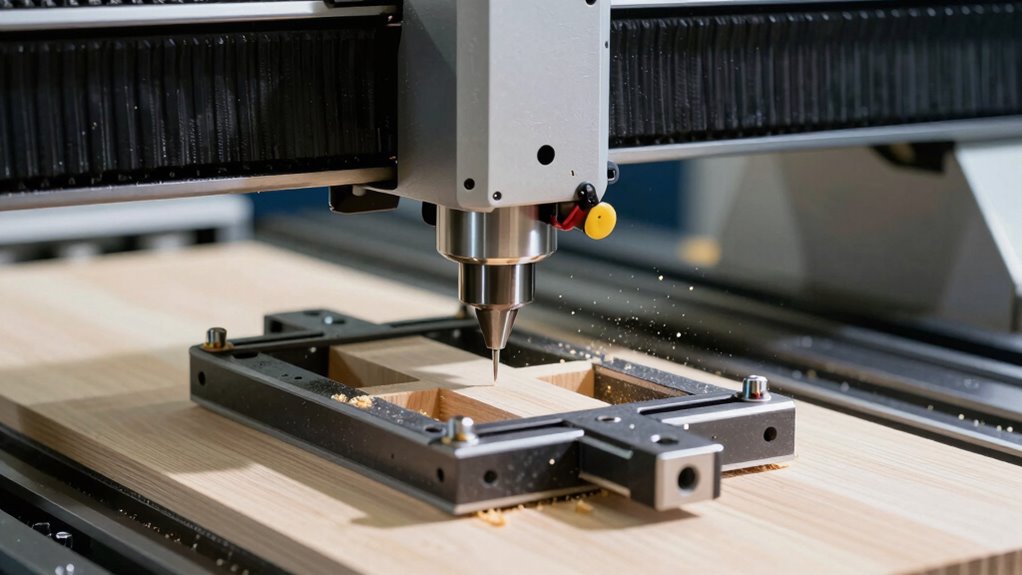
Effective workholding is vital for achieving precision and safety when operating a CNC router. Without proper workholding, your cuts can become inaccurate, dangerous, or even damage your machine. To secure your workpiece effectively, you need to understand clamping techniques and fixture design, which are central to reliable CNC operation. Clamping techniques involve choosing the right method to hold your material firmly without causing damage or warping. You might opt for traditional clamps, vacuum tables, or specialized fixtures depending on your project. The key is applying even pressure to prevent movement while avoiding marring or stressing the material. Proper clamping also means considering accessibility; you want to guarantee your cutting tool can reach all areas of the workpiece without interference from clamps or fixtures. Additionally, understanding workholding methods helps you select the most suitable approach for your specific project. Fixture design is equally critical. It involves creating or selecting a holding device tailored to your specific project and material. A well-designed fixture not only secures the workpiece but also positions it precisely in the correct orientation. When designing fixtures, you should consider factors like material thickness, shape, and the type of cuts you plan to make. Custom fixtures often incorporate features such as locating pins, stops, or adjustable components to ensure consistency across multiple parts. Using modular fixtures can save time, especially if you’re producing a series of similar components. When designing fixtures, keep in mind that they should be rigid, easy to set up, and quick to release, so your workflow remains efficient. The combination of effective clamping techniques and intelligent fixture design reduces the risk of movement during machining, which is vital for accuracy. If your workpiece shifts even slightly, it can lead to flawed cuts, wasted material, or damage to your tooling. By investing time in planning your fixture setup and selecting the appropriate clamping methods, you create a stable environment that allows your CNC router to perform at its best. Additionally, consider safety precautions; secure clamping minimizes the chance of workpieces becoming projectiles if they come loose during operation.
Frequently Asked Questions
What Are the Latest Advancements in CNC Workholding Technology?
The latest advancements in CNC workholding technology focus on innovative clamping systems and fixture design. You’ll find quick-change fixtures that reduce setup time and improve precision, along with modular clamping solutions that adapt to different materials and shapes. These improvements make securing workpieces more efficient and reliable, allowing you to achieve better accuracy and productivity in your CNC operations. Stay updated with these innovations to optimize your machining process.
How Does Workholding Affect CNC Router Precision and Accuracy?
Your choice of clamping methods and fixture design directly impacts your CNC router’s precision and accuracy. Secure, well-designed fixtures prevent workpiece movement during machining, reducing errors. Using proper clamping methods distributes force evenly, minimizing vibrations that can skew cuts. When you optimize fixture design and clamping techniques, you guarantee consistent results and higher-quality finishes, making your CNC routing more reliable and precise.
What Safety Precautions Are Necessary During Workholding Setup?
Think of workholding setup as tightrope walking—balance and focus are essential. Always wear safety gear like goggles and gloves to protect yourself from flying debris or accidental slips. Use proper clamping techniques to secure the workpiece firmly, preventing movement that could cause mishaps. Double-check your setup before starting the machine, and stay alert throughout. Safety isn’t just a step; it’s your safety net in this high-stakes performance.
Can Custom Workholding Solutions Improve Production Efficiency?
Yes, custom workholding solutions can considerably improve your production efficiency. By optimizing clamping methods and fixture design, you guarantee quicker setup times and more secure holds. Custom fixtures reduce errors and repositioning, allowing you to focus on machining without frequent adjustments. This tailored approach streamlines your workflow, minimizes downtime, and boosts overall productivity, making your CNC router operations smoother and more reliable.
How Does Workholding Impact Material Waste and Overall Costs?
Think of workholding as the anchor in your ship; poor clamping methods and fixture design can cause material waste and inflate costs. When your setup isn’t secure, you risk errors and scrap, which directly impacts your budget. By optimizing fixture design and employing effective clamping methods, you minimize waste, save money, and guarantee precision. Strong workholding keeps your project steady, helping you cut costs and produce efficiently.
Conclusion
You see, mastering workholding is where the real challenge lies with CNC routers. If you don’t get it right, everything else falls apart. It’s like trying to build a house on a shaky foundation—you won’t get far. So, take the time to perfect your workholding techniques. When you do, you’ll find that precision and efficiency come naturally, making your projects smoother and your results more dependable. Don’t let workholding be the thorn in your side; tackle it head-on.