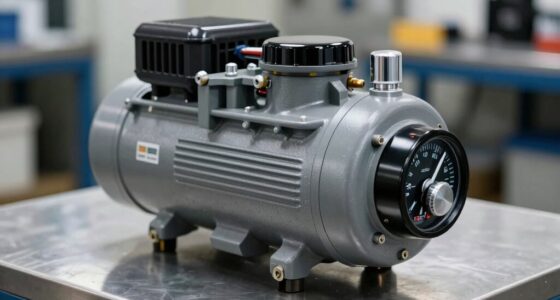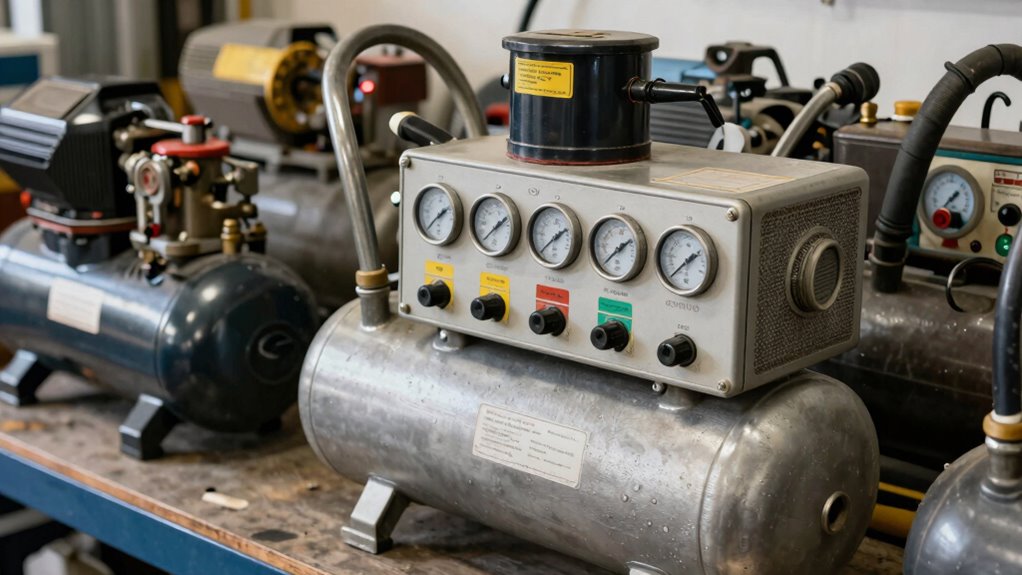

You might find air compressor specs confusing because manufacturers often use different terms, units, and measurements that aren’t always clear or comparable. Too much focus on horsepower can be misleading, while key specs like CFM, PSI, and tank size can seem complex. Without understanding what each rating really means, it’s easy to compare models poorly. If you keep exploring, you’ll discover how to interpret these specs better and make smarter choices.

Get school and study supplies delivered free — and shop member deals
- Fast, free delivery on millions of items
- Access to Prime Big Deal Days deals on October 6–7
- Prime Video, Amazon Music and more included
Key Takeaways
- Manufacturers use different terms, units, and measurement standards, making comparisons confusing.
- Lack of understanding about what each specification signifies leads to misinterpretation.
- Emphasis on horsepower without considering actual output capacity causes misconceptions.
- Inconsistent presentation of specs makes it hard to compare models accurately.
- Focus on impressive specs without evaluating build quality or safety features misleads buyers.
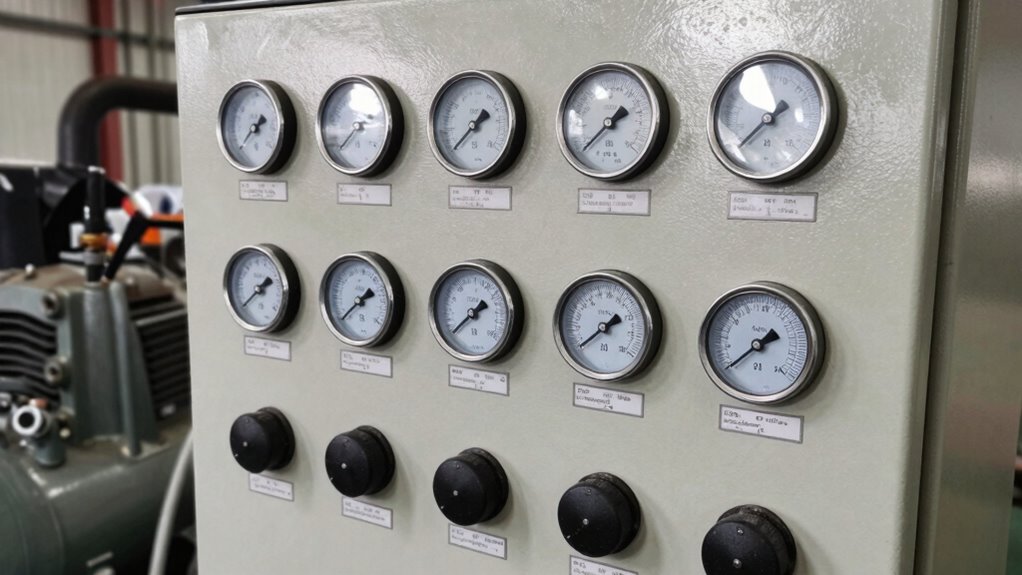
Are you unsure what to look for when choosing an air compressor? If so, you’re not alone. The specs can seem overwhelming because manufacturers often use different terms, units, and measurements, making it hard to compare models directly. The confusion often stems from a lack of understanding about what each specification truly means and how it impacts your use. To make a smart choice, you need to decode these numbers and understand their relevance to your projects. For starters, it’s essential to contemplate the CFM (cubic feet per minute) rating, which indicates how much air the compressor can deliver at a specific pressure. If you overlook this, you might end up with a machine that can’t keep up with your tools, leading to frustration and inefficiency. Similarly, the PSI (pounds per square inch) tells you the maximum pressure the compressor can generate. While more PSI can be beneficial, it’s equally important to match this with your tool requirements to avoid overworking the compressor or risking safety hazards. Understanding air compressor specifications can help clarify what features are most important for your needs. Many buyers get confused because they focus on the horsepower rating, thinking a higher HP means a better compressor. But that’s not always true—horsepower mainly indicates motor power, not output capacity. It can be misleading if you don’t also check the CFM and tank size, which directly affect performance. Speaking of tank size, larger tanks store more compressed air, reducing the number of cycles needed and providing steady airflow. But bigger tanks are bulkier and less portable, so consider your workspace and mobility needs. Additionally, proper maintenance tips and safety guidelines are crucial, as neglecting them can lead to decreased efficiency or safety issues. Proper maintenance ensures your compressor runs efficiently and lasts longer, reducing unexpected breakdowns. Additionally, safety features can play a crucial role in preventing accidents and ensuring safe operation. Proper maintenance and safety practices are key to getting the most out of your compressor and extending its lifespan. Following safety guidelines is equally critical to prevent accidents, especially since compressors involve high-pressure air and electrical components. Many buyers overlook these aspects, which can lead to costly repairs or injuries down the line. When comparing models, look beyond the specs on paper—consider how each feature aligns with your specific tasks and safety practices. A compressor with impressive specs but poor build quality or inadequate safety features may not be the best choice. Ultimately, understanding the specs helps demystify the buying process, making it easier to select a compressor that meets your needs without unnecessary expense or risk. With a bit of research into these details, you’ll be better equipped to make a confident, informed decision.
air compressor CFM and PSI specifications
As an affiliate, we earn on qualifying purchases.
As an affiliate, we earn on qualifying purchases.
Frequently Asked Questions
How Do I Interpret CFM Ratings Accurately?
To interpret CFM ratings accurately, focus on airflow measurement and pressure consistency. CFM indicates how much air the compressor can deliver per minute, so choose a rating that matches your tool’s requirements. Keep in mind that real-world airflow can vary due to factors like pressure drops. Always check if the CFM rating is at a specific pressure, ensuring your compressor maintains consistent pressure and airflow during use.
What Is the Difference Between PSI and Bar?
PSI (pounds per square inch) and bar are both units measuring air pressure, but they differ in scale. PSI is common in the US, with 1 bar roughly equal to 14.5 PSI. Understanding these helps you gauge compressor capacity and air pressure requirements. If your tools specify one, make sure your compressor’s PSI or bar matches, ensuring safe operation and peak performance for your air pressure needs.
How Do Duty Cycles Affect Compressor Performance?
Think of duty cycles as the heartbeat of your compressor; a higher cycle means it beats more often, handling continuous tasks better. This affects maintenance frequency because a compressor with a high duty cycle needs more frequent checks to prevent overheating or wear. Noise levels can also rise if it’s pushed beyond its limits. Choosing the right duty cycle guarantees your compressor performs smoothly, lasts longer, and keeps noise at manageable levels.
Are Higher Horsepower Models Always Better?
Higher horsepower models aren’t always better because efficiency improvements and noise reduction matter just as much. A more powerful compressor can deliver more air, but it might also consume more energy and generate extra noise. If you prioritize quieter operation and energy efficiency, a lower horsepower model with the right features could suit you better. Always compare specs, focusing on how they match your needs, rather than just horsepower alone.
How Does Tank Size Impact Compressor Use?
Tank size directly affects your compressor use by providing more air storage, which means less frequent cycling of the motor. A larger tank capacity guarantees you have a steady air supply for continuous tasks and reduces wear on the compressor. If you’re working on bigger projects or running multiple tools, a bigger tank helps maintain consistent pressure and performance, making your work smoother and more efficient.
best portable air compressor with safety features
As an affiliate, we earn on qualifying purchases.
As an affiliate, we earn on qualifying purchases.
Conclusion
Just like Icarus flying too close to the sun, diving into air compressor specs without understanding them can lead you astray. By demystifying these numbers, you gain control, avoiding pitfalls and soaring confidently in your projects. Remember, knowledge is your wingman—turning complex data into clear, actionable insights. So next time you face specs, keep your feet on the ground but aim high, guided by understanding rather than confusion.
air compressor tank size for woodworking
As an affiliate, we earn on qualifying purchases.
As an affiliate, we earn on qualifying purchases.
high performance air compressor for tools
As an affiliate, we earn on qualifying purchases.
As an affiliate, we earn on qualifying purchases.
Halloween Picks
halloween
As an affiliate, we earn on qualifying purchases.