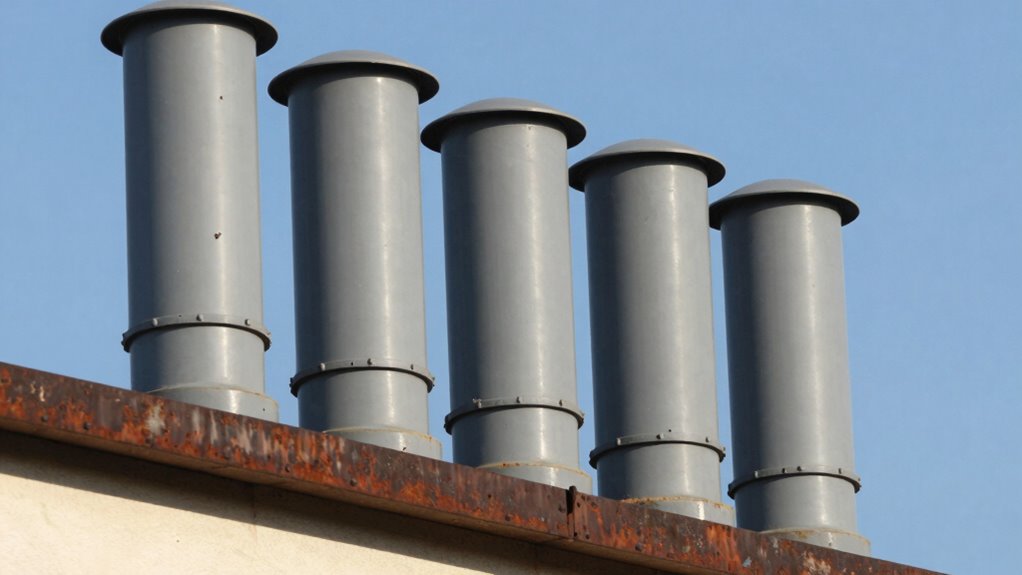
Your plumbing vent stacks are essential for letting air in and out of your drainage system, preventing issues like slow drains, gurgling sounds, and sewer odors. They balance air pressure and keep wastewater moving smoothly. If they get blocked or damaged, problems can quickly occur. Regular inspection and maintenance help keep them clear, and experts can fix more serious issues. Stay tuned for tips on how to spot and address vent stack troubles effectively.
Key Takeaways
- Plumbing vent stacks regulate air pressure in drainage systems, preventing siphoning and ensuring smooth wastewater flow.
- They are often overlooked but critical for eliminating sewer gases and maintaining proper trap seals.
- Common signs of vent stack issues include gurgling drains, foul odors, and slow drainage.
- Regular inspection and cleaning of vent openings prevent blockages from leaves, nests, or debris.
- Professional diagnosis and maintenance are essential for resolving complex vent problems and ensuring system longevity.

Holikme 30 Feet Dryer Vent Cleaner Kit, Flexible Lint Brush with Drill Attachment, Fireplace Chimney Brushes Extends Up to 30 Feet for Easy Cleaning, Use with or Without a Power Drill
Home Essentials: Fireplace chimney brushes includes two high quality synthetic brush head and flexible rods that extend up…
As an affiliate, we earn on qualifying purchases.
As an affiliate, we earn on qualifying purchases.
What Are Plumbing Vent Stacks and How Do They Work
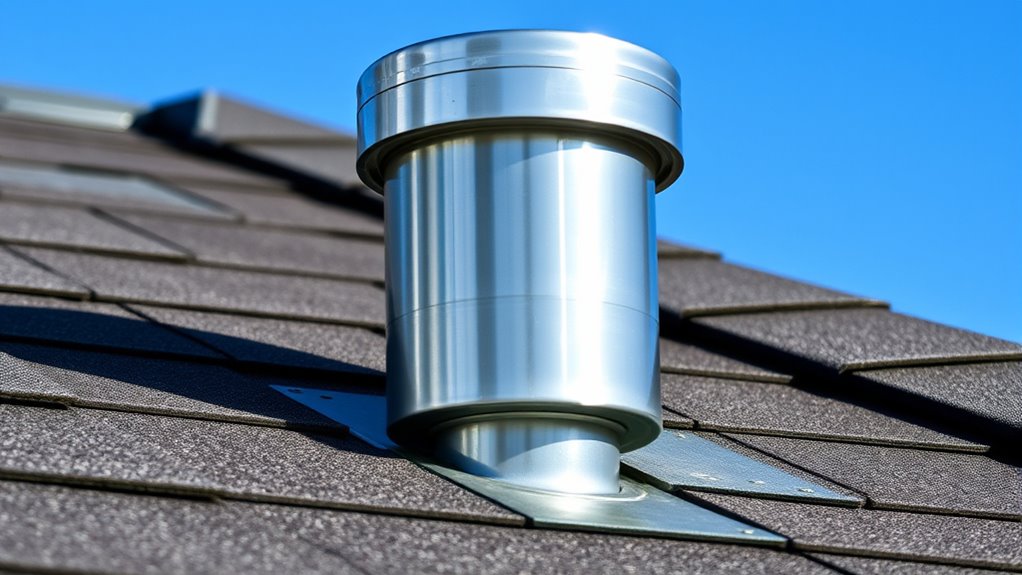
Plumbing vent stacks are essential components of your home’s plumbing system, allowing air to enter and exit the drainage pipes. They work by balancing air pressure inside the pipes, which prevents vacuums and siphoning that could disrupt proper drainage. The pipe design ensures that air flows smoothly into the vent stack, maintaining consistent pressure and flow. When you use a faucet or flush a toilet, water moves through the pipes, creating changes in air pressure. The vent stack allows fresh air to enter, equalizing pressure and helping wastewater drain efficiently. Without a properly designed vent stack, these pressure imbalances can cause slow drains, gurgling sounds, or even sewer gases escaping into your home. Proper pipe design and ventilation keep your plumbing system functioning seamlessly. Additionally, the contrast ratio in your plumbing system ensures clear and consistent flow, preventing issues like airlocks or blockages that could compromise performance.

Endoscope Camera with Light,1920P HD Borescope Tools with 8 Adjustable LED Lights, Endoscope with Semi-Rigid Snake Camera, IP67 Waterproof Inspection Borescope for iOS and Android-16.4ft Dual-Lens
1920P HD Resolution: Sewer camera with 7.9mm probe can inspect hard-to-reach places effortlessly. The 2.0MP HD endoscope can…
As an affiliate, we earn on qualifying purchases.
As an affiliate, we earn on qualifying purchases.
Why Plumbing Vent Stacks Are Essential for Your Home
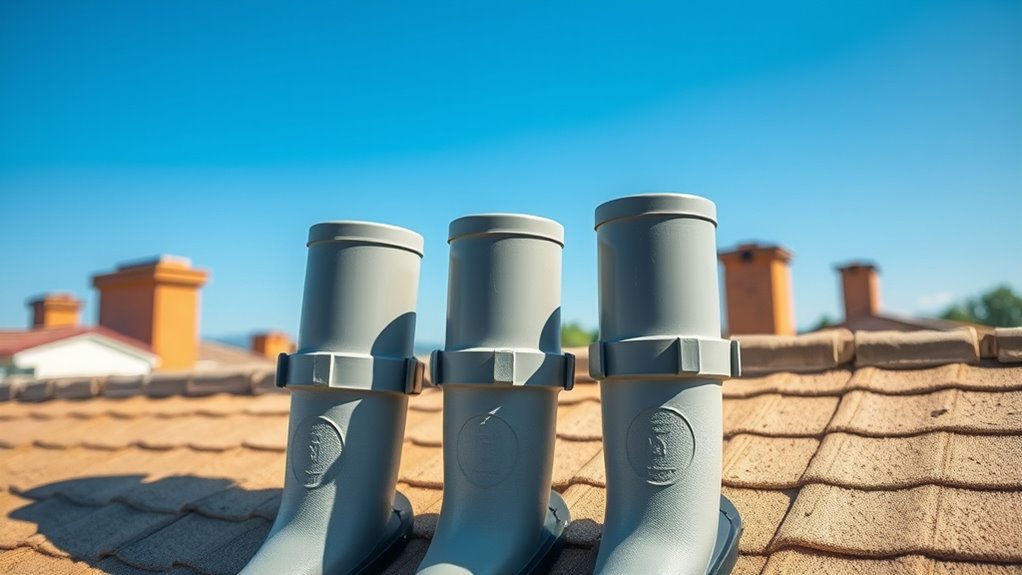
Because they regulate air pressure within your pipes, plumbing vent stacks are essential for preventing drainage problems and sewer gases from entering your home. Without proper venting, wastewater can back up, odors may seep in, and traps can siphon dry. The materials used for vent stacks—like PVC, ABS, or metal—must withstand weather, pests, and corrosion, ensuring longevity. Architectural considerations, such as the vent’s placement and height, are vital to avoid obstructions and code compliance. Proper vent material selection can significantly impact the durability and maintenance needs of your system. Here’s a quick comparison:
| Material | Durability | Cost |
|---|---|---|
| PVC | High | Low |
| Metal | Very high | High |
| ABS | Good | Low |
Choosing the right material and placement guarantees your system functions smoothly and safely.
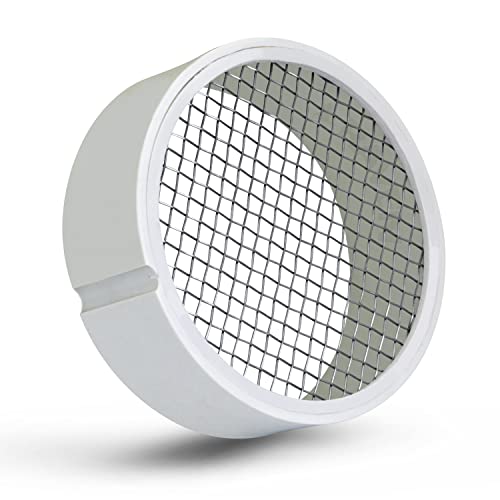
PVC Termination Cap Mesh Screen Vent Cover, Furnace & Roof Vent Cap, Stainless Steel Wire Round Exhaust Pipe Cover End 2" Inner & 2-3/8" Outer Diameter
ATTENTION: Please Read FIRST: the inner diameter measures 2" inch and the outer diameter measures 2-3/8" inch, therefore…
As an affiliate, we earn on qualifying purchases.
As an affiliate, we earn on qualifying purchases.
How to Spot Signs of Blocked or Damaged Vent Stacks
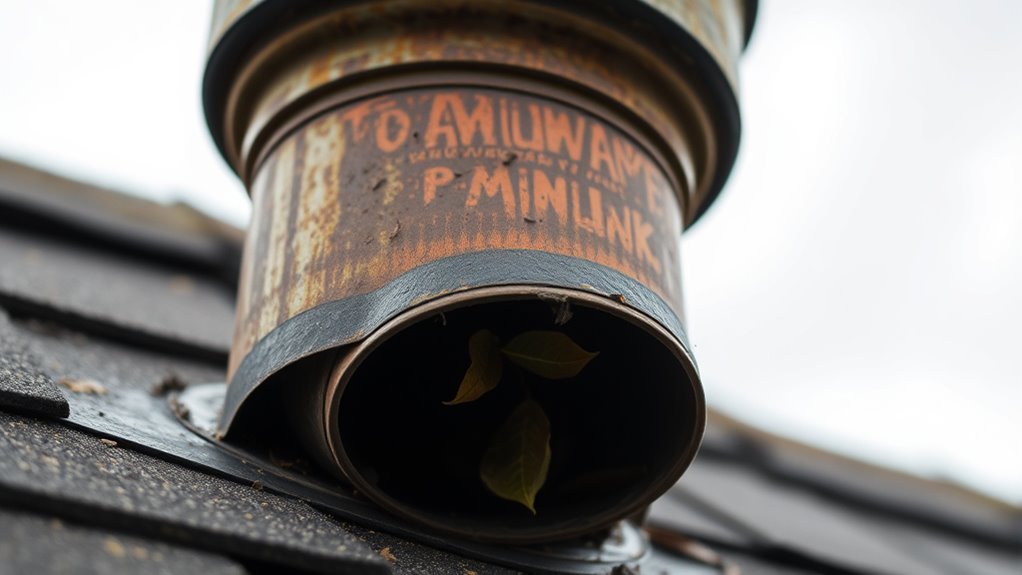
You can often tell if your vent stack is blocked or damaged by listening for unusual gurgling sounds when you use your sinks or toilets. Persistent odors in your home are another warning sign, indicating air isn’t venting properly. Additionally, slow drainage across multiple fixtures suggests a vent issue that needs your attention. Recognizing smart kitchen tools can help streamline plumbing maintenance tasks, making it easier to identify and address vent problems early.
Unusual Gurgling Noises
Have you ever noticed a strange gurgling sound coming from your drains or toilet? That noise often signals an issue with your vent stack, usually a blocked or damaged pipe. When vent stacks are compromised, air pressure in your plumbing system can’t equalize properly. This imbalance causes water seals in traps to break or fluctuate, leading to those unsettling gurgles. Recognizing these sounds early can prevent bigger problems. Here’s a quick overview:
| Symptom | Cause | Effect |
|---|---|---|
| Gurgling drains | Blocked vent stack | Disrupted water seals |
| Slow draining | Reduced air pressure | Ineffective drainage |
| Foul odors | Water seals broken | Odors escaping |
| Repeated noises | Damaged vent pipe | Air pressure imbalance |
Addressing these signs promptly keeps your plumbing functioning smoothly.
Persistent Odors Present
Persistent odors around your drains or plumbing fixtures can be a clear sign that something’s wrong with your vent stack. When the vent stack design is compromised, gases from your sewer system can escape into your home, causing unpleasant smells. These odors often linger and become more noticeable during use of sinks, toilets, or showers. Proper odor control depends on a functioning vent stack that allows gases to vent outside safely. If you notice persistent smells despite good drain maintenance, it might indicate a blockage or damage in your vent system. Inspecting your vent stack for obstructions or cracks can help identify the issue early. Addressing vent stack problems promptly restores proper odor control and maintains a healthy, odor-free environment.
Slow Drainage Occurs
Slow drainage is often one of the first signs that your vent stack may be blocked or damaged. When venting isn’t functioning properly, air pressure in your pipes drops, causing water to drain slowly. You might notice sinks, tubs, or toilets taking longer to empty. Different pipe materials, like PVC or cast iron, can also influence how quickly drainage issues become apparent. To better understand, consider this:
| Symptom | Cause |
|---|---|
| Slow draining fixtures | Blocked or damaged vent stack affecting air pressure |
| Gurgling sounds | Air trapped in pipes due to vent issues |
| Frequent clogs | Poor venting causing debris buildup |
| Bad odors | Sewer gases escaping through faulty vents |
| Water backup in fixtures | Pressure imbalance from vent problems |
Recognizing these signs helps you identify vent stack issues early. Proper venting systems are essential for maintaining optimal drainage and preventing plumbing problems.

Sewer Gas Leak Detector by Forensics | 20-Year Sensor | Bathroom, Drains, Sewage, Plumbing |
⚛️ ACCURATE: Accurate Made in Japan sensor with 20 year life.
As an affiliate, we earn on qualifying purchases.
As an affiliate, we earn on qualifying purchases.
Common Causes of Vent Stack Problems You Should Know
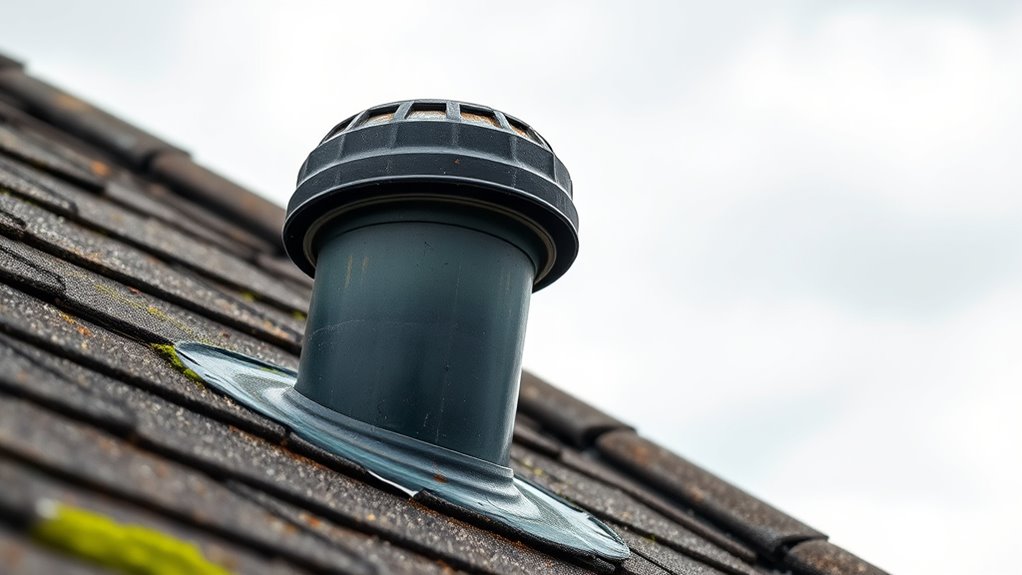
Vent stack problems often stem from simple issues that can be easily overlooked. One common cause is the use of poor-quality vent stack materials, which may corrode or crack over time, leading to blockages or leaks. Additionally, improper installation of vent stacks can cause misalignments or leaks, disrupting airflow. Blockages caused by debris, such as leaves or nests, are another frequent problem. Sometimes, homeowners install alternative venting systems that aren’t compatible with their plumbing setup, resulting in insufficient ventilation and gurgling sounds. These issues can cause slow drainage and sewer gas odors. Regular inspection of vent stack materials and ensuring proper installation are essential steps to prevent these problems. Addressing these common causes helps maintain a healthy, functioning plumbing system and proper ventilation.
How to Inspect and Maintain Your Vent Stacks Regularly
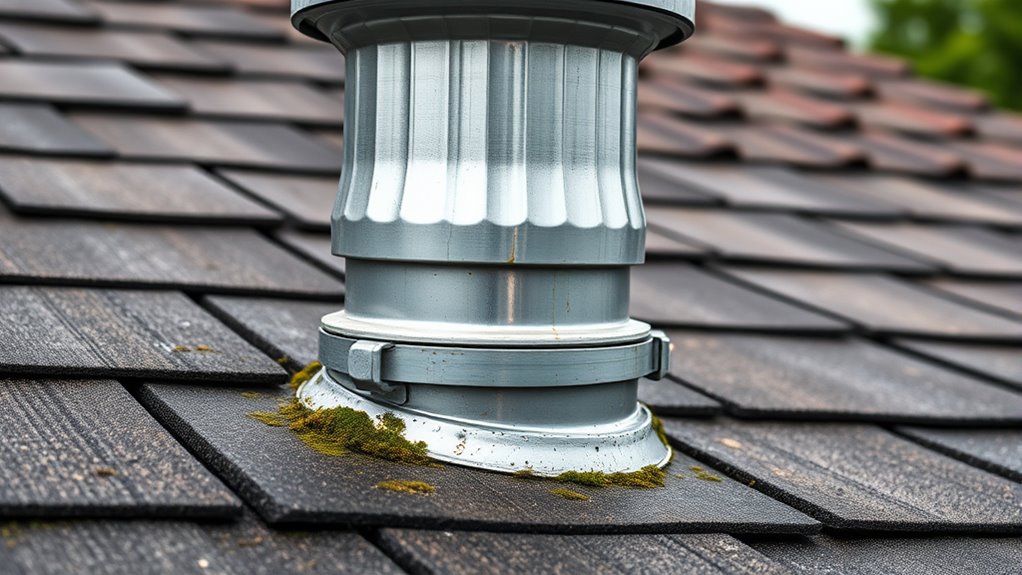
To keep your vent stacks functioning properly, you need to regularly inspect them for any signs of trouble. Use visual techniques to check for cracks, blockages, or debris, and clean them as needed to prevent issues. Be alert for warning signs like slow drainage or gurgling sounds, which can indicate problems that need attention. Regular maintenance can also help prevent damage caused by environmental factors such as UV exposure UV filters, which can compromise the integrity of your vent stacks over time.
Visual Inspection Techniques
How can you guarantee your plumbing vent stacks stay functional and free of blockages? Regular visual inspection is key. Start by checking accessible vent openings for debris or animal nests. Use a camera inspection if you suspect internal blockages or damage; it provides a clear view inside the pipes. Smoke testing can also reveal leaks or obstructions by introducing smoke into the system and observing escape points. Keep in mind, some issues require professional evaluation. To help you understand common inspection methods, see the table below:
| Method | Purpose | When to Use |
|---|---|---|
| Camera Inspection | Detect internal blockages or damage | Suspicion of hidden issues |
| Smoke Testing | Find leaks and vent obstructions | Suspected airflow problems |
| Visual Check | Spot debris or animal nests at vents | Routine maintenance |
| Sound Inspection | Listen for abnormal noises during flow | Ongoing monitoring |
Cleaning and Clearing Blockages
Regular maintenance of your plumbing vent stacks is essential to prevent blockages that can disrupt proper drainage and airflow. Start by inspecting the vents for debris, leaves, or nests that may cause blockages. Use a garden hose or a plumbing snake to clear any obstructions you find. Clearing these blockages helps prevent sewer smell from escaping into your home and reduces the risk of backflow. Check the pipe insulation around vent pipes to ensure it isn’t damaged or missing, as exposed insulation can lead to condensation issues that contribute to blockages. Regularly cleaning and maintaining your vent stacks keeps your plumbing system functioning efficiently, minimizes unpleasant odors, and extends the lifespan of your pipes. Incorporating local automation can help remind you to perform these maintenance tasks regularly, ensuring your system stays in optimal condition. Consistent care saves you time and costly repairs down the line.
Recognizing Warning Signs
Maintaining your plumbing vent stacks involves more than just clearing debris; it requires being able to recognize early warning signs of trouble. Look for slow draining sinks, gurgling noises, or foul odors, which may indicate vent blockages or improper vent stack height. Inspect the vent stack materials—whether PVC, cast iron, or other materials—as cracks or corrosion can cause leaks or blockages. Regularly check the vent opening on your roof for obstructions like leaves, nests, or debris. Also, ensure the vent stack height adheres to building codes; a vent that’s too short may not provide proper airflow, leading to drainage issues. Being attentive to these signs and conditions helps prevent costly repairs and keeps your plumbing system functioning smoothly. Additionally, understanding Gold IRA Markets can offer insights into protecting your financial future should plumbing issues lead to costly repairs.
When to Call a Professional for Vent Stack Repairs
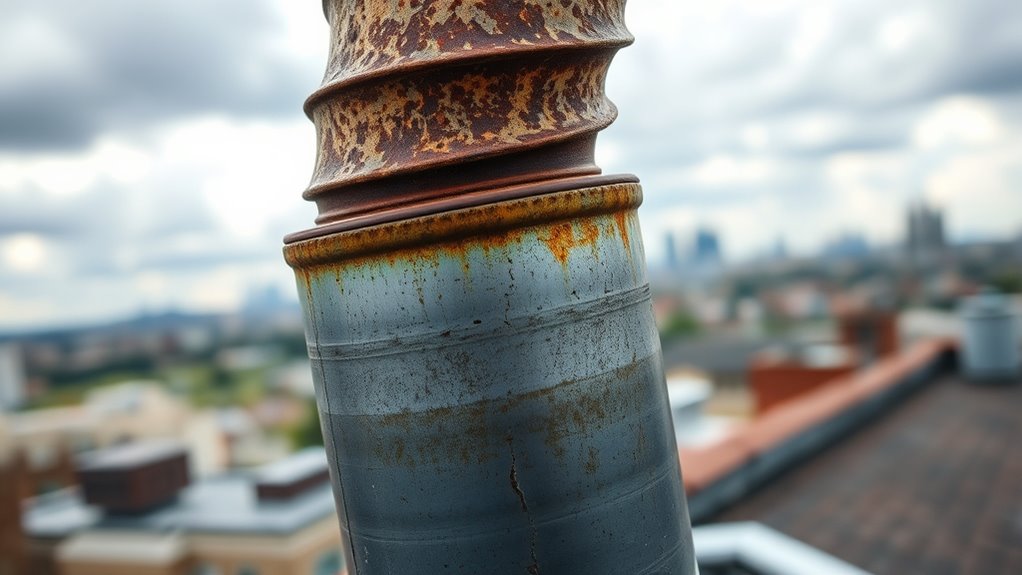
Sometimes, vent stack issues can be difficult to diagnose and fix on your own, especially if you’re unfamiliar with plumbing systems. While DIY fixes might seem tempting, many vent stack myths can lead you astray or cause more damage. If you notice persistent odors, gurgling drains, or slow flushing toilets, it’s time to call a professional. Attempting to repair complex vent problems without proper tools and expertise can worsen the situation or compromise your home’s plumbing integrity. A licensed plumber can accurately identify the issue, whether it’s a blockage, damage, or improper installation. Proper navigation and mapping, along with specialized tools, enable professionals to quickly pinpoint and resolve vent stack issues. Don’t risk further damage or costly repairs—know when to seek expert help to ensure your vent stacks function correctly and safely.
Simple Tips to Keep Your Vent Stacks Clear and Working
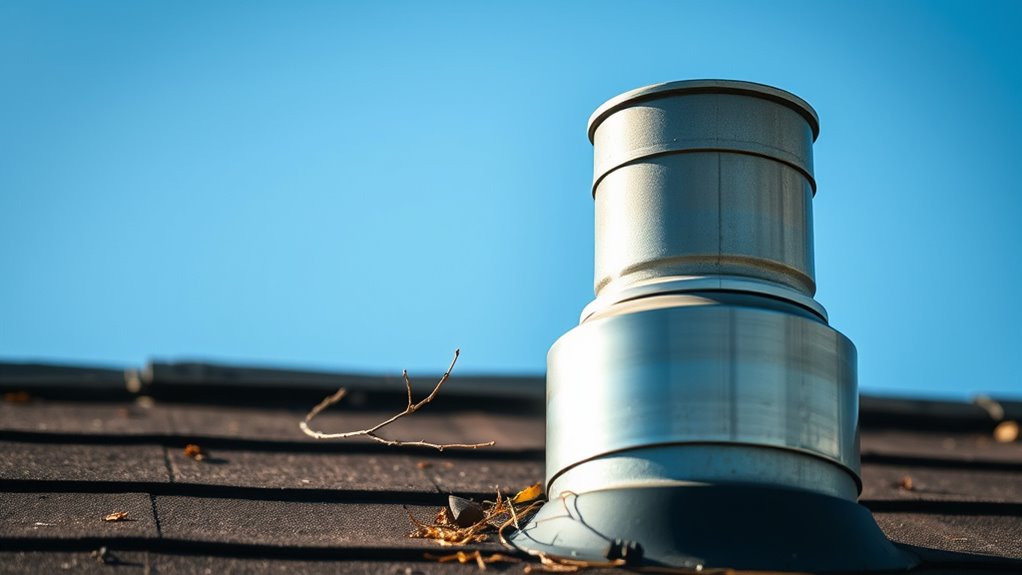
Keeping your vent stacks clear is essential for ensuring your plumbing system functions smoothly. Start by inspecting vent stack materials regularly—whether they’re PVC, metal, or other materials—and look for blockages or damage. Clear debris like leaves, bird nests, or dirt that may accumulate at the vent openings. If you notice slow drainage or gurgling sounds, it could mean a vent is clogged. You can attempt DIY vent repair by using a plumber’s snake or a garden hose to flush out minor blockages. Wear gloves and use caution to avoid damaging the vent stack. Regular maintenance, combined with prompt attention to any warning signs, helps keep your vent stacks working efficiently and prevents costly plumbing issues down the line. Regularly checking for blockages and damage ensures your plumbing remains in optimal condition.
Frequently Asked Questions
Can Vent Stacks Cause Indoor Air Quality Issues?
Yes, vent stacks can cause indoor air quality issues if they develop odors or leaks. These odors can seep into your home, affecting your indoor air quality and causing discomfort or health concerns. Proper maintenance, like checking for blockages or leaks, helps prevent bad odors from escaping and guarantees your vent stacks function correctly, keeping the air inside your home fresh and safe.
How Do Weather Conditions Affect Vent Stack Performance?
Weather conditions directly impact vent stack performance by affecting their ability to vent gases properly. Heavy rain, snow, or strong winds can block or create pressure imbalances, leading to sewer gases entering your home. You can improve climate resilience by ensuring proper vent design, sealing leaks, and installing weatherproof caps. Regular maintenance helps your vent stacks withstand diverse weather, maintaining proper airflow and preventing indoor air quality issues.
Are There Eco-Friendly Options for Replacing Vent Stacks?
Think of eco-friendly vent stacks as the green leaves of your home’s plumbing system. You can choose sustainable alternatives like bamboo or recycled plastic, which lessen environmental impact. These eco-friendly materials are durable and help reduce your carbon footprint. By replacing traditional vent stacks with these options, you’re making a smart, sustainable choice that benefits both your home and the planet. It’s a small step with a big impact.
What’s the Average Lifespan of a Typical Vent Stack?
You can expect a typical vent stack to last around 20 to 50 years, depending on material durability and proper vent stack maintenance. Regular inspections help identify corrosion or damage early, extending its lifespan. Materials like cast iron last longer than plastic, but all need periodic checks. Staying on top of maintenance guarantees your vent stack functions efficiently, preventing costly plumbing issues down the line.
How Does Building Design Impact Vent Stack Placement?
You might think building design doesn’t matter for vent stack placement, but it actually plays a vital role. Building codes require strategic placement to guarantee proper airflow and prevent sewer gases from entering your home. If the design compromises structural integrity or neglects ventilation needs, it can cause problems. So, thoughtful planning ensures your vent stacks are correctly positioned, maintaining safety and functionality without risking structural issues.
Conclusion
Think of your plumbing vent stacks as the unsung heroes of your home’s plumbing system, keeping everything flowing smoothly behind the scenes. By staying alert to signs of trouble and performing regular maintenance, you can prevent clogs and damage. When issues do arise, don’t hesitate to call in a professional. Keeping your vent stacks in top shape is like tending a garden — with a little care, it’ll flourish and keep your home running effortlessly.


![The early History of the Singular Value Decomposition (1993) [pdf]](https://micronomicon.com/wp-content/uploads/2026/07/the-early-history-of-the-singular-value-decomposition-1993-pdf-featured-1-260x140.jpg)

![The Early History Of The Singular Value Decomposition (1993) [Pdf]](https://micronomicon.com/wp-content/uploads/2026/07/the-early-history-of-the-singular-value-decomposition-1993-pdf-featured-260x140.jpg)