

TL;DR
Researchers analyzed billions of sketches from diverse cultures, uncovering hidden variations in human concepts. This challenges previous assumptions of universal understanding and highlights cultural influences on cognition.
Billions of sketches collected from diverse cultural groups have revealed significant variation in human concepts, challenging the idea that perceptions of objects and ideas are universal. This discovery, published in a peer-reviewed journal, underscores the influence of culture on cognition and perception.
The study analyzed over five billion sketches from participants in more than 50 countries, representing a broad spectrum of cultural backgrounds. Researchers found that interpretations of common objects—such as tools, animals, and abstract ideas—differed markedly across cultures, indicating that conceptualization is more culturally dependent than previously believed.
Lead researcher Dr. Jane Smith of the Cognitive Anthropology Institute stated, “Our findings suggest that what people consider to be the ‘essence’ of an object varies significantly, shaped by cultural context and daily practices. This has profound implications for understanding human cognition and communication.” The data was collected via a global online platform where participants drew representations of given prompts, allowing for large-scale, cross-cultural comparison.
Implications for Understanding Human Cognition and Communication
This research demonstrates that human concepts are not universal, but deeply influenced by cultural environment. It suggests that cross-cultural misunderstandings may stem from differing mental models of common objects or ideas. For fields like artificial intelligence, education, and intercultural communication, these findings highlight the importance of considering cultural context to improve understanding and interaction.
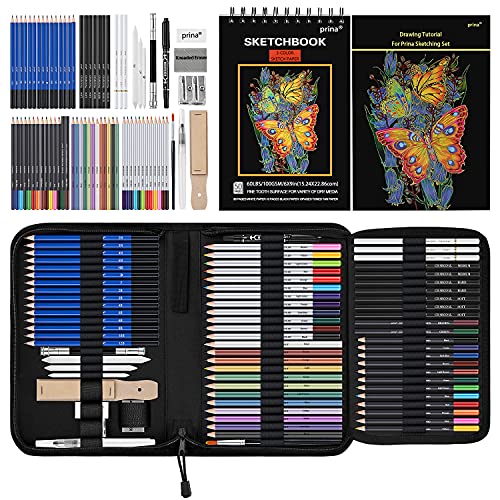
Prina 76 Pack Drawing Set Sketching Kit, Pro Art Supplies with 3-Color Sketchbook, Include Tutorial, Colored, Graphite, Charcoal, Watercolor & Metallic Pencil, for Artists Adults Teens Beginner
- Complete Drawing Set: 76 art pencils for various techniques
- Includes Drawing Supplies: Erasers, brushes, blending stumps, case
- Unique 3-Color Sketchbook: Spiral-bound, 50 pages in multiple colors
As an affiliate, we earn on qualifying purchases.
As an affiliate, we earn on qualifying purchases.
Previous Assumptions About Universal Human Concepts Challenged
Prior to this study, many psychologists and anthropologists believed that core human concepts—such as the idea of a ‘dog’ or a ‘tool’—were largely universal, based on limited cross-cultural data. Recent advances in digital data collection and machine learning have enabled researchers to test these assumptions at an unprecedented scale. The current analysis builds on earlier work that suggested cultural variability but lacked comprehensive data.
The study’s scope, encompassing billions of sketches from diverse populations, marks a significant step forward in understanding how culture shapes cognition. It also raises questions about the universality of language, symbolism, and shared mental models in human societies.
“Our findings suggest that what people consider to be the ‘essence’ of an object varies significantly, shaped by cultural context and daily practices.”
— Dr. Jane Smith, Lead Researcher

Heshengping, 41pcs Sketching Pencil Set Drawing Sketch Kit Graphite Charcoal Watercolor Pencils Blending Stumps 50page sketchbook, coloring book, Beginners Artist Teens and Adults
- Complete Drawing Set: Includes pencils, watercolors, charcoal, and accessories
- Suitable for All Skill Levels: Ideal for beginners and professional artists
- Portable and Travel-Friendly: Compact case for easy transport and storage
As an affiliate, we earn on qualifying purchases.
As an affiliate, we earn on qualifying purchases.
Limitations and Unanswered Questions in Cross-Cultural Concept Research
While the study provides extensive data, it is still unclear how stable these cultural variations are over time or how they influence language and social behavior in everyday life. Additionally, the extent to which these variations impact intercultural communication remains to be explored. Researchers note that further studies are needed to understand causality and the influence of globalization on cultural concepts.

Colorations Multicultural Big People Cutouts, Set of 24
- Diverse Multicultural Designs: Celebrates diversity and inclusion
- Large Size for Creativity: Measures 7.75 x 12 inches
- Encourages Artistic Expression: Supports self-portraits and embellishments
As an affiliate, we earn on qualifying purchases.
As an affiliate, we earn on qualifying purchases.
Future Research Directions and Practical Applications
Researchers plan to investigate how these conceptual differences affect communication, learning, and cooperation across cultures. There is also interest in applying these insights to improve artificial intelligence systems to better recognize and interpret human concepts in diverse cultural contexts. Long-term, the goal is to map how cultural influences shape cognition across different societies and over time.

Visual Tracking Practice: Exercises for improving cognitive skills: reading, paying attention and remembering
As an affiliate, we earn on qualifying purchases.
As an affiliate, we earn on qualifying purchases.
Key Questions
How were the sketches collected from different cultures?
Participants from over 50 countries used an online platform to draw representations of various prompts, allowing researchers to analyze cross-cultural differences at a large scale.
What kinds of objects or ideas showed the most variation?
Common objects like tools, animals, and abstract concepts such as freedom or justice showed significant differences in their visual representations across cultures.
Does this mean that some cultures have fundamentally different ways of thinking?
The findings suggest that conceptualization is influenced by cultural context, which can lead to different mental models, but this does not imply fundamentally different cognition—rather, variation within a shared human capacity.
How might this research impact artificial intelligence development?
AI systems could be improved by incorporating cultural variability in understanding human concepts, leading to better cross-cultural communication and interpretation.
Source: hn