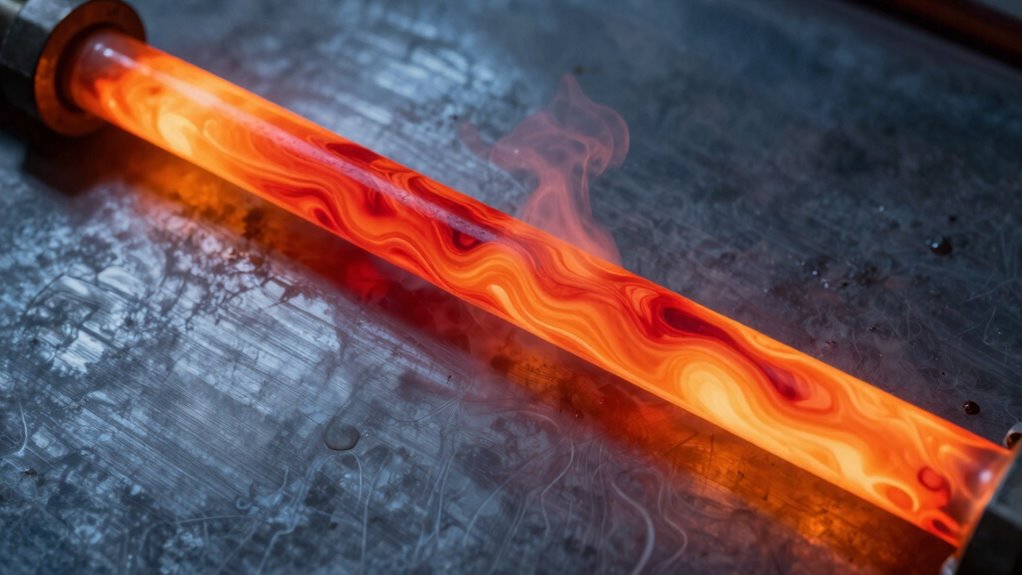

If hot water takes forever to reach your tap, heat loss might be the culprit. A heat loss map shows where your pipes lose heat, helping you spot problem areas like insulation gaps or leaks. By identifying these, you can take steps to improve insulation or fix leaks. Addressing heat loss not only speeds up hot water delivery but also saves energy. Keep exploring to discover how a heat loss map can help you solve this issue effectively.
Key Takeaways
- Heat loss in pipes causes delayed hot water delivery and increased energy bills.
- Thermal imaging with heat loss maps identifies cold spots and insulation gaps.
- Targeted repairs on identified areas improve hot water efficiency and reduce wait times.
- Proper insulation around pipes and fixtures minimizes heat escape and accelerates heating.
- Regularly updating heat loss maps helps monitor and address new insulation issues promptly.

UNI-T Thermal Imaging Camera UTI32 High Temperature Industrial Infrared Thermal Camera 1024 Pixels Construction Thermal Imager -20-1000
- Resolution: 32×32 pixels for clear imaging
- Field of View: 30° x 30° for precise analysis
- Adjustable Emissivity: Customizable for accurate readings
As an affiliate, we earn on qualifying purchases.
As an affiliate, we earn on qualifying purchases.
What Is Heat Loss in Plumbing and Why Does It Matter?
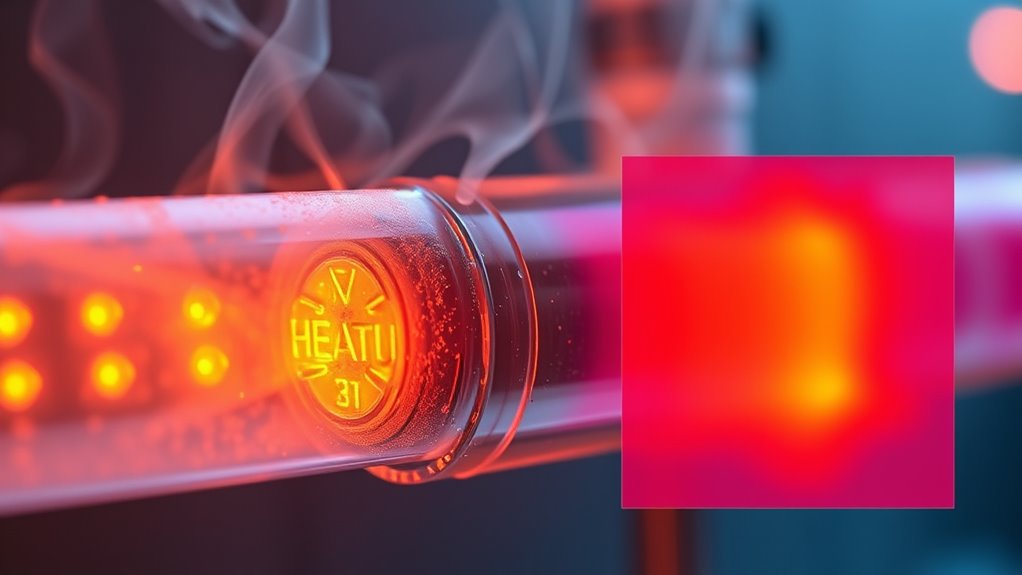
Have you ever wondered why your hot water pipes feel cold to the touch or why your energy bills are higher than expected? That’s because of heat loss in plumbing systems. Heat loss occurs when warm water transfers heat to the surrounding environment, often through uninsulated pipes. Over time, pipe aging can worsen this issue, as materials degrade and lose their thermal insulation properties. Without proper insulation, heat escapes more easily, making your system work harder to maintain water temperature. This inefficiency can also be attributed to the materials and craftsmanship of the pipes themselves. This not only wastes energy but also increases costs. Understanding heat loss helps you identify where your plumbing needs attention. Addressing pipe aging and improving thermal insulation can markedly reduce heat escape, saving you money and ensuring more efficient hot water delivery.

Duck Brand Foam Pipe Covers, Pipe Insulation Foam Tubes for Hot and Cold Water Pipes, Pre Slit and Self Sealing Adhesive Edge, 0.75 in. x 1 Ft., 6 Sticks Per Package, 6 Feet Total, Black
- Insulates hot and cold water pipes: Suitable for hot and cold water pipes
- Pre-slit for easy installation: Pre-slit for quick setup
- Self-sealing edges for secure fit: Self-sealing for easy securing
As an affiliate, we earn on qualifying purchases.
As an affiliate, we earn on qualifying purchases.
How Does a Heat Loss Map Help You Spot Problems?
A heat loss map provides a visual overview of where your plumbing system is losing heat, making it easier to identify problem areas. Using thermal imaging, it reveals temperature differences along pipes and fixtures that may indicate insulation gaps or leaks. This detailed insulation assessment helps you pinpoint spots where heat escapes, so you can target repairs more effectively. By visualizing heat loss, you avoid guesswork and quickly find areas needing insulation improvement or repair. The map highlights cold spots or uneven temperatures that signal potential issues, saving you time and money. Additionally, integrating smart home automation can help monitor and manage your plumbing system more proactively. Ultimately, a heat loss map empowers you to optimize your plumbing’s efficiency, reduce heat loss, and ensure hot water delivery is faster and more reliable.

HF96 Thermal Camera with AI Scene Detection, Laser Pointer, -4°F~1022°F
- AI Scene Recognition: Automated water leak and insulation detection
- 3-in-1 Tool: Thermometer, thermal camera, laser pointer
- User-Friendly Controls: Buttons for power, menu, capture, and palette
As an affiliate, we earn on qualifying purchases.
As an affiliate, we earn on qualifying purchases.
Where Does Heat Usually Escape in Your Pipes?
Heat often escapes through sections of your pipes where the material and thickness aren’t well-suited to retaining warmth. Insulation plays a key role in slowing heat loss, but its effectiveness can vary based on quality and application. Additionally, the surrounding temperature influences how quickly heat escapes, especially in unprotected or exposed pipes.
Pipe Material and Thickness
The material and thickness of your pipes play a crucial role in determining where heat escapes. Different pipe compositions, such as copper, plastic, or steel, conduct heat at varying rates. Copper pipes, for example, are highly conductive, so they lose heat quickly unless properly insulated. Plastic pipes insulate better naturally, reducing heat loss. Pipe wall thickness also influences heat transfer; thicker walls provide more insulation and slow down heat escape, while thinner walls allow heat to escape more readily. If your pipes are made from a material with high thermal conductivity and have minimal wall thickness, expect more heat loss along their length. Choosing the right pipe composition and wall thickness can markedly improve your hot water system’s efficiency and reduce waiting time. Additionally, thermal conductivity varies significantly among materials, impacting how quickly heat dissipates from your pipes.
Insulation Effectiveness
Insulation effectiveness directly impacts where heat escapes along your pipes. High-quality insulation minimizes heat transfer by reducing thermal conductivity, keeping water hot longer. Insulation durability is vital because it guarantees the material maintains its insulating properties over time, resisting wear, moisture, and temperature fluctuations. When insulation has low thermal conductivity, it effectively slows heat loss, preventing your pipes from cooling down quickly. Conversely, worn or poor-quality insulation allows heat to escape more readily, especially at joints, bends, or exposed sections. Properly insulated pipes with durable material prevent heat from leaking out and save energy. Regularly inspecting your insulation helps identify areas where heat may escape, ensuring your hot water stays hot and your energy bills stay low. Additionally, considering ventilation considerations can help prevent moisture buildup that may degrade insulation over time.
Ambient Temperature Impact
Since ambient temperature plays a crucial role in how quickly heat escapes your pipes, understanding where heat tends to leak is essential. When the surrounding air is colder, heat transfer accelerates due to the higher thermal conductivity between warm water and cold air. Pipes exposed to lower ambient temperatures lose heat more rapidly, especially at points where insulation is minimal or nonexistent. This thermal conductivity difference causes heat to flow from the hot water inside your pipes to the cooler environment outside. As a result, your water takes longer to stay hot, increasing energy consumption. To minimize this effect, guarantee pipes are well-insulated, especially in unheated spaces, and consider the ambient temperature’s fluctuations to maintain consistent hot water supply and reduce heat loss. Effective insulation can significantly slow down this heat transfer process, helping to conserve energy and maintain water temperature longer.
Duck Brand Foam Pipe Covers, Pipe Insulation Foam Tubes for Hot and Cold Water Pipes, Pre Slit and Self Sealing Adhesive Edge, 0.75 in. x 1 Ft., 6 Sticks Per Package, 6 Feet Total, Black
- Insulates hot and cold water pipes: Suitable for hot and cold water pipes
- Pre-slit for easy installation: Pre-slit for quick setup
- Self-sealing edges for secure fit: Self-sealing for easy securing
As an affiliate, we earn on qualifying purchases.
As an affiliate, we earn on qualifying purchases.
How Can You Create and Use a Heat Loss Map at Home?

Start by walking through your home to spot cold areas and insulation gaps. Use a thermal camera or infrared thermometer to create a detailed heat loss map. This visual guide helps you target repairs and improve energy efficiency effectively.
Identify Cold Spots
Have you ever noticed certain areas of your home feel colder than others, even when the thermostat is set the same? Using thermal imaging helps you identify these cold spots accurately. Imagine holding a thermal camera and seeing bright colors for warm areas, while cold spots appear as dark patches. To pinpoint cold spots, consider these key visuals:
- A patchy wall showing a dark area indicating heat loss.
- Gaps around windows with cool streaks highlighting insulation weaknesses.
- Unheated corners with noticeably lower temperatures than the surrounding space.
- Implementing a heat loss map can help you systematically locate and address these issues for better energy efficiency.
Map Insulation Gaps
Creating a heat loss map at home is a practical way to identify insulation gaps that let heat escape. Start by inspecting your walls, attic, and basement for visible cracks or poorly insulated areas. Pay special attention to spots around windows, doors, and outlets. Use a thermal camera or an infrared thermometer to detect cold spots indicating insulation gaps. Don’t forget to check pipes, as unwrapped pipes can lose heat quickly; pipe wrapping is an effective solution to reduce heat loss. Mark these gaps on your map to prioritize insulation improvements. Sealing insulation gaps helps retain heat and improves energy efficiency. Regularly updating your heat loss map ensures you catch new gaps over time, keeping your home warm and reducing energy costs. Additionally, understanding heat loss mechanisms can help you implement more targeted insulation strategies.
What Are Simple Ways to Cut Down on Heat Loss?
Wondering how to reduce heat loss in your home? Here are simple ways to cut down on wasted energy. First, consider insulation upgrades—adding or improving insulation keeps heat where it belongs. Imagine thicker walls or insulating your attic to create a cozy barrier. Second, reroute your pipes—placing hot water lines closer to the heat source or inside insulated walls minimizes heat escape. Picture pipes tucked inside walls or wrapped with foam sleeves, preventing heat from seeping out. Third, seal leaks around windows and doors; visualize draft stoppers blocking chilly air from sneaking in. These small adjustments can considerably reduce heat loss, making your home warmer and more energy-efficient without major renovations. Additionally, choosing top-rated vacuums of 2024 can help keep your living space clean and comfortable, further enhancing your home’s energy efficiency.
Why Fixing Heat Loss Will Save You Time and Money
Fixing heat loss in your home can lead to significant savings of both time and money over the long run. When your home is more energy efficient, your heating system doesn’t have to work as hard, reducing energy bills and decreasing wear and tear on equipment. By sealing leaks, insulating pipes, and improving your home’s overall insulation, you optimize heat retention. These improvements lower your energy consumption, translating directly into cost savings month after month. Additionally, a well-insulated home heats up faster and stays warm longer, saving you time waiting for hot water or heat to circulate. Investing in fixing heat loss not only benefits your wallet but also makes your home more comfortable and sustainable. It’s a smart way to maximize efficiency and minimize ongoing expenses. Incorporating Suprem fabric in your home insulation solutions can also contribute to better heat retention and durability.
Easy DIY Tips for Reducing Heat Loss
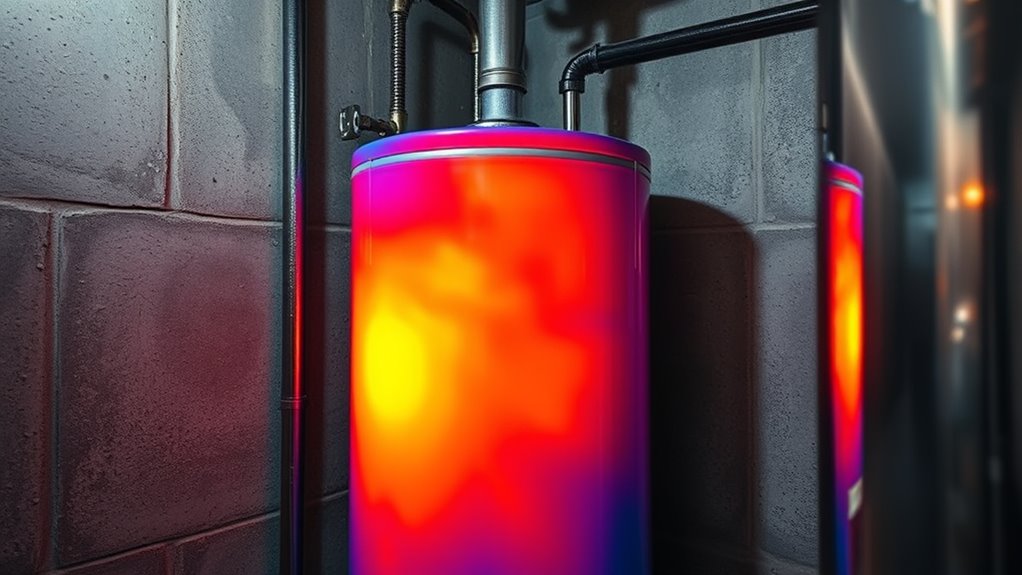
Reducing heat loss in your home can be simple and inexpensive with a few easy DIY steps. One effective method is adding pipe insulation around your hot water pipes, which keeps heat from escaping and improves energy efficiency. Second, seal any gaps or leaks around windows and doors using weatherstripping or caulk to prevent warm air from escaping. Third, consider installing reflective radiator panels behind radiators to bounce heat back into the room instead of losing it through walls. These small upgrades can considerably cut heat loss, making your hot water system more efficient. Additionally, understanding heat distribution can help you identify the most effective areas to insulate or seal. By taking these simple steps, you not only save on energy bills but also enjoy faster hot water delivery without major renovations.
When Should You Call a Pro for Hot Water Issues?
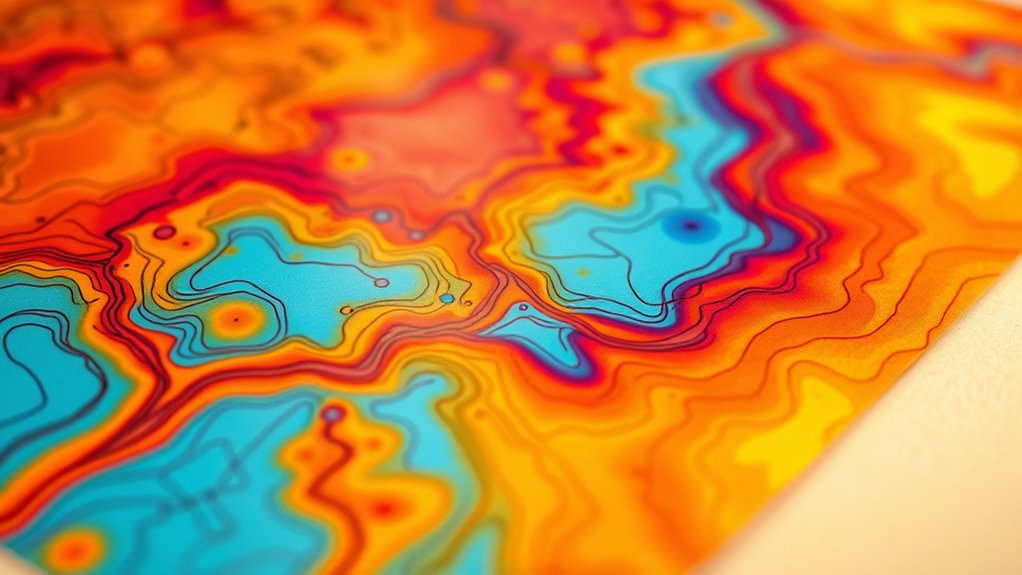
While some minor hot water issues can be addressed with DIY fixes, you should call a professional when problems persist or worsen. If you notice inconsistent water temperatures or longer wait times, it’s time to seek expert help. Professionals can check your pipe insulation to guarantee heat isn’t escaping, especially in colder months. They’ll also perform accurate temperature monitoring to identify hidden issues like faulty thermostats or sediment buildup. If your hot water runs out quickly or takes too long to heat up despite adjusting the thermostat, a pro can diagnose the root cause. Don’t ignore these signs, as unresolved problems can lead to higher energy bills and possible damage to your plumbing system. Calling an expert ensures safe, efficient, and long-lasting hot water performance.
Frequently Asked Questions
Can Insulation Alone Completely Prevent Heat Loss in Plumbing?
Insulation alone can’t completely prevent heat loss in plumbing, but it considerably improves insulation effectiveness. By increasing pipe thermal resistance, you slow down heat transfer, keeping hot water warmer longer. However, factors like pipe material, installation quality, and external temperatures can still cause some heat loss. To maximize efficiency, combine insulation with proper pipe placement and other heat retention methods for the best results.
How Often Should I Check My Pipes for Heat Loss Issues?
Think of your pipes as a delicate dance partner—keep a close eye to prevent missteps. You should check your pipes for heat loss issues every few months, especially during seasonal changes. Use pipe insulation to shield them and perform temperature monitoring to catch any cold spots early. Regular inspections help make sure your hot water stays warm and your energy bills stay in check, keeping the rhythm smooth all year round.
Are There Specific Pipe Materials That Reduce Heat Loss Better?
You should choose pipe materials like copper or PEX, which naturally retain heat better. To further reduce heat loss, add pipe insulation and consider pipe coatings designed to reflect heat. These options help keep hot water flowing efficiently, saving energy and reducing wait times. By combining the right material with proper insulation and coatings, you’ll notice quicker hot water delivery and lower energy bills.
What Are the Signs That Heat Loss Is Affecting My Hot Water Supply?
You’ll notice your hot water takes longer to reach taps or feels cooler faster, signaling heat loss. Use thermal imaging to identify cold spots along your pipes, especially where insulation is missing or damaged. Improving pipe insulation can minimize heat loss, ensuring hot water stays warm longer. If these signs persist, inspecting your pipes with thermal imaging helps pinpoint problem areas, so you can take targeted action.
Is Professional Inspection Necessary for Detecting Hidden Heat Leaks?
Think of a professional assessment as your home’s detective, uncovering hidden heat leaks. Yes, a professional inspection is necessary for detecting these elusive issues. Using thermal imaging, experts can pinpoint areas where heat escapes, much like Sherlock Holmes solving a mystery. This technology reveals concealed leaks, ensuring your hot water stays warm and efficient. Trust a professional to safeguard your energy and comfort, catching what the naked eye cannot see.
Conclusion
Did you know that up to 50% of heat loss in hot water systems occurs through pipes? By understanding and addressing heat loss, you can enjoy instant hot water and save money on energy bills. Creating a heat loss map helps you identify problem spots and fix them quickly. With simple DIY tips, you can reduce heat loss easily—sometimes even without calling a pro. Take control of your hot water system today and start saving!